Garden & Outdoor · 6 min read · 14 August 2026
How to Clean Artificial Grass: Pets, Smells and Summer Wear
Fake lawns are low maintenance, not zero. A fitter's routine for brushing, dog urine smells, moss and window burn — plus honest UK prices if you'd rather pay someone to do it.
By the Nims Casa editorial team — written from professional cleaning experience and checked against our editorial standards.
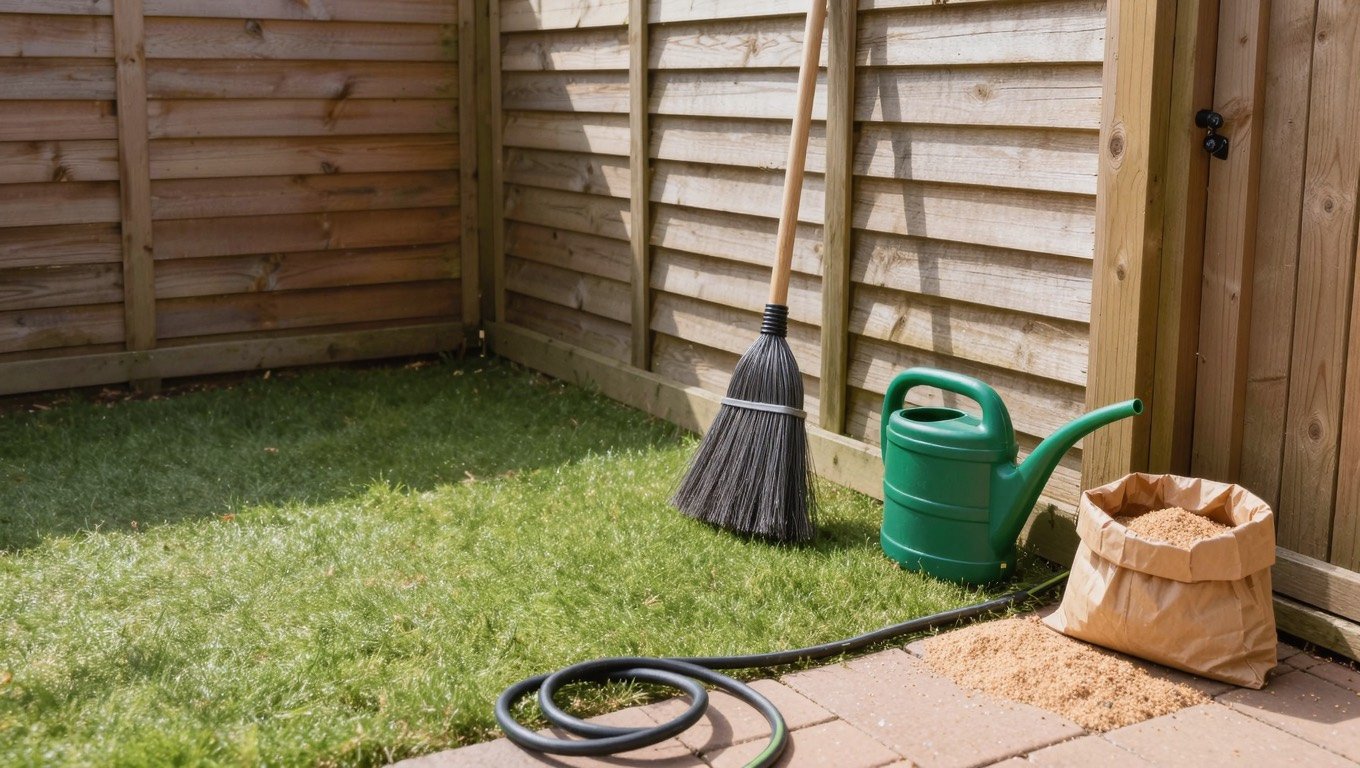
Artificial lawns sold in enormous numbers during the drought summers on the promise of "zero maintenance". That promise is nonsense: you've bought a plastic carpet that lives outdoors, and it collects debris, flattens underfoot and holds smells if a dog uses it. After a decade fitting and maintaining these lawns, the difference between one that looks respectable at year eight and one that's flat and reeking by year three is about twenty minutes of care a fortnight.
Here's the routine that keeps the pile standing, the proper fix for dog urine (and why the vinegar trick fails), and what a professional clean should cost.
Safety First
There are four ways people wreck artificial grass while cleaning it. First, the pressure washer: a narrow jet up close blasts out infill, lifts the pile and can split glued seams. Fit the widest fan tip, keep the lance 30cm off the surface and stay on low — the same discipline as in our patio cleaning guide.
Second, chemicals: never use bleach — the runoff kills borders and shouldn't reach surface drains — and check moss treatments are labelled pet-safe, keeping animals off until dry. Third, heat: barbecues, fire pits and dropped cigarettes melt polyethylene fibres instantly. Finally, wear gloves for infill sand and cleaning concentrates.
Tools, Materials, Time and Cost
A year's maintenance kit costs less than one professional visit. Expect 15-20 minutes a week in summer, a monthly once-over in winter, and one two-to-three-hour deep clean each spring for a typical 50m² lawn.
For comparison, a professional clean runs £3-£6 per square metre with minimum charges of £60-£80 — £150-£300 on a 50m² lawn. Roughly 80% of that is labour; the materials are cheap. Keep that split in mind for judging quotes later.
- •Stiff synthetic-bristle broom or artificial grass rake (never wire — it shreds fibres): £10-£20
- •Plastic leaf rake or garden blower for debris: £25-£60
- •Enzymatic pet odour cleaner: £8-£15 per litre
- •Kiln-dried silica sand for infill top-ups: £5-£8 per 20kg bag (you need roughly 4-5kg per m²)
- •Artificial grass cleaner concentrate or mild washing-up liquid solution: £0-£18
- •Powered brush (hire, for badly flattened lawns): £30-£50 a day
The Routine, Step by Step
The habit that matters most is brushing against the pile — push the broom into the direction the fibres lean so they stand back up. Brushing with the lean just polishes the lawn flatter.
- •1. Clear debris weekly. Rotting leaves become the organic layer moss and weeds grow in; use a plastic rake or blower, never a metal spring rake.
- •2. Brush against the pile weekly in summer, monthly in winter. High-traffic routes and the dog's favourite corner need double the attention.
- •3. Rinse monthly with a hose to flush dust, pollen and light pet residue through the drainage holes.
- •4. Wash marks with mild detergent. Washing-up liquid in warm water and a soft brush handles food spills, fox mess and general grime; rinse well.
- •5. Treat pet areas with enzymatic cleaner monthly — weekly if the smell has already taken hold (full method below).
- •6. Top up infill every one to two years. Brush the lawn upright on a dry day, scatter kiln-dried sand at 1-2kg per m² and brush it in. The sand ballasts the grass and keeps fibres standing.
- •7. Treat moss and algae at the first green tinge — a pet-safe moss remover in autumn and again in early spring keeps shaded corners clear.
Dog Urine Smell: The Fix That Actually Works
Urine drains through the grass, but the smell doesn't leave with it. Uric acid crystals bond to the fibres, the latex backing and the sand infill, and every warm day reactivates them — which is why fake lawns smell worst in hot weather.
Now the myth: vinegar. Acetic acid masks the ammonia smell for a day or two but doesn't break down uric acid crystals, so the stink returns with the next hot afternoon — the same reason it fails on carpets, as we explain in getting pet urine smell out of carpet. Vinegar has plenty of legitimate jobs — see our vinegar cleaning guide — but this isn't one.
What works is an enzymatic cleaner, which digests the crystals rather than masking them. Rinse with cold water first (hot water sets the proteins), apply the cleaner diluted as directed, leave it 10-15 minutes, then rinse lightly. For an established smell, repeat weekly for a month. If the lawn still smells after that, the urine has reached the sub-base, where no surface treatment can follow; that's a professional job.
Troubleshooting: Flat Pile, Weeds and Window Burn
Most artificial grass problems are cosmetic and fixable. One is not, and it catches people out every summer.
That one is window burn: a shrivelled, melted patch, often in a neat arc, facing the house. Energy-efficient double glazing can act as a concave mirror, focusing reflected sunlight past 80°C — enough to deform polyethylene fibres. No product fixes melted plastic: the section must be cut out and patched with an offcut, and unless you fit anti-reflective film to the offending window or shade the reflection, it happens again next June.
- •Flat, matted pile: brush against the pile over several sessions; hire a powered brush if a season's neglect won't lift by hand.
- •Moss and algae in shaded corners: clear debris, cut back overhanging shrubs for airflow, treat with pet-safe moss remover twice a year.
- •Weeds at edges and through drainage holes: hand-pull while small; persistent edge invasion usually means the installer skimped on the weed membrane.
- •Puddles that linger and smell: drainage holes blocked with compacted debris, or a sub-base laid without falls — the first is a stiff brush and rinse, the second is a re-lay.
- •Fading and flattening at year 8-10: normal wear, not a cleaning failure — budget lawns show it sooner.
When to Call a Professional — and What a Fair Quote Looks Like
Call someone in for pet odour that survives a month of enzymatic treatment, lifting seams, drainage failures, or any patch repair you want invisible. A proper service visit includes power brushing, sanitising and an infill top-up at £3-£6 per m²; seam re-gluing runs £80-£150 and a patch repair £100-£200 depending on matching. Because labour dominates, a quote well under those ranges usually buys a quick hose-down and a spray of fragrance — £60 for something you could do with £10 of product.
Be equally suspicious of the opposite: anyone who diagnoses "replace the whole lawn" for a smell problem without lifting a corner to inspect the sub-base, or who quotes by the hour without seeing the lawn. A fair contractor prices by area, names the treatment they'll apply, and will tell you when a 12-year-old lawn isn't worth deep cleaning; at that age the money belongs in replacement.
If this list has surprised you — most people were sold "no mowing, no work" — a real lawn needs less effort than you might think; our realistic UK lawn care calendar makes an honest case for the living alternative. Either way, the routine above keeps a fake lawn worth the money for the 10-15 years it should last.
Found this useful?
There's plenty more — hundreds of guides and honestly-tested product reviews for every corner of your home.
Browse All Guides