Garden & Outdoor · 6 min read · 23 May 2026
How to Get Rid of Weeds in a Lawn: UK Step-by-Step, With Real Costs
Weedy British lawns are usually a mowing-height and compaction problem wearing a weedkiller disguise. Here is the order the work goes in, what it really costs, and where DIY stops.
By the Nims Casa editorial team — written from professional cleaning experience and checked against our editorial standards.
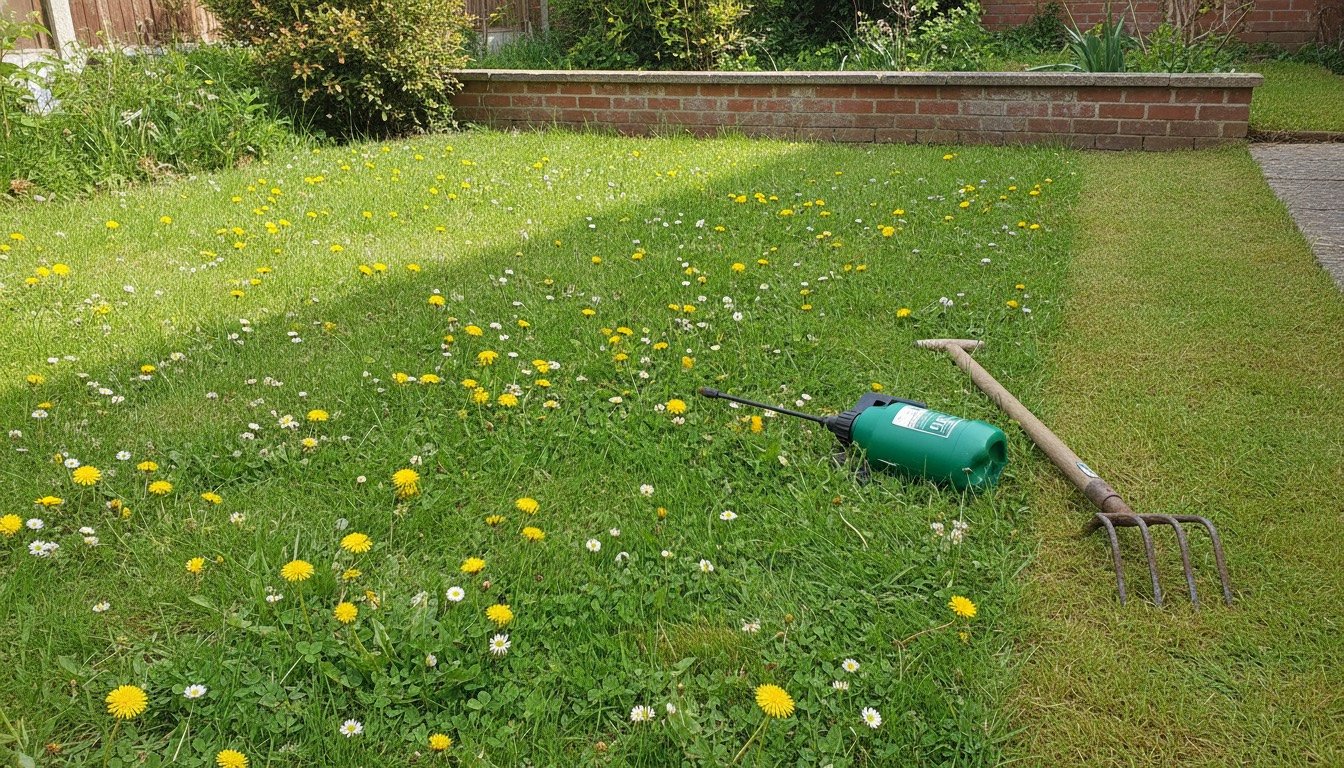
Dandelions, daisies, creeping buttercup and white clover do not muscle their way into thick, well-fed turf. They colonise gaps — left by scalping the mower to 15mm, by a July drought, by winter football on clay. Reach straight for the sprayer and you kill this year's crop while leaving the vacancy notice up for next year's.
What follows is the sequence lawn treatment operators work through, with UK products, timings and honest prices — including what a professional quote should and should not contain. Which route makes sense depends on how much of your lawn is still grass, and on whether you will fix the underlying lawn care basics rather than spraying every spring.
Safety first: the label is the law
Every amateur lawn weedkiller sold in the UK carries a MAPP number and an approved use statement. Mixing stronger or spraying near water is an offence, and professional-only concentrates need PA1 and PA6 certification to buy at all. The real risk is not the grass — it is everything within drift range.
- •Nitrile gloves, long sleeves, eye protection; wash hands and sprayer after.
- •Do not spray if leaves on a nearby shrub are moving. Drift onto roses and tomatoes causes twisted, fern-like growth for a season.
- •Keep children and pets off until fully dry — 2-6 hours in summer. Granular feed-and-weed labels usually say 24 hours for dogs.
- •Stay 2 metres back from ponds and drains. These actives harm aquatic life; washings go onto the treated lawn, never down a drain.
- •Bin or leave in place the first three cuts. Hormone residues survive composting and deform tomatoes and beans a year later.
Tools, materials and what they cost
All standard UK garden centre stock. Accuracy, not skill, separates a clean result from a striped, scorched lawn.
- •Selective concentrate (2,4-D, MCPA, dicamba, mecoprop-P or fluroxypyr): £10-£18 per litre, covering 300-600m2. Ready-to-use spot bottles are £6-£10.
- •5 litre pump sprayer £20-£35, or a dribble bar on a watering can £15-£25 — more accurate on small lawns.
- •Granular weed, feed and mosskiller: £15-£25 per box covering 80-100m2, plus £25-£45 for a spreader.
- •Daisy grubber: £8-£15, right for under 30 weeds.
- •1kg perennial ryegrass £10-£18 (sow gaps at 35g/m2), 25kg screened topsoil £4-£6.
Realistic time and cost for a 100m2 lawn
Most UK back garden lawns run 60-120m2. Budget half a day of work across a season: 20 minutes measuring and identifying, 30-45 minutes hand-weeding two dozen dandelions, 25 minutes spraying, 45 minutes overseeding in September.
DIY costs £45-£80 in materials the first season, £25-£35 later once you own the sprayer. A national lawn treatment firm quotes £18-£30 per visit at that size, four to six visits a year — £110-£220. A one-off contractor spray lands at £45-£70, because the minimum call-out sets that floor, not the chemical. Our guide to professional lawn care costs covers what each visit includes.
Understand the labour-versus-materials split before judging a quote. On a £25 visit the product in the tank is £3-£6; the other 75-85% is labour, travel, insurance, certification and the spray records the operator must legally keep. That ratio is normal — this is a service, not a chemical delivery.
- •Reasonable: the lawn is measured or paced before pricing, the quote is per m2 or in area bands, the product is named, and the visit months are written down.
- •Reasonable benchmarks: £0.20-£0.45 per m2 per visit; £1.50-£3.50 per m2 for one-off scarification; £12-£20 per m2 for turf laid.
- •Suspect: doorstep selling with a same-day discount, cash only, no certificate numbers when asked, or a promise that one visit clears everything.
- •Suspect: a twelve-month contract with no exit after two visits, or a free survey that reaches full returfing before anyone tests for compaction.
The step-by-step method
Work in this order. Steps 2 and 9 are the ones people skip, and they are why the same weeds return each May. Timing matters more than product choice, so line spraying up with your lawn fertiliser schedule.
- •1. Identify before you buy. Taprooted rosettes (dandelion, plantain, dock) need a systemic hormone product; creeping weeds (clover, speedwell, trefoil) need fluroxypyr and two hits. No selective product touches moss or coarse grass.
- •2. Fix the cause. Raise the mower to 25-40mm. Push a screwdriver into damp soil — if it stops at 50mm, you have compaction, not weeds. Feed in spring and autumn.
- •3. Choose by weed count. Under 30: hand-pull with a grubber in damp soil, taking the whole taproot. 30-100: spot spray. Over 100: treat the whole lawn.
- •4. Wait for the window. Air and soil above 12C, grass growing, weeds in full leaf. Late April to early June is strongest; mid-September is second. Never treat drought-stressed or frosted turf.
- •5. Mow three to four days before, then leave it. Weeds need leaf area to absorb the chemical, and no mowing for three days after.
- •6. Measure and calibrate. Spray plain water over a marked 10m2 and see how much you used. By eye usually means double the label rate.
- •7. Apply on a still, dry morning, no rain forecast for six hours. Fan nozzle 30-40cm above the sward, steady pace, overlap by 10% at most.
- •8. Wait properly. Weeds twist within 48 hours but take two to four weeks to die. Clover, speedwell and yarrow need a second hit six weeks later.
- •9. Fill the gaps. Dead weeds leave bare soil that reseeds within a month. Wait the label interval — four to six weeks — then scarify lightly, overseed at 35g/m2 and top-dress.
Troubleshooting: why weeds survive
Nearly every failed treatment traces back to temperature, timing or dose. Work down this list before buying a second bottle, and check anything unfamiliar against our lawn care mistakes guide.
- •Nothing happened: under 10C, drought, rain within six hours, or the 'weed' is a grass. These products need actively growing leaf.
- •Yellowed then regrew: underdose or a deep taproot. Re-treat after six weeks at the correct rate rather than doubling up.
- •Clover ignored it: it fixes its own nitrogen and thrives in hungry turf. Use fluroxypyr and feed the grass.
- •Yellow stripes: overlapping passes, or granular feed dropped on wet leaves. Grows out in three weeks.
- •Moss back within a month: ferrous sulphate only blackens it. Moss is a symptom of shade, compaction, acidic soil or mowing below 20mm.
When to stop and call someone
There is a point where spraying stops making economic sense. Above roughly 40% weed cover you are paying to create a field of dead patches; renovation gives a better lawn for similar money — scarify, aerate and overseed in September, £150-£400 for 100m2.
- •Over 400m2: knapsack work becomes a full day, and a contractor with a boom sprayer is cheaper per m2.
- •Japanese knotweed: a mortgage and legal issue, not a lawn one. Use a PCA-accredited firm with an insurance-backed guarantee, £2,500-£5,000 for a multi-year plan.
- •Horsetail (mare's tail): amateur products barely dent it; control takes repeated bruising and treatment over several seasons.
- •Turf that lifts like a carpet: chafer grubs or leatherjackets, not weeds. No weedkiller helps.
- •Lawn running within 2 metres of a watercourse: certified operator only.
Found this useful?
There's plenty more — hundreds of guides and honestly-tested product reviews for every corner of your home.
Browse All Guides