Home Safety & Security · 6 min read · 20 June 2026
How to Prepare Your Home for a Hurricane: A UK Storm-Season Guide
Britain never gets a true hurricane, but it regularly gets what is left of one. The preparation is the same, the warning window is about 48 hours, and the work takes one person a morning.
By the Nims Casa editorial team — written from professional cleaning experience and checked against our editorial standards.
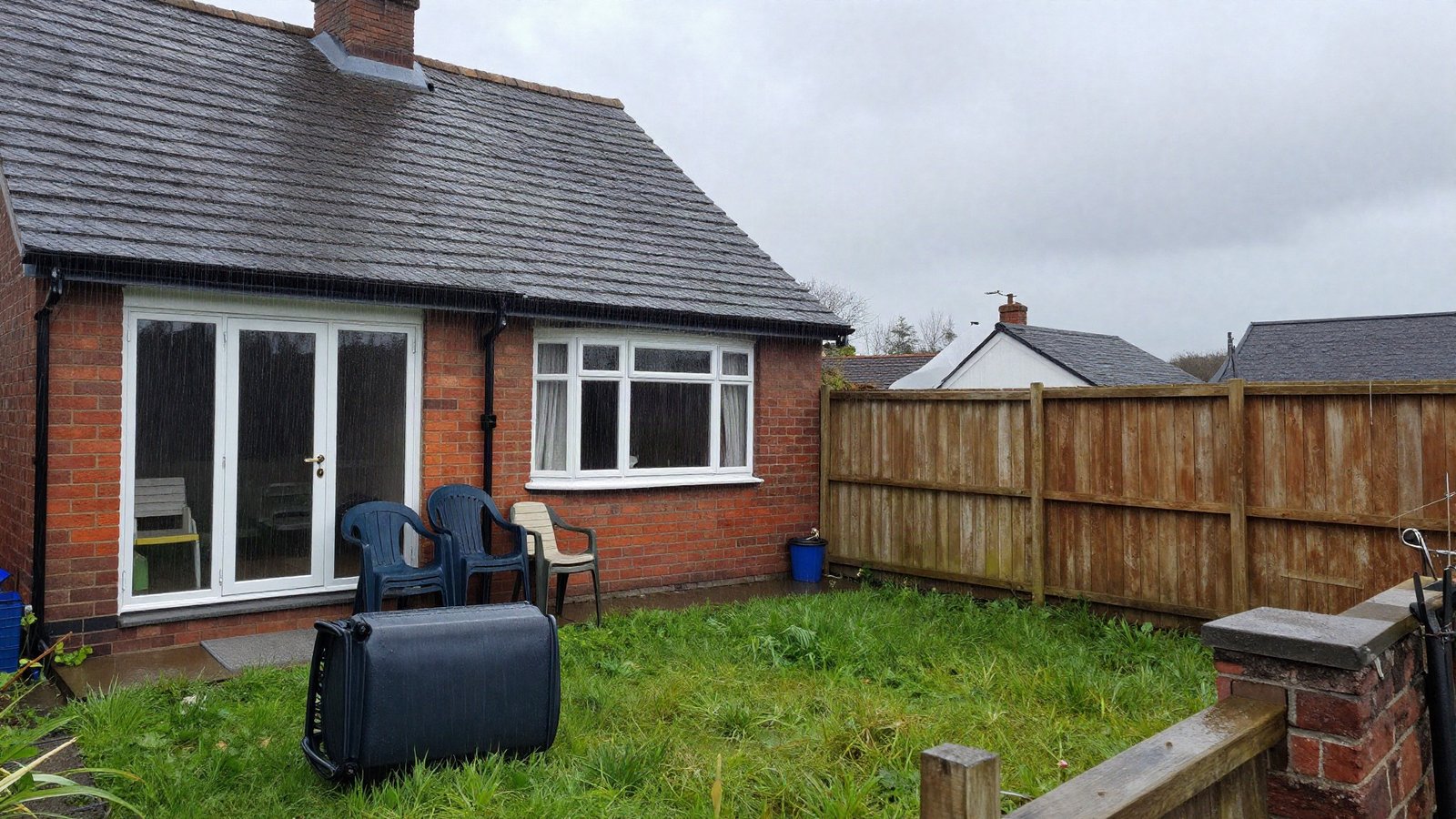
The sea around Britain is far too cold to sustain a tropical cyclone, so nobody here rides out a hurricane in the technical sense. What we get is the wreckage of one: an ex-hurricane that has crossed the Atlantic, re-formed as a deep low and arrived over Cornwall or western Scotland with 70 to 90mph gusts still in it. Storm Arwen put around a million UK homes into the dark in November 2021.
You normally get 48 to 72 hours of Met Office warning. On a three-bed semi the useful work takes one adult about three hours, and almost none of it is skilled. It is walking the outside of the building, removing everything the wind can lift, and checking the four things that always fail first: gutters, fence posts, ridge tiles and the garage door.
Safety first: the rules that come before any of it
The commonest UK storm injury is not being struck by debris. It is falling off a ladder while preparing for the storm, usually on the morning it arrives. Ladder work turns genuinely unsafe once sustained wind passes about 25mph.
- •Do all outdoor work the day before, in daylight. Once the warning goes amber or red, go inside and accept the damage.
- •Nobody should be on a roof before a storm. Slipped tiles and crumbling ridge mortar are a roofer's job.
- •Treat every downed cable as live: stay 10 metres back and ring 105 to reach your network operator.
- •Never run a petrol generator in a garage, porch or conservatory. Carbon monoxide from a 3kW set turns a single garage lethal in under ten minutes.
Tools, materials and skill level
None of this needs a trade. Buy the fixings early — the shelves empty the day a storm gets named.
- •Cordless drill/driver, exterior screws and galvanised angle brackets
- •Two 5m ratchet straps, about £15
- •Shed or trampoline ground anchors, £15-£30 a set of four
- •Airbrick covers at £4-£8 each, plus a doorway flood barrier (£250-£600) in a flood zone
- •Gutter scoop, gloves and a ladder with a stand-off
- •Torches, a wind-up radio and a power bank — see our notes on a sensible home emergency kit rather than panic-buying on the day
- •Binoculars: the most useful roof-inspection tool a homeowner owns
Realistic time and cost
For a semi with a small garden, budget three hours and under £100 if you own a drill. Starting from nothing somewhere exposed, £300-£600 covers anchors, barriers, airbrick covers and torches, and it lasts a decade.
- •Gutters and downpipe gully: 45-60 minutes, free — the routine in our gutter cleaning guide
- •Bracing or dropping a fence panel: 30 minutes, £8-£15 in timber
- •Emergency roofer call-out afterwards: £250-£450 before materials
The step-by-step prep sequence
Work outside-in and top-down. The ladder jobs belong at the start, while the wind is lightest.
- •1. Check the Met Office warning level and register for free flood warnings with the Environment Agency, SEPA or Natural Resources Wales.
- •2. Clear gutters, hoppers and the gully at each downpipe. A blocked downpipe in 40mm of rain backs up behind the fascia into the wall plate.
- •3. Store everything loose — cushions, parasols, wall pots, hanging baskets — and lay wheelie bins on their sides. Anchor the trampoline or strip its enclosure poles; the netting is a sail.
- •4. Push each fence panel at shoulder height. If the post moves more than 25mm at ground level it will go: brace it with 100x50 timber at 45 degrees, or lay the panel flat. A deliberate gap saves the panels either side.
- •5. Scan the roof from the ground with binoculars for slipped tiles, crumbling ridge mortar and gaps in the chimney flashing, then anchor the shed into its slab and check trees for deadwood. Note faults; do not climb.
- •6. Lock every window — it pulls a uPVC sash against the seal and roughly doubles its wind resistance — and drop the handle on patio doors to engage the multipoint hooks.
- •7. Padlock both garage door runners, about £12. Up-and-over doors are the classic UK failure point: once one goes, wind gets into the roof space.
- •8. If flooding is possible, fit airbrick covers, set the door barrier and move documents upstairs — our comparison of flood barriers versus sandbags covers which is worth the money.
- •9. Photograph the exterior, charge everything, and learn how to open electric gates manually. The power cut checklist covers food, heat and backup.
UK rules that catch people out
Nothing about an approaching storm suspends planning or building control. The tree rule bites hardest: a tree with a Tree Preservation Order, or one in a conservation area, needs six weeks' written notice to the council before pruning. There is an exemption for a dead or immediately dangerous tree, but photograph the defect and notify within five days.
- •Generators: never back-feed through a socket. It bypasses RCD protection and can electrocute network engineers on the line. A changeover switch is notifiable under Part P, £400-£900 fitted.
- •Gas: a displaced boiler flue or damaged terminal is Gas Safe registered work only.
- •Roofs: like-for-like repair is exempt, but re-covering more than 25 per cent of a slope triggers Part L and needs building control or a CompetentRoofer firm.
- •Fences: rebuilding above 2m — 1m adjoining a highway — needs planning permission; storm damage is not permitted development.
- •Landlords: roof, gutters, drains and exterior sit with the landlord under Section 11 of the Landlord and Tenant Act 1985.
Troubleshooting during and straight after
The instinct mid-storm is to go outside and fix something. Resist it — almost everything can be contained from indoors for a few hours.
- •Water down a chimney breast: usually failed flashing, not tiles. Bucket it and wait — tarping a leaking roof is a job for after the wind drops.
- •Fence panel gone: leave the gap. Refitting mid-storm feeds the next panel to the wind.
- •Water at a doorway: stack sandbags in a pyramid, ends folded under, then drape plastic sheet over the outside face — the sheet seals, not the sand.
- •Power out: ring 105 and switch off the electric shower and immersion to avoid a surge on restoration.
- •Once calm, photograph everything before tidying, then read up on filing a home insurance claim. Most UK policies define a storm as gusts of 55mph or more, so the local Met Office record is your evidence.
When to stop and call a professional
Every item here involves height, structure or a service — all three punish enthusiasm. Call a roofer for loose ridge tiles, lifted flashing, a leaning stack or anything above single-storey height. Call a qualified arboriculturist — not a man with a chainsaw and a leaflet — for trees over about 4 metres or near a power line: a survey runs £150-£300 and removal £600-£1,800, per our tree removal cost guide.
Call a structural engineer for fresh diagonal cracking or a bowed wall. And ring your insurer before authorising anything beyond emergency make-safe work — our storm damage repair cost guide shows what a fair quote looks like, which is how you spot the opportunist knocking the morning after.
Found this useful?
There's plenty more — hundreds of guides and honestly-tested product reviews for every corner of your home.
Browse All Guides