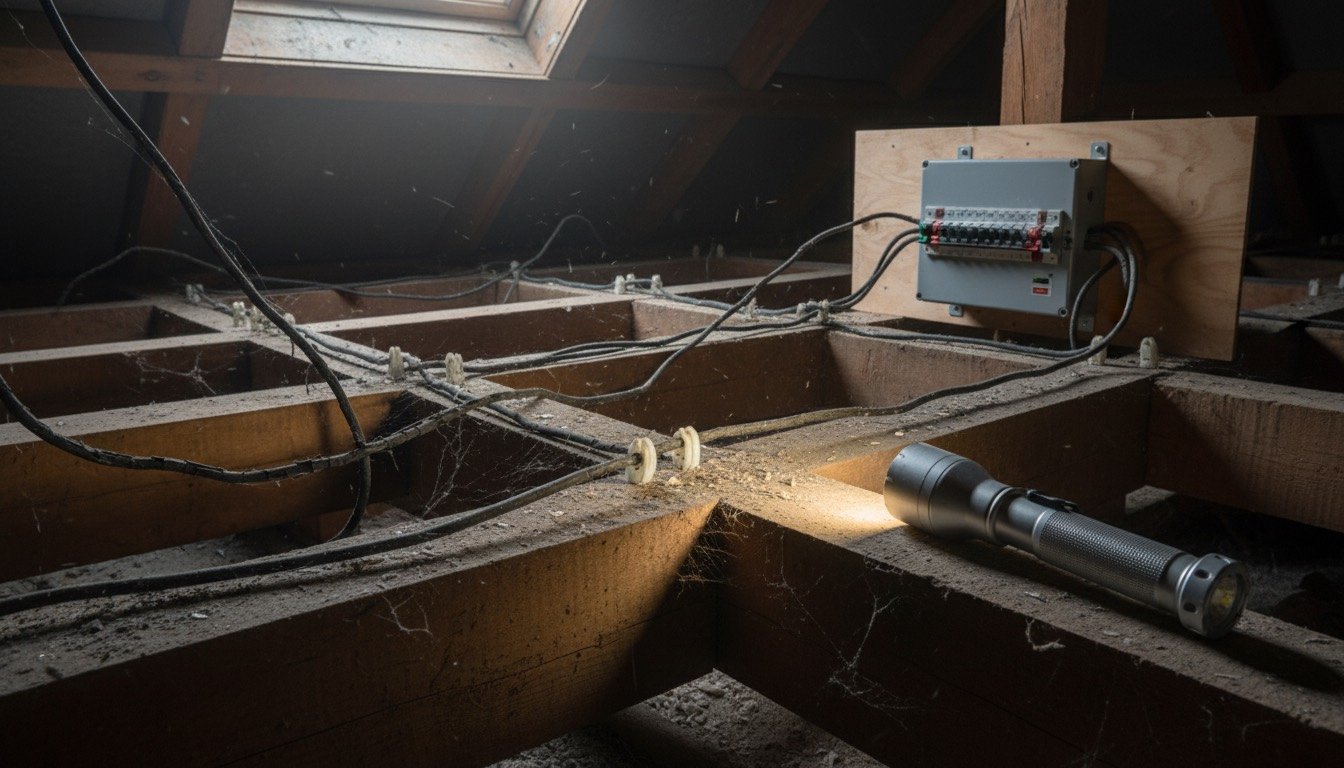
Electrical · 6 min read · 7 July 2026
How to Replace an Electrical Outlet: A UK Socket Swap, Step by Step
A cracked faceplate or a socket so slack that plugs sag out of it is a twenty-minute job. Here is how to do it safely, what it costs, and how to spot a fair quote.
By the Nims Casa editorial team — written from professional cleaning experience and checked against our editorial standards.
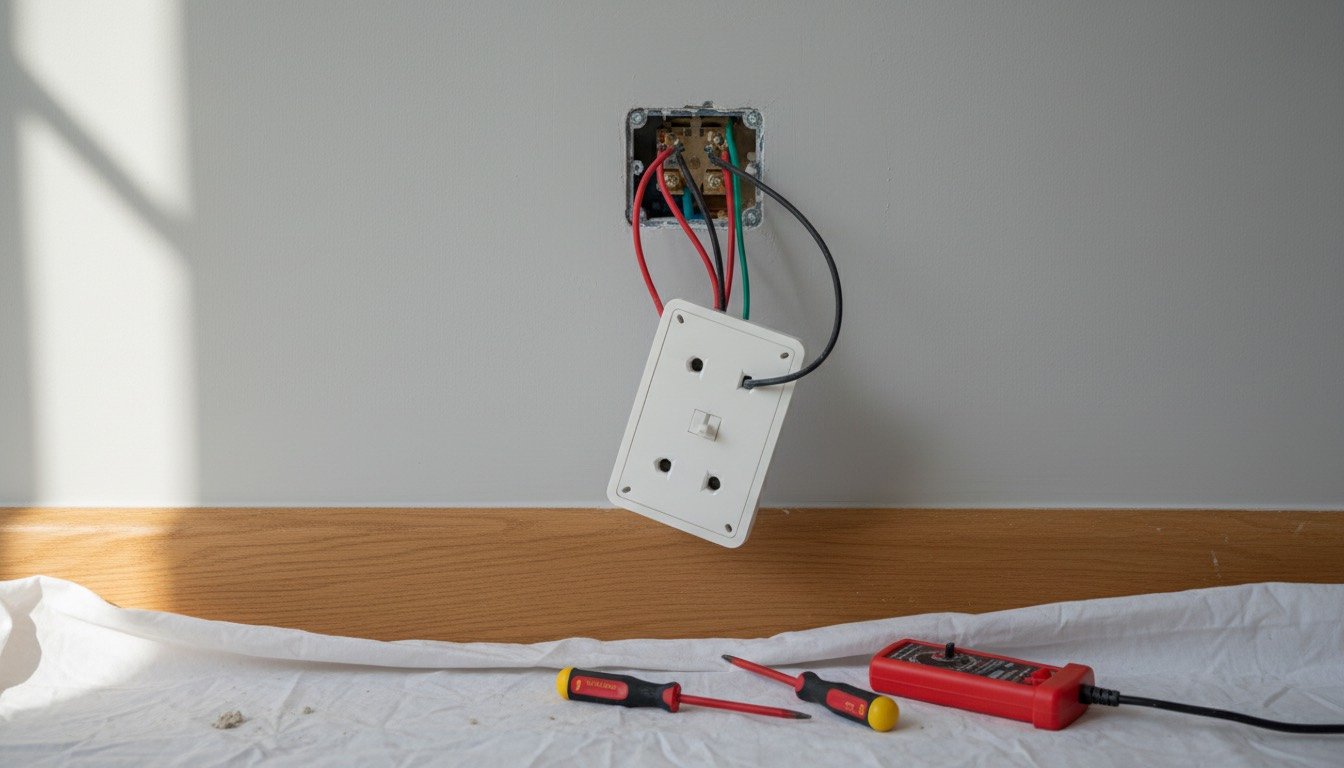
Three things usually put a socket on the replacement list: a cracked or yellowed faceplate, pins that no longer grip so plugs sag out, or scorching around a terminal. The work is trivial — two screws, three conductors, one faceplate. What separates a safe job from a dangerous one is everything that happens before the screwdriver goes near the plate.
Be blunt about the money first. The socket costs about £4; an electrician charges £55–£95 to fit it, and that is not a swindle. You are paying for the visit, the certificate, and their eye for the melted neutral you would have screwed straight back in. Without a two-pole voltage indicator already in the toolbox, your first socket costs more than paying someone. From the second on, the maths flips.
Safety first: isolation, proving dead, and where you stand legally
A like-for-like socket swap on an existing circuit counts as repair and maintenance, so it is not notifiable under Part P in England or Wales. Scotland and Northern Ireland have their own equivalents, but the principle is universal: paperwork or not, the job must comply with BS 7671. If you rent, do not touch it — your landlord carries the duty and the five-yearly EICR. Our guide to when you need an electrical permit covers the jobs that genuinely require sign-off.
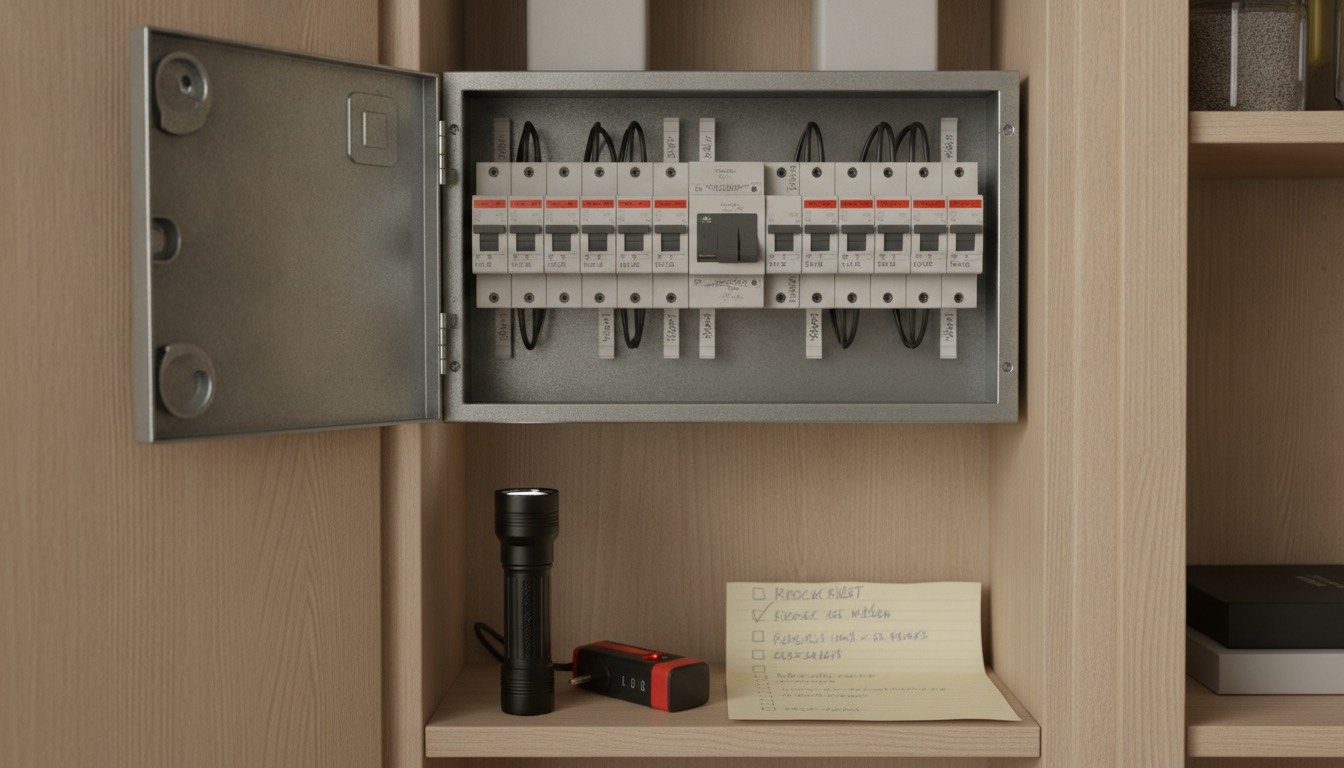
- •Switch off the MCB or RCBO and lock it off with a proprietary device (£8–£15), or take the fuse carrier with you. Tape a note over the board.
- •Prove your two-pole voltage indicator on a proving unit, test the socket at line–neutral, line–earth and neutral–earth, then prove the tester again. Three steps, every time.
- •Never use a neon screwdriver. They fail GS38 and will read a live socket as dead if the neutral is broken.
- •Photograph the terminals first. Two cables in the box means a ring final; three means a spur.
- •Pre-2005 houses have red live and black neutral. Our wire colour guide covers the changeover and the traps in mixed installations.
Tools, materials and what they really cost
Nothing here is exotic, but the test kit is non-negotiable and it is most of the outlay. Trade-counter prices for 2026:
- •Two-pole voltage indicator plus proving unit (Di-Log, Kewtech, Martindale): £55–£120 — worth every penny.
- •Socket tester: £12–£30 for a three-lamp unit, £60–£100 for one that times the RCD trip (our round-up).
- •VDE-insulated screwdrivers, 3.5mm flat and PZ2: £15–£25 the pair. Side cutters and strippers: £15–£30.
- •Green-and-yellow earth sleeving, £3 a metre — needed wherever the earth arrives bare, as in most pre-2005 houses.
- •The socket: white moulded single £2–£4, double £3–£7; brushed steel or matt black double £9–£25; USB-C double £18–£35.
- •A 35mm back box if the old one is too shallow (galvanised for masonry, dry-lining for plasterboard): £1.50–£3, plus a grommet.
Time, cost and how to judge an electrician's quote
Allow 40 minutes for your first socket, 15–25 each after. For a professional doing one like-for-like swap, materials are £3–£8 and labour £55–£90 — roughly 90% of the bill is time. That split looks alarming, but it is normal: you are buying the journey and the competence, not the plastic. Rates run £40–£75 across most of the UK and £60–£95 in London and the South East, with a £60–£120 minimum charge covering travel — our guide to what an electrician costs breaks it down further.
- •£55–£95 to swap one socket outside central London; £75–£130 inside the M25.
- •£140–£260 for eight to twelve sockets in one visit — a half-day rate of £150–£220 plus £40–£90 of accessories, near £15–£25 each.
- •£20–£45 for each extra socket once someone is on site. If number two costs the same as number one, ask why.
- •£30–£60 extra where a shallow 25mm box must be chased out for a 35mm one in a solid wall; making good is usually excluded.
- •A Minor Electrical Installation Works Certificate should be in the price, not a £40 add-on.
- •Suspect: a quote that leaps because of a fault you are never shown, a rewire recommended off one loose socket, or a refusal to itemise labour and materials.
The steps
Assume a 13A BS 1363 socket on a 2.5mm² twin-and-earth ring final — the arrangement in most UK homes.
- •1. Isolate at the consumer unit, lock off, and prove dead using the three-step sequence above.
- •2. Undo the two faceplate screws (86mm centres on a double, 60.3mm on a single) and ease the plate forward; never let it hang on the conductors.
- •3. Loosen the terminals and withdraw conductors one function at a time — line, neutral, then earth — so nothing gets crossed.
- •4. Inspect what came out. Blackened copper, a hot-plastic smell or a crumbling terminal means the fault is in the wiring, not the socket.
- •5. Trim damaged conductors back to clean copper and re-strip to 10–12mm. Sleeve every bare earth in green-and-yellow up to the terminal.
- •6. If the old plate never sat flush, fit a deeper back box now — cramming conductors into a 16mm box is how faceplates crack.
- •7. Land the conductors: brown or red into L, blue or black into N, sleeved earth into E. Doubled conductors sit side by side, not twisted.
- •8. Tighten to 0.5–0.8Nm, then tug each conductor. A terminal that feels tight but lets go under a pull was never tight.
- •9. On a metal box, fit a flying earth link between the box terminal and the faceplate, and check the grommet is still in the knockout.
- •10. Fold cables back in a concertina, not a coil, screw down evenly until snug, then restore power, test with a socket tester and press the RCD button.
Troubleshooting what goes wrong
Nearly every post-swap problem traces back to a terminal or a back box.
- •Your socket and others on the ring are dead: a conductor has slipped out, breaking the ring. Isolate and recheck every terminal.
- •The RCD trips on restoring power: a neutral touching earth, or a nicked conductor shorting in the box. Isolate and inspect before resetting.
- •The MCB trips instead: a line–neutral short, almost always a stray strand bridging terminals behind the plate.
- •Reverse polarity on the tester: line and neutral swapped, easy in an old red-and-black installation.
- •If the socket was dead before you started, work through our dead socket diagnosis order — the fault may sit elsewhere on the circuit.
When to stop and call an electrician
No shame in putting the plate back and picking up the phone. Every item below is cheaper to hand over than to get wrong; our list of repairs you should never DIY explains why.
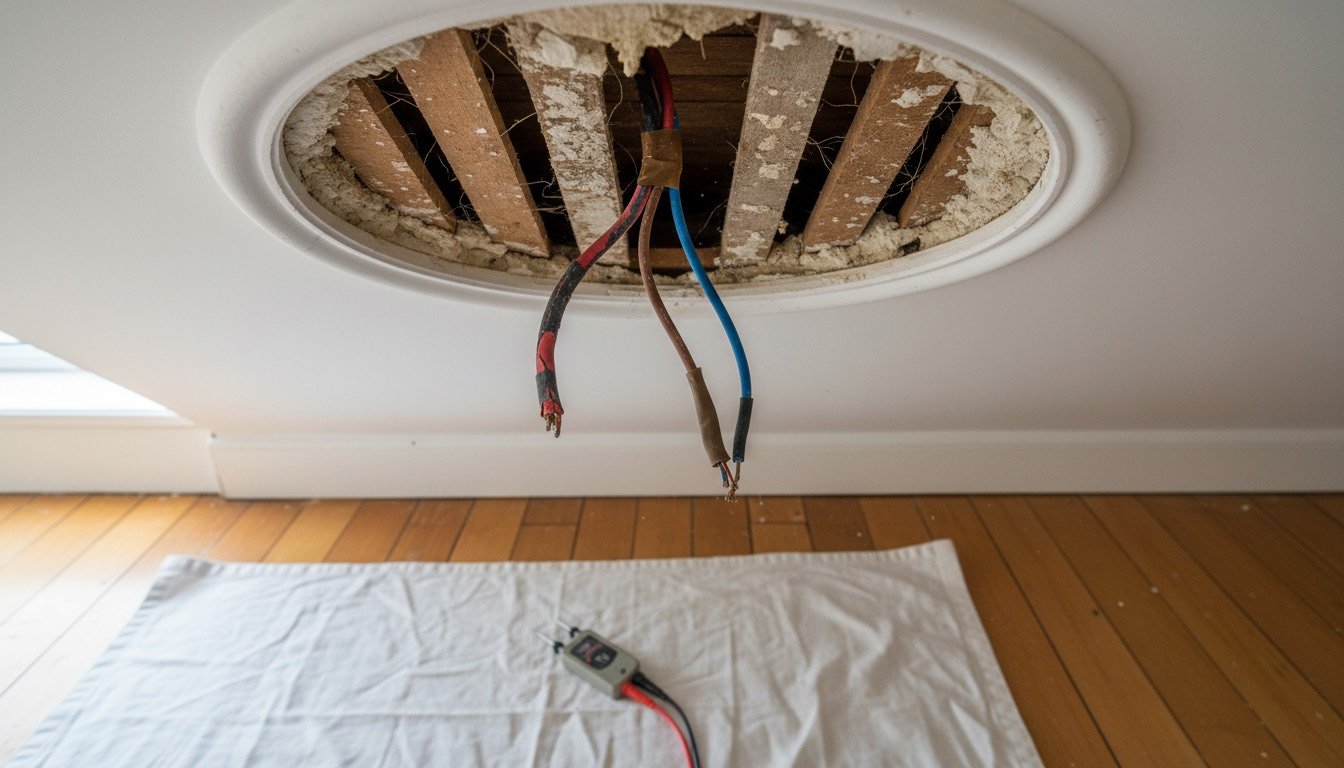
- •Scorching, melted insulation or copper gone dull brown — heat from a loose connection, which may have travelled up the cable.
- •No earth conductor, rubber or lead-sheathed cable, or fabric flex: that installation needs assessment, not a new faceplate.
- •Any socket in a room with a bath or shower, or outdoors — different rules, and notifiable in some nations.
- •A consumer unit with rewireable fuses and no RCD: a new socket on an unprotected circuit is still unprotected.
- •You cannot identify which MCB feeds the socket, or you have no two-pole tester. Guessing is not a method.
Found this useful?
There's plenty more — hundreds of guides and honestly-tested product reviews for every corner of your home.
Browse All Guides