Electrical · 6 min read · 10 July 2026
Why Is an Outlet Not Working? A UK Guide to Dead Plug Sockets
Nine times out of ten a dead socket is not a wiring fault at all. Here is the order a working electrician checks things in, and the exact point where you should stop and pay someone.
By the Nims Casa editorial team — written from professional cleaning experience and checked against our editorial standards.
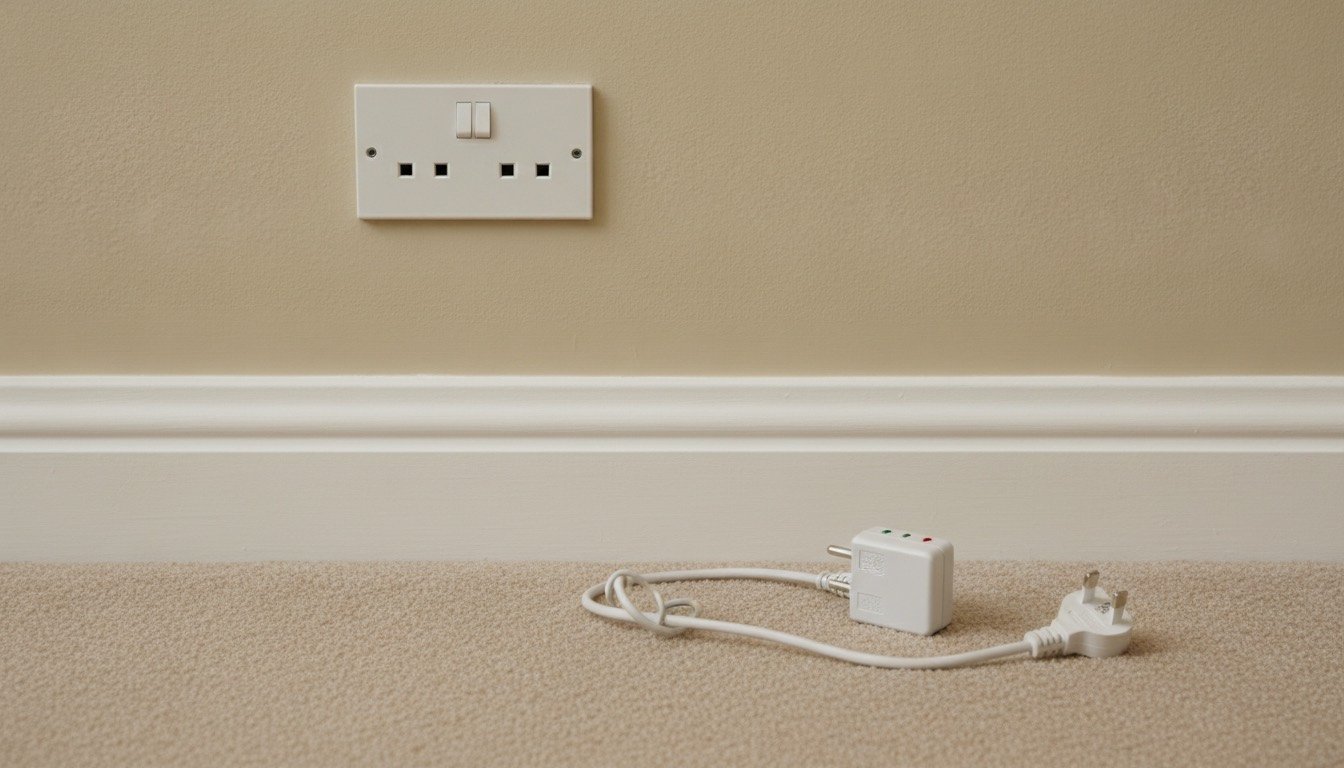
A dead socket rarely means what people assume. Usually the cable in the wall is perfectly healthy and the fault sits somewhere you can see, hold or switch: a 3A plug fuse, an RCD that tripped quietly two days ago, or a fused spur in a kitchen cupboard knocked off while unloading shopping.
The skill is checking in the right order, because each step rules out a whole category of causes. Work from the appliance back towards the consumer unit, never the reverse. Here is the sequence used on a real callout.
Start With a 60-Second Diagnosis
Gather information before touching anything. A minute of checks puts the fault in one of three buckets: the appliance, one socket, or the whole circuit.
- •Test with a known-good table lamp, not a phone charger. Chargers die silently and send people chasing a phantom fault.
- •Check the socket's own rocker switch, and both halves of a double. One dead half points at the appliance or its plug fuse.
- •Try other sockets in that room, then next door, then upstairs. One dead outlet is local; a whole floor is a circuit fault.
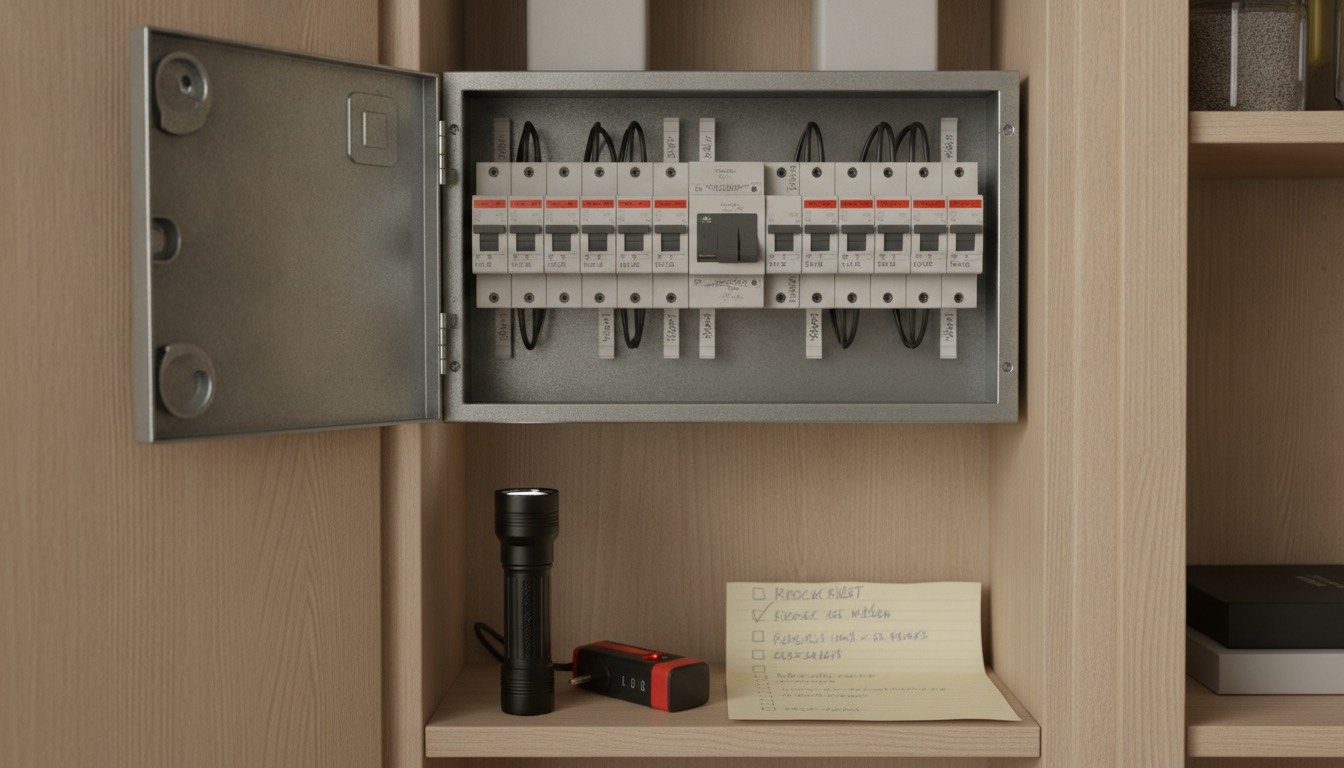
- •Read switch positions in the consumer unit, not the labels, which are often wrong. A tripped MCB sits visibly lower; a tripped RCD kills a bank.
- •Find any switched fused connection unit nearby: above a worktop, in a cupboard, beside the boiler. Spurred sockets die the second that switch goes off.
- •If the whole house is dead, check the meter for credit and ring 105 free from any UK phone before blaming your wiring.
Symptom to Cause: What the Clues Mean
The pattern of what is dead tells you more than any tester will.
- •One appliance dead, the socket fine with anything else: a blown BS 1362 plug fuse, or a failed flex or switch inside the appliance.
- •One socket dead, rest of the room fine: a loose terminal behind the faceplate, burnt switch contacts, or a broken spur.
- •Two or three dead in a run: a break in the ring final circuit, usually at a terminal in a socket either side.
- •A floor dead with an MCB tripped: overload or a short, covered in why your circuit breaker keeps tripping.
- •Sockets and lights dead across half the house, RCD down: earth leakage, usually a kettle, freezer, immersion heater or a rain-soaked outdoor socket.
- •Intermittent, plug warm, faint hot-plastic smell: arcing at a loose terminal. Switch that circuit off now.
- •Everything dead and the main switch will not stay up: a fault upstream, or a blown service fuse that belongs to your network operator.
The Causes, Ordered by How Often We Find Them
Ordered by what genuinely turns up on jobs, rather than by what sounds alarming.
- •Blown plug fuse. Roughly a third of callouts, cured by a 30p cartridge fuse.
- •A fused connection unit switched off or its fuse blown. Endemic in kitchens, where fridges, extractors and washing machines spur off a switch you never look at.
- •RCD tripped, or reset half-heartedly so the toggle sits mid-position and looks fine at a glance.
- •A loose terminal screw. Twenty years of heating and cooling lets 2.5mm conductors creep out from under a screw, and the neutral goes first.
- •A broken ring from a picture nail, a screw through a stud wall, or a kitchen fitter who never tightened a terminal.
- •Failed switch contacts, common on the £4 accessories fitted in rentals and budget new-builds.
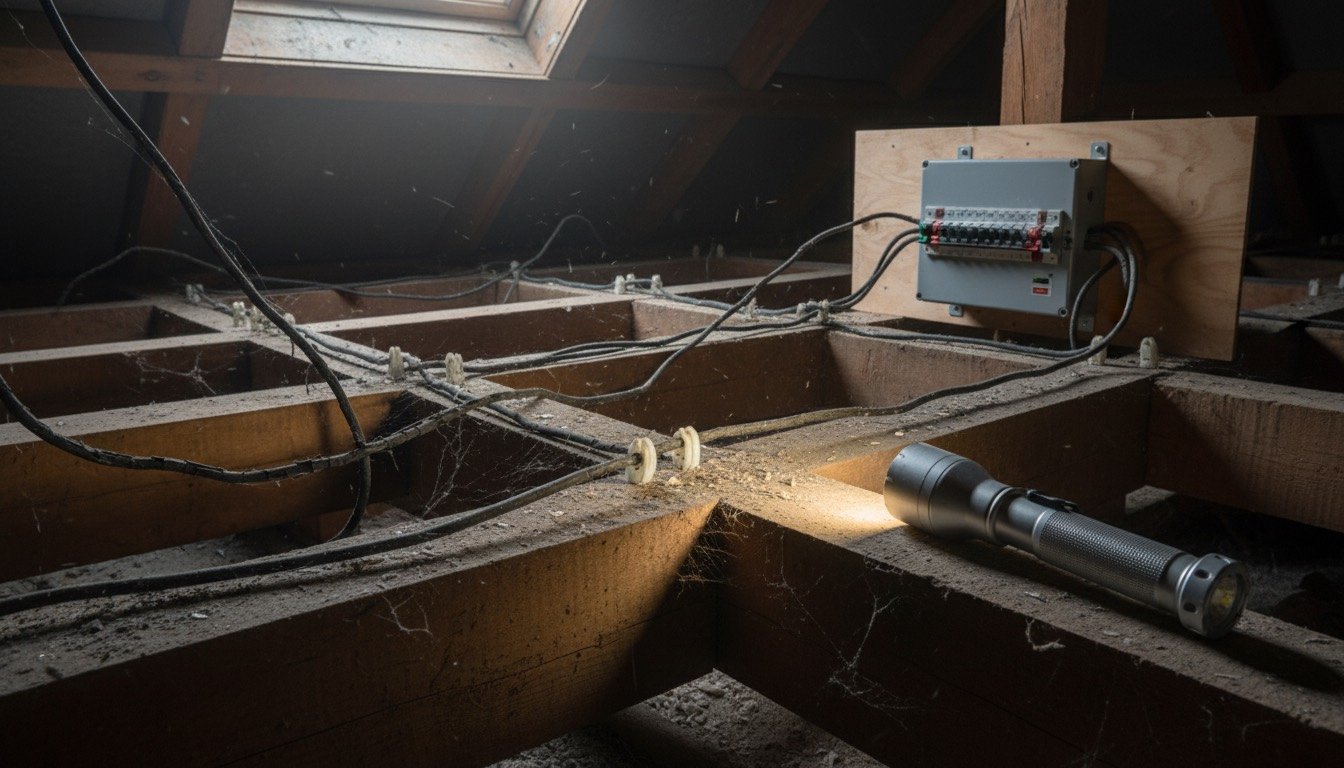
- •Damaged cable: rodents in a loft, water in a garage, a crushed cable under a floorboard.
- •Persistent overloading, a different problem in disguise. Read the signs of an overloaded circuit before you keep resetting things.
Fixes, Ordered From Safest to Riskiest
Work down this list and stop where you run out of tools or competence. There is no shame in stopping at step three, and real danger in bluffing past step five.
A plug-in socket tester costs £10 to £25 and is worth owning, but it only confirms polarity and a present earth: it cannot detect a borrowed neutral or a joint that fails under load. Our socket tester comparison covers what matters.
- •Swap the plug fuse. 3A up to roughly 700W for lamps, TVs and laptops; 13A for kettles, irons and heaters. Never fit 13A because it was the one in the drawer.
- •Reset the fused connection unit. The carrier levers out with a flat screwdriver and takes a 3A or 13A fuse.
- •Reset the RCD or MCB properly: unplug everything on the affected circuits, push fully off then back on, then reintroduce appliances one at a time. Whichever trips it again is your culprit.
- •Removing the faceplate is where most people should stop. Doing it safely means isolating at the consumer unit, locking off and proving dead with a two-pole voltage indicator to GS38. A neon screwdriver is not a test instrument.
- •No bodges: no tape over a scorched faceplate, no extension lead as a permanent repair.
The Renter-Safe Version: No Deposit at Risk
If you rent, the plug fuse, the spur switch, the RCD reset and a plug-in tester are all fair game. None of it leaves a mark or alters the installation, so none of it can cost you at check-out. Opening a faceplate is different: a scratched wall or disturbed terminal turns a landlord’s problem into your deposit deduction.
Report it in writing with photos and a date. Your landlord is responsible for the installations supplying electricity, and rented homes in England, Wales and Scotland need an Electrical Installation Condition Report every five years. A dead socket alongside an overdue EICR changes the conversation quickly.
- •Reversible stopgap: a surge-protected extension lead run along the skirting with removable adhesive clips, never staples or nails.
- •Move the fridge or freezer to a known-good socket first. A dead lamp is an inconvenience; a defrosted freezer is a bill.
- •A plug-in socket shelf or a freestanding lamp beats drilling, the same logic behind our rental-friendly decor guide.
- •Never let an unregistered handyman open the accessory, and do not dock the cost from rent without following the proper process.
Where DIY Has to Stop, and What It Costs
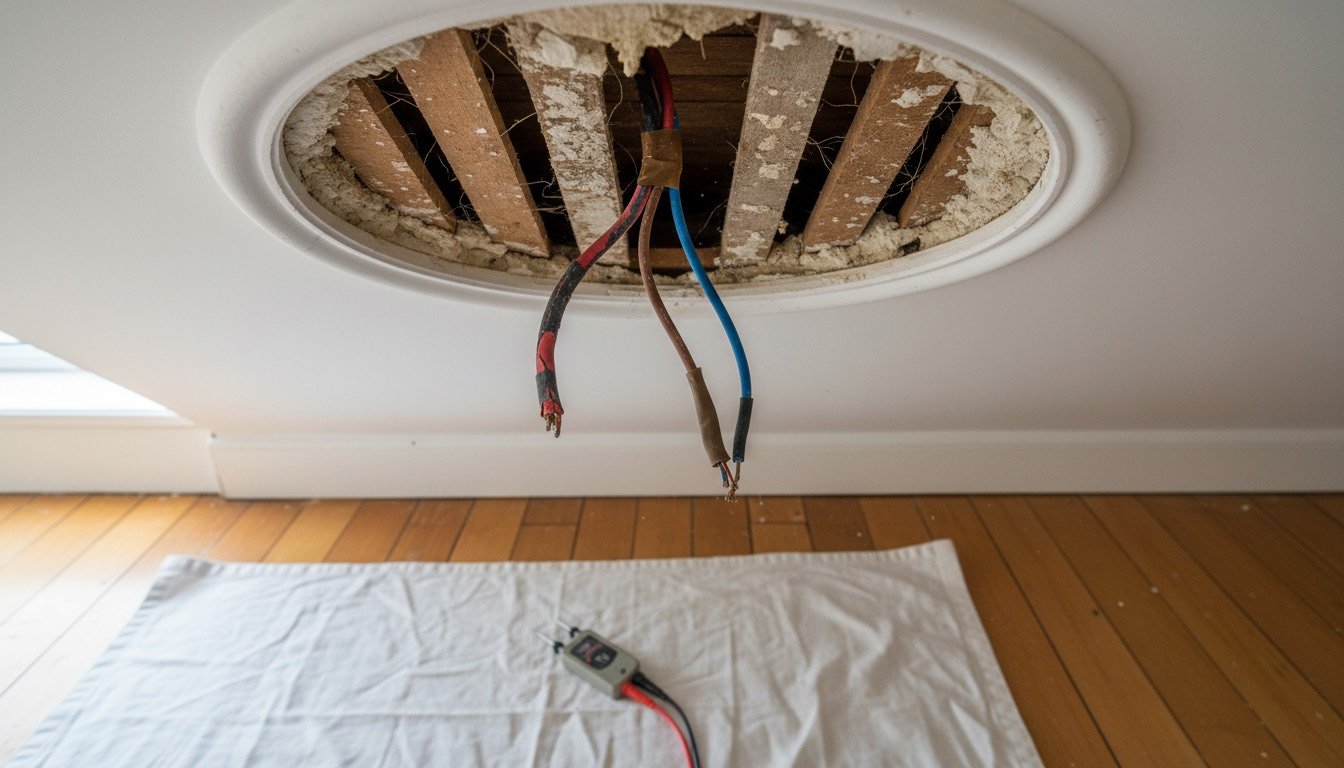
Browning around a faceplate, a socket warm to the touch, a melted plug, a hot-plastic smell or a buzzing sound means one action: switch that circuit off at the consumer unit and leave it off. Arcing behind plasterboard is a genuine ignition source.
Swapping a like-for-like socket on an existing circuit is not notifiable under Part P in England and Wales, but it must still comply with BS 7671. A new circuit, anything in a bathroom, or a consumer unit change is notifiable and needs a registered electrician or building control. Scotland has its own route, so check locally.
Budget £70 to £120 for a first hour and £90 to £160 for a straightforward one-socket repair. Fault-finding a broken ring runs £150 to £300, and out-of-hours callouts start nearer £150; see our electrician cost breakdown. Use someone registered with NICEIC, NAPIT or ELECSA and ask for a Minor Electrical Installation Works Certificate. Unsure whether a job is yours at all? Our list of electrical repairs you should never DIY is the honest answer.
Found this useful?
There's plenty more — hundreds of guides and honestly-tested product reviews for every corner of your home.
Browse All Guides