Garden & Outdoor · 6 min read · 11 August 2026
How to Save Your Garden in a Drought: Triage, Mulch & What to Sacrifice
Over 70% of England and Wales is in drought and nine water companies have hosepipe bans. Here's the triage order professionals use, what a watering can should go on first, and what to let go.
By the Nims Casa editorial team — written from professional cleaning experience and checked against our editorial standards.
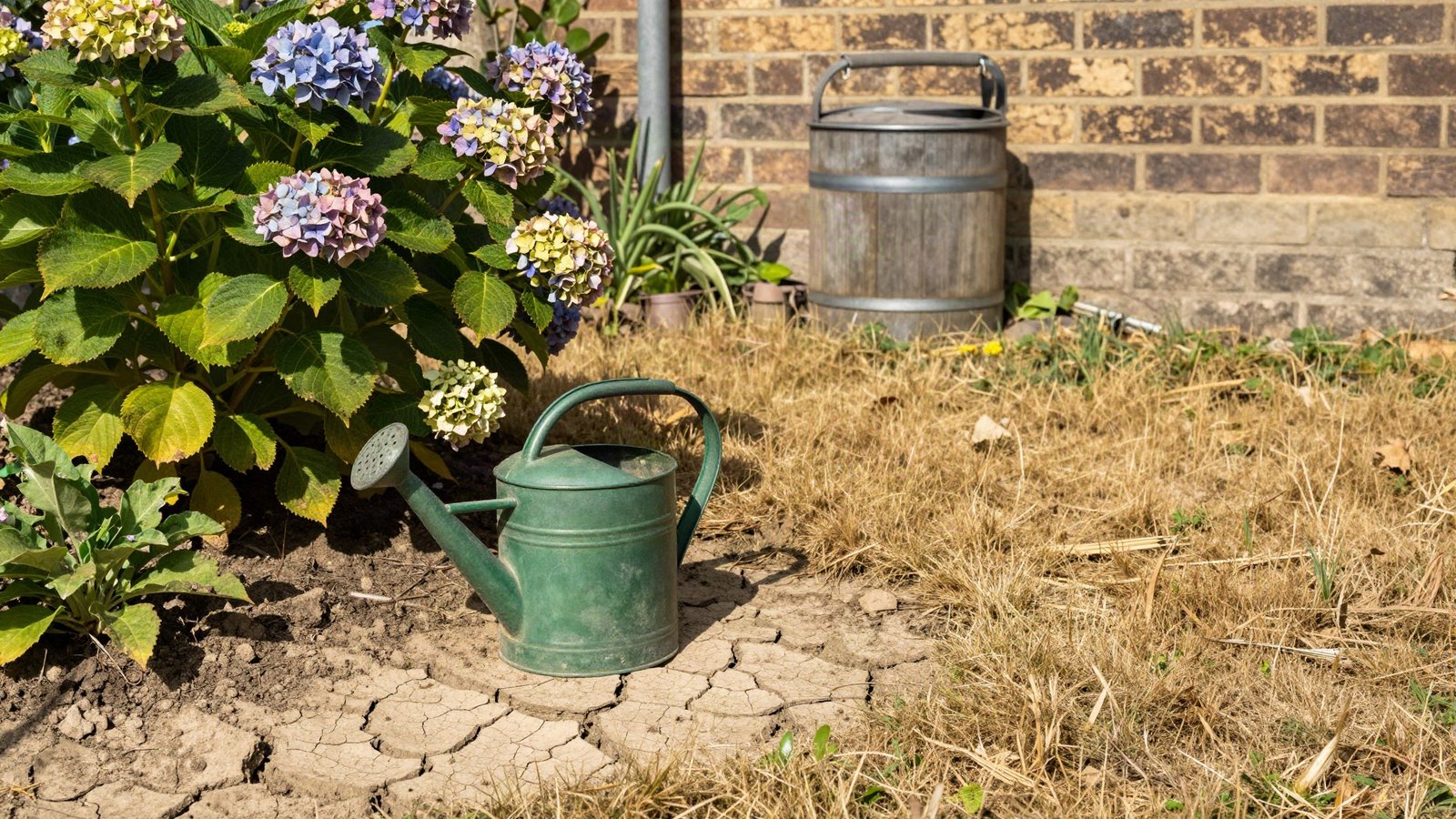
England has been in an official flash drought since 29 July 2026, more than 70% of England and Wales is now classed as in drought, and nine water companies are running hosepipe bans. With another heatwave in the Met Office forecast, the honest position is that you cannot save everything with a watering can, and trying to will cost you the plants that matter.
So this is a triage guide: what the law lets you do, the order in which to spend your water, how mulch and shade stretch every litre, and what to sacrifice because it will recover on its own.
What a flash drought is and why it catches gardens out
A classic drought builds slowly after a dry winter. A flash drought develops in weeks: intense heat and evaporation strip moisture from the top 30cm of soil faster than roots can chase it down, which is why borders that looked lush in mid July are collapsing by mid August. Plants never had a dry spring to push roots deeper, so they are shallow-rooted and exposed.
Stressed plants close their leaf pores, stop growing, wilt to cut the leaf area losing water, then shed leaves, flowers and fruit. A useful field test: a plant that wilts at 4pm on a 30C day but stands back up overnight is coping. A plant still flat at 7am is in genuine trouble and goes to the top of your watering list.
Know the rules before you pick up a hose
Nine companies currently have hosepipe bans, formally Temporary Use Bans under section 76 of the Water Industry Act 1991: Thames Water, South East Water, Southern Water, Anglian Water, South West Water, Affinity Water, Cambridge Water, Welsh Water, and Essex & Suffolk Water. Breaching one carries a fine of up to £1,000. Yorkshire Water, unusually, has no restrictions this summer, while Southern Water has applied for a non-essential use ban, the next tier up, in Hampshire and the Isle of Wight.
The bans stop you using a mains-fed hosepipe or sprinkler. They do not stop watering with a can or bucket, using washing-up or bath water, or running a hose from a water butt, because harvested rainwater is not mains supply. Exemptions, such as Blue Badge holders and drip irrigation on timers, differ by company, so check yours. Cutting indoor use frees up more for the garden too; our guide to reducing water use at home covers the quick wins.
The triage order: what to save first
Spend rationed water in this order, ranked by how quickly things die and what they cost to replace, not by how sad they look.
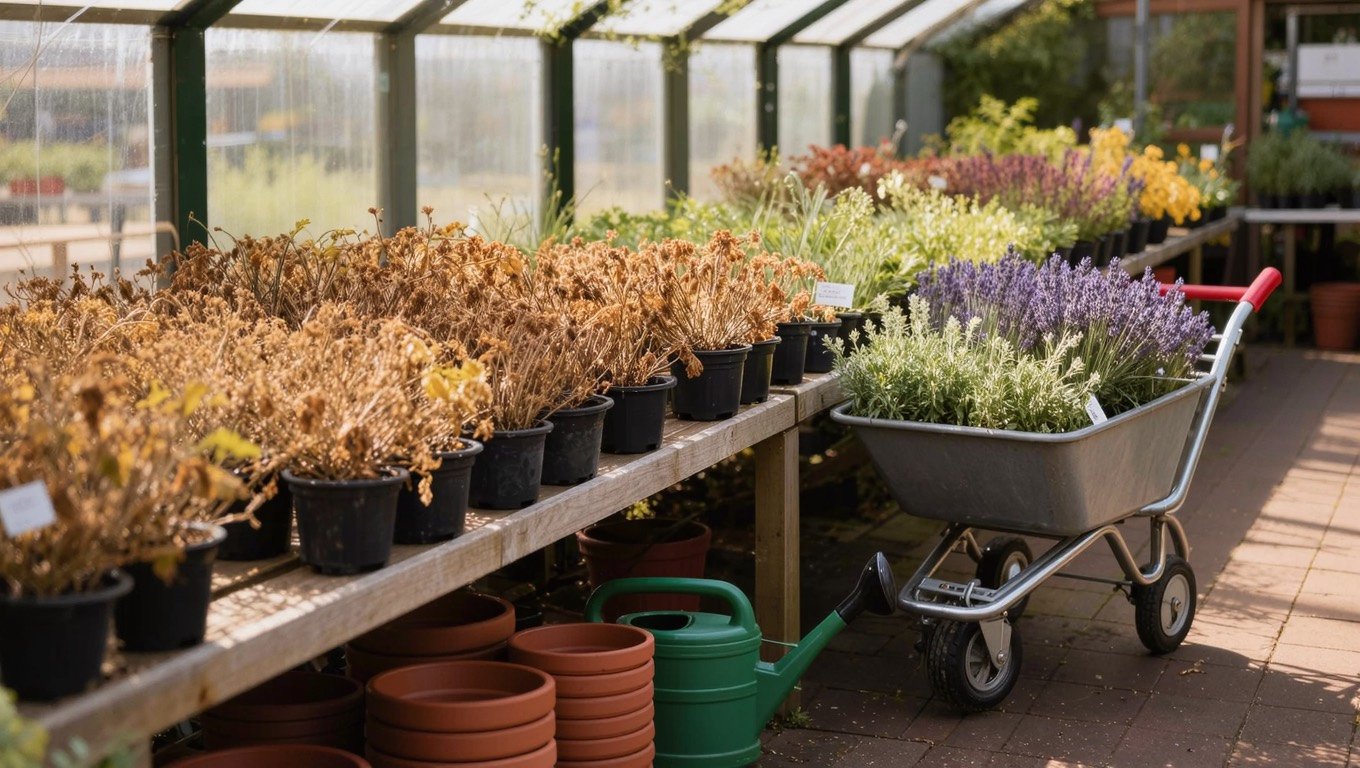
- •1. Containers and hanging baskets. No root run, small soil volume, dead in 48 hours. Water daily, ideally moved into shade first.
- •2. Anything planted in the last 12 months. Roots are not established; give each plant 10 litres twice a week at the base. A dead young tree costs £30 to £150 to replace.
- •3. Vegetables in flower or fruiting. Courgettes, beans and tomatoes abort their crop without water at this stage.
- •4. Herbaceous borders, selectively. Water only what you value; most perennials slump, look dreadful, and return next spring.
- •5. Established shrubs and trees, three-plus years in the ground. Roots run deep; almost always leave them alone.
- •6. The lawn. Bottom of the list. Let it brown.
Let the lawn go: it is designed to survive this
A browned lawn is dormant, not dead. Grass crowns shut down in drought and regrow within two to three weeks of proper autumn rain. Watering even a modest 50 square metre lawn takes around 500 litres a week, exactly the water your containers, veg and young trees need. Keep off it, raise the mower blade if you cut at all, and do not feed it. Patches still brown in October are usually a different problem; see our guide to brown patches in lawns, and the lawn watering guide for once restrictions lift.
Mulch, shade and making every litre count
Technique matters more than volume. Water before 8am or after 7pm, straight onto the soil at the base, and go deep and infrequent: 10 litres per square metre once or twice a week trains roots downward, while a nightly sprinkle keeps them at the surface where they cook. A sunk pot or cut-down bottle beside thirsty plants gets water to the roots instead of running off baked soil.
Then lock the moisture in. A 5 to 7cm mulch of bark, compost or dried grass clippings over damp soil dramatically cuts evaporation; coverage rates are in our mulch guide. Stop feeding and stop pruning: fertiliser pushes soft, thirsty growth and its salts scorch roots in dry soil, while pruning triggers regrowth the plant cannot support. Shade netting of 40 to 50% pegged over veg beds on canes drops leaf temperature by several degrees on a 32C day.
What the kit costs, and when to call someone in
None of this is expensive against replacing plants. A 210 litre water butt runs £35 to £80 at B&Q or Wickes, plus £10 to £15 for a downpipe diverter, and one decent thunderstorm off an average roof fills it; see our guide to collecting rainwater. A bulk bag of bark mulch is £70 to £110 and covers 10 to 12 square metres at 6cm deep. Shade netting is £10 to £25 for a 2m by 5m piece, and a grey-water siphon pump for the bath is under £15. Longer term, lavender, salvias, sedums, cistus and verbena bonariensis shrug off weeks without rain once established; autumn is the time to plant them, and our water-saving landscaping ideas cover redesigning borders so the next drought is boring instead of heartbreaking.
Almost everything here is DIY, with two exceptions. A mature tree showing crown-wide early leaf drop, cracking bark or branch dieback near a house needs a qualified arborist, not a hose; stressed trees shed limbs, and a £75 to £150 survey is cheap against remedial work later. And while drip line from a butt is simple DIY, any irrigation connected to mains plumbing needs backflow protection, typically a double check valve, under the Water Supply (Water Fittings) Regulations 1999. You are liable if it is fitted wrongly, so use a plumber who will notify your water company where required.
Drought FAQs
Can I use bath and washing-up water? Yes. Ornamentals tolerate normal soaps fine short term. Let hot water cool, pour it on soil not leaves, skip anything with bleach, and keep grey water off crops you eat raw.
Should I plant anything now? No. Anything planted into hot, dry August soil will struggle however much you water it. Hold plants in pots in shade until September, when soil is warm, rain returns and roots establish fast.
Will established shrubs die? Very rarely. Hydrangeas, viburnums and acers will look terrible and may skip flowering next year, but mature roots reach moisture you cannot see. Water only if they fail the 7am wilt test twice in a week.
When does it end? Flash droughts break with sustained autumn rain, not one storm. Keep butts connected, leave mulch down, and note what survived untouched: that list is your free planting plan for a drought-proof garden.
Found this useful?
There's plenty more — hundreds of guides and honestly-tested product reviews for every corner of your home.
Browse All Guides