Energy & Insulation · 6 min read · 17 July 2026
Water Saving Landscaping Ideas for Real UK Gardens and Budgets
Most gardens that suffer in a dry July are not short of rainfall — they are losing it. Work out which way yours loses water, and the right fixes become obvious and much cheaper.
By the Nims Casa editorial team — written from professional cleaning experience and checked against our editorial standards.
Most of England and Wales gets 700-1,200mm of rain a year. That is plenty. Gardens that collapse in a dry fortnight are not short of water arriving — they lose it one of three ways: down through open sand or chalk, off the top of baked clay, or up out of a lawn and a row of terracotta pots.
Which of those is happening decides which ideas below are worth your money. Buy gravel and Mediterranean planting for a garden whose real problem is compaction and you have spent £400 to change nothing. So the first job is not shopping — it is twenty minutes with a spade and a bucket.
Start with a percolation test, not a plant list
This is what a drainage contractor does before quoting, and it costs nothing. Do it in a bed you care about, not the one good patch by the back door.
- •Dig a hole 30cm across and 30cm deep in the middle of the problem area.
- •Fill it and let it drain completely — that wets the surrounding soil so the reading is honest. Now fill it again to the brim and note the clock.
- •Under 20 minutes to empty: free-draining sand, gravel or chalk. Water is past the roots before plants can use it.
- •20 minutes to 4 hours: loam. The soil is fine, so the problem is what you planted or how you water.
- •Over 4 hours, or still holding water next morning: compacted clay. It waterlogs in winter and seals over in July, shedding rain like a roof.
- •Then check exposure: a south or west-facing border backed by brick runs 4-6°C hotter than the open plot and radiates heat after dusk.
Match the idea to the diagnosis
Four common results and what helps each. Read the one matching your test — the others will waste your money.
- •Free-draining sand or chalk: the enemy is speed, not shortage. Two 50-litre barrows of well-rotted compost per square metre, forked in, then 75mm of bark on top.
- •Compacted clay: grit alone does nothing. Break the pan with a fork to a spade's depth, work in compost, then hold water on the surface long enough to soak in using shallow swales or a sunken bed. If the plot sits wet all winter, fix that first — see improving garden drainage.
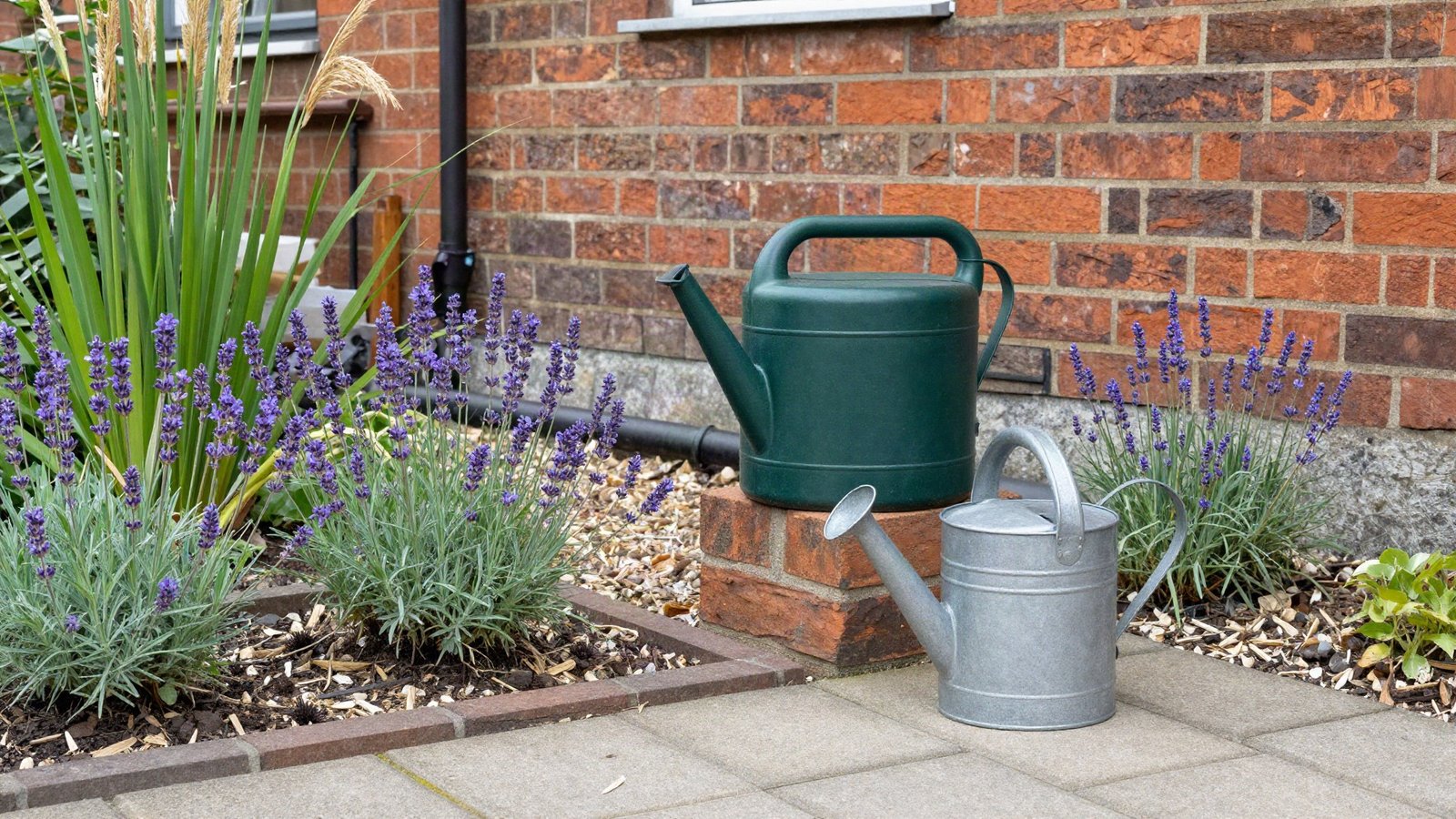
- •Hot, wall-backed borders: plant species that expect it — lavender 'Hidcote', rosemary, santolina, Salvia yangii, Stipa tenuissima, sedum, cistus. Mulch with 40mm gravel, not bark, so crowns stay dry through a British winter.
- •Soil fine, routine wrong: the most common result of all. Daily five-minute sprinkles train roots into the top 30mm, where they cook. One long soak a week beats seven short ones — how long to water a lawn has the timings.
Under £100: the biggest saving per pound
Nothing here needs a contractor and it pays back inside two summers. Metered water runs £1.80-£2.60 per 1,000 litres in 2026 and an oscillating sprinkler moves 500-1,000 litres an hour, so a dry July of casual hosepipe use costs £60-£120 unnoticed.
- •A 200-litre water butt, diverter and stand: £35-£70, or £25-£35 through the subsidised schemes most UK water companies still run. A 3m x 8m roof slope fills it from about 9mm of rain, and linking two butts with a £10 connector kit is the upgrade almost everyone should make — how to collect rainwater covers the plumbing.
- •Mulch 75mm deep over damp soil in March or October: a bulk bag of bark is £45-£75 delivered and cuts evaporation sharply.
- •Group containers out of afternoon sun and pot up one size: a 30cm pot dries out in a day in August, a 45cm pot lasts three.
- •Raise the mower to 50mm and stop watering the lawn. UK lawns go dormant, not dead, and green up within a fortnight of proper rain.
£100-£800: changing how the garden holds water
Here you stop economising on water and start redesigning for it. Budget honestly — a gravel garden looks cheap until the skip appears on the invoice.
- •Drip irrigation on a tap timer: £70-£160 of kit covers 40-50m² of border and uses 50-70% less than a sprinkler for the same plant health. Targeted drip systems with a timer and pressure-reducing valve are usually exempt from hosepipe bans, unlike handheld hoses — see installing a drip irrigation system.
- •A rain garden: a shallow saucer 150-200mm deep, sized at roughly 20% of the roof area feeding it, planted with iris, astilbe and carex. DIY cost £150-£400, and it takes downpipe overflow instead of the drain.
- •Gravel garden over a former lawn: £25-£40 per m² in materials, plus £180-£280 for a skip if the turf has to go.
- •Replanting a thirsty border: £12-£18 per plant, five per square metre. Plant in autumn, water hard for one season, then leave it.
£800 and up: tanks, permeable paving and greywater
Be honest about the arithmetic. An underground tank saving 15,000 litres a year at £2.20 per 1,000 litres saves about £33 annually — that is drought insurance and a way to keep a garden alive through a Temporary Use Ban, not an investment. Permeable paving is the exception that earns its keep: since 2008 in England, laying over five square metres of impermeable surface in a front garden needs planning permission unless water drains to a permeable area.
- •Above-ground tank with pump, garden use only, 1,000-1,500 litres: £900-£1,800 fitted.
- •Underground tank, 3,000-5,000 litres, garden and WC supply: £2,400-£4,800 installed, with site access driving most of the variation — rainwater harvesting costs breaks it down.
- •Permeable block paving: £95-£145 per m² laid, or £45-£70 per m² in materials if you build the sub-base.
- •Greywater diversion from a bath or shower: £1,200-£3,000. It falls under Building Regulations Part G and BS 8525, must not cross-connect to mains, and untreated greywater has to be used within 24 hours.
Small gardens, courtyards and terraced front plots
Small gardens have one advantage: wet and dry spots sit metres apart, so you can plant to them precisely instead of treating the plot as one. The north-facing strip beside the fence stays damp all summer — ferns, hostas and hardy geraniums go there and need no watering after year one. In a courtyard the walls are the problem, since render and pale brick bounce heat into pots and dry them by lunchtime. Move containers 300mm off the wall and use glazed or plastic pots rather than terracotta. A slimline 100-litre butt fits down a side return where a round one will not.
Where the money actually goes
On any scheme over £500, materials rarely dominate. A typical 30m² gravel-garden conversion runs roughly 20% plants, 25% aggregate and membrane, 15% compost, 15% skip and waste, and 25% labour. Groundwork and disposal push quotes up, not the pretty bits.
The honest ranking of value is mulch, then a water butt, then watering habits, then plant choice, then irrigation kit, and only then tanks and paving. If you do one thing this year, mulch every bare bed 75mm deep in autumn while the soil is wet: under £80 for most gardens, and more effect than £2,000 of hardware. Then look indoors — reducing water use at home.
Found this useful?
There's plenty more — hundreds of guides and honestly-tested product reviews for every corner of your home.
Browse All Guides