DIY & Maintenance · 5 min read · 6 July 2026
How to Secure a Sliding Glass Door: A UK Step-by-Step Guide
Sliding patio doors are the easiest entry point in most UK homes, and the fixes cost less than a takeaway. Here is exactly what we fit, in what order, and when to stop and call a professional.
By the Nims Casa editorial team — written from professional cleaning experience and checked against our editorial standards.
We maintain homes for a living, and the sliding patio door is the weakness we flag to clients more than any other. It sits at the back of the house out of sight, it is mostly glass, and on doors fitted before the mid-2000s the panel can often be lifted clean out of its track in under a minute. Burglars rarely smash glass, because noise gets them caught; they lift, lever or slip the latch instead.
The good news is that securing a sliding glass door properly is one of the cheapest security jobs in the house. Budget £25 to £80 for the mechanical fixes, one to two hours of basic DIY, and another £100 to £250 if you want a smart security layer on top. Here is the full method.
Know What You Are Defending Against
Three attacks account for nearly every sliding door break-in. First, the lift: older aluminium and early uPVC sliders sit loose in their tracks, so the panel can be raised 10-15 mm and swung out, even while locked. Second, the lever: a flat bar in the gap between panel and frame pops a worn single-point latch with little force. Third, the slip: a thin blade through the gap flicks a tired latch back.
Test yours tonight: lock it, grip the handle and the trailing edge, and lift firmly while pulling outward. If the panel rises more than about 6 mm or rocks in the frame, everything below fixes it.
Tools, Materials, Time and Cost
If you can drill a pilot hole and drive a screw, you can do all of this. Allow 60 to 90 minutes for the mechanical work. Everything listed is stocked by Screwfix, Toolstation and B&Q.
- •Drill with 2 mm and 3 mm HSS bits, plus a screwdriver and tape measure
- •Sash jammers, two per sliding panel: £8-£12 a pair
- •Patio door security bar, or a length of 25 mm dowel cut to fit: £10-£20 (the dowel is nearly free)
- •Pan-head self-tapping screws for anti-lift protection: under £3
- •Security window film, 100 micron or thicker, if your glass is not laminated: £15-£25 per square metre
- •Silicone spray lubricant for the finish: £5
- •Skill level: beginner. Total cost: £25-£80. Time: 1-2 hours
Step by Step: The Mechanical Fixes
Do these in order. Steps 1 and 2 alone defeat the two most common attacks.
- •1. Stop the lift. Open the door, then drive three pan-head screws into the upper track, spaced evenly, leaving each head proud so the panel clears it by 2-3 mm when sliding. The door still glides, but it can no longer be lifted out. This is the single highest-value fix on the list.
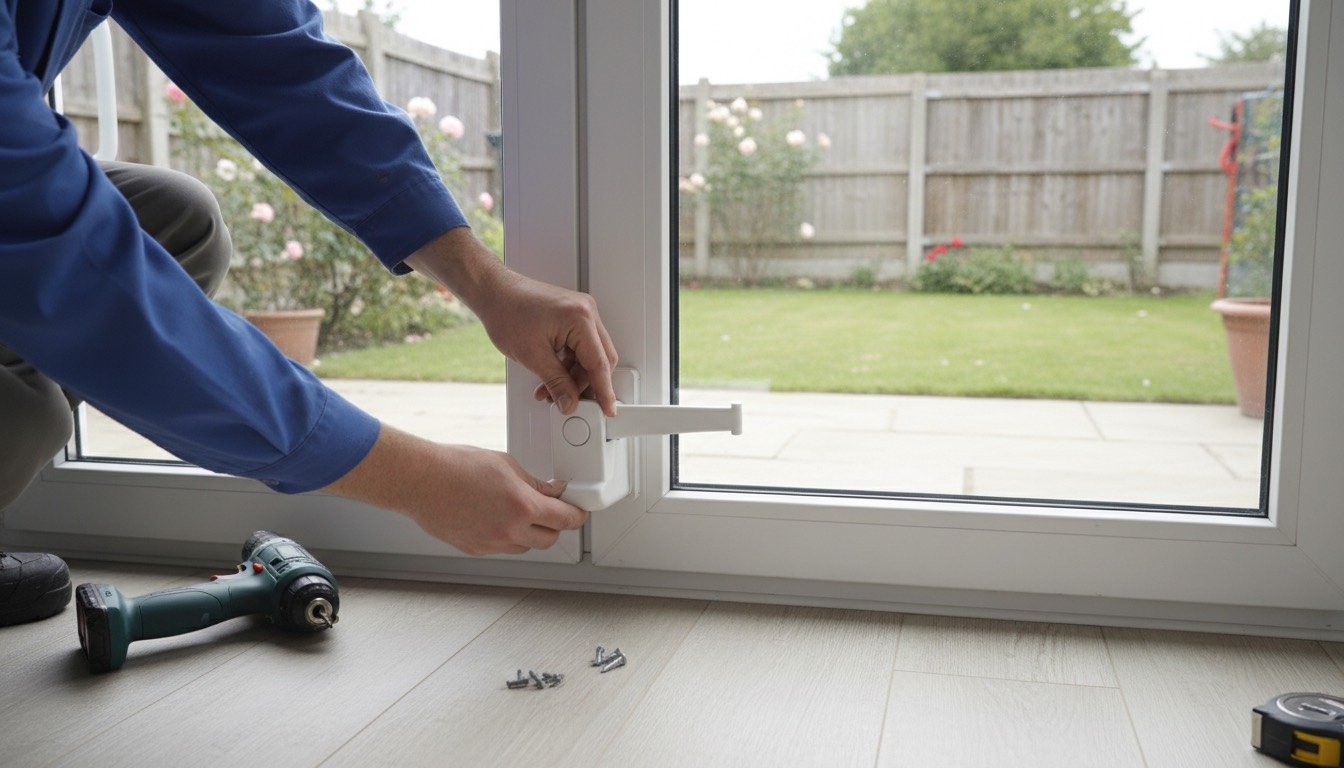
- •2. Block the track. Cut the security bar or dowel to the gap between closed panel and frame, and drop it into the bottom track. Even with the latch defeated, the door physically cannot slide open. Take it out before you open up each morning.
- •3. Fit sash jammers. Screw one to the frame near the top of the sliding panel and one near the bottom, so the swing arms bar the panel from moving. Drill 2 mm pilot holes first and keep every fixing at least 25 mm away from the glazing line so you never touch the sealed glass unit.
- •4. Deal with a worn latch. If the handle is floppy or only latches on the second pull, the mechanism is done. A replacement handle and latch set is £15-£40 and fits with two screws on most uPVC doors.
- •5. Add security film if the glass is single-glazed or old double glazing without laminated panes. Applied to the inside face, 100-micron film holds the pane together under impact, turning a quick smash into a slow, loud struggle.
- •6. Adjust the rollers. Two screws in the bottom edge of the panel raise or lower each roller. Set them so the door closes snugly against the seals with no rattle; a tightly seated door is far harder to lever. If it drags or judders, our guide to sticking and dragging doors covers the same adjustment.
Add a Smart Layer: Sensors, Cameras and Automation
An honest note on smart locks: most are built for hinged doors, and genuine smart options for UK sliding patio doors are rare, so the smarter money goes on detection. A contact sensor on the sliding panel (£15-£25) paired with a smart hub (£30-£70) alerts your phone the second the door opens and can trigger a siren. Add a security camera covering the patio, £40-£120 for a decent 2K model with infrared, mounted at first-floor height, out of casual reach.
A video doorbell at the front finishes the job, because most burglars knock first to check the house is empty, then walk round the back. Set your home automation to run lamps on a dusk schedule when you are away. One warning from experience: the back of the house is where Wi-Fi goes to die, and a camera that drops offline is decoration, so fix the dead zone with mesh Wi-Fi before you buy cameras.
Maintenance: A Secure Door Is a Maintained Door
Every security fix above depends on the door sitting tight in its frame, and that is a maintenance job. Vacuum the bottom track every couple of months, because grit chews the rollers and a sagging door defeats its own locks. Lubricate rollers and the latch twice a year with silicone spray, never oil, which attracts the very grit you just removed. Check the brush seals and gaskets each autumn; perished seals let in draughts and give a lever bar room to work, and our draught-proofing guide shows the £10 replacements.
Clean the glass properly while you are there so you notice new damage or tool marks; the method in our streak-free window cleaning guide takes minutes. Repeat the lift test every six months and re-tighten the sash jammers, which work loose with daily use.
DIY vs Pro: When to Stop
Everything above is safe DIY. Stop and call someone when the problem is structural. If the panel still lifts after anti-lift screws, the track or frame is worn beyond adjustment. If the frame is spread, rotten or cracked, no bolt-on lock fixes it. If a multi-point locking mechanism has failed, a locksmith will replace the gearbox for £80-£150, far cheaper than a new door. And check your home insurance wording: many UK policies require key-operated locks on accessible doors and windows, and claims can be reduced where they were missing or unused.
A full replacement sliding door, tested to PAS 24 with laminated glass and a multi-point lock, runs £1,200-£2,500 fitted by a FENSA or CERTASS registered installer, and is the right call for any door from the 1980s or earlier. For every other afternoon-sized job in the house, our DIY and maintenance guides work through the list.
Found this useful?
There's plenty more — hundreds of guides and honestly-tested product reviews for every corner of your home.
Browse All Guides