DIY & Maintenance · 5 min read · 22 May 2026
Hurricane Prep Checklist for UK Homes: Two Weeks, 72 Hours and Landfall Day
Ex-hurricanes hit the UK as named storms every autumn. Our timeline checklist covers the jobs to do two weeks out, 72 hours out and on landfall day itself.
By the Nims Casa editorial team — written from professional cleaning experience and checked against our editorial standards.
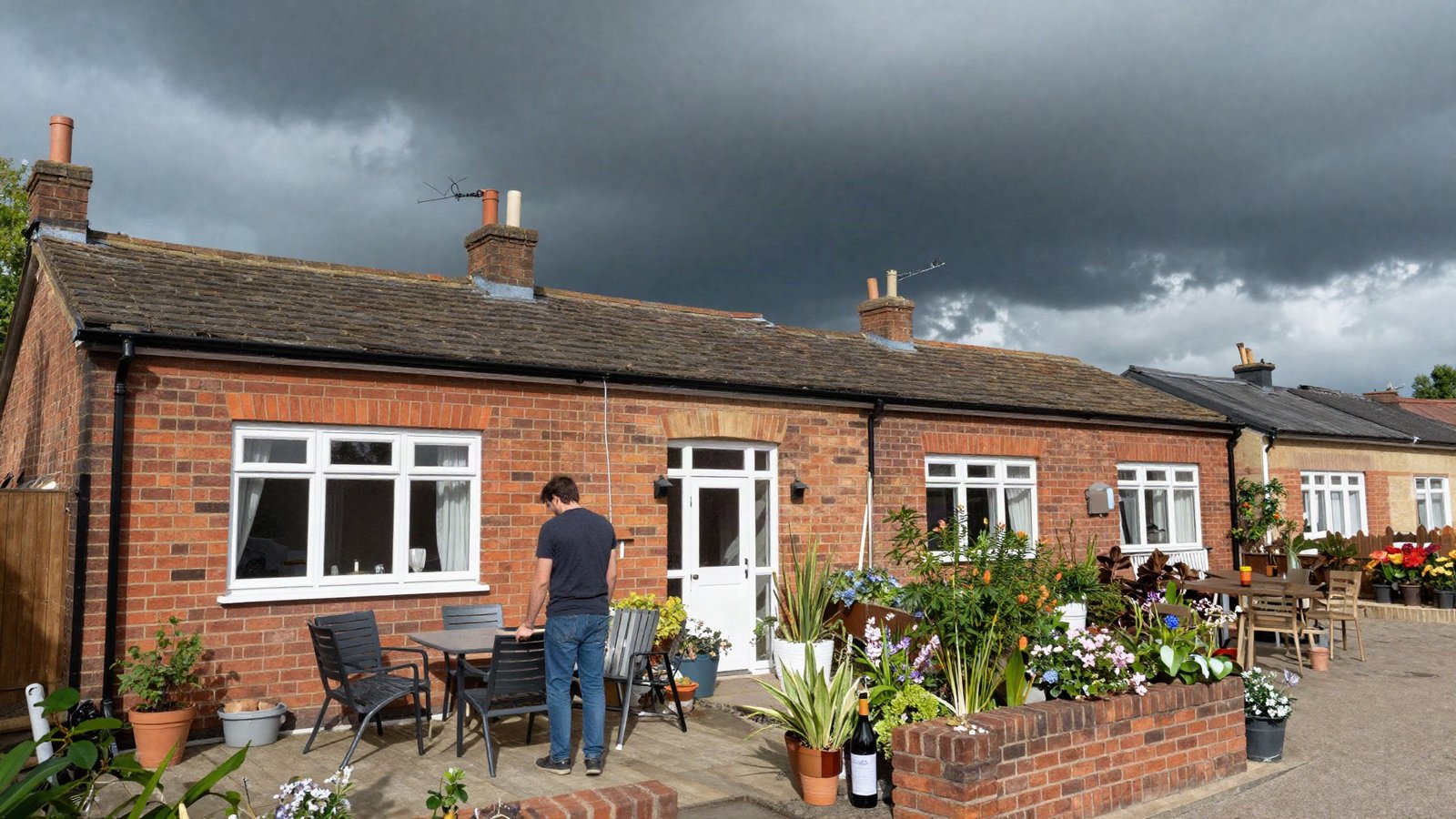
Britain never takes a direct hurricane hit — Atlantic storms technically weaken into 'ex-hurricanes' before they reach us — but tell that to anyone who was outside when Storm Eunice gusted to 122 mph at the Needles in February 2022. From late August through winter, hurricane remnants arrive here as named storms carrying 70–100 mph winds and a month's rain inside 48 hours.
We maintain and clean homes for a living, and every storm season brings the same preventable damage: gutters that dumped water into cavity walls, fence panels through greenhouse glass, trampolines two gardens over. This hurricane preparedness checklist works backwards from the day the storm lands — two weeks out, 72 hours out, and landfall day itself — because each stage has jobs that cannot be done later.
Two Weeks Out: Fix What the Wind Will Find
The moment the Met Office names a storm, you will not get a roofer. The two-week window — realistically, any calm fortnight between September and March — is for jobs that need dry weather, daylight or a tradesperson.
- •Walk the roofline with binoculars. Slipped tiles, loose ridge caps and lifting felt on flat roofs are what 80 mph gusts exploit first. A tile refixed now costs £80–150; a stripped roof section costs thousands.
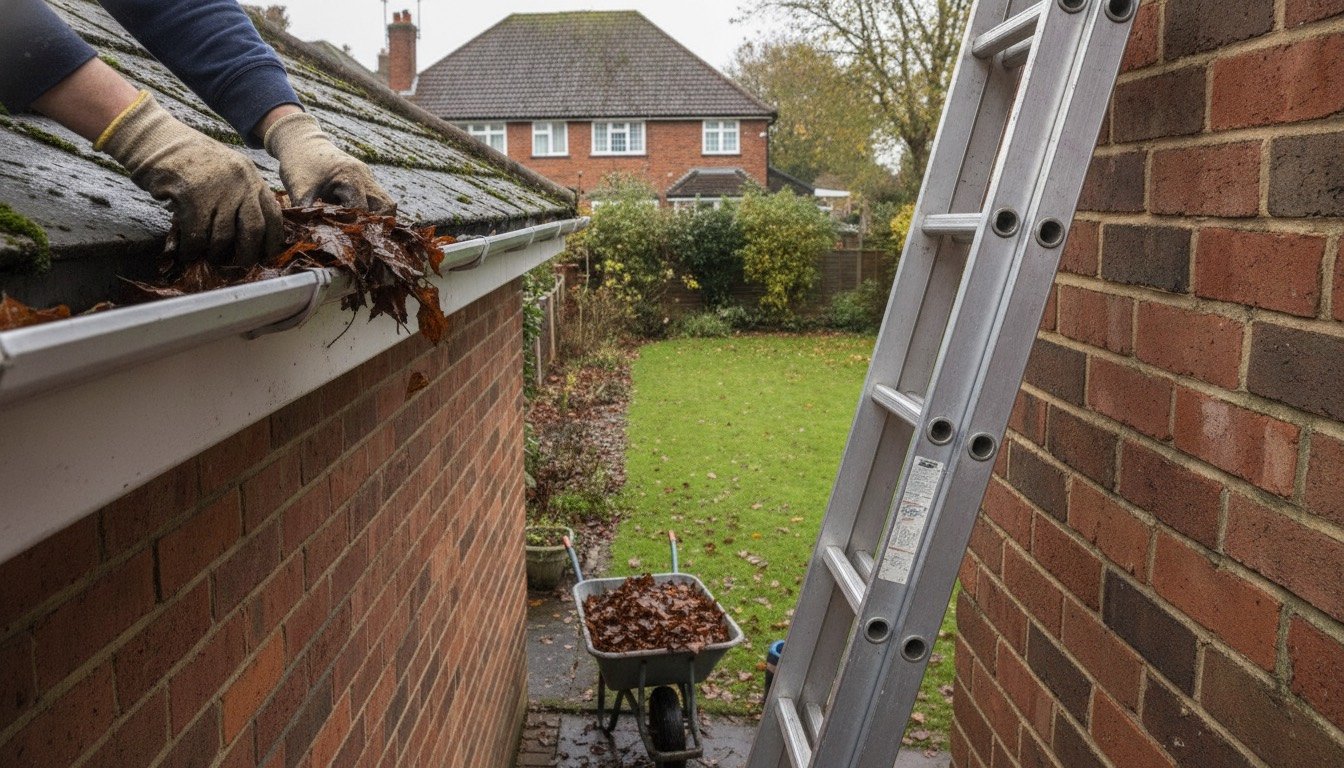
- •Clear gutters and downpipes. Blocked gutters overflow against brickwork exactly when the rain turns horizontal — our gutter cleaning and maintenance guide covers doing it safely.
- •Rock every fence post. Rotten timber posts snap in the first serious gust; repair with concrete spurs (£15–20 each) while the ground is workable.
- •Prune dead or overhanging branches above the roof, car or phone line. For large limbs, book a tree surgeon now — availability vanishes once warnings go out.
- •Dig out your insurance policy, confirm storm and flood cover, save the claims line, and photograph every room and elevation as a before record.
- •In a flood-risk postcode? Register for the Environment Agency's free flood warnings and buy airbrick covers (£15–20 a pair) and door barriers before the panic-buying starts.
72 Hours Out: Secure, Charge and Stock Up
Three days out, the forecast track is reliable enough to act on. An amber or red warning means this list stops being optional.
- •Bring in or tie down anything under roughly 20 kg: pots, bins, parasols, cushions. Anchor trampolines with ground stakes or flip and weight them — they are Britain's favourite storm projectile. Our garden furniture care guide covers proper storage.
- •Charge everything: phones, power banks (a 20,000 mAh bank runs one phone four to five days), torches and rechargeable lamps.
- •Fill water containers — allow 3 litres per person per day for three days. Burst mains and contaminated supplies are common after flooding.
- •Freeze plastic bottles of water. They keep the freezer colder in a power cut and thaw into drinking water.
- •Fuel the car and park it clear of trees; withdraw some cash in case card terminals go down with the power.
- •Find your stopcock, fuse box and gas shut-off now — midnight in a blackout is no time to go searching.
Hurricane Supplies: The UK Kit List
Keep the kit in one labelled box, not scattered through the house. Starting from nothing it costs £60–90, and most of it lasts years:
- •One head torch per person plus spare batteries (£8–12 each) — they beat hand torches because both hands stay free
- •Battery or wind-up radio for forecasts if the mobile network drops
- •First aid kit, a week of any prescription medicines, paracetamol
- •Camping gas stove and cartridges (£25–35) for hot food — use it with ventilation, never under wall cabinets
- •Long-life food needing no cooking: tinned fish, beans, UHT milk, biscuits — plus a manual tin opener
- •Bin bags, gaffer tape and a cheap tarpaulin (£10–15) for emergency patching of broken glass or slipped tiles
- •A written card of key numbers: 105 for power cuts, Floodline 0345 988 1188, and your insurer's claims line
How to Board Windows — and Whether You Should
Boarding windows is routine in Florida; in the UK it earns its keep only on exposed coastal properties, large single-glazed panes, greenhouses and conservatories facing the south-westerly. Modern double glazing resists wind-blown debris far better than most people fear, and a badly fixed board itself becomes a projectile.
If you do board up: use 18 mm OSB3 or exterior-grade plywood (£25–30 per 2440 × 1220 mm sheet at Wickes, B&Q or Jewson), cut to overlap the window reveal by at least 50 mm on every side. Screw — never nail — into the surrounding masonry or structural timber using 100 mm frame fixings at 300 mm centres. Do not screw into uPVC frames; they crack and the fixing pulls out. Label each board by window and store them flat: cut once, reuse for a decade. For deeply recessed windows, wedge the board inside the reveal with timber battens instead. If drilling is not an option, anti-shatter film will not stop debris but does hold broken glass together — a genuine injury reduction for £5.
Landfall Day: While It Blows
Once gusts pass about 60 mph, outdoor work is over. No fence panel is worth a head injury from airborne slate — leave it, film it for the insurer, fix it after.
- •Keep away from windows on the windward side; if the peak arrives overnight, sleep in a rear room.
- •Never drive through flood water — 30 cm of moving water floats most cars, and it is the leading cause of UK storm deaths.
- •Keep fridge and freezer doors shut in a power cut: a full freezer holds temperature roughly 48 hours, a fridge about four.
- •Report power cuts on 105 — save 999 for lines that are down and arcing.
- •Phone elderly neighbours rather than visiting, and wedge letterboxes and cat flaps on the windward side — pressure differences slam them for hours.
After the Storm: Check, Photograph, Dry Out
Wait for the genuine all-clear — the back half of a rotating storm often arrives after a deceptive lull. Then photograph every bit of damage before touching anything; insurers settle faster on time-stamped evidence. Torch-check the loft for daylight through the roof and fresh damp patches, and inspect gutters, ridge lines and aerials from ground level.
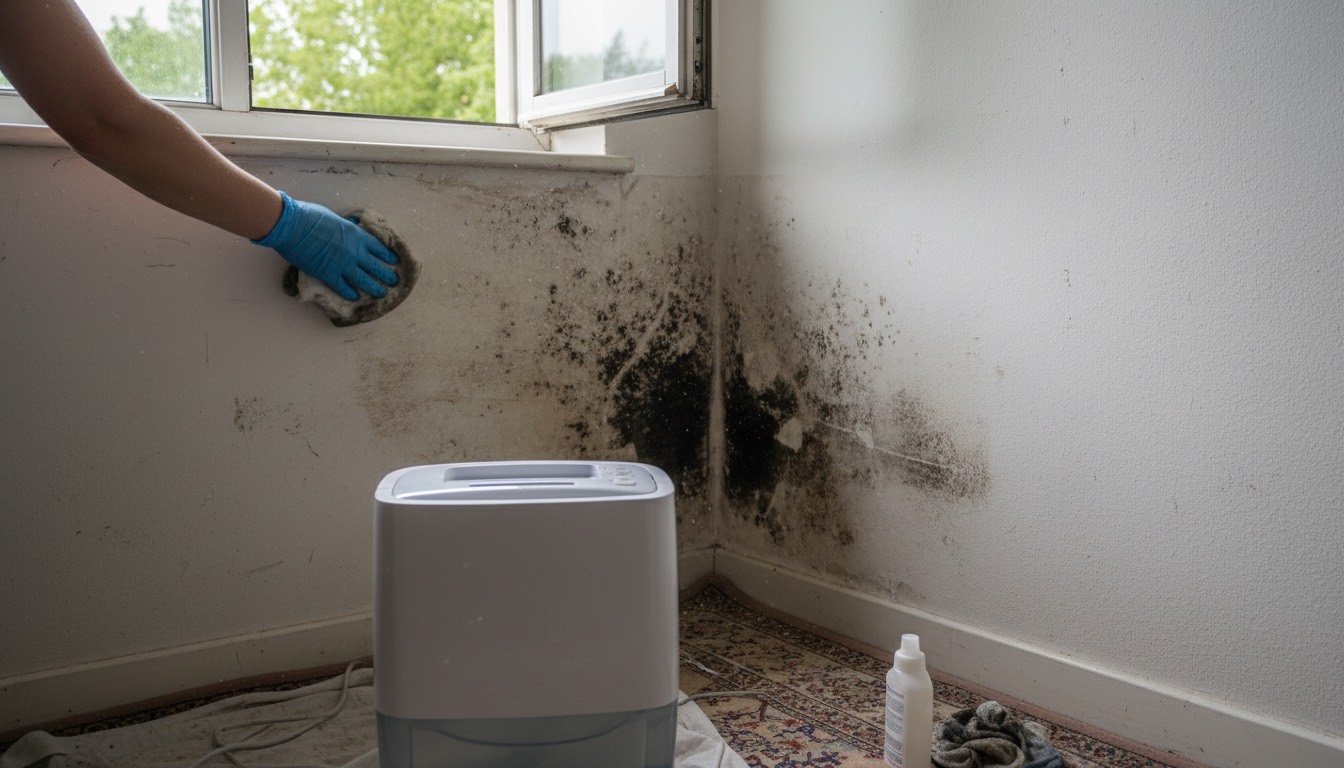
If water got in, speed is everything. Carpets and underlay soaked by rainwater are usually salvageable if dried within 48 hours — professional extraction such as our carpet cleaning service shifts litres where a hired domestic machine pulls cupfuls. Run a dehumidifier in affected rooms for at least a week (see our tested UK dehumidifier picks), and watch walls for tide marks or black spotting — if they appear, work through our guide to getting rid of damp and mould before repainting. Storm prep is unglamorous, but the £150 spent on the fortnight-out jobs is the cheapest insurance your house will ever carry.
Found this useful?
There's plenty more — hundreds of guides and honestly-tested product reviews for every corner of your home.
Browse All Guides