Tools & Workshop · 6 min read · 23 June 2026
Impact Driver vs Drill: Differences, Costs and Which One a UK Home Needs
One makes holes with control. The other drives screws with brute force and no manners at all. Knowing which is which saves you money, wrists and, in an old house, a fair bit of plaster.
By the Nims Casa editorial team — written from professional cleaning experience and checked against our editorial standards.
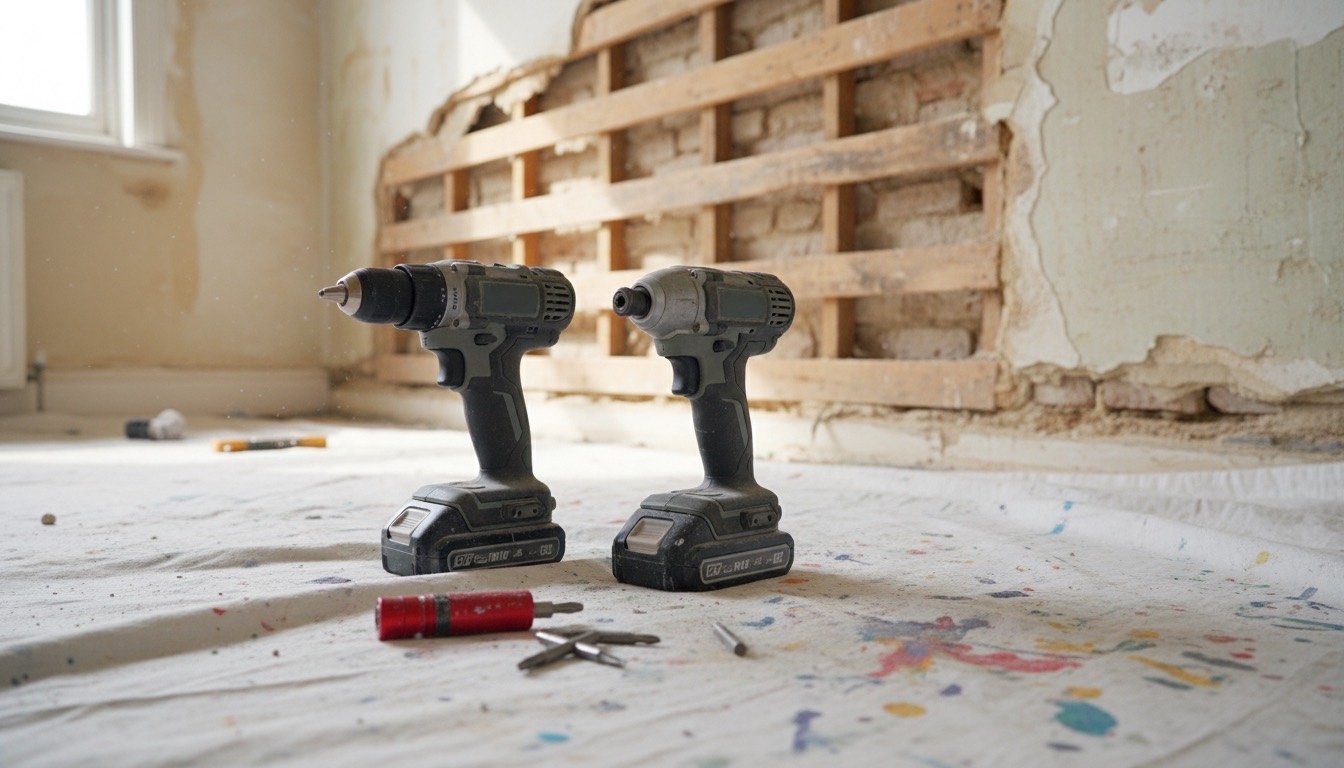
Walk onto any refurbishment job in Britain and you will see both tools on the same belt, running off the same batteries. That is not duplication. They do genuinely different work, and in a house built before the First World War the difference stops being academic and starts being expensive.
The short version: a combi drill makes holes and drives screws with control; an impact driver drives screws with enormous rotational force and does nothing else. Buy the drill first, and the impact driver the day you meet a 100mm decking screw or a joist of 1890s pitch pine.
How each tool actually works
A combi drill spins a chuck through a two-speed gearbox with a torque clutch in front of it. When the screw meets resistance the clutch slips and the drill stops driving — which is what stops you burying a screw through a cupboard door or shearing a brass fixing.
An impact driver has no clutch. It spins until it stalls, then a spring-loaded hammer strikes the anvil sideways, 3,000 to 3,900 times a minute — a rotational blow the screw feels and your wrist does not. That is why a 1.2kg tool out-drives a far heavier drill.
- •Chuck: combi takes a 13mm keyless chuck and any round or hex shank; impact driver accepts 1/4in hex bits only
- •Torque: a mid-range 18V combi gives 55-70Nm; the matching impact driver gives 170-200Nm
- •Clutch: combi has one, typically 1-21 plus drill and hammer; the impact driver has speed modes only
- •Masonry: combi drills have a hammer setting for brick and block; an impact driver cannot drill masonry
- •Size: combi 190-210mm and 1.5-1.9kg with a 4.0Ah battery; impact driver 115-135mm and 1.1-1.4kg
- •Noise: an impact driver under load runs 95-100 dB(A); a combi sits nearer 85
Performance: where each one wins
For holes, the drill wins by default. Twist bits, spade bits, hole saws and forstners have round shanks an impact driver's hex collet will not hold, and even hex-shank versions wander badly under impact. If you are buying one tool, that settles it; our pick of the current models is in the best cordless drill guide.
For screws, the impact driver wins by a distance. A 6 x 120mm structural screw into dry softwood takes about four seconds with no pilot hole. The same screw stalls a 55Nm combi, cams out and chews the PZ2 recess. On decking or fencing that turns a two-day job into an afternoon.
Its weakness is precision. No clutch means no stopping point, so it snaps 4mm brass screws, strips chipboard fixings and cracks a cabinet door face. Anything you would tighten by feel gets finished on the combi's clutch at 4 or 5, or by hand.
Old houses change the answer
Everything above assumes a modern house: cavity walls, plasterboard on dot-and-dab, studs at 400mm centres. Pre-1930s housing behaves nothing like that. Solid nine-inch walls have no cavity, so a fixing lands in soft handmade brick or, worse, in lime mortar that will not hold a plug under load. Go into the brick face rather than the perp joints, and use a 100mm frame fixing where a 50mm plug would do in a new build.
Lime plaster on riven lath is the real hazard. It is held on only by nibs squeezed through the gaps between laths, and hammer action shakes those nibs off the back. Switch the hammer off, run slowly in rotary mode and let the bit cut — vibrate a lath ceiling for thirty seconds and half a metre can come down. If you have already lost a patch, the method is in our guide to repairing old plaster walls.
Pre-1970s wiring predates safe-zone conventions: rubber or lead-sheathed cable can run diagonally, through a sash box void, or under lime plaster with no capping. Detectors are far less reliable on solid walls, so isolate the circuit at the consumer unit before drilling near a socket, switch or ceiling rose. Original brass sash ironmongery shears instantly under an impact driver — refit it by hand.
The impact driver earns its keep here on coach screws into seasoned oak or pitch pine, once pilot-drilled, and on rusted cast-iron rainwater fixings. Always pilot century-old timber: it splits along the grain without warning.
What each costs over ten years
Bought bare, an 18V combi runs £70-£130 and an impact driver £60-£110. Almost nobody should buy them that way — twin packs with two batteries, charger and case are where UK retailers price aggressively.
- •DIY-tier twin pack (Einhell Power X-Change, Ryobi ONE+, Bosch 18V green): £110-£170
- •Trade-tier twin pack (Makita, DeWalt, Erbauer EXT, Titan): £190-£290
- •Replacement 4.0-5.0Ah battery: £45-£90 — two per decade domestically, more if you are on the tools weekly
- •Bits and consumables: £15-£25 a year for impact-rated PZ2 bits, HSS twist drills and masonry bits
- •SDS-plus rotary hammer, near-essential for solid brick or a concrete lintel: £70-£160, once
- •Ten-year household total: roughly £320-£480 all in — about £3.50 a month
Bits, batteries and keeping them alive
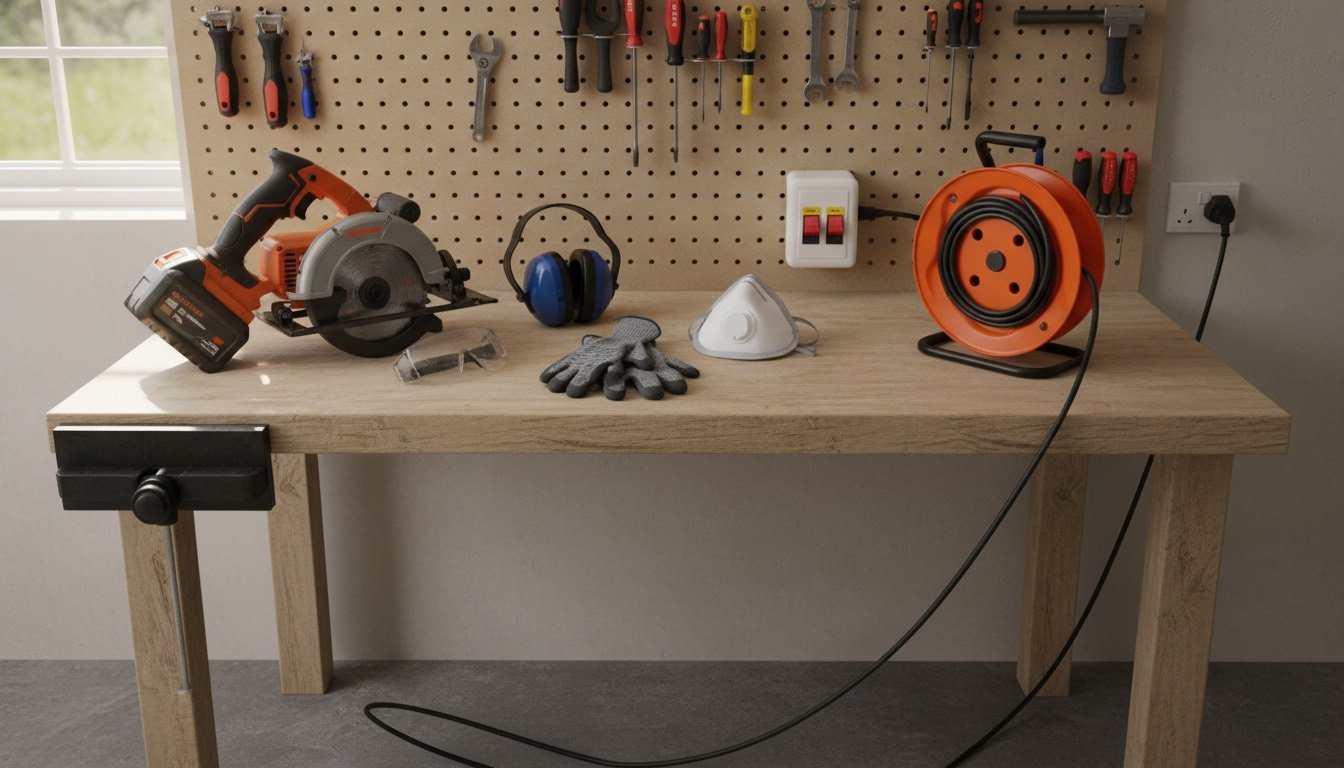
Buy impact-rated bits. Standard bits are hardened through and shatter under repeated blows, sometimes past your face; impact bits have a torsion zone that absorbs the shock. A 25-piece set is £12-£20 and lasts years. Eye and ear protection matter more here than with almost any other domestic tool — the rest of the habits are in our power tool safety checklist.
Lithium packs dislike heat and full discharge. Do not leave them in an unheated garage all winter and then charge at 2°C. Store near half charge, charge indoors, and blow the vents out with a dry brush every few months. If your work is mostly bench-based, see where mains power still wins in cordless vs corded tools.
Who each tool suits
If you use a tool a handful of times a year — curtain poles, flat-pack, a shelf, a smoke alarm — buy the combi drill and nothing else. It does 90 per cent of household jobs well and the rest slowly. Spending £60 to speed up four screws a year makes little sense when a minimum call-out, covered in our handyman rates guide, is £60-£90 anyway.
Add the impact driver for decking, fencing, garden rooms, loft boarding, heavy wall units, or repeated work in old hard timber — and straight away if you have wrist or shoulder trouble, because losing the reaction torque is a real physical benefit. Skip it for cabinetry and furniture assembly.
The verdict
The combi drill is the one you cannot do without: it is the only one of the two that makes holes, and holes are what most household jobs need. The impact driver is a specialist that turns the worst hour of a job into five minutes, and the wrong tool for anything requiring judgement.
For most UK households the honest answer is a mid-range 18V twin pack at £190-£290, on a battery platform you can still buy cells for in eight years. In a Victorian or Edwardian house, add an SDS-plus hammer for the solid walls. More on kitting out a workshop sits in our Tools & Workshop hub.
Found this useful?
There's plenty more — hundreds of guides and honestly-tested product reviews for every corner of your home.
Browse All Guides