Home Decor · 6 min read · 3 May 2026
Interior Painting Mistakes to Avoid (Ranked by What They Actually Cost)
Most bad paint jobs are not bad painting — they are bad decisions made in the first two hours. Here are the ones that cost the most, from lead dust to sheen, and the point where you should stop.
By the Nims Casa editorial team — written from professional cleaning experience and checked against our editorial standards.
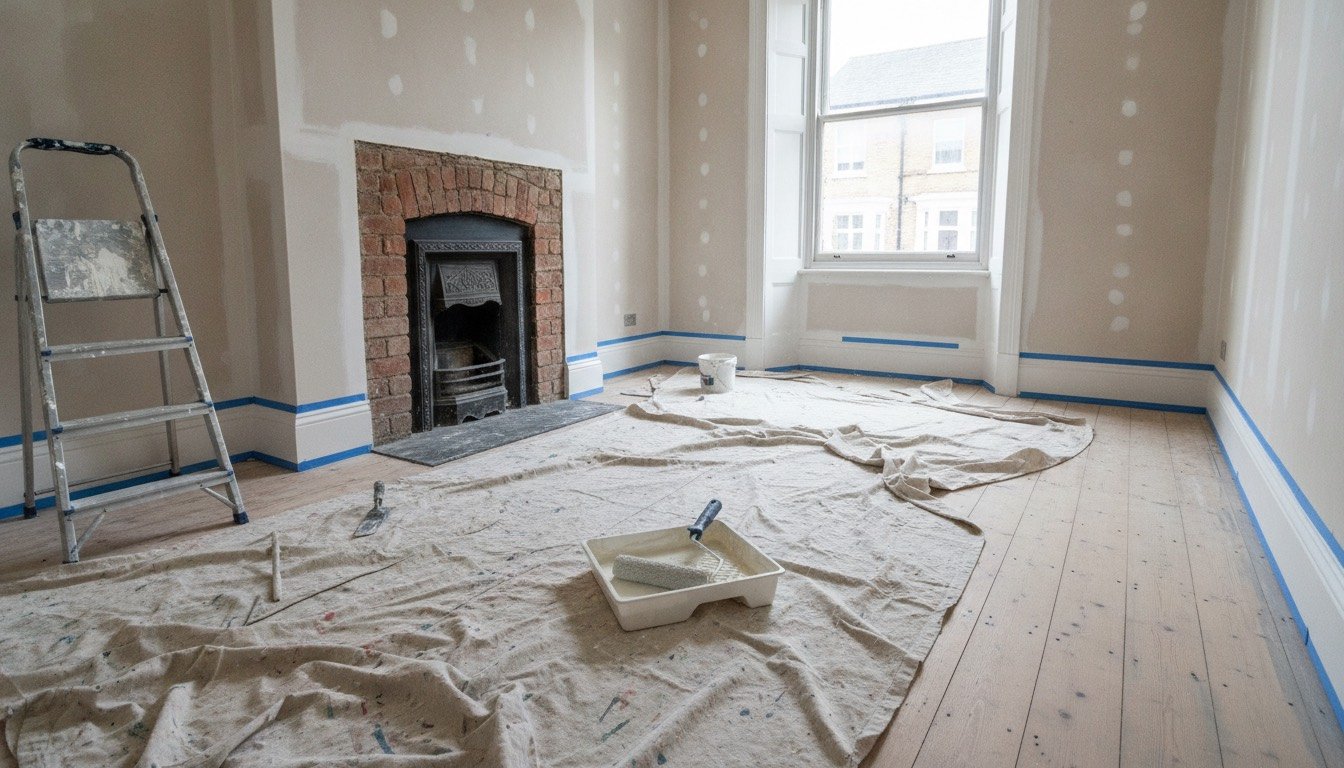
Nearly every repaint we get called back to fix went wrong before the tin was opened. Rolling is the easy part; it is the twenty minutes of judgement beforehand — what is under the old coat, whether the wall is dry, whether that surface should be matt at all — that decides whether the finish lasts eight years or eight months.
We have ranked the errors by consequence rather than frequency: a patchy corner is an annoyance, a hot air gun on 1970s gloss is a health problem. Several also touch UK regulation, which surprises people who assume a paintbrush is a consequence-free tool.
The Mistakes Ranked by Consequence
The top three can harm someone or create a legal problem; the rest cost money and time. Read it alongside our walkthrough on how to paint a room properly, which covers the order of work these mistakes break.
- •1. Dry-sanding or heat-stripping old paintwork in a pre-1992 home — creates lead dust and fume.
- •2. Painting over active damp or mould instead of finding the source. For a landlord, this is not a repair.
- •3. Pulling socket and switch faceplates off without isolating the circuit at the consumer unit.
- •4. Coating fire doors and their intumescent seals in a flat or HMO — paint build-up stops the seal expanding.
- •5. Putting standard emulsion on fresh plaster instead of a thinned mist coat; the film peels off in sheets.
- •6. Skipping sugar soap in kitchens, bathrooms and above radiators — grease and nicotine kill adhesion.
- •7. Filling without sealing the repairs, so every patch flashes as a dull halo in raking light.
- •8. Choosing sheen by preference rather than by how the room gets used.
- •9. Judging colour from a printed swatch under shop lighting instead of a sample on the wall.
- •10. Under-ordering, then finishing a wall from a different batch.
The Genuinely Dangerous Ones: Lead, Dust and Live Electrics
White lead paint was only banned for general domestic sale in the UK in 1992, and it lingers on skirtings, staircases, window boards and doors in anything decorated before then. The Control of Lead at Work Regulations 2002 force a professional decorator to assess and control it; a homeowner is not bound by those rules, but the lead does not know the difference. The failure mode is always the same — an orbital sander, or a hot air gun above roughly 450°C that vaporises lead into dust which settles into carpets and stays there.
The safe route is wet abrasion with 120-grit and a spray bottle, a chemical poultice stripper, or low-temperature infrared, with the room sheeted, an FFP3 mask on and children and pets out. Our lead paint safety guide for older houses covers testing and disposal.
Electrics are simpler, and people still get it wrong daily. Removing a faceplate to paint behind it is not notifiable work under Approved Document P in England and Wales, but it is live work unless you have killed the circuit at the consumer unit and proved dead with an approved voltage indicator. Never paint over a socket plate to save two minutes — it bridges into the terminal recess and seizes the screws.
Painting Over Damp and Mould — and the Landlord Trap
A tin marked anti-mould is a fungicide in a paint film, not a cure for water arriving from somewhere. Cover a black patch on a north-facing bedroom wall and it bleeds back within two winters, because the moisture load and the cold surface are both still there. Diagnose first: condensation appears on the coldest corners and window reveals, penetrating damp forms a discrete patch that darkens after rain, and rising damp stops at a tide line about a metre up. Our guide to damp and mould in UK homes sets out the tests that separate them.
If you let the property this becomes a legal point. The Homes (Fitness for Human Habitation) Act 2018 lets a tenant pursue damp and mould directly, and Awaab's Law imposes fixed investigation and repair timescales on social landlords. Painting over the evidence between tenancies is the most expensive shortcut here. Separately, in a listed building, internal redecoration can need listed building consent where it changes character — painting previously bare timber, for instance. Ring the conservation officer first.
Prep Shortcuts That Show Up Within Six Months
These happen for one reason: prep is unrewarding and the wall looks fine when you start. It does not look fine in low March sunlight.
- •New plaster: mist coat of contract matt thinned 15-20% with water, not a paint-and-primer product.
- •Fill deeper than feels necessary, dry fully, sand flush, then spot-prime — see how to fill cracks and holes invisibly.
- •Wash with sugar soap and rinse; a greasy kitchen wall rejects even good trade emulsion.
- •Paint above 10°C, ideally 15-20°C, humidity under 70%. A 12°C bedroom in February turns a four-hour recoat into ten.
- •Match roller nap to surface: 5-8mm on smooth plaster, 10-12mm on textured or previously papered walls.
- •Cut in and roll wall by wall to hold a wet edge, rather than cutting in the whole room first.
Sheen, Colour and Coverage: The Expensive Guesses
Sheen is a durability decision disguised as an aesthetic one. Flat matt looks beautiful and cannot be washed; in a hallway with a dog you repaint within two years. Washable matt or eggshell belongs on kitchen and bathroom walls, satinwood on woodwork, full gloss mostly on period joinery. If you are unsure, paint sheens explained room by room is the shortest route to a decision.
On quantity, budget 10-12 m² per litre on sealed plaster and 6-8 m² per litre on fresh or porous surfaces, then add 10%. A 4m x 3.5m bedroom with a 2.4m ceiling takes about 5L for two coats. Buy it in one go and check batch numbers match — a mid-wall batch change is visible in daylight even when the colour code is identical. To sanity-check what the job is worth, see our figures on interior painting costs.
When to Stop and Call a Decorator
Stop if you confirm lead across more than a door or two; a decorator working to the lead regulations has the extraction, sheeting and disposal route you do not. Stop if mould returns after a proper clean, because that is a building fault rather than a finish. Stop at ceilings over 3m, spindle staircases and anything needing a tower on a half-landing — the fall risk outweighs the £250 saved.
Otherwise, a decent decorator charges roughly £180-£260 a day across most of the UK and £250-£350 in London, and does a standard bedroom in one to one and a half days including prep. Get two quotes, ask what they mist new plaster with, and be wary of anyone pricing without seeing the walls.
Questions We Get Asked
Can I paint straight over wallpaper? Only if it is firmly stuck and not vinyl, and you accept that seams telegraph through. Emulsion re-wets old paste, so lifting is common.
How long before furniture goes back against the wall? Touch dry in two to four hours is not cured. Leave 48 hours in summer, up to a week in a cold room, or the paint marks.
Found this useful?
There's plenty more — hundreds of guides and honestly-tested product reviews for every corner of your home.
Browse All Guides