Laundry & Fabric Care · 6 min read · 14 August 2026
Laundry Stripping: Does the Viral Bathtub Soak Actually Work?
The grey bathwater looks damning, but a good chunk of it is loose dye and redeposited dirt. Here's what stripping genuinely fixes, what it ruins, and the recipe that works with UK ingredients.
By the Nims Casa editorial team — written from professional cleaning experience and checked against our editorial standards.
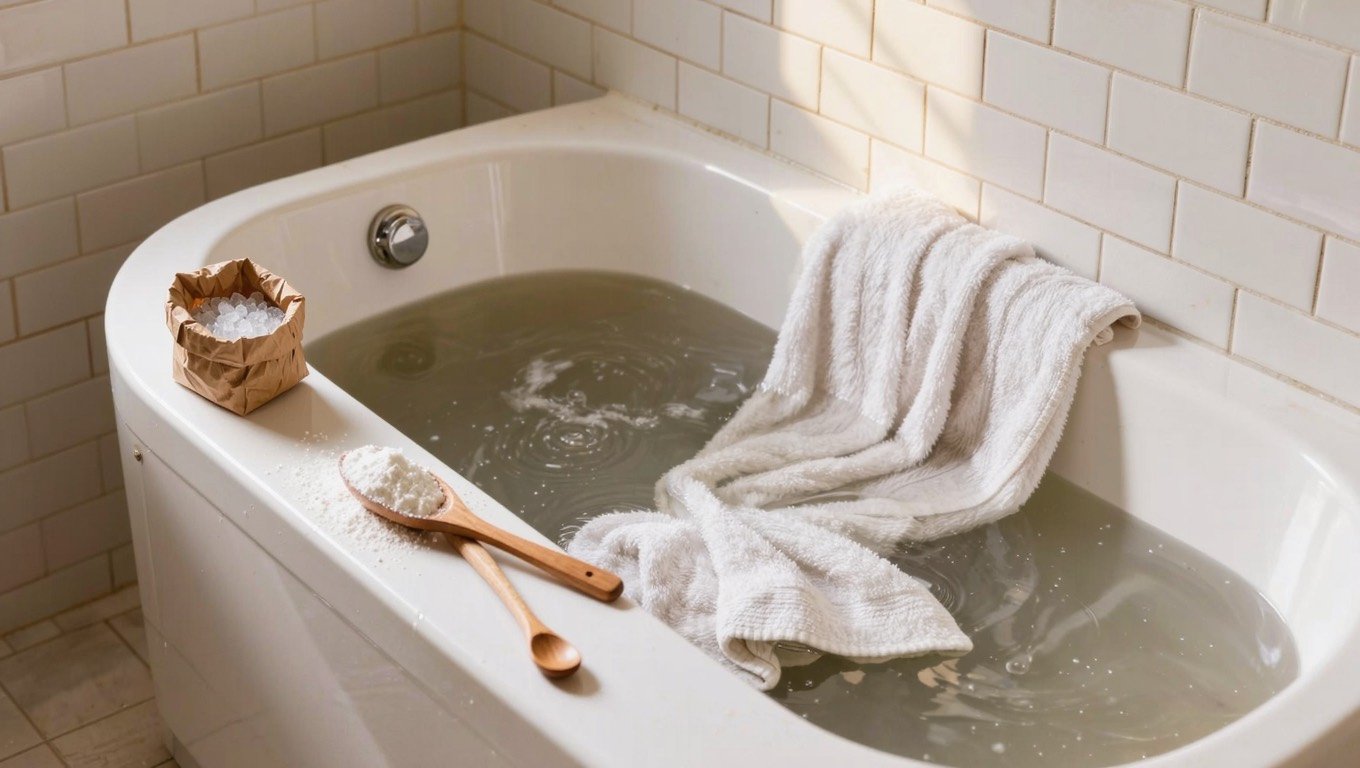
Somewhere on your feed right now, a bathtub of murky grey water is being held up as proof that a washing machine has been failing for years. Laundry stripping — a long, hot soak in borax, washing soda and detergent — has been one of the UK's breakout cleaning searches this summer, and the before-and-after shots are genuinely striking.
Here's the honest version from people who launder for a living: the soak does something real, but the grey water is not the damning evidence it looks like, and on the wrong fabrics stripping causes more damage than it removes. Before you fill the bath, work out which problem you actually have.
What Laundry Stripping Actually Is
Stripping is a deep soak for laundry that is already clean. You dissolve borax, washing soda and biological detergent in very hot water — around 50-60°C — submerge freshly washed towels or bedding, and leave them for four to six hours while the water cools. The extended contact time gives the alkalis and enzymes a chance to dissolve what quick machine cycles leave behind: detergent residue, fabric softener coating, body oils and hard-water minerals bonded to the fibres.
One UK-specific correction to the American recipes: you can't buy borax off the shelf here, and haven't been able to since 2010 under EU-derived chemical rules. What you want is 'borax substitute' — sodium sesquicarbonate — which Dri-Pak sells for around £2.50 for 500g in most supermarkets and hardware shops. It's slightly milder than true borax and works perfectly well for this job. 'Washing soda' is simply soda crystals, about £1.50 a kilo.
Diagnose First: Which Problem Do Your Towels Actually Have?
Stripping treats residue build-up. It does not fix a dirty machine, chronic under-dosing or dye transfer, and each of those looks superficially similar. Match your symptom to the real cause before spending an afternoon on it:
- •Towels feel stiff and won't absorb, and you live in a hard-water area: mineral build-up. Stripping helps a lot here — the soda crystals dissolve the same deposits you'd tackle when you remove limescale elsewhere in the house.
- •Towels smell musty within a day of use: bacteria feeding on softener and detergent residue — and very often a biofilm inside the machine itself. Strip once, but clean the washing machine first or the smell returns within weeks.
- •Whites have gone grey and dingy: usually dye transfer and years of under-dosing, not residue. Stripping recovers some brightness, but the full fix is covered in our guide to rescuing grey whites — an oxygen-bleach soak does more for less effort.
- •Gym kit smells even straight out of the wash: synthetic fibres holding body oils. Stripping works, but so does a regular 60°C wash with biological powder — try that first, it's 20 minutes not 6 hours.
- •Everything feels waxy or coated: fabric softener overdose. Stripping removes the coating; stopping the softener stops it coming back.
Why the Water Goes Grey (Partly a Myth)
The grey water is the whole reason this trend went viral, so let's be straight about what's in it. Some of it genuinely is lifted residue and soil. But a significant share is loose dye — almost any coloured textile bleeds when held at 50°C for six hours — plus minerals from your own tap water reacting with the soda crystals, and dirt redeposition: soil lifted early in the soak that has nowhere to drain away, settles, and gets stirred back up.
Soak brand-new towels straight from the packet and the water still turns cloudy grey from finishing agents and dye. So murky water alone proves nothing about how filthy your laundry was. The honest test of whether stripping worked is how towels feel and smell after drying: noticeably softer, fluffier and fresher means you had real build-up. Barely different means you didn't.
How to Strip Laundry the UK Way
Total product cost per bathtub soak is roughly £1.20-£1.50, and the whole job takes 15 minutes of effort spread across an afternoon. Stick to whites and colourfast cottons — towels, bedding, tea towels — and never mix strong colours with pale items in the same soak.
- •Start with clean, freshly washed laundry. Stripping dirty washing just makes grey soup and redeposits soil into the fibres.
- •Fill the bath about a third full with the hottest water you can run — 50-60°C is the target. Top up with a kettle if your hot water runs cooler.
- •Dissolve 100g borax substitute, 100g soda crystals and 200g biological detergent powder, stirring until there's no grit left on the bottom.
- •Submerge the laundry fully and stir it every hour or so with a wooden spoon or clean stick — agitation is what stops lifted soil settling straight back in.
- •Leave for 4-6 hours, until the water is cool.
- •Drain, squeeze out as much water as you can, then run everything through a rinse-and-spin cycle with no detergent.
- •Dry thoroughly, ideally on the line. Tumble-dry towels on medium if you want maximum fluff.
What It Genuinely Helps — and What It Wrecks
Stripping earns its keep on hard-wearing cotton in hard-water areas: bath towels, white bedding, pillow protectors and tea towels that have had years of softener and short cycles. It is actively harmful to plenty of other things. Hot alkaline water degrades elastane, so keep leggings, swimwear and anything stretchy out of the bath. Biological enzymes digest protein fibres — that's wool and silk ruined, not refreshed. Waterproof or shower-resistant coatings on jackets and mattress protectors strip right off. Check the care label symbols before anything goes in: if it says 30°C or hand-wash only, it does not belong in a stripping soak.
Duvets and pillows are a tempting target but a poor one — they're heavy, slow to dry and prone to clumping after a long soak. You'll get a better result washing duvets and pillows properly in a large-capacity machine, or paying a launderette £10-£15 to do it. And treat stripping as an occasional reset, not routine care: two or three times a year is the sensible ceiling, because every hot six-hour soak shortens fabric life a little.
Laundry Stripping FAQs
No bath? Run the machine's longest, hottest cotton cycle with 50g of soda crystals plus your normal dose of bio powder, using the soak or extra-rinse option if you have one. It's maybe 80% as effective and far less faff.
Is stripping the same as an oxygen-bleach soak? No — Vanish-type oxy products whiten and sanitise, while stripping dissolves residue. Grey whites want oxygen bleach; stiff, musty towels want stripping. Different problems, different chemistry.
Do towels need fabric softener afterwards to stay soft? The opposite: softener coating is the main thing you just spent six hours removing. Properly rinsed, correctly dosed towels stay soft on their own — and washing them at sensible intervals matters more than any soak, so see our schedule for how often to wash towels and bedding.
When is it not worth it? If towels are five-plus years old, thin and still scratchy after one strip, no soak will resurrect them. A decent 550gsm bath towel is £8-£12; sometimes replacement is the honest answer.
Found this useful?
There's plenty more — hundreds of guides and honestly-tested product reviews for every corner of your home.
Browse All Guides