Laundry & Fabric Care · 6 min read · 1 July 2026
How to Keep Whites White (And Rescue Grey, Dingy Washing)
Grey whites aren't worn out — they're wearing a film of redeposited soil, detergent residue and hard-water minerals. Strip the film and the white returns.
By the Nims Casa editorial team — written from professional cleaning experience and checked against our editorial standards.
White cotton rarely 'wears' grey — it accumulates it, layer by layer: soil that washed off other items and redeposited, detergent and softener residue that never fully rinsed out, and mineral deposits that bake in with every hot cycle. In much of the UK, particularly London, the Home Counties and the South East, hard water adds to that build-up, one reason whites there often dull faster than in softer-water regions further north.
The good news is that build-up strips. A shirt or duvet cover that looks tired rather than worn out — no thinning, no holes, just a flat, yellow-grey cast — is almost always rescuable with one deep treatment and a few habit changes that stop the film reforming.
This guide covers the overnight soak that reverses most greying, roughly what the kit costs, the habits that keep whites bright afterwards, the mistakes that undo them, and when the real problem is your washing machine rather than your routine.
Why whites turn grey: soil redeposition and hard water
Every wash lifts soil from clothes and suspends it in the water. In a well-dosed, hot-enough wash, that soil rinses away. In an underdosed, overloaded or lukewarm one, some of it redeposits onto the fabric instead — disproportionately onto whites, since there's no colour to hide it in. Detergent and softener residue behave the same way: a film that doesn't fully rinse out builds with every cycle, giving whites a waxy, grey-yellow cast that scrubbing can't touch, because it isn't sitting on the surface — it's laminated into the fibres.
Hard water compounds this. Calcium and magnesium react with detergent, reduce its cleaning power, and leave mineral deposits on fibres much as they scale up kettles and shower screens. In a hard-water postcode, whites usually need more detergent than the packet's standard dose — that dose is calibrated for soft water.
The oxygen bleach soak that reverses greying
This is the most effective fix for greyed or yellowed whites, and it costs under £1 per treatment. Skip chlorine bleach: it yellows synthetics and elastane, weakens cotton over repeated use, and reacts with hard-water iron to leave staining rather than removing it. Oxygen bleach is colourfast-safe and suited to lifting redeposited soil, not just disguising it.
- •Fill a bucket, bath or the machine drum with hand-hot water, around 50°C — hot enough to activate the powder, not so hot it sets protein stains like sweat.
- •Dissolve a generous scoop (roughly 60-100g) of sodium percarbonate (oxygen bleach powder) fully before adding fabric; undissolved granules can bleach pale spots onto whatever they touch.
- •Submerge the whites completely, weighing them down if they float, and leave for at least four hours, or overnight for badly greyed loads.
- •For towels or kit that has stopped absorbing water and smells the moment it warms up, add a tablespoon of soda crystals — a DIY version of the laundry stripping method that went viral; the discoloured water shows exactly what was sitting in the fibres.
- •Drain, then wash as normal at the hottest temperature the care label allows.
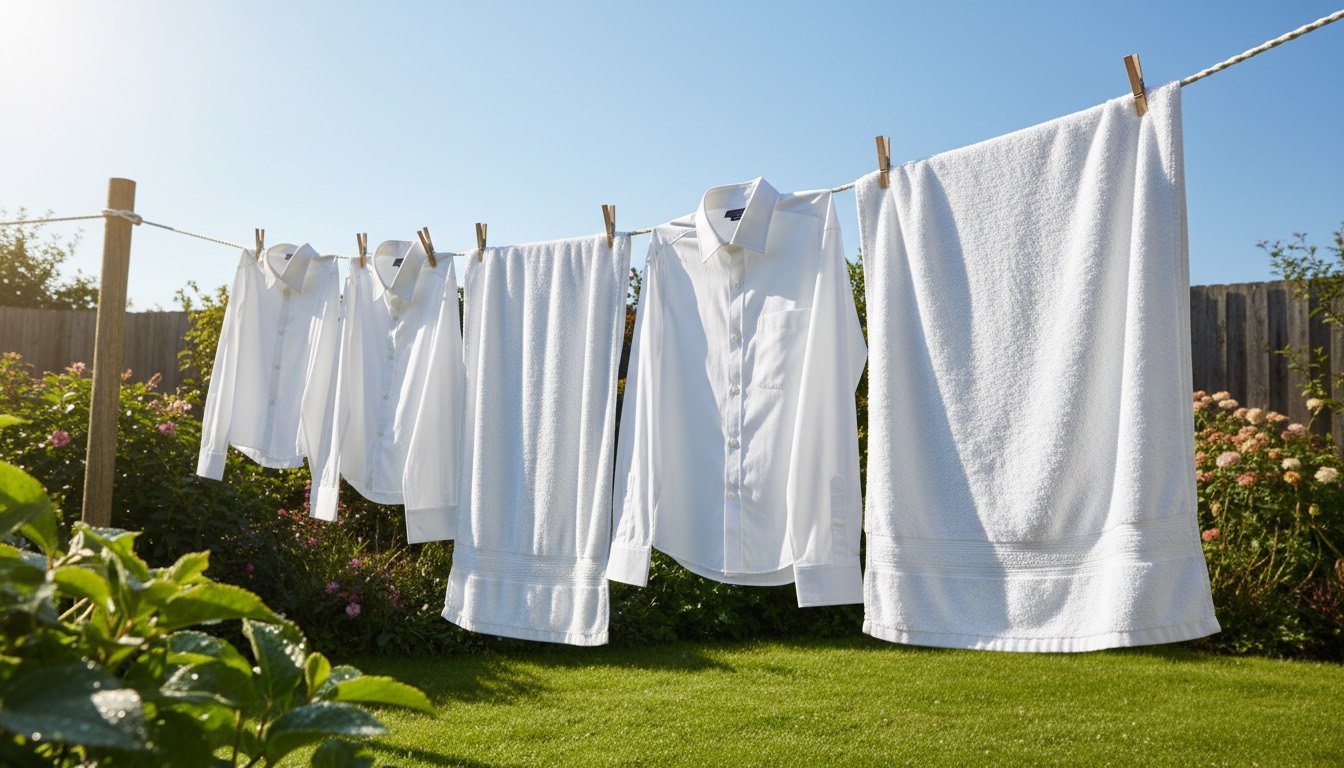
- •Line-dry in direct sunlight if possible; UV light bleaches gently and finishes what the soak started.
Tools and materials: what it actually costs
None of this needs specialist kit — everything below is available from a supermarket.
- •Oxygen bleach powder (sodium percarbonate) — around £4-£7 for a 1-1.5kg tub, enough for 12-15 soaks.
- •Soda crystals — about £1.50-£2.50 for 1kg, useful for the strip variant and for softening hard water generally.
- •A dedicated white-only laundry basket or mesh bag — £3-£8, the cheapest habit-forming purchase you'll make.
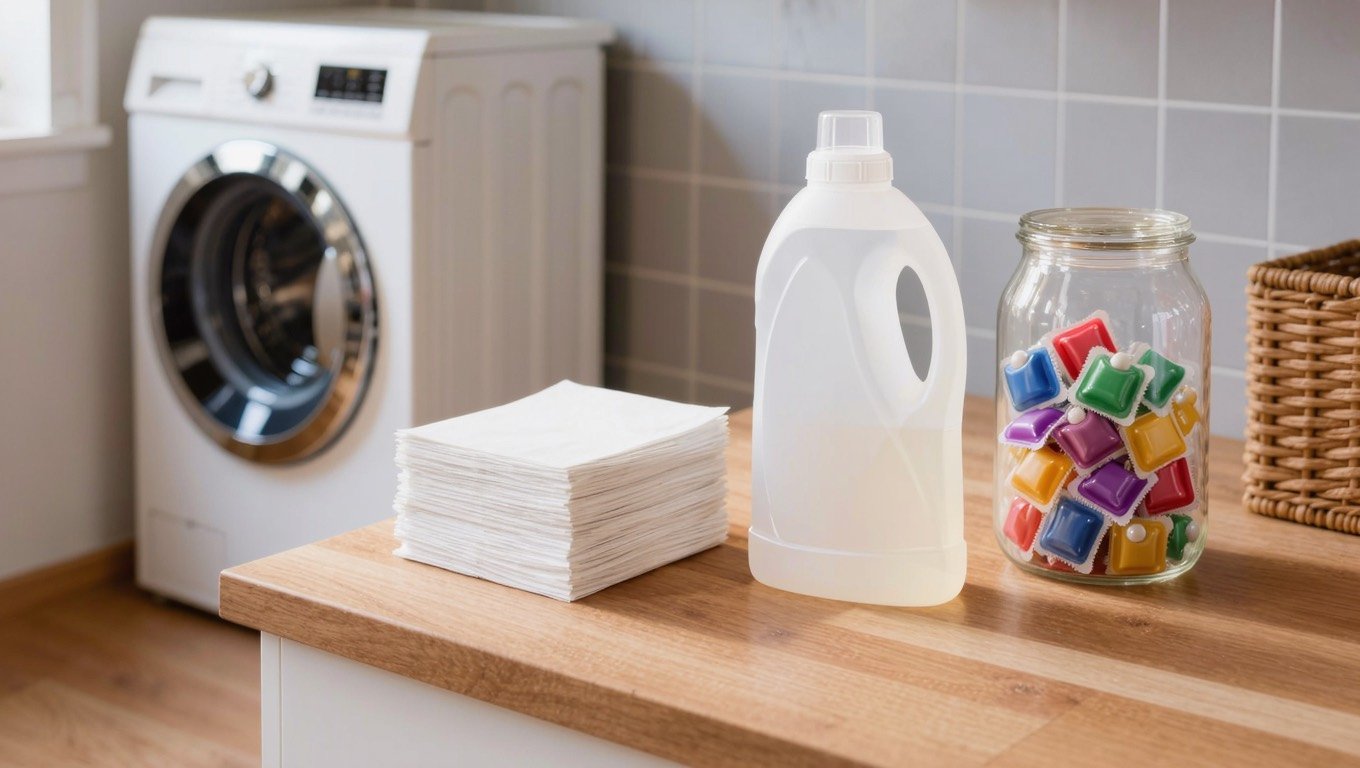
- •A non-bio detergent for whites — typically £5-£9 for a 40-50 wash bottle; a laundry sanitiser add-in costs another £3-£5 and helps where detergent alone isn't shifting odour.
- •A spare bucket kept aside for soaks — under £5, and it saves tying up the bath overnight.
Washing habits that keep whites white
The soak buys a fresh start; these habits are what stop the film reforming.
- •Wash whites only with whites — 'light greys and that one pink-tinged top' is how the film starts again; this is the unglamorous 80% of the answer.
- •Wash hot enough. Whites tolerate and reward 40-60°C where the label allows; cool washes shift less soil and redeposit more of what they do lift.
- •Dose for your water hardness, not the minimum line on the cap — hard-water areas need more detergent to keep soil suspended rather than resettling.
- •Skip fabric softener on towels and whites; softener film traps soil and is a main cause of grey, non-absorbent towels.
- •Don't overload the drum — whites need water circulation to carry soil away, not a crammed drum shuffling grey water between items.
- •Line-dry in sunlight whenever British weather allows, or finish indoor-dried whites near a bright window — see drying clothes indoors without damp if condensation is the issue.
Common mistakes that make white washing worse
A few habits actively work against you, even though they feel like they should help.
- •Reaching for chlorine bleach as standard — the wrong tool for greying, and repeated use weakens cotton, making whites thin and prone to tearing early.
- •Ignoring stains before washing. A protein or tannin stain heat-set in a hot wash rarely comes out afterwards; treat marks with the right method before the item joins the rest of the load.
- •Using the same detergent dose all year regardless of where you live — hard-water areas need noticeably more than soft-water ones.
- •Never cleaning the machine itself. A mouldy door seal or scaled element redeposits its own grime onto every load; see how to clean a washing machine if whites are coming out musty rather than just grey.
- •Storing damp whites before washing — anything balled up in a gym bag for days develops mildew spotting a standard wash won't fully remove.
When the problem is the machine, not the laundry
If whites keep greying within a week or two despite a proper soak and better habits, the machine is usually the cause, not the routine. Biofilm, mould or scale inside the drum or door seal redeposits onto every load it touches, and extra detergent won't fix that from the laundry side. Try a hot maintenance wash with the drum empty first; if greying or a musty smell persists, book a service — a failing door seal or heavily scaled element is common in hard-water areas. For typical costs, see our guide to appliance repair costs.
For genuinely delicate whites — christening gowns, vintage linen, anything with lace or fragile trim — skip the DIY soak and take it to a professional dry cleaner instead.
Frequently asked questions
**Why do my whites go grey even though I wash them regularly?** Frequency matters less than whether each wash is hot enough, dosed for your water hardness, and not overloaded — those factors decide whether soil rinses away or redeposits.
**Can I use chlorine bleach instead of oxygen bleach?** You can, but it's the more damaging choice: it weakens cotton over repeated use and can react badly with hard-water iron. Oxygen bleach lifts the residue film without that damage.
**How often should I do the oxygen soak?** Every four to eight weeks is usually enough for everyday whites once they're back to bright; heavily used items like gym kit may need it more often. There's no need to do it with every wash.
**Will the soak damage elastane or delicate trims?** Oxygen bleach is safe on elastane at these concentrations, unlike chlorine bleach. For lace or unusual finishes, test a hidden seam first or have the piece professionally cleaned.
**Why do my whites grey faster than a friend's, using the same detergent?** Water hardness varies by postcode. In a hard-water area, the dose that works fine elsewhere won't be enough — increase it and consider soda crystals or a water softener.
**Is this the same as 'laundry stripping'?** Same principle, milder form. The viral bathtub strip adds more soda crystals or powder detergent for maximum effect on rarely-washed items like duvets; this routine is the everyday version between deeper strips.
Found this useful?
There's plenty more — hundreds of guides and honestly-tested product reviews for every corner of your home.
Browse All Guides