Energy & Insulation · 6 min read · 18 June 2026
Low VOC vs Zero VOC Paint: What UK Labels Mean, Real Costs and Which to Buy
Three tins of white emulsion at £3, £9 and £22 a litre all claim to be kind to your lungs. Here is what the labels actually mean in Britain, and where the money really goes.
By the Nims Casa editorial team — written from professional cleaning experience and checked against our editorial standards.
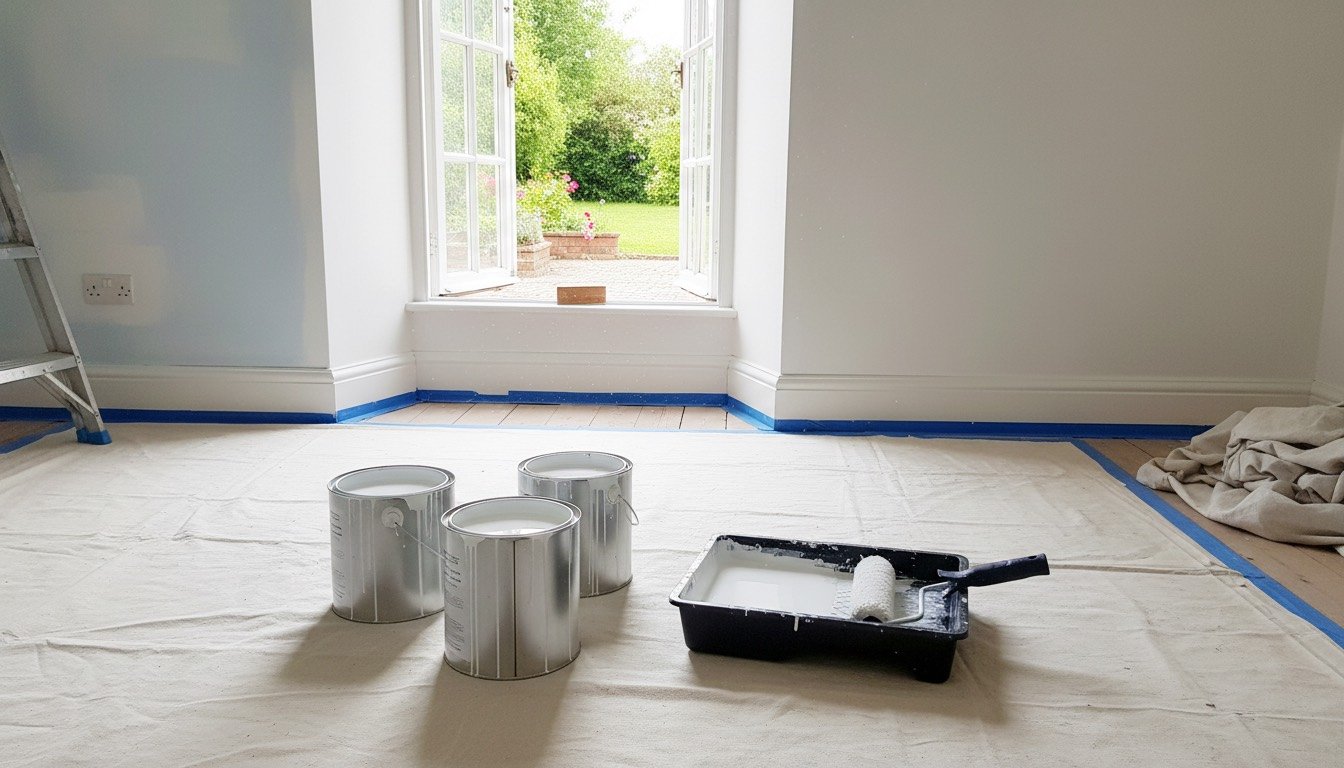
Volatile organic compounds are the solvents that evaporate as paint cures. They are what you smell for the first 48 hours, and in a room with the trickle vents taped shut they can linger for weeks. Two decades of reformulation have shrunk that problem, which is precisely why the marketing has got louder.
The gap between a cheap trade matt and a specialist eco paint is real — just not the gap the front of the tin implies. In Britain these terms are not policed the way most people assume.
What the labels legally mean in the UK
Only one number is legally binding, and it is on the back. The Volatile Organic Compounds in Paints, Varnishes and Vehicle Refinishing Products Regulations 2012 cap VOC content by category: 30 g/L for water-based interior wall and ceiling matt, 130 g/L for water-based trim paint, and 300 g/L for the surviving solvent-based trim products. Trading Standards enforce it at the point of sale; decorating itself is not notifiable work.
Above that sits the British Coatings Federation's voluntary globe symbol, a five-band scale:
- •Minimal: 0–0.29% VOC — where almost every modern UK emulsion now sits
- •Low: 0.30–7.99%
- •Medium: 8–24.99%; High: 25–50%
- •Very high: over 50% — old-school solvent gloss and specialist coatings
Why 'zero' is a marketing word, not a legal one
There is no UK legal definition of zero VOC paint. Manufacturers either borrow the American convention of under 5 g/L to EPA Method 24, or quote an emissions test such as BS EN 16516 or the French A+ class — which measure different things entirely.
The practical catch is tinting. A base can honestly claim zero VOC and still gain 10–20 g/L at the mixing desk, because machine colourants are carried in solvent and a deep charcoal needs far more of them than a chalky off-white. If indoor air quality is your reason for buying, ask for the figure on the tinted product, not the base.
The honest side-by-side
Comparing like with like — standard interior matt emulsion in both cases:
- •VOC content: low VOC 5–30 g/L; zero VOC under 5 g/L before tinting, often 5–25 g/L after a deep tint
- •Smell: low VOC fades in 24–48 hours; zero VOC is near-odourless, though ammonia and preservatives still register
- •Opacity: low-VOC trade matts cover in two coats; clay and mineral paints often want a third
- •Maintenance: low-VOC vinyl and easy-clean emulsions wipe well; most zero-VOC mineral paints burnish if you scrub them
- •Breathability: zero-VOC lime, clay and silicate paints are far more vapour-open — decisive in solid-wall houses
- •Choice: low VOC gives thousands of stock shades; zero VOC usually means a card of 60–100
- •Availability: low VOC in every Screwfix and Brewers; zero VOC is mostly online, 2–5 day lead times
Performance: where zero VOC wins, and where it loses badly
Two situations flip the answer. The first is a pre-1919 solid-wall property on lime plaster. A vinyl-heavy emulsion seals that wall, traps moisture behind the film and eventually blows the plaster off in sheets. Clay, lime or silicate paint at near-zero VOC lets it breathe — a building-fabric decision, not an air-quality one.
The second runs the other way. In a bathroom or utility with weak extraction you want exactly the fungicide package specialist eco paints deliberately omit. Check our bathroom paint guidance before spending £22 a litre on something spotted with mould by March.
Low VOC does not fix everything. The common paint reaction UK dermatologists see is to isothiazolinone preservatives — MIT, BIT, CIT — in-can biocides present regardless of VOC class. And most solvent exposure while decorating comes from trim, not walls. Pick the sheen first, the VOC class second.
What changes on the brush
Low-solvent paints hold a shorter wet edge: six to eight minutes in a warm July room against fifteen for traditional contract matt, so cut in and roll one wall at a time rather than cutting the whole room first. Clay paints are thicker again and want a long-pile 12–15 mm roller, not the 9 mm you would use on vinyl matt — how to paint a room covers the order of work.
Recoat times are similar at two to four hours at 18°C, but full cure is slower: do not expect to wipe marks off a zero-VOC wall for a fortnight.
Cost now, and the ten-year number
Take a 4.2 m by 3.5 m bedroom: roughly 46 m² of wall after a door and window, plus 15 m² of ceiling. At 12 m² per litre and two coats, about 10 litres.
Over ten years the cheap tin usually loses. Contract matt in a hallway wants redoing at four to five years; durable low-VOC emulsion, or clay paint on a stable wall, runs eight to ten. Two repaints at £120 of paint plus £250 of labour is £740 against one at £190 plus £250 — binder quality, not VOCs. See our interior painting cost guide for whole-house figures.
- •Trade contract matt (Leyland, Johnstone's), low VOC, 10L: £28–38 — about £33 for the room
- •Retail durable emulsion (Dulux Easycare, Crown Clean Extreme), low VOC, 2 × 5L: £70–90
- •Premium low-VOC designer matt (Little Greene, Farrow & Ball), 2 × 5L: £190–235
- •Genuine zero-VOC clay or mineral (Earthborn, Graphenstone, Ecos), 10–12L: £145–190, plus a third coat
- •Decorator's labour: £180–280 per bedroom in most of England, £250–400 in London
The UK rules that actually apply
There is no Part P equivalent for decorating and nothing to declare on a sale. The regulations that bite sit around the paint rather than on it.
- •Building Regulations Part F is the real control on indoor air: 15 l/s intermittent extract in a bathroom, 30 l/s over a kitchen hob, 6 l/s in a WC, plus background trickle ventilation. Since 2021, replacement windows must not reduce existing ventilation. No paint compensates for a dead extractor.
- •Volatile organic compounds are a named hazard under the Housing Health and Safety Rating System, applied to rented homes alongside the Homes (Fitness for Human Habitation) Act 2018.
- •Awaab's Law has set fixed damp and mould timescales for social landlords since October 2025, extending to the private rented sector under the Renters' Rights Act. Anti-mould paint is no defence.
- •Paint in homes built before about 1970 may contain lead, and dry sanding is the hazard — read lead paint safety in old houses first.
- •Liquid paint must not go in the household bin: solvent leftovers are hazardous waste; usable emulsion goes to Community RePaint.
The verdict: who should buy which
For most UK homes the answer is low VOC, in the best quality you can afford, with the windows open for the first week.
- •Modern cavity-wall house, no sensitivities: a good low-VOC durable emulsion. The extra £120 for zero VOC buys nothing measurable.
- •Nursery, or a room repainted while someone with asthma lives in it: zero VOC, tinted pale, applied 72 hours before use.
- •Pre-1919 solid wall, lime plaster, any history of damp: zero-VOC clay, lime or silicate every time.
- •Bathroom, kitchen or high-turnover rental: low-VOC durable emulsion with a fungicide — and fix the extractor first.
- •Skirting, doors and architraves: water-based satinwood instead of oil-based gloss. This one swap does more for your air than every other choice here.
Found this useful?
There's plenty more — hundreds of guides and honestly-tested product reviews for every corner of your home.
Browse All Guides