Heating & Cooling · 6 min read · 11 May 2026
How to Improve Indoor Air Quality in a UK Home (Including Pre-1919 Houses)
Most UK indoor air problems are moisture problems with a gadget bolted on. Measure first, fix ventilation and combustion second, filter last - and treat an old house completely differently.
By the Nims Casa editorial team — written from professional cleaning experience and checked against our editorial standards.
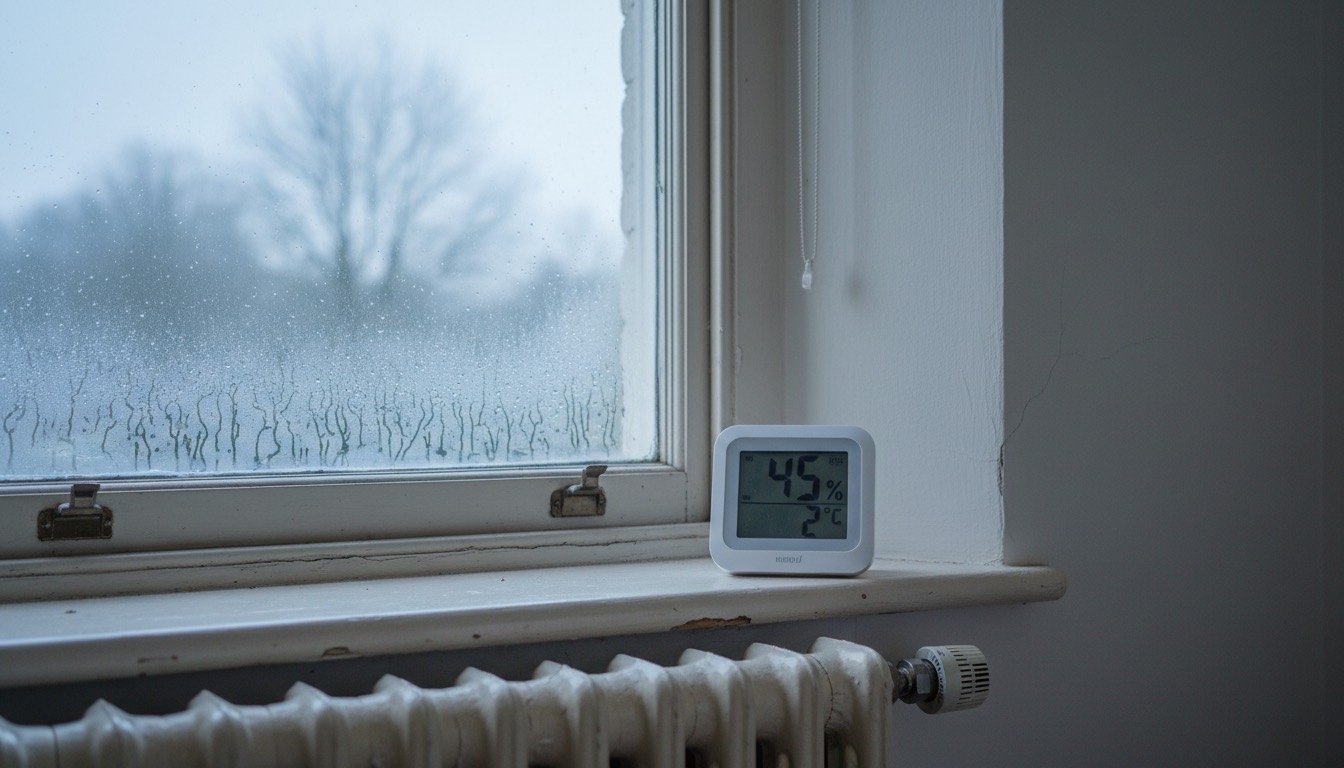
A family of four puts 10 to 15 litres of water into the air every day: showering, boiling pans, breathing, drying washing on radiators. In a house draught-proofed and double-glazed without anyone adding controlled ventilation, that water has nowhere to go but the coldest surface it can find.
Order matters more than equipment - measure, fix moisture and combustion, then filter. The most useful tool here costs eight pounds and has no filter in it. And if your house predates 1919, half the standard advice makes things worse.
Safety first: the three things that can genuinely hurt you
These three are immediate; everything else here is slow. Carbon monoxide comes first: fit an alarm to BS EN 50291 in every room with a fuel-burning appliance and test it monthly. Service gas appliances annually through a Gas Safe registered engineer, £80 to £130, and never run a flueless bottled-gas heater behind a shut door.
- •Radon: the UK Action Level is 200 Bq/m3, the Target Level 100. Check your postcode on the UKRadon map - in an affected area such as Cornwall, Devon or the Derbyshire Peak, a three-month detector pack is about £50.
- •Asbestos: textured coatings such as Artex applied before 2000 may contain chrysotile. Never dry-sand one or hole-saw a duct through it; a UKAS test is £30 to £50.
- •Lead paint: pre-1992 joinery may be lead-based, so wet-sand or strip chemically. Dry-sanding old sashes fills the room with the particles you are trying to remove.
Tools and materials
Stage one costs under £100. It stops being beginner work the moment a fan has to be wired in.
- •Three digital hygrometers, £8 to £15 each - coldest bedroom, bathroom, living room
- •Carbon monoxide alarm to BS EN 50291, £18 to £30
- •Laser PM2.5 monitor, £80 to £150 - optional, but it shows what cooking does
- •Humidistat extractor fan, 100 mm bathroom or 125 to 150 mm kitchen, £35 to £70
- •Rigid ducting, external grille and core drill hire, about £45 plus £30 a day
- •Chimney balloon or wool sheep, brush draught excluder and a HEPA-filtered vacuum, £135 upwards
Realistic time and cost
Stage one - measuring, clearing airbricks, opening trickle vents, changing habits - is three hours of work plus a fortnight of watching numbers, at £60 to £120. Stage two is extract: an electrician fitting a humidistat fan on rigid duct runs £180 to £300, more through a solid brick wall.
Stage three only applies if the first two have not shifted the readings. A 12 to 20 litre-per-day dehumidifier is £150 to £250 and 8p to 13p an hour to run; a loft-mounted positive input ventilation unit is £500 to £900 installed. Note that an air purifier or a dehumidifier do different jobs, and neither replaces a fan.
The method, step by step
- •1. Log humidity for a fortnight, aiming for 40 to 60% relative humidity. Mould germinates where surface humidity holds above roughly 65% for days, so start in the coldest unheated bedroom.
- •2. Sort combustion before ventilation: alarm tested, boiler serviced, and check whether the cooker hood ducts outside or recirculates through charcoal. A recirculating hood removes no moisture at all.
- •3. Extract at source at the rates Approved Document F expects: 30 l/s over a hob, 15 l/s in a bathroom, 6 l/s in a WC, with a 15 minute overrun and the door shut.
- •4. Stop making the water. Lids on pans, dryers vented properly, nothing wet on radiators - one load releases two litres. There are safer ways of drying washing indoors.
- •5. Open every trickle vent and leave them open all winter. Windows fitted since 2021 should carry 8,000 mm2 equivalent area in habitable rooms; retrofitting vents costs £40 to £80 each.
- •6. Clear the airbricks and gullies. Decking, raised borders and render bury the airbricks a suspended timber floor depends on; a bucket of water reseals a dried-out gully trap.
- •7. Cut particles at source: frying, toasting, candles and open fires are the biggest PM2.5 events in most homes. Run the hood before you light the hob.
- •8. Filter last, sizing a HEPA unit to four or five air changes per hour for the room it stands in. Then re-measure and compare like weeks.
Old houses: why the standard advice backfires
A solid nine-inch wall runs three to four degrees colder than an insulated cavity wall in the same room, so condensation starts at a lower humidity: 55% RH in a Victorian terrace does what 65% does in a 1990s semi. That is why damp and mould keeps returning to one external corner despite acceptable readings.
Lime plaster is vapour-open by design. Skim over it in gypsum, roll on vinyl silk, and the wall is sealed - the moisture goes back into the room. Internal wall insulation without a vapour-open build-up pushes the dew point into the masonry, where nothing shows until the plaster blows. Cut duct openings in lath ceilings with a multi-tool, never a hole saw.
- •Sash windows: that leakage is doing a job. Brush-sealing every sash can cut a house's air change rate by a third overnight, so fit the extract in the same month - and settle restoring or replacing original sashes then too.
- •Chimneys: foam or a bin liner up an open flue is the commonest cause of a damp chimney breast. Use a removable balloon or wool sheep below and a vented cowl above.
- •Victorian drainage: dried-out gully traps and capped-but-unsealed soil stubs in cellars let sewer gas in. A sulphurous smell after a dry spell is a trap, not a broken drain.
- •Pre-1970s wiring: rubber insulation perishes to bare copper in lofts, so spurring a bathroom fan off it is one of the electrical jobs that should never be DIY. Draught-proofing an old house is worth doing, but only paired with mechanical extract - alone, it reliably creates mould.
Troubleshooting: when the readings will not move
- •Still above 65% with the fan running: it is under-rated, or on five metres of concertina hose. Use rigid 100 mm duct, two bends maximum, and check the grille flap opens.
- •Mould on one external corner only: that is a cold bridge, not whole-house humidity. Pull furniture 50 mm off the wall and warm the room.
- •One cold bedroom damp, the rest dry: hold unused rooms at 15 to 16 degrees, not 10.
- •Musty smell but low readings: look under the floor. Blocked airbricks or a wet subfloor void scent the ground floor without registering upstairs.
- •Headaches that clear when you leave: suspect VOCs from new flooring or fresh paint, and check the CO alarm.
When to call a professional
Stop if the CO alarm sounds - leave, open windows and ring the National Gas Emergency Service on 0800 111 999. The same goes for a radon result above 200 Bq/m3: a sump and fan costs £800 to £2,500 and must be designed around the building.
Use a registered electrician for any new circuit or bathroom fan spur, especially with rewireable fuses and no RCD. If mould keeps returning over more than a square metre, pay an independent damp surveyor rather than take a free survey from a firm selling injected damp courses.
Found this useful?
There's plenty more — hundreds of guides and honestly-tested product reviews for every corner of your home.
Browse All Guides