Product Reviews · 6 min read · 15 June 2026
The Best Paint for Bathrooms in the UK (2026): Four Tins Worth Buying
Bathroom emulsion buys you a wipeable, fungicide-treated film and a few more years before the ceiling goes black. It does not fix a ventilation problem. Here is what we would put on the wall.
By the Nims Casa editorial team — written from professional cleaning experience and checked against our editorial standards.
Affiliate disclosure: if you buy through links in this article we may earn a small commission at no extra cost to you. Our recommendations come from professional cleaning experience and are never influenced by retailers or brands.
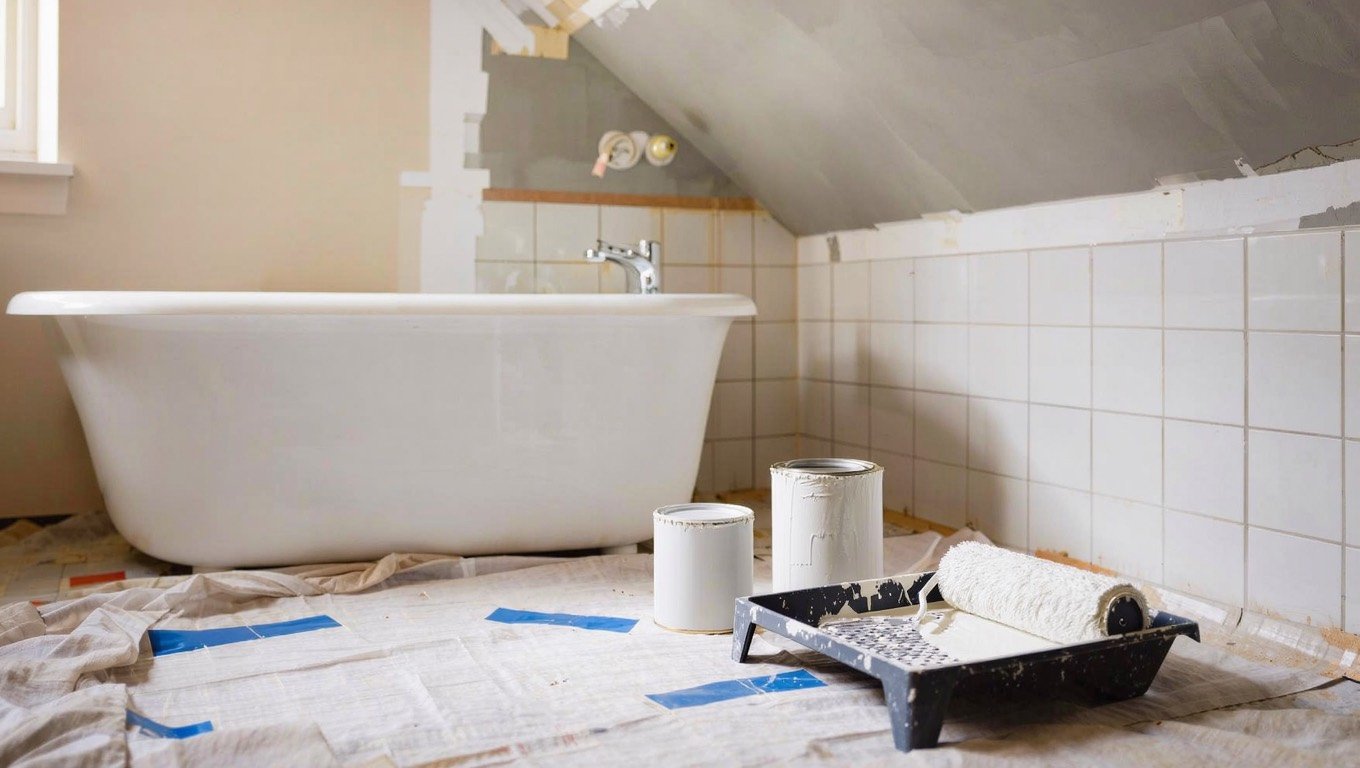
Bathroom paint fails in a predictable order. The ceiling above the shower goes first, in a fine grey speckle. Then the wall behind the towel rail, then the window reveal where the cold bridge sits. In most UK homes that is not the paint's fault: it is an extractor fan that isn't there, runs for thirty seconds, or vents into a loft where the moisture comes straight back through the plasterboard.
What a decent bathroom emulsion gives you is a tighter, more flexible film with a fungicide dispersed through it, so condensation beads and runs off instead of soaking in. That is worth £25 to £70 a tin. It is not damp-proofing, and no paint here will out-argue a room that hits 80% relative humidity twice a day.
Our top picks at a glance
Dulux Easycare Bathroom+ Soft Sheen
~£28-34 (2.5L)The default choice for an average family bathroom with a fan that works, and the easiest of these to buy at 6pm on a Saturday. Moisture-resistant soft sheen with a stated mould guarantee and dependable two-coat opacity in pale and mid tones.
Pros
- ✓ Stocked by every major UK DIY shed and most decorators' merchants
- ✓ Reliable two-coat coverage at around 13 m² per litre on sealed plaster
- ✓ Soft sheen flatters ordinary plaster rather than exposing it
Cons
- ✗ Not self-priming over bare or heavily stained surfaces
- ✗ Deep colours can need a third coat
Zinsser Perma-White Interior Satin
~£45-58 (2.5L)What we specify when a ceiling has already gone black and the ventilation is only being partly improved. Self-priming on sound previously painted surfaces, with a five-year mould-free guarantee and good behaviour in cold, humid rooms.
Pros
- ✓ Genuinely self-priming on sound painted plaster, saving a coat
- ✓ Five-year mould-free film guarantee, the strongest here
- ✓ Applies well in cooler rooms where other emulsions struggle
Cons
- ✗ Roughly double the price per litre of a standard bathroom emulsion
- ✗ Limited colour range next to a tinting-machine brand
Crown Easyclean Bathroom Mid-Sheen
~£22-28 (2.5L)The sensible tin for repainting between tenancies or refreshing a bathroom that is not in trouble. Wipeable mid-sheen finish and a fast recoat make a two-coat job on a 15 m² room genuinely cheap.
Pros
- ✓ Lowest cost per finished square metre of the four
- ✓ Fast recoat, so a full room in a day is realistic
- ✓ Handles wiping far better than a standard vinyl silk
Cons
- ✗ Mould resistance is good rather than exceptional
- ✗ Higher sheen shows imperfect plaster under downlights
Farrow & Ball Modern Emulsion
~£62-76 (2.5L)A washable, mould-resistant emulsion that lets you use a dark or complex colour in a bathroom without it chalking off the first time it is wiped. You are paying a premium for pigment depth, not technical performance.
Pros
- ✓ Excellent depth and consistency in dark and muted shades
- ✓ Washable, mould-resistant film, unlike the brand's Estate Emulsion
- ✓ Low VOC and low odour for a small, poorly ventilated room
Cons
- ✗ Two to three times the cost of the mainstream options
- ✗ Needs the matching primer and undercoat on bare surfaces
Who this guide is for
- •Repainting a bathroom that keeps going black in the same two spots: you want the most fungicide-heavy film available, and the fan dealt with at the same time.
- •Decorating after a refit, over fresh plaster: your priority is the mist coat and the sheen level, not the biocide.
- •A landlord repainting between tenancies: two-coat coverage, a fast recoat, and a film that survives being wiped hard.
- •It is not for walls that are wet rather than damp. Blown plaster, salts at skirting level or a stain that reappears within days means a defect, and paint will lift off it inside a year.
How we judge bathroom paint
We do not run a scrub-test laboratory, and would rather say so. These picks come from published technical data sheets, what decorators' merchants stock and reorder, and the experience of people who repaint bathrooms for a living. Spread rates and cure times are the makers' own figures.
- •Fungicide in the dry film, not just a can preservative. The good ones state a mould-free guarantee in years.
- •Sheen level, typically 10-25% gloss at 60 degrees. Below that you cannot wipe it; above it you see every ripple in the skim.
- •Spread rate. Most claim 12-14 m² per litre per coat on sound sealed plaster; 16 m² is optimistic on a colour change.
- •Cure time. Recoat at 4 hours at 15-20°C, but genuine wash resistance takes 7-14 days.
- •VOC band. UK regulations cap interior matt wall paint at 30 g/L and other interior wall coatings at 100 g/L, and the band must be on the label.
The four we would buy
Dulux Easycare Bathroom is the default for an averagely damp family bathroom with a working fan. Zinsser Perma-White is what we reach for when a ceiling has already gone black and the ventilation is only partly fixed: self-priming over sound painted surfaces, and the only one here we would put on a bathroom ceiling without thinking twice. Crown Easyclean is the landlord tin; Farrow & Ball Modern Emulsion is for a deep colour you will pay three times as much per square metre to get.
Sort the sheen before the brand; it is the choice most people get wrong. Matt flatters imperfect Victorian plaster but holds moisture and marks the first time it is wiped; soft sheen or mid sheen is the working compromise in a room with a shower. Our breakdown of paint sheens room by room sets out where each finish belongs, and eggshell versus satin covers the woodwork.
What to look for, and what the tin will not tell you
Two things matter more than brand. The first is what is underneath. Fresh plaster needs four to six weeks before anything but a mist coat, and that mist coat should be contract matt or emulsion thinned roughly 70:30 with water — never a bathroom paint, which is built to form a closed film and will not key. Old gloss or vinyl silk needs a light abrade with 180 grit and a sugar soap degrease, or the new coat peels in sheets; our comparison of paint and primer in one against a separate primer shows where the all-in-one tins work. The second is temperature: below 8-10°C emulsion never coalesces, stays soft, and marks under a towel.
- •Do the maths. A 2.2 m by 1.7 m bathroom with a 2.4 m ceiling has about 15 m² of wall after deductions, so two coats is 30 m² — one 2.5 litre tin.
- •Look for a stated scrub class. EN 13300 Class 1 or 2 is what you want; unclassified means wipe-only.
- •Spot-prime water stains with a solvent-borne stain block. Water-based bathroom paint will not hold them back.
Ventilation, Part P and the bit a landlord cannot paint over
Paint is the last 10% of a bathroom mould problem. Approved Document F sets intermittent extract in a bathroom at 15 litres per second, with a 15-minute overrun where there is no openable window. Plenty of fans fitted before 2010 manage neither, and newer ones are often throttled by four metres of concertinaed flexible duct. If mould returns in the same corner every winter, the fan is the fix, not the tin, and the warning signs of poor ventilation show up long before the paint does.
Replacing that fan is where regulation bites. In England, adding to or altering a circuit in a room containing a bath or shower is notifiable under Part P, because that space is a special location: you need a registered electrician under NICEIC, NAPIT or ELECSA, or a building control application first. Wales is broader, and Scotland runs its own building warrant system. Swapping a fan on an existing, unaltered spur is maintenance; new wiring in that room is not a Saturday job.
For landlords the stakes are higher. Damp and mould is scored as a hazard under the Housing Health and Safety Rating System, the Homes (Fitness for Human Habitation) Act 2018 lets tenants enforce it directly, and since Awaab's Law took effect in October 2025 social landlords have worked to fixed timescales for investigating and remedying it. Fungicidal paint over a live colony is not a repair. Treat the growth first, as our guide to mould on bathroom ceilings and walls sets out, then paint.
Common buying mistakes
- •Buying matt because it photographs well. In a shower room it holds moisture and goes patchy within a year.
- •Buying 5 litres for a room that needs 2.5. Opened emulsion in a cold garage is landfill in eighteen months.
- •Painting over live mould. The biocide resists colonisation; it does not kill an established one. Wash off, wait 24 hours, then paint.
- •Assuming anti-mould means damp-proof. If moisture comes through the wall rather than condensing on it, no emulsion holds.
- •Painting over failed bath sealant. Paint will not bridge a gap and will not stick to silicone.
What it actually costs
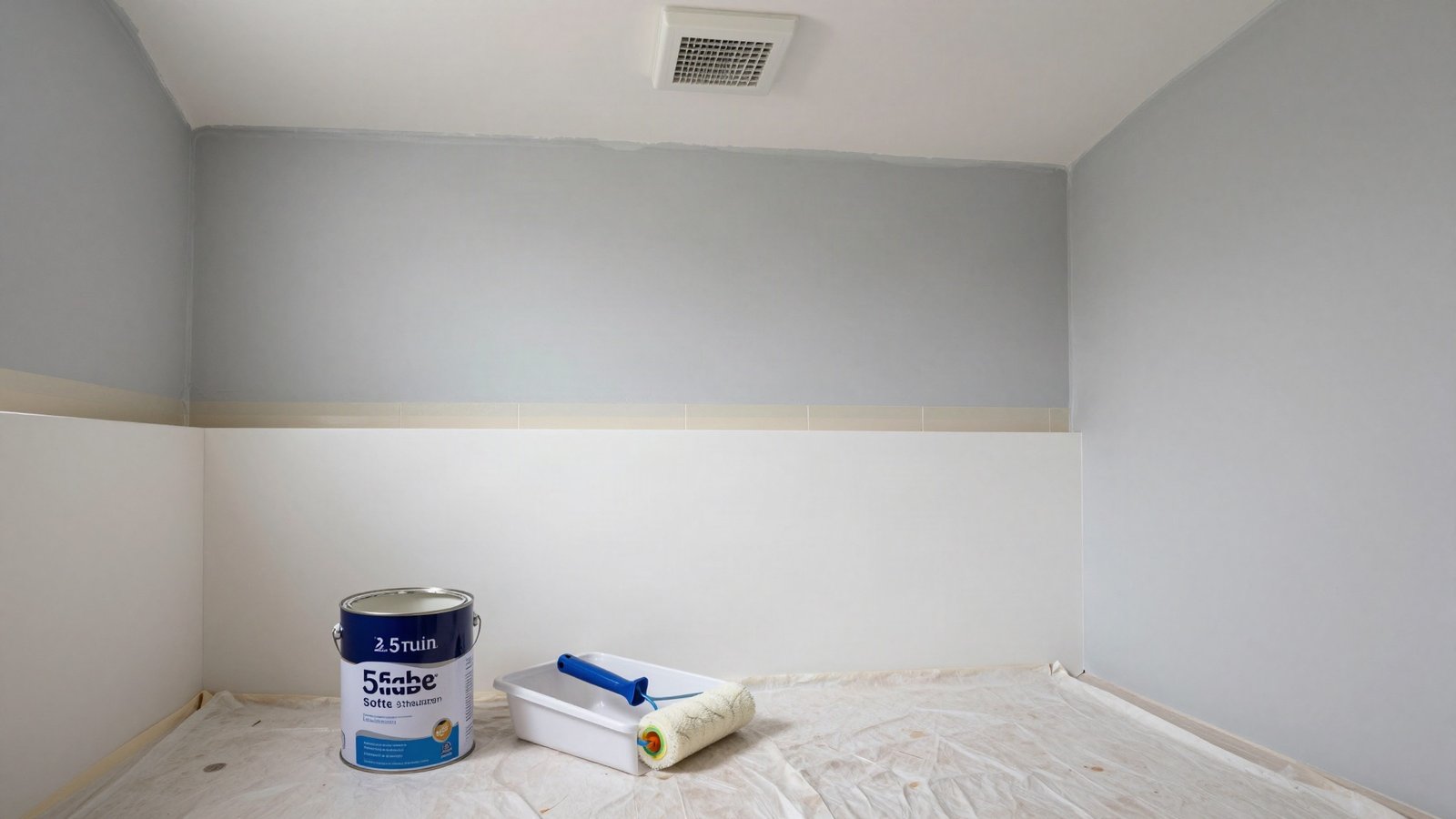
Materials for a standard UK bathroom run £35 to £95: one 2.5 litre tin, half a litre of water-based satinwood for the door and skirting, low-tack tape, a 9-inch short-pile sleeve and a dust sheet. That is a weekend for one person, including the two hours of prep you will be tempted to skip. A decorator charges £180 to £320 for a small bathroom in a day, materials on top. Our interior painting cost guide splits labour from materials room by room.
Found this useful?
There's plenty more — hundreds of guides and honestly-tested product reviews for every corner of your home.
Browse All Guides