Laundry & Fabric Care · 6 min read · 14 August 2026
Mould on Clothes and Inside Wardrobes: Causes, Cures and Prevention
That musty jumper is a symptom, not the problem. Work out why your wardrobe grows mould, clean every fabric type safely, and fix the cold-wall condensation behind it.
By the Nims Casa editorial team — written from professional cleaning experience and checked against our editorial standards.
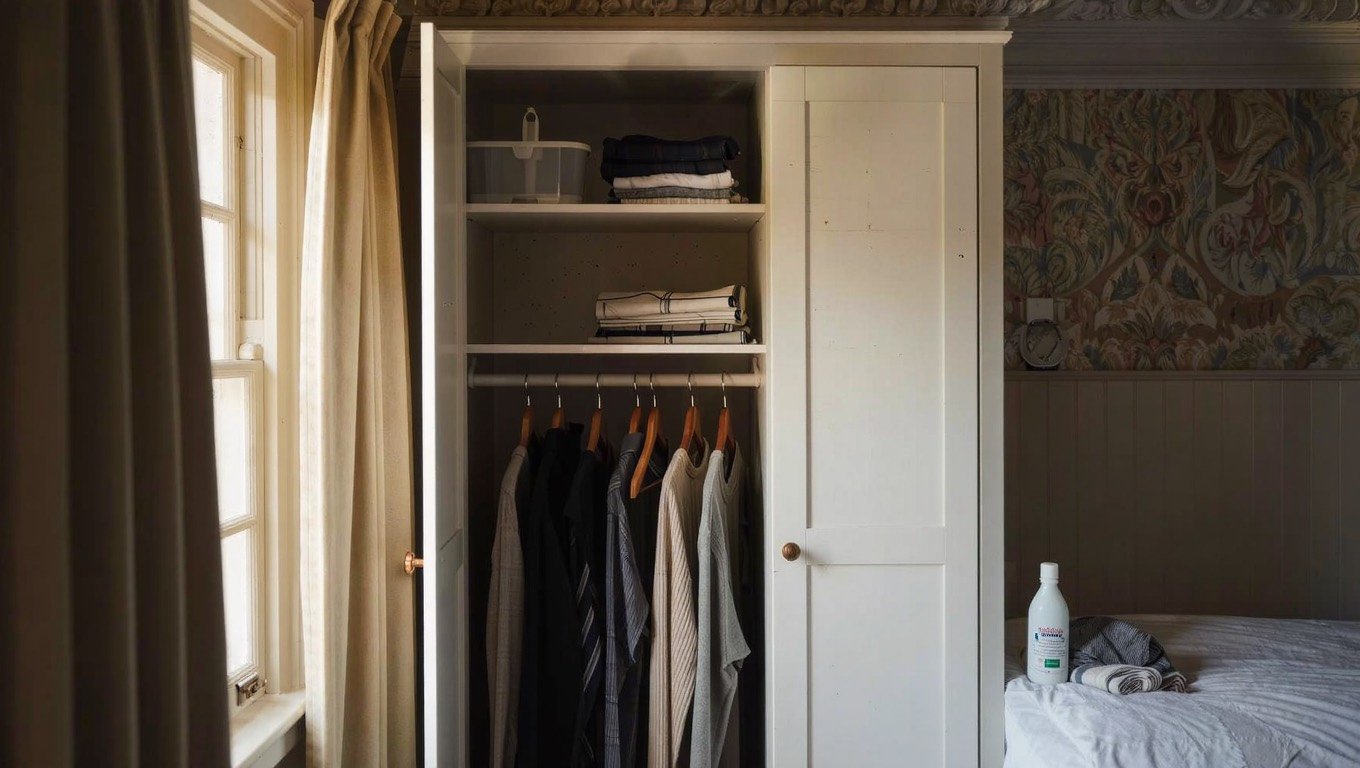
It usually starts with the smell: a jumper from the back of the wardrobe carrying that flat, earthy odour of an old cellar. Look closer and there is grey-white bloom on a leather belt, or black speckles on a shirt that has hung against the back panel. In UK bedrooms, especially where a wardrobe sits tight against an external wall, this is one of the most common damp complaints from late summer into autumn.
The cleaning itself is quick. The mistake most people make is scrubbing off the visible mould, hanging everything straight back up and wondering why it returns within a month. Before you reach for the vinegar, spend five minutes working out which of the four underlying problems you actually have, because each has a different permanent fix.
First, Diagnose: Four Problems That Look the Same
Mould needs only two things: spores, which are in every home, and sustained moisture. Where the moisture comes from decides the cure, so match your symptoms before cleaning anything.
- •Musty smell, little visible mould: clothes went in damp. Washing brought in "nearly dry", gym kit re-hung after wearing, coats put away wet. The fix is laundry habits, not the wall.
- •White or green fuzz on leather and bags throughout: the room air is too humid, usually from washing dried in the bedroom or a house running above 65% relative humidity. The fix is moisture control for the whole room.
- •Black speckling on the back panel, and only on clothes touching it, on the side facing an external wall: classic condensation. The wall is cold, trapped air cannot circulate, and moisture films onto the surface nightly. The fix is an air gap plus humidity control.
- •Mould at the wardrobe base with tide marks, bubbling paint or soft plaster low on the wall: suspect rising or penetrating damp, a building fault. Cleaning fabric is pointless until the wall is sorted.
Safety First
Wardrobe mould is usually Cladosporium or Aspergillus rather than anything exotic, but disturbed spores are a genuine airway irritant and one brush stroke flicks millions into the air.
- •Wear an FFP2 or FFP3 mask (£2 to £5) and nitrile gloves for all brushing and wiping.
- •Open the bedroom window before disturbing anything and keep it open.
- •Bag mouldy clothes in a bin liner at the wardrobe and carry them to the machine. Never shake them indoors.
- •Never mix chlorine bleach with vinegar; the reaction releases chlorine gas.
- •Anyone with asthma, COPD or a weakened immune system should not do this job or be in the room.
Tools, Materials, Time and Cost
Everything here is supermarket or DIY-shed stock. For a single mouldy wardrobe budget 30 to 45 minutes of hands-on work plus wash cycles, and £10 to £20 in materials.
- •White vinegar, 5% acetic acid: £1 to £1.50 a litre; the main fabric-safe mould killer.
- •Oxygen bleach (sodium percarbonate stain remover): £3 to £4 a tub, for stains on colours.
- •Soft-bristled brush and microfibre cloths.
- •FFP2 masks, nitrile gloves, bin liners.
- •Disposable moisture traps at £1.50 to £2 each, or a compressor dehumidifier for a persistent problem.
- •Optional: leather conditioner (£6 to £8) if belts, bags or shoes are affected.
Step by Step: Cotton, Synthetics and Everyday Clothes
Work through the whole wardrobe, not just the visibly mouldy pieces; spores settle on everything sharing that air.
On the vinegar versus bleach decision: chlorine bleach kills surface mould fast but belongs only on white pure cotton. It strips dye, weakens elastane and does not penetrate porous fibres, so growth deep in the weave survives. Vinegar's acidity kills most household mould species and soaks into the fibre; oxygen bleach lifts the staining. Keep chlorine bleach as a last resort for whites, diluted to roughly 20ml per 5 litres, and never in the same water as vinegar.
- •1. Empty the wardrobe completely. Bag visibly mouldy items separately from the merely musty.
- •2. Outdoors, mask on, brush off all loose mould so the machine is not washing spores through the load.
- •3. Pre-soak mouldy items for 30 to 60 minutes in one part white vinegar to four parts warm water, or in an oxygen-bleach solution at 40°C for coloured fabrics.
- •4. Wash at the hottest temperature the care label allows: 60°C for most cotton whites and bedding, 40°C with oxygen bleach for colours. Check labels against our guide to laundry symbols; many items tolerate more heat than people assume. Add 200ml of white vinegar to the softener drawer.
- •5. Dry completely, ideally outside in direct sun; UV finishes what the wash missed. Nothing goes back even slightly damp.
- •6. Smell-test once bone dry. Residual mustiness means a repeat soak, not fabric freshener over the top.
Wool, Delicates, Leather and Suede
Hot washes and chlorine are off the table here, so the approach changes by material.
Wool and silk: brush off outdoors, soak for 30 minutes in cool water with a capful of white vinegar, hand-wash with wool detergent and dry flat. If mould has fed on the fibre, leaving thin patches or holes, the garment is gone.
Leather: never soak it. Wipe with a cloth wrung out in a 1:1 mix of white vinegar and water, dry away from radiators, then apply leather conditioner twice, because vinegar strips the natural oils.
Suede: once fully dry, work over it with a suede brush outdoors and stop there. Anything worse is a cobbler's job at £10 to £20, and tailored pieces go to a dry cleaner at £10 to £15 a garment. Tell them it is mould; they will bag it separately.
Clean the Wardrobe and Fix the Airflow
With the wardrobe empty, wipe every internal surface with the 1:4 vinegar solution, working into corners, drawer runners and the back panel. Melamine takes this happily; bare MDF drinks moisture, so wring the cloth well and leave the doors open for 24 hours before reloading. If the wall behind shows mould too, treat it as part of the room-wide job covered in our guide to getting rid of damp and mould.
Then remove the conditions that grew it, or you will repeat the whole exercise in October.
- •Pull the wardrobe at least 50mm off any external wall so air moves behind it.
- •Do not repack tight: aim for a finger's width between hangers. A proper seasonal rotation system halves what hangs there at any one time.
- •Put a moisture trap on the wardrobe floor and replace it once the crystals dissolve, typically every four to eight weeks in autumn.
- •Keep bedroom humidity under 60%; a £10 hygrometer tells you where you stand. If you must dry clothes indoors, do it in one closed room, and consider a compressor dehumidifier at £120 to £180, which earns its keep from September to March.
- •Hold the bedroom at 16 to 18°C through the cold months; condensation concentrates in unheated rooms with cold walls.
Troubleshooting, and When to Call Someone In
Most stubborn cases fall into one of four patterns.
Call in help when the wall keeps re-wetting, when mould covers more than about a square metre, or when anyone in the household has a respiratory condition. Book an independent damp surveyor at £150 to £300 rather than a free survey from a damp-proofing firm, whose diagnosis tends to match their price list. If you rent, damp and mould are the landlord's legal responsibility under Awaab's Law and the Homes (Fitness for Human Habitation) Act: report it in writing with photos.
- •Smell survives two washes: the odour source is probably the wardrobe carcass, not the clothes. Re-clean it, including under drawers and the underside of the top panel.
- •Mould returns within four to six weeks despite the airflow fixes: the wall is too cold or too wet. Outside, check for a leaking gutter, cracked render or soil banked above the damp-proof course in line with the patch.
- •Grey shadow stains remain after the mould is dead: residual staining, not regrowth. Repeat oxygen-bleach soaks fade it on cotton; on delicates it is usually permanent but harmless.
- •Plaster behind the wardrobe feels damp or paint is bubbling: stop cleaning and diagnose the wall. No amount of vinegar outruns a building fault.
Found this useful?
There's plenty more — hundreds of guides and honestly-tested product reviews for every corner of your home.
Browse All Guides