Costs & Hiring · 5 min read · 25 June 2026
Moving Into a New House Cleaning Checklist (Printable UK Order of Work)
The gap between key collection and the removal van is the only time you will see the place empty. Here is the order professionals clean in, with honest UK timings, prices and the week-one safety checks.
By the Nims Casa editorial team — written from professional cleaning experience and checked against our editorial standards.
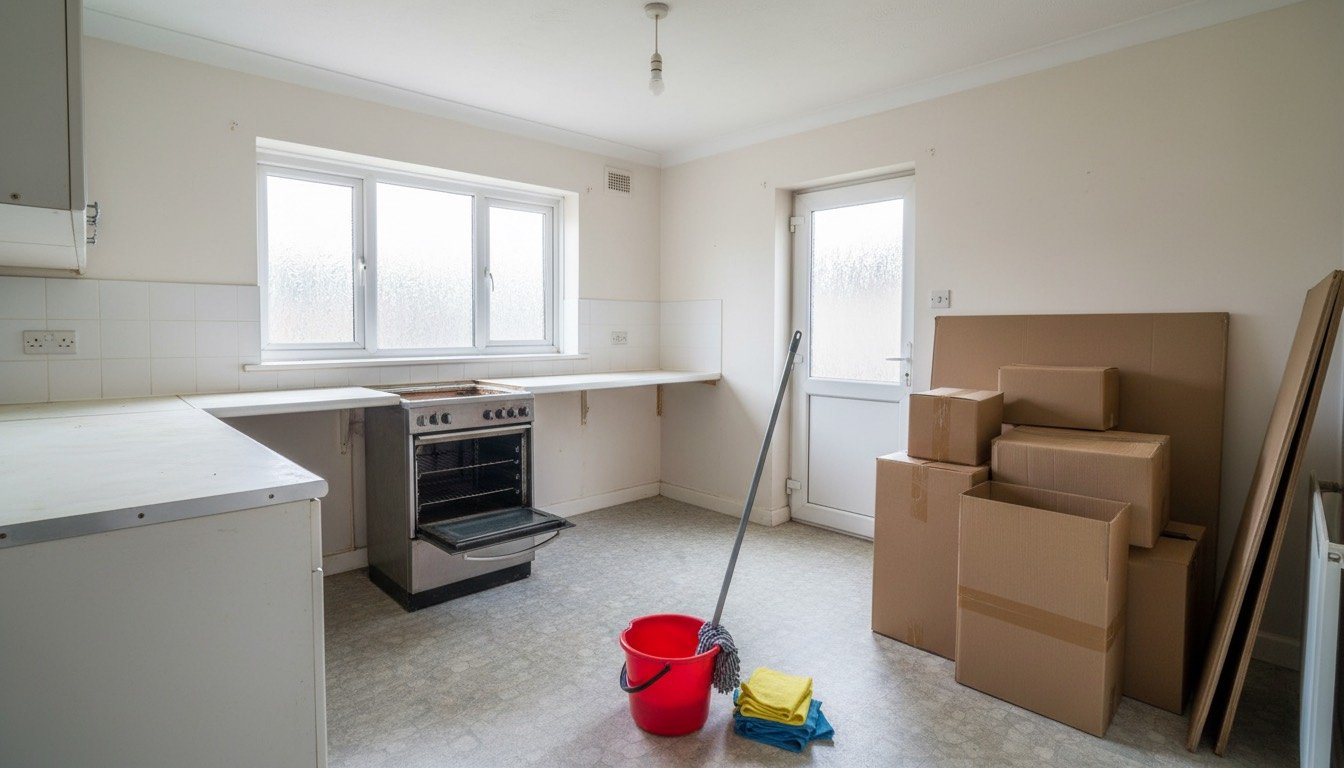
The gap between collecting the keys and the van reversing onto the drive is worth more than an entire weekend of scrubbing later. Every job below gets three to five times harder once there is a wardrobe against the wall and a sofa parked in the middle of the floor, and some of them become effectively impossible.
What follows is the order end-of-tenancy and move-in teams actually work in: empty-only jobs first, then top-to-bottom by room, floors last. It also covers the checks that are not cleaning at all but belong in the same week — the gas, electrical and alarm paperwork that decides whether the house you have just bought or rented is legally safe to live in. If you are still pre-completion, run through what to do before moving into a new house first and come back to this on key day.
Empty-property jobs: do these before anything comes off the van
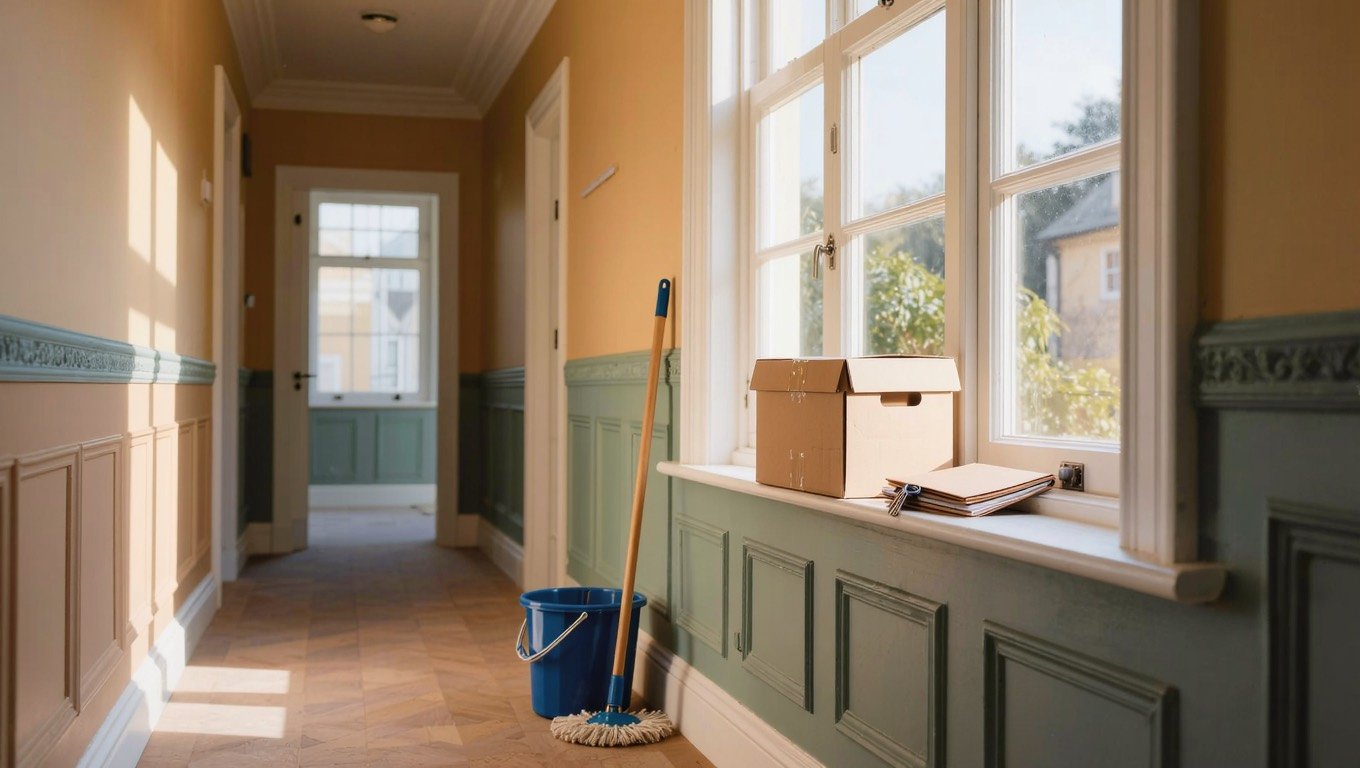
If you get half a day with an empty house, spend it here rather than on worktops you can wipe at any point in the next decade. Renters usually get keys the day before the move; buyers often get them at midday on completion, so triage ruthlessly.
- •Vacuum then wash inside every fitted cupboard and wardrobe, including the top shelf and the underside of shelves — about 10 minutes per unit.
- •Pull the fridge, washing machine and cooker forward and clean the floor and wall behind them. Expect grease, crumbs and at least one lost sock.
- •Wash skirting boards, door frames and the tops of internal doors with warm water and a squirt of washing-up liquid. Microfibre, not spray polish — polish leaves a film that pulls dust back within a fortnight.
- •Clean windows inside and out while there are no curtains, blinds or beds in the way.
- •Clean the carpets before a single item of furniture goes down. They take four to eight hours to dry, and doing it later means moving everything twice.
- •Open the loft hatch, meter cupboard and under-stairs cupboard. Those are the three places previous occupants leave things behind.
- •Find and label the stopcock, consumer unit and gas meter while you can still reach them.
The kit: buy this once, before key day
A full move-in kit costs £50-£70 and covers the whole job. You do not need fourteen specialist sprays; professional cleaners carry about six products and a lot of cloths.
- •Ten-pack of colour-coded microfibre cloths, £6-£10. Blue for glass, red for bathrooms, yellow for kitchen — it stops cross-contamination and arguments.
- •Soda crystals, 1kg for around £1.50. The cheapest degreaser in Britain and safe on almost everything except aluminium.
- •A proper acid limescale remover (Viakal, HG or Astonish), £2.50-£4. Essential anywhere south and east of a line from the Severn to the Humber.
- •Cream cleaner such as Cif or Bar Keepers Friend for stainless sinks and hobs, £2-£3.
- •Caustic-free oven cleaner plus nitrile gloves, £8-£12.
- •Squeegee, long-handled duster for cornices, bucket and a roll of heavy-duty bin bags, £20-£25 together.
- •Never use bleach and a limescale remover in the same room. Acid plus hypochlorite gives off chlorine gas, and a small unventilated bathroom is the worst possible place to discover that.
Kitchen and bathroom: roughly 70% of the work
Two rooms will eat most of your day. The oven is the single biggest job in the house — allow 90 minutes with a caustic-free cleaner and patience, or £55-£90 for a firm that takes the shelves away in a dip tank. The method end-of-tenancy cleaners use gets you there without wrecking the door seal.
In hard-water areas the bathroom is a descaling job, not a scrubbing one: give the limescale remover five to ten minutes of contact time and it does the work for you. While you are down there, look behind the loo and under the bath for the black speckling that signals a longer-running damp or mould problem rather than surface grime — that is a survey question, not a cleaning one.
- •Oven: shelves and racks out first, cleaner on the door glass and cavity floor last. 90 minutes DIY, £55-£90 professionally.
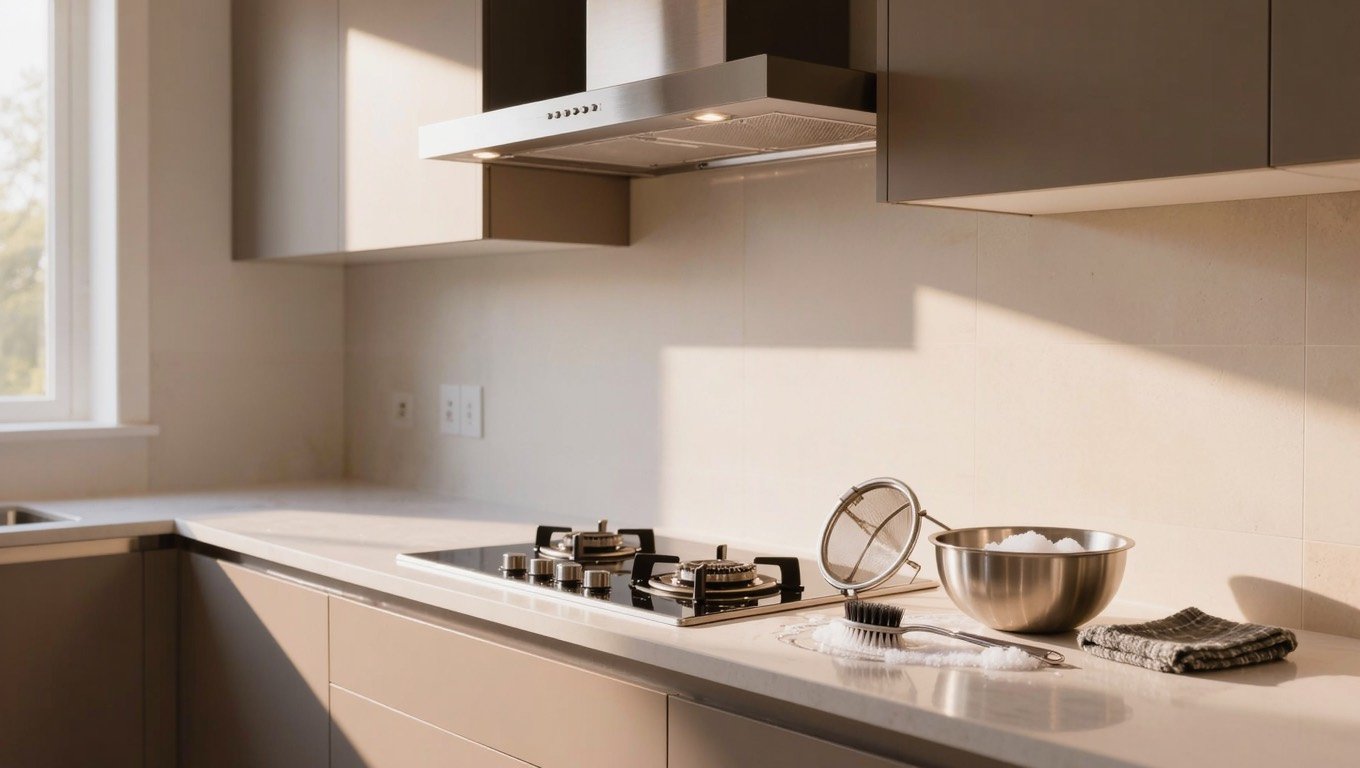
- •Extractor hood: metal filters through the dishwasher at 65C, or 20 minutes in hot water with two tablespoons of soda crystals.
- •Fridge and freezer: defrost overnight, then wash with warm bicarbonate solution — never anything perfumed, because the scent transfers straight into food.
- •Silicone sealant: if the black staining sits inside the silicone rather than on it, no product will shift it. Cut it out and reseal — £8 of sealant and an hour.
- •Toilet: clean under the rim and inside the seat hinge caps. Almost everyone skips both.
- •Shower head: unscrew and soak in descaler for an hour. It restores flow better than any new head you could buy.
Everywhere else, then the floors
Work top-down in every remaining room so dust falls onto surfaces you have not done yet: light fittings and cornices, curtain rails and picture rails, radiator tops and the fins behind them, switches and sockets with a barely damp cloth, then skirtings, then the floor. Radiators hold a startling amount of felted dust that will circulate the first time the heating fires up in October.
Floors are genuinely last. Vacuum the whole house, then mop hard floors, then clean the carpets and shut the doors. If the previous owner had pets, lift a corner of carpet near the skirting and check for larvae before you commit to keeping it — carpet moths are far easier to deal with in an empty house.
Realistic times and costs
Timings below are for an empty, reasonably kept property. Add 30-50% for a probate sale, a heavy-smoking household or a rental that has clearly been signed off in a hurry. If you would rather buy the time back, compare against typical house cleaning service costs before you book.
- •Full move-in clean, empty 3-bed semi: 8-12 hours for one person, 5-6 hours for two.
- •Professional move-in or end-of-tenancy clean: £180-£260 for a 2-bed, £250-£380 for a 3-bed. Oven usually included, carpets usually not.
- •Carpet cleaning: £30-£45 per room with a £70-£90 minimum charge, or £25-£30 a day for a hire machine plus about £12 of solution.
- •Oven only: £55-£90 depending on size and whether the hood and hob are included.
- •Windows inside and out on a standard terrace or semi: £25-£45.
- •Your own kit, bought once: £50-£70.
Week one: the checks that are not cleaning
This is the part of a move-in checklist that most guides skip, and it is the part with legal weight behind it. Do it in the first seven days while you still have the seller's or letting agent's attention.
One safety note that catches people mid-clean: if the property predates 2000 and has textured Artex-style ceilings, the coating may contain chrysotile asbestos. Wipe gently with a damp cloth and never sand, scrape or wire-brush it. If it needs to go, read up on Artex removal and the professional costs before anyone touches it.
- •Gas: only a Gas Safe registered engineer may legally work on gas appliances — ask to see the card and check the number on the register. Budget £80-£120 for a boiler service if you have bought. If you are renting, your landlord must give you the Gas Safety Record at the start of the tenancy and within 28 days of each annual check.
- •Electrics: landlords in England must hold an EICR renewed at least every five years and supply a copy on request. Owner-occupiers should budget £150-£300 for one roughly every ten years, or immediately if the consumer unit still has rewireable fuses.
- •Part P: any new circuit, consumer unit replacement or electrical work in a bathroom in England and Wales is notifiable. Ask the seller for the electrical installation certificate or building control completion notice before assuming a rewire was signed off.
- •Alarms: in England, landlords must fit a smoke alarm on every storey with living accommodation and a CO alarm in any room with a fixed combustion appliance. In Scotland the standard applies to every home, owner-occupied included — interlinked smoke alarms in the main living room and each circulation space, plus a heat alarm in the kitchen. Test on day one and replace any unit over ten years old.
- •Building control and planning: for any extension, loft conversion or garage conversion, get the completion certificate plus planning permission or a lawful development certificate confirming permitted development. Replacement windows fitted since April 2002 need a FENSA or CERTASS certificate.
- •Water: locate the internal stopcock, turn it a quarter turn to confirm it is not seized, and report any lead pipework you find to your water supplier.
If you have only got one day
Most moves do not hand you a clear week. This is the order to work in when the van arrives at two o'clock and everything else has to wait.
- •Carpets first, purely because of drying time.
- •Inside kitchen cupboards, the fridge and the freezer — food is going in there tonight.
- •Bathroom: toilet, shower tray, basin and taps. Twenty minutes gets it usable.
- •Bedroom floors and the window of whichever room you are sleeping in.
- •Test every smoke and CO alarm, and find the stopcock and consumer unit.
- •The oven can wait. Nobody cooks properly on moving day anyway.
- •Spread skirtings, radiators, light fittings and windows across the following fortnight, one room per evening.
Found this useful?
There's plenty more — hundreds of guides and honestly-tested product reviews for every corner of your home.
Browse All Guides