Home Decor · 6 min read · 9 June 2026
Oil-Based vs Water-Based Stain: Costs, Lifespan and Which to Use in the UK
One tin costs £32, the other £41 — and over ten British winters that small difference decides whether you wash and recoat, or spend a weekend sanding a deck back to bare timber.
By the Nims Casa editorial team — written from professional cleaning experience and checked against our editorial standards.
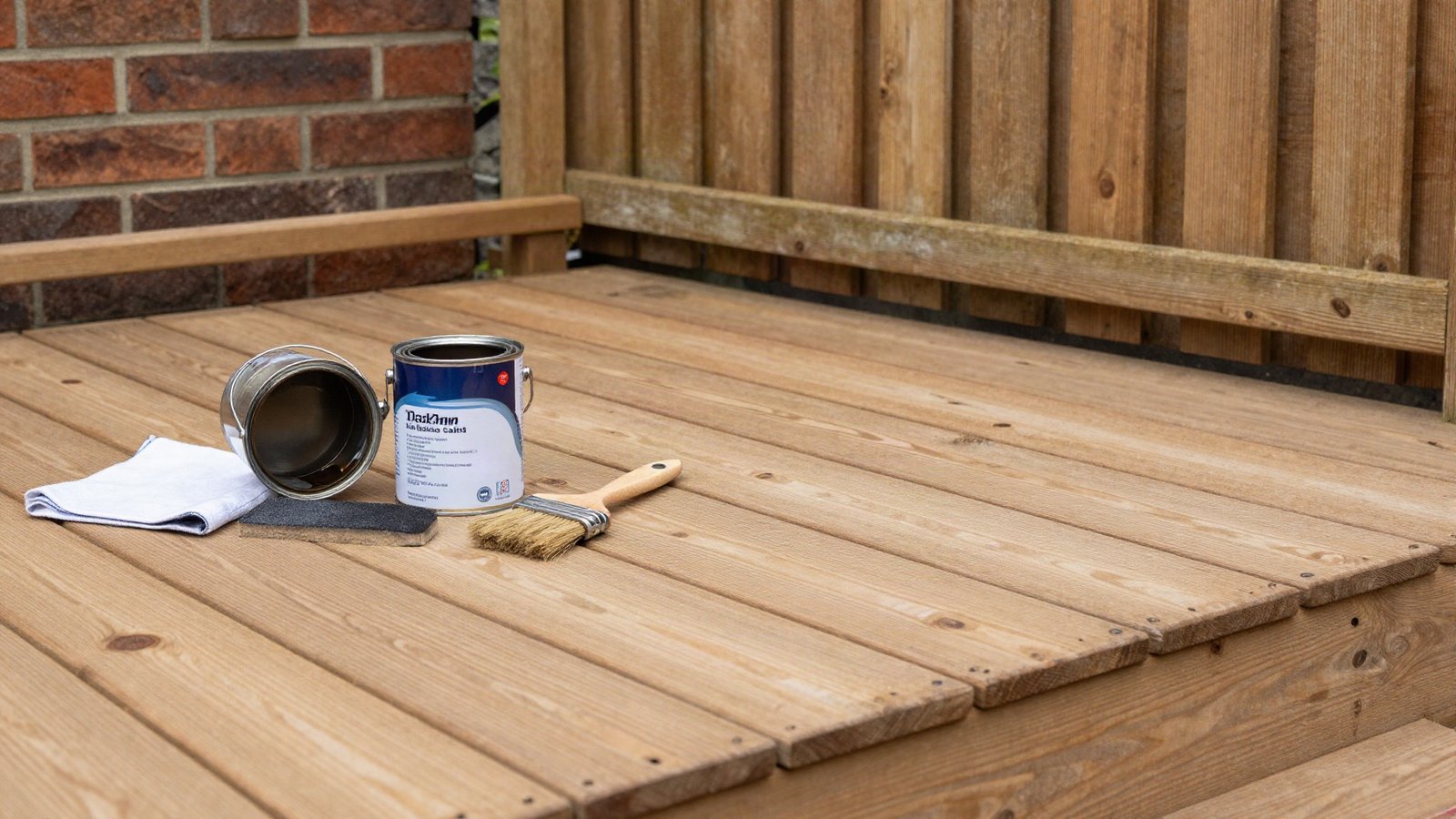
Neither finish is better. They fail differently, and the failure mode is what costs money. A penetrating oil fades and thins until the timber looks tired; a water-based film cracks at the board ends, lets water underneath, and flakes in sheets. One of those is a wash and a recoat on a Saturday. The other is a stripping job.
The numbers below are the ones we work to when quoting exterior timber in the UK — decks, fencing, sheds and joinery — including what materials genuinely cost and where a cheap quote hides the prep.
The short version, side by side
The two products differ in one thing: where the binder ends up. Oil carries pigment into the timber's surface cells. Water-based acrylics sit on top as a flexible film. Everything else follows from that.
- •Where it sits: oil penetrates 1-2mm into the grain; water-based forms a film 40-80 microns thick on the surface.
- •Recoat interval, horizontal deck: oil 12-18 months; water-based 24-36 months.
- •Recoat interval, vertical fencing or cladding: oil 2-3 years; water-based 4-6 years.
- •Failure mode: oil goes patchy where it wears; water-based cracks and peels once the film is breached.
- •Prep to recoat: oil needs a wash and a light abrade; a peeling water-based film needs stripping back to sound timber.
- •Price: oil £8-£14 per litre (Osmo, Barrettine, Owatrol); water-based £5-£9 per litre (Ronseal, Cuprinol, Bedec).
- •Coverage on planed timber: oil 10-14 m² per litre per coat, water-based 6-8 m². On sawn or grooved boards, halve both.
- •Drying: oil is touch-dry in 4-8 hours and needs 24 hours between coats; water-based recoats in 2-4 hours.
- •VOCs and clean-up: solvent-borne stains run 400-700 g/L and need white spirit; water-based is under 130 g/L and washes out under a tap.
How each performs on British timber
On horizontal surfaces taking rain, sun and boot traffic, oil wins on serviceability. It cannot peel, because there is no film to lose adhesion. A south-facing deck coated in pigmented oil looks thin at 15 months and is perfectly recoatable at 18: wash it, let it dry 48 hours, put another coat on. That cycle never gets harder.
Water-based stains hold colour longer. Micronised iron-oxide pigments block UV far better than a clear oil — which is why clear finishes of either type are wasted money outdoors, having no UV blockers at all. The trade-off is that a film on horizontal boards eventually breaches at knots, screw heads and end grain, and then you are into a strip. On vertical joinery and cladding that rarely happens, which is why water-based systems have been the professional default for exterior windows and doors for twenty years.
One point specific to our climate: shaded, north-facing timber stays damp for weeks. Plain oils can feed algae and black spot, so on a shaded deck insist on a stated biocide. If yours is already green, deal with that first — our guide to reviving wooden decking covers it without furring the boards.
Application: what changes on the day
Water-based needs 8-10°C and rising, with no dew or rain for four hours after the last coat. Oil copes with cold down to about 5°C but not with damp timber — below 18% moisture content, or it stays tacky. In practice both mean a settled three-day window between April and September, never in direct sun on hot boards. The best time to paint outside is worth ten minutes before you buy.
The expensive mistake is compatibility. Water-based will not bond over an oiled deck, and oil will not soak through an old acrylic film. If you do not know what is on there, sand a test patch: if it comes off as flakes, it was film-forming. Switching type means full removal, which is where a £120 job becomes a £500 one. On opacity, see solid stain vs semi-transparent stain; for method, how to stain a deck.
The 10-year cost, worked through
Take a 20 m² planed softwood deck, south-facing, in the Midlands. Both routes assume a proper wash before every recoat and two coats each time.
- •Water-based, DIY: 7.5 litres per application at £7/L is £53, plus £15 of cleaner. Four applications in ten years is £272 — but budget one strip-and-sand at year 6-8: £45 in abrasives and stripper plus £45 sander hire, or £300-£550 if a contractor does it. Ten-year total £320 DIY, £850-£1,100 with a paid strip.
- •Oil, DIY: 3.5 litres per application at £11/L is £39. Seven applications in ten years is £370, and no stripping, ever — but seven Saturdays instead of four.
- •Contractor, either finish: £320-£520 per visit for a 20 m² deck including materials outside the South East, £480-£750 inside the M25. Over ten years that is £1,300-£2,100 water-based, £2,200-£3,600 oil, purely because oil needs more visits.
- •Twelve close-board fence panels (about 22 m² of sawn face): water-based at £6/L needs 6 litres a coat, so £75 per application every five years — £150 over the decade. Sprayed and back-brushed by a contractor, expect £10-£18 per panel.
Labour versus materials, and reading a quote
On exterior timber, materials are only 12-20% of a contractor's bill. Everything else is labour: day rates run £180-£280 across most of England and Wales, £260-£380 in London and the South East. That ratio is the argument for buying the better tin — £15 more on a 5-litre tin moves the job cost by about 3%, while a finish that fails a year early costs a full day of someone's time. The same maths runs through exterior painting costs generally.
- •Reasonable: 'Pressure wash, leave 48 hours to dry, sand raised grain, two coats by brush, masking to walls and glass — 2 days, £460 including materials.'
- •Suspect: washing and coating on the same visit. Wet timber cannot be finished; the coat lifts within a season.
- •Suspect: no product named, just 'trade decking stain'. You cannot check the recoat interval or the chemistry.
- •Suspect: spray application with no back-brushing. Finish that is not worked into the grain wears off in patches.
- •Suspect: under £8 per m² all-in — below materials plus half a day's labour.
Who each one suits
Choose oil for horizontal timber that takes a beating — decking, garden furniture, sleepers, bench tops — or if you would rather do a small job often than a big job rarely. Choose water-based for anything vertical, anywhere colour retention matters, and for joinery where you want a durable film. It also wins when the job must finish in one dry day; oil cannot be two-coated that fast. If you are choosing products rather than chemistry, the best deck stain separates the ones that last from the ones that look good for a summer.
The verdict
For a UK deck, oil is the cheaper decade if you do the work yourself, because you never pay for a strip. For fencing, sheds, cladding and joinery, water-based wins outright: longer intervals, better colour, and no real peeling risk on a vertical face. The genuinely wrong answers are a clear finish of either kind, and switching type without removing what came before. Whichever you pick, put the money into prep — on exterior timber the coating is the cheap part.
Found this useful?
There's plenty more — hundreds of guides and honestly-tested product reviews for every corner of your home.
Browse All Guides