Home Decor · 6 min read · 17 May 2026
When Is the Best Time to Paint Outside? The UK Weather Windows That Matter
The forecast on your phone measures the wrong thing. Here is what UK decorators actually check before opening a tin outdoors, and why a solid-walled Victorian house needs a different week to a 1990s semi.
By the Nims Casa editorial team — written from professional cleaning experience and checked against our editorial standards.
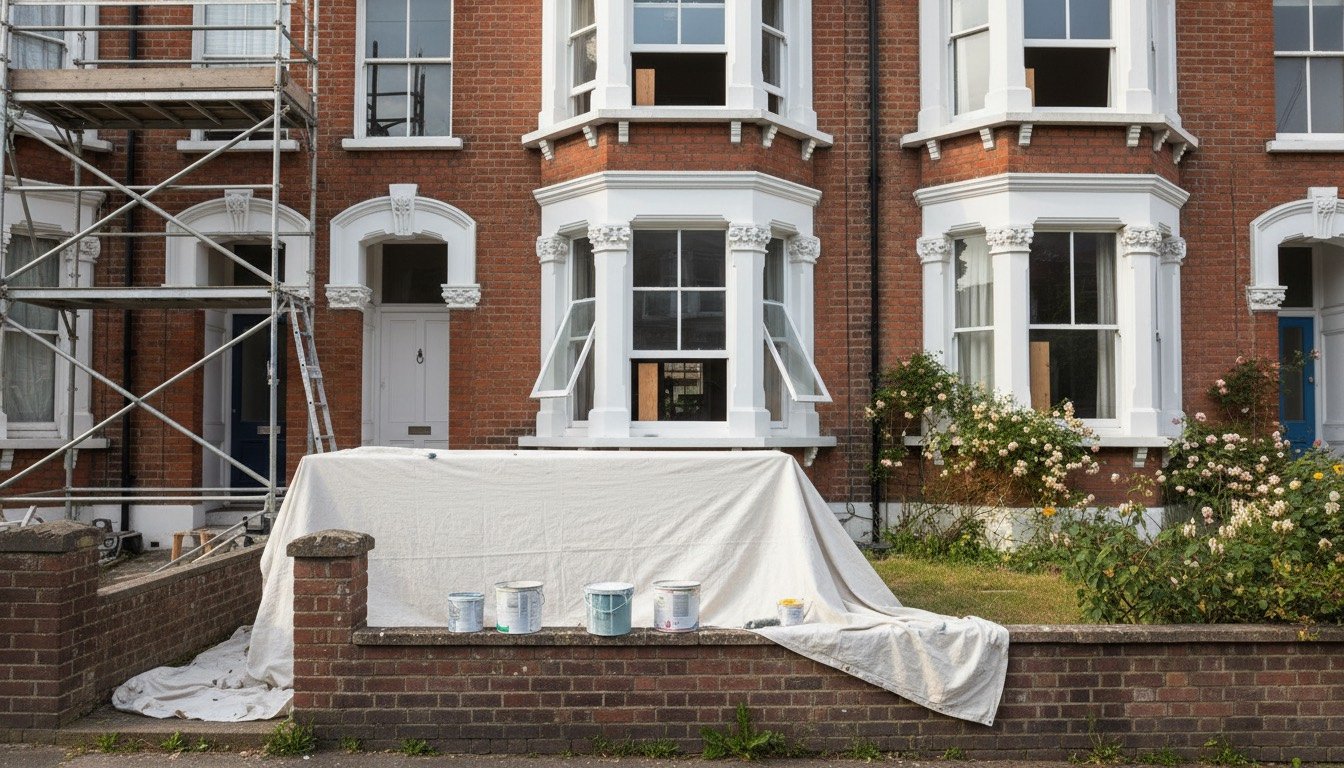
Ask three decorators and you get three answers, but all describe the same conditions: a run of days where the surface is genuinely dry, warm enough to form a film, and not so hot the paint skins before it levels. In the UK that window is narrower than people assume, and on a pre-1919 house narrower still.
The forecast on your phone measures air temperature at 1.5 metres, in the shade. Paint does not care. It cares what the wall is doing, and a north-facing solid brick elevation in April sits 4°C below air temperature at nine in the morning while still holding rain from a fortnight ago.
What good painting weather actually means
Forget the word warm. Five numbers decide whether a coating bonds or fails, and a £30 infrared thermometer plus a moisture meter checks four of them.
Water-based paints form a film by coalescence: the water leaves and the resin particles fuse. Below roughly 8°C at the surface they never fuse properly, so the coating looks perfect in June and sheds in flakes by February. Oil and alkyd finishes cure by oxidation, needing warmth and daylight. Limewash does neither: it carbonates slowly out of the air and wants damp overcast weather.
- •Surface temperature 8-25°C. Tins say above 5°C and rising; 8°C is the honest floor. Measure the wall, not the air.
- •Dew point gap: the surface must sit 3°C above dew point and stay there four hours after the last coat.
- •Relative humidity below 80%. Above 85%, water-based films stay open, bloom milky and collect dirt.
- •Moisture content: timber under 18%, masonry under 16%. The number DIY jobs skip.
- •Rain: 24-48 hours dry before you start on masonry, 12 hours clear afterwards.
- •Wind under 15mph. Stronger drives grit into wet paint and dries the film faster than it flows.
The UK painting calendar, month by month
Chase the shade, not the sun. Start on the elevation that has just lost direct sunlight and follow it round. In late June a south-facing render hits 45-50°C by midday, well past the point where paint stops flowing.
- •March to mid-April: too early for walls, which are still carrying winter. Sheltered joinery only.
- •Late April and May: the best stretch most years. Long days, falling humidity, mild nights. Decorators are booked out for it by February.
- •June to August: excellent for timber and oil finishes. Start at 7am on the east elevation, be off the south wall by 11am, and expect humid thunder days to end early.
- •September: the quiet favourite. Stable, cool, good light. Dew is the catch, so stop by 3pm, 2pm late in the month.
- •October: the first fortnight only, and only where the sun reaches before 10am.
- •November to February: don't. At 3°C even all-weather coatings sit on the surface instead of bonding.
Old houses run on a different clock
Generic advice falls apart here. A cavity-walled house built after about 1930 sheds water at the outer leaf and dries in two or three days of breeze. A 215mm solid brick wall, or a 327mm Victorian flank, holds water through its full thickness and can want five to ten days of drying wind before a meter reads under 16%. Same street, same forecast, different job.
Lime render and limewash carbonate slowly, needing mild, humid, overcast conditions and then three or four frost-free weeks: mid-May to mid-June, or early September. Limewash applied in August sun goes chalky and dusts off on your sleeve; a frost within 48 hours destroys it. If the walls are bedded in lime, the breathability logic behind lime mortar versus Portland cement governs the coating too.
Box sashes must be painted open and left to cure open, or they glue shut in the box: a June or September job, never a March one. New linseed oil putty needs two to four weeks to skin before overpainting, so book glazing repairs a month ahead of the paint — see restoring original wood windows. Anything decorated before the 1992 UK ban may contain lead, ruling out dry sanding and hot-air stripping above 450°C, so read lead paint safety in older homes first. And Victorian cast iron rainwater goods flash-rust within hours on a damp day, so bare metal gets primed the session it is exposed.
Matching the window to the coating
- •Water-based masonry paint (Dulux Weathershield, Sandtex, Johnstone's Stormshield): 8-25°C surface, four to six hours between coats in summer, overnight in September.
- •Breathable mineral and silicate paints (Keim, Beeck, Earthborn): a settled five-day spell, wall under 16% moisture. Rain inside 24 hours marks them permanently.
- •Water-based trim paint: touch dry in an hour or two, but needs four clear hours before dew, or you get a milky bloom that will not polish out.
- •Linseed oil paint: 24-48 hours between coats, plus warmth and daylight to oxidise. June to early August only.
- •Deck and fence stain: the driest fortnight you get, timber under 18%, no dew for 12 hours after. See staining a deck properly for prep.
Costs, and what bad timing costs you
A full exterior repaint of a three-bed semi runs £1,800-£3,200 including access. A Victorian terrace with sashes, a bay and cast iron downpipes is more like £3,500-£6,500, and the joinery is where the money goes. Day rates are £180-£260 outside London, £250-£350 in the South East. Two-storey scaffold front and rear for a fortnight is £700-£1,400; an alloy tower hires at £60-£90 a week. Five litres of masonry paint costs £45-£75 and covers 30-35m² per coat on smooth render, half that on pebbledash. Our exterior painting cost breakdown has the detail.
Off-season is where people lose money. Decorators discount exterior work 10-20% from October to March. A coating applied over a cold, damp substrate fails in three or four years instead of ten: you have not saved £400, you have bought a second repaint.
DIY or hire a decorator
Ground-floor walls, garage doors, fences, sheds and bungalows are sensible DIY, provided you strip failing paint back properly rather than painting over it. Hand it over when the job involves scaffold, second-storey gables, lead removal on a pre-1970 or listed property, a full sash overhaul, or a wall you suspect is structurally damp.
Be honest with the arithmetic: on a two-storey house, once you have hired a tower, bought 30 litres of paint and sundries, and given up six weekends, you are usually within £400 of a decorator's quote.
Common questions
- •Can I paint on a mild winter day? Not on masonry. A wall at 9°C at 2pm is at 4°C by 6pm, and the film is still curing then.
- •What if it rains two hours after I finish? Most water-based masonry paint is shower-resistant by then in warm conditions, but a downpour washes streaks. Let it dry, assess in daylight, recoat those panels.
- •Morning or afternoon? Morning in autumn, once dew has burned off around 9-10am. Late afternoon in high summer.
- •How many dry days do I need? For masonry, four: two dry before, one to paint, one after.
- •Does direct sun help? No. The surface skins before the film has levelled or bonded, giving roller marks and early flaking.
Found this useful?
There's plenty more — hundreds of guides and honestly-tested product reviews for every corner of your home.
Browse All Guides