Kitchens & Bathrooms · 6 min read · 28 July 2026
Quartz vs Granite Worktops: Differences, Pros, Cons and Cost
Showrooms will tell you quartz is maintenance-free and granite is natural and unique. Both claims are half true. Here is how the two really behave once a British family cooks on them.
By the Nims Casa editorial team — written from professional cleaning experience and checked against our editorial standards.
Every worktop material fails eventually. The useful question is not which one is best, but which failure you can live with, because quartz and granite break down in completely different ways. One goes wrong from heat and sunlight; the other from neglect and the wrong bottle under the sink.
Prices here are UK supplied-and-fitted rates for 2026, on a 600mm deep run at 20mm or 30mm thickness. British fabricators quote by the linear metre rather than by area. If you are still at the layout stage, settle the cabinets before the stone — the worktop is templated last and cannot be fudged once cut. It usually swallows 10-15% of a full kitchen budget.
The short version, side by side
Strip out the sales language and it comes down to six things — what we tell customers before a stone-yard visit.
- •Price, supplied and fitted: granite £280-£500 per linear metre; quartz £350-£650. Veined marble-effect quartz and exotic Brazilian granite both climb past £700.
- •Porosity: granite is porous and needs an impregnating sealer. Quartz is roughly 90% ground stone in polymer resin — non-porous, never sealed.
- •Heat: granite takes a pan straight off the hob. Quartz resin scorches and yellows from around 150°C, permanently.
- •Consistency: every granite slab differs, so view and reserve the actual one. Quartz is batch-made, so joins and future repair pieces match.
- •Repairability: a chipped granite edge can be re-polished in place for £120-£250. Damaged quartz usually means replacing a whole section.
- •Sunlight: quartz in a south-facing bay or glazed extension can yellow over five to ten years. Granite does not.
How each performs in a real British kitchen
The most common quartz callout we get is a pale brown halo where someone rested a hot casserole or an air fryer. Trivets are not optional, nor a heat mat under a slow cooker. Granite has the opposite weakness: fine with heat, but it can crack from thermal shock at the narrow bridge of stone between hob cut-out and sink.
On staining, granite is only as good as its seal. Light Kashmir and Bianco granites take a red wine or olive oil mark within minutes once the sealer wears through around the sink and hob, where it always goes first. Quartz absorbs nothing, but the resin is vulnerable: turmeric, hair dye and oven cleaner all leave a permanent shadow.
Hard water matters more than most guides admit. Across London, the Home Counties and East Anglia, dark polished granite shows every dried splash as a chalky spot, and the limescale that furs your kettle dulls the finish within two years. Honed or leathered surfaces are the smarter pick in hard-water postcodes.
The ten-year cost, not the quote
Compare only the fitted price and quartz looks expensive. Compare a decade of ownership and the gap almost closes. Note too that a stone splashback is nearly always the worst-value line on any quote — tiling the splashback instead costs a fraction and is a genuine weekend job.
- •Galley, 4.5m, mid-range grey granite: £1,750 fitted, £45 cut-outs, sealer at £18 every 18 months (£120 over ten years) and one professional re-polish around year eight (£220). Ten-year total: about £2,135.
- •Galley, 4.5m, plain white quartz: £2,050 fitted, £60 cut-outs, no consumables, but budget one scorch or chip section replacement at £450 in year seven. Ten-year total: about £2,560.
- •Family kitchen, 7.3m including an island, veined quartz: £3,900 fitted, £180 cut-outs, £220 for a mitred 100mm island apron. Ten-year total: about £4,300, with no maintenance spend.
- •Extras that catch people out: drainer grooves £100-£180, 100mm upstands £60-£90 per linear metre, old worktop removal and disposal £100-£200.
Installation, joins and the dust question
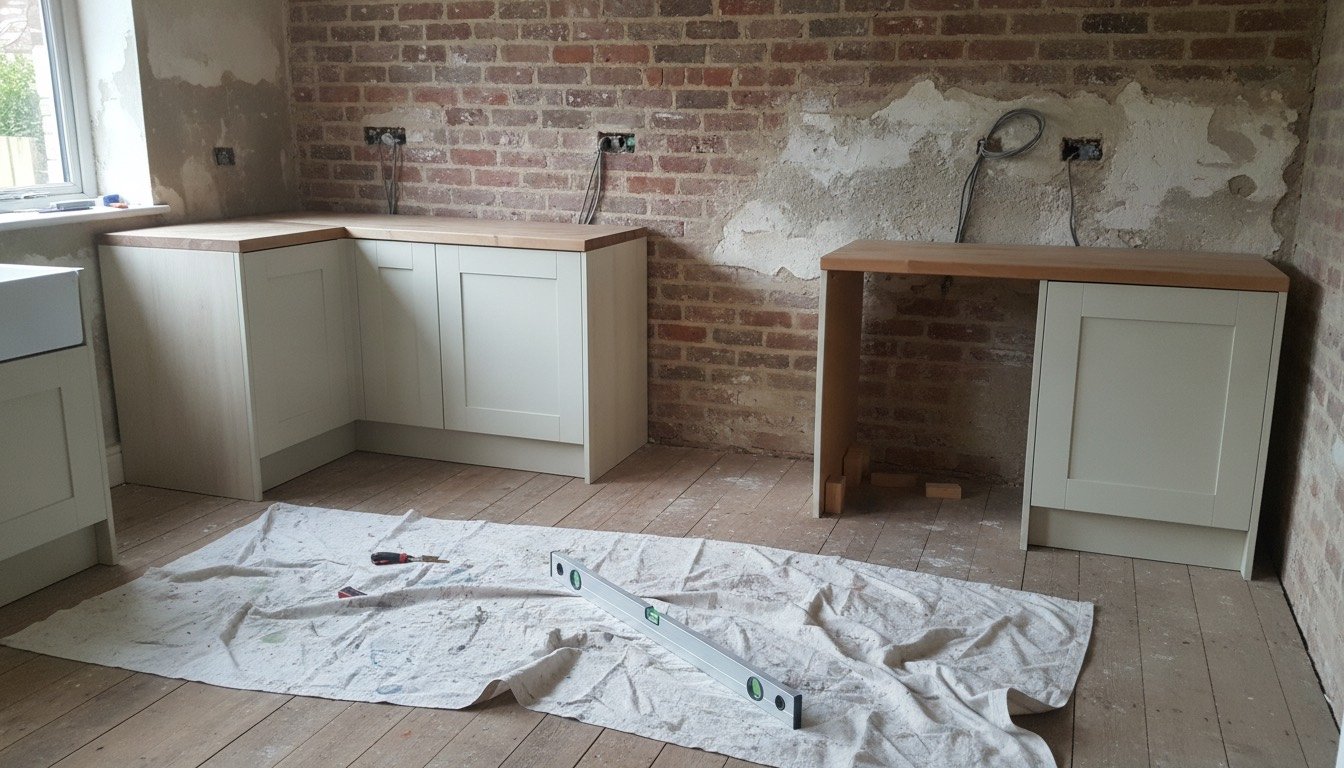
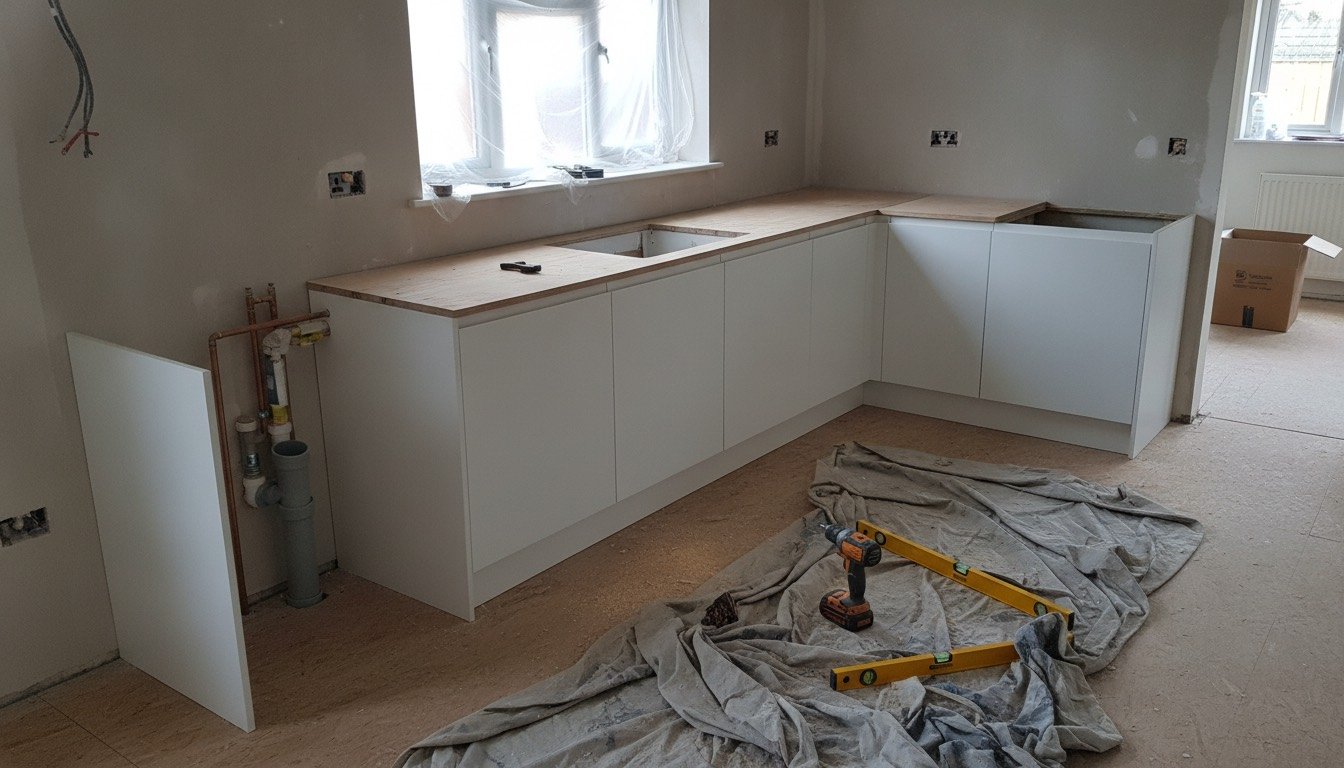
Both follow the same sequence: units fitted and levelled, template taken, then eight to fifteen working days before fitting. Nothing else in the kitchen finishes during that gap, which is why sensible schedules put templating on the critical path. Get three quotes and read them line by line — our guide to comparing contractor estimates is worth ten minutes before you sign.
One point the showroom will not raise: cutting and polishing engineered quartz releases very high levels of respirable crystalline silica. Australia banned engineered stone worktops in 2024 over silicosis cases, and the HSE has stepped up enforcement in UK stone workshops. It has no bearing on living with the finished surface, but it should shape who you buy from. Ask whether the fabricator wet-cuts with extraction and issues respiratory protection.
Living with them without ruining them
Daily care for both is deliberately dull: warm water, a few drops of washing-up liquid, a microfibre cloth, dried off. Skip bleach sprays, cream scourers and anything descaling. Neat vinegar and limescale removers etch polished granite and dull quartz resin, which is exactly what happens where one bottle does both the bathroom and the kitchen.
For granite, test the seal every six months: leave a 50p-sized puddle for fifteen minutes and see whether it darkens the stone. If it does, reseal with an impregnating product such as Lithofin Stain-Stop — £20-£28, two thin coats, half an hour. For quartz, a cream stone cleaner once a month lifts the greasy film around the hob.
The renter-safe version: upgrades that come back off
Stone is not happening in a rented flat, and no landlord is refunding you for it. What works is a set of fully reversible changes that leave the original laminate untouched — the same principle behind the rest of our rental-friendly decor ideas. Photograph the worktop, dated, before you start, and get any adhesive change agreed in writing first.
Resist sticking anything within 200mm of the hob or over a worn sink edge. Heat lifts the film, water gets underneath and swells the chipboard core, and that swelling is what genuinely costs you the deposit.
- •Self-adhesive stone-effect worktop film: £15-£30 for a 2m roll, lasts 12-24 months, and lifts cleanly with a hairdryer on low and slow peeling.
- •A granite or quartz remnant from a fabricator's offcut bin, cut to 600 x 400mm with polished edges: £40-£90, sits loose as a hot-pan and pastry station, and moves house with you.
- •A freestanding butcher's block trolley at £70-£180 — real prep surface and storage without a single screw in a wall.
Who each suits, and the verdict
Choose granite if you cook hard and hot, want a surface that can be repaired rather than replaced, like the idea of a slab nobody else has, and will accept a fifteen-minute reseal every eighteen months. Choose quartz if you want visual consistency across a long run or island, a marble look without marble's fragility, or a kitchen for a rental or a house you plan to sell.
For most UK kitchens we would fit quartz in a plain or lightly veined colour, 20mm with a mitred edge, from a fabricator with a dust-controlled workshop. Granite wins outright for serious cooks, for period properties where a natural slab suits the room, and where the £300-£600 saving matters more than the yellowing risk in a sunny extension. Either way, put the difference into soft-close drawers rather than a thicker slab — refacing the units you already have is often the smarter half of the budget.
Found this useful?
There's plenty more — hundreds of guides and honestly-tested product reviews for every corner of your home.
Browse All Guides