Heating & Cooling · 5 min read · 27 May 2026
Refrigerator Not Cooling? Check These 7 Things First (UK Fridge-Freezer Guide)
Most fridges that stop cooling are not broken in the expensive sense. Seven checks, done in the right order, separate the ten-minute fix from the job that legally needs a qualified engineer.
By the Nims Casa editorial team — written from professional cleaning experience and checked against our editorial standards.
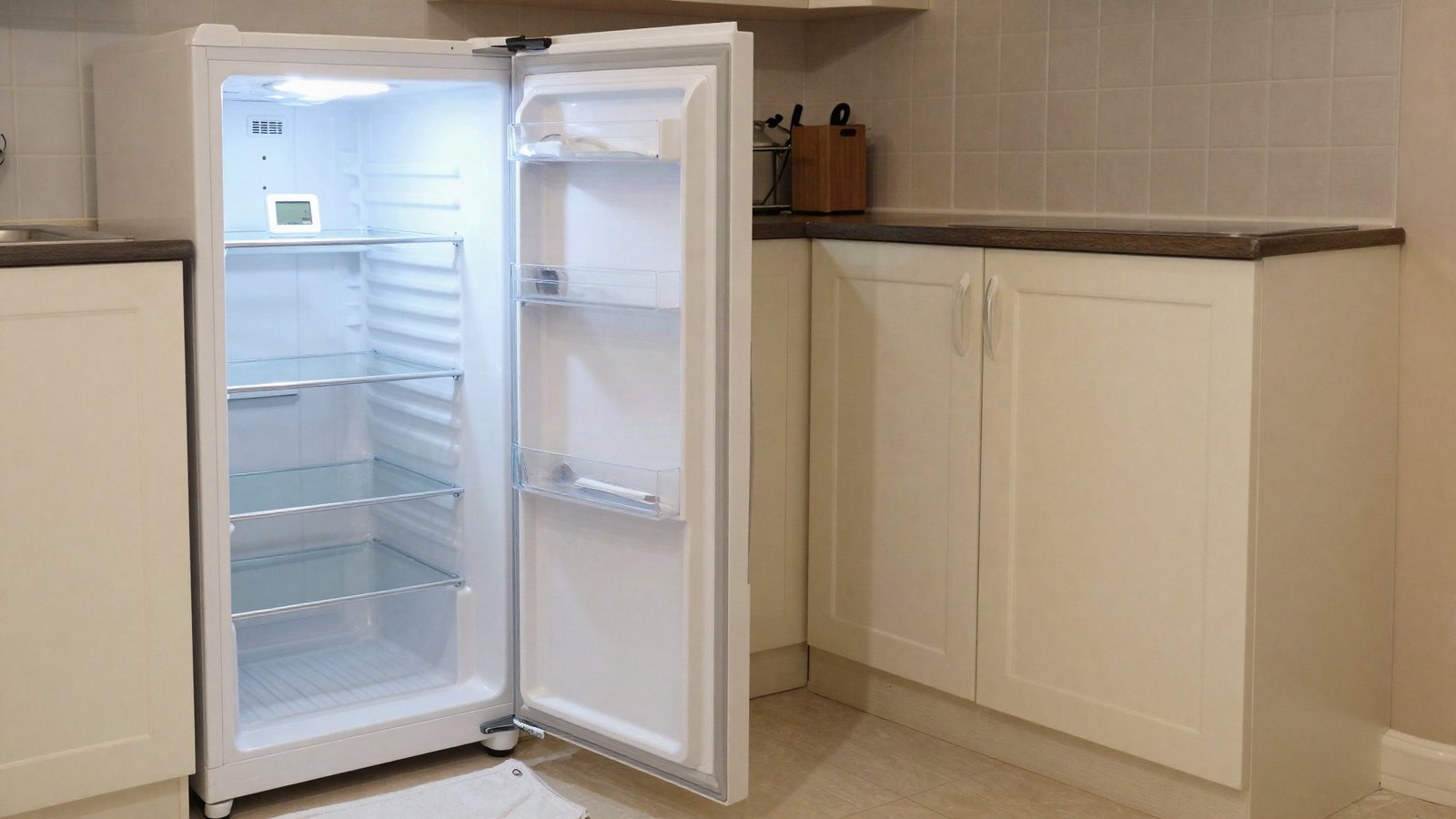
A fridge rarely fails cleanly. It drifts: the milk turns a day early, the butter goes soft, and by the time anyone reaches for a thermometer the compressor has been struggling a fortnight. In the trade, roughly two thirds of callouts logged as "not cooling" come down to airflow, ice, ambient temperature or a door that isn't sealing.
The rest involve the sealed refrigerant circuit, which is not a DIY job in the UK for legal as well as practical reasons. Below are the seven checks an engineer runs, in order, and the line between what you can safely do and what needs a certificate.
First, Define the Fault: Two Numbers and a Glass of Water
"Not cooling" covers two different faults. Nothing at all — no hum, no cold after 12 hours — points at power, the control board or the compressor start circuit. Not cooling enough — 9°C instead of 4°C — points at airflow, ice, seals or ambient conditions.
Measure it properly. A fridge should sit between 0°C and 5°C, a freezer at -18°C. Air temperature swings every time the door opens, so stand a glass of water on the middle shelf for four hours and test that. Above 8°C the food safety clock is running: if it has been warm for over four hours, bin raw meat, fish, dairy and anything cooked.
How a Fridge Makes Cold — and Why That Matters
The compressor pumps refrigerant — usually R600a isobutane in anything built since about 2010 — around a loop, shedding heat through the condenser at the back or through the side panels, then expanding to get very cold inside the evaporator. Most UK fridge-freezers have one evaporator only, behind the freezer's back wall, with a small fan blowing chilled air up a duct into the fridge.
That detail explains most of what follows. If the fan stops or the duct ices over, the freezer stays fine while the fridge warms — nothing in the refrigerant circuit is broken, the cold just isn't being delivered.
The Seven Checks, In Order
Work down the list rather than jumping to the interesting one. Each rules out those below it, and the first three account for most callouts ending in a £75 invoice.
- •1. Power, properly confirmed. The interior light can be lit while the compressor has nothing. Check the RCD or MCB, swap the 13A plug fuse, and test the socket with something else — our dead socket troubleshooting order covers the sequence.
- •2. The setting. Dials marked 1–7 are not degrees: 4 is roughly mid, 1 is nearly off. Check for holiday or eco modes, which on some digital models park the fridge at 12°C deliberately.
- •3. The door seal. Close the door on a £5 note; if it slides out with no drag, the gasket has hardened. Also check for a shelf holding the door a few millimetres proud.
- •4. Heat rejection at the back. Pull the appliance out and vacuum the condenser coils and compressor. Many modern UK models instead use a skin condenser foamed into the sides, so warm flanks are normal. You need 50mm clearance behind and a clear gap above.
- •5. Internal airflow. Find the vent holes in the fridge's rear wall and clear anything packed against them. Overfilling is a leading cause of uneven cooling, so do a fridge deep clean and reorganisation while everything is out.
- •6. Ice on the evaporator. Inspect the freezer's rear panel behind the drawers. Thin even frost is normal; a solid white slab means automatic defrost has failed. Empty it, unplug, leave both doors open with towels down for 24–48 hours, then restart. If it fails again a fortnight later, the defrost heater or its thermostat has gone.
- •7. Ambient temperature. Check the climate class on the rating plate. An N-class appliance is rated only from +16°C, and an unheated British garage sits below that from November. Under its rated minimum the compressor barely cycles, so the freezer thaws while the fridge seems fine — out there you need SN or SN-T.
Fridge Warm, Freezer Cold? That Narrows It Fast
This exact combination is the most common single complaint we see, and it rarely means the appliance is finished. Because both compartments run off one evaporator, a fridge warm and freezer cold fault is a delivery problem with four realistic culprits.
In order of likelihood: the evaporator fan has seized (open the freezer and hold the light switch in — you should hear it spin); the evaporator has iced over and blocked the duct; the defrost heater or thermostat has failed, which caused that ice; or the damper flap metering cold air into the fridge has stuck shut.
Where DIY Stops and an Engineer Starts
This is where people go wrong, and it matters: the refrigerant in a modern fridge is a flammable hydrocarbon under pressure. The honest split:
- •Fair game for a competent DIYer: cleaning coils and vents, levelling the appliance, replacing a door gasket, a manual defrost, changing the plug fuse, and clearing a blocked defrost drain with warm water and thin wire.
- •Borderline — fine if you are confident, unplugged and buying the right part number: evaporator fan motor, start relay or PTC device, defrost heater, defrost thermostat. All plug-on parts behind a back panel, no refrigerant involved. If you find yourself splicing mains wiring rather than unplugging connectors, stop.
- •Professional only, no exceptions: anything touching the sealed system — recharging refrigerant, replacing a compressor, fixing a leak, changing a filter drier. R134a is a fluorinated gas and working that circuit without certification breaches the UK F-Gas Regulations; R600a is flammable and needs hydrocarbon-qualified handling.
- •Also professional: the incoming supply or a hardwired connection. Kitchen electrics are notifiable under Part P of the Building Regulations, and electrician rates are cheap next to getting that wrong.
- •Stop now and call someone if you smell burning, see scorching on the rear board, hear the compressor clicking on and off every 30 seconds, or spot oily residue on the pipework — that last one is escaping refrigerant.
UK Repair Costs and the Replace-or-Repair Line
Expect £60–£95 for an appliance engineer's callout and diagnosis, plus parts and labour. A thermostat or fan motor lands at £90–£160 fitted, a defrost heater £120–£190, a control board £150–£250. Compressor replacement runs £280–£450, almost never worth it when a decent new fridge-freezer is £350–£800.
The trade rule: if the quote exceeds half the replacement cost and the appliance is over eight years old, replace it — check our figures on how long appliances last first. Either way, add a coil vacuum and a seal check to your appliance maintenance routine.
Questions We Get Asked Most
How long before it should be cold? Give it 12 hours, or 24 after a defrost. A full fridge takes far longer than an empty one.
Is constant running bad? Not necessarily — modern inverter compressors run almost continuously at low speed. Constant running with a warm interior is the real fault.
Can I use a fridge straight after moving it? If it travelled upright, an hour. If it was laid on its side, stand it up for four hours first so the compressor oil drains back.
Found this useful?
There's plenty more — hundreds of guides and honestly-tested product reviews for every corner of your home.
Browse All Guides