Costs & Hiring · 6 min read · 21 July 2026
Renovation Budget Mistakes to Avoid (And What They Really Cost in an Older UK House)
Budgets rarely fail on the kitchen. They fail on what is behind the plaster, and in a pre-1919 house there is a great deal behind the plaster.
By the Nims Casa editorial team — written from professional cleaning experience and checked against our editorial standards.
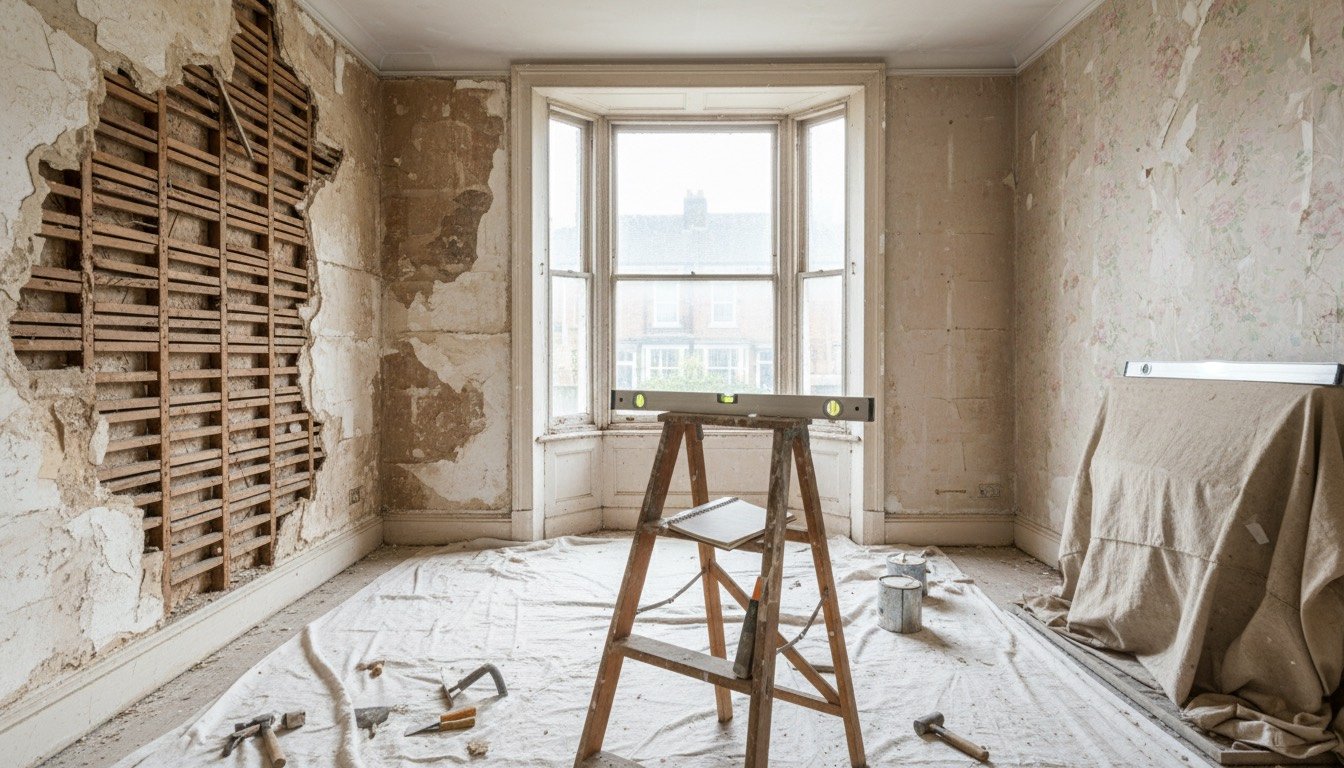
Nobody blows a budget by choosing slightly nicer tiles. Budgets fail in three places: the contingency was sized for a modern house, survey work was skipped to save a few hundred pounds, and the sequence of works was wrong so trades came back twice. In a pre-1919 property all three go wrong at once, because solid brick, lime plaster, lath ceilings, clay drains and rubber-sheathed wiring behave nothing like the plasterboard-and-PVC house the price guides are written for.
What follows is ranked by consequence rather than frequency. A £300 mistake and a £14,000 mistake feel identical in the week you make them, which is exactly why people make the expensive one.
The Mistakes, Ranked by What They Cost You
Rank your risks by the size of the hole they leave, not by how obvious they look. Worst first, these are the ones that swallow whole budgets on period refurbishments.
- •1. No contingency, or a 10% one. A pre-1919 house needs 20-25%. On a £60,000 refurb that is £6,000 of headroom versus £15,000, and the gap is roughly one collapsed ceiling plus one failed drain run.
- •2. Budgeting from ex-VAT quotes. Sole traders under the threshold don't charge it; VAT-registered builders add 20%, turning £48,000 into £57,600. This stops more projects mid-job than anything else.
- •3. Skipping a £150-£250 CCTV drain survey. Relining Victorian clay drainage is £180-£400 per metre; digging out and replacing is £1,500-£4,000.
- •4. Assuming the wiring is fine because the sockets work. A rewire is £4,500-£7,500 for a three-bed terrace and must happen before plastering, not after.
- •5. Pricing lime plaster as gypsum. Lime is £60-£90 per m² against £22-£35 per m² for board and skim. Across 120 m² of walls that is a £4,000-£6,000 swing.
- •6. Replacing sash windows you could repair. Refurbishment with draught-proofing is £450-£900 per sash; like-for-like timber replacement is £1,400-£2,600.
- •7. Forgetting the dull line items: scaffolding (£900-£2,000 for six weeks), skips at £280-£420 each, building control at £400-£900, structural calculations at £350-£700.
Why These Mistakes Keep Happening
None of this is stupidity. It is one underlying error: pricing the house you can see rather than the house you own. Online estimators are modelled on post-1980s construction, so they assume stud walls you can drop a cable through, a working damp-proof course, plastic soil pipes and a loft you can insulate in an afternoon.
The second driver is optimism about sequence. People book a kitchen fitter for a fixed date, then find the joists under the old scullery are wet-rotted and the programme slips a month with the deposit gone. Our walkthrough on how to budget for a home renovation sets out the order in which costs should be locked down.
Third, quotes get compared on the wrong number. A £42,000 quote and a £51,000 quote are usually not the same job: one has excluded the electrics, or priced gypsum where lime is required. Go line by line using our guide to comparing contractor estimates.
The Old-House Traps That Break Budgets
Solid walls are the big one. A 225mm solid brick wall has no cavity, frequently no damp-proof course, and it needs to breathe. Everything downstream changes: you cannot chase deep channels through it without weakening it, internal wall insulation eats 80-120mm of room width at £90-£150 per m², and sealing the outside with cement render traps moisture that reappears as damp indoors.
Lath and lime plaster is the second. Once a ceiling is disturbed it usually has to come down entirely, and reboarding a 4m by 4m room is £600-£1,100 including skim. Replastering lime walls in gypsum is a false economy; use lime mortar rather than Portland cement on anything that must move and dry.
Then the services. Salt-glazed clay drains crack at the joints as ground shifts, and pre-1970s wiring may have no earth at the lighting circuit and rubber insulation that crumbles when touched, which is why a full rewire is a first-fix job. Sash windows are almost always cheaper to save than to replace.
The Genuinely Dangerous Ones
A few mistakes stop being financial and become safety issues. Treat these as non-negotiable spending; they are the cheapest lines in the budget relative to what they prevent.
- •Artex and textured coatings applied before 2000 can contain chrysotile asbestos. Never sand, scrape or drill it. A refurbishment and demolition survey is £250-£600; overboarding and removal options are in our guide to Artex ceiling removal.
- •Pre-1970s wiring with a rewireable fuse box, no supplementary bonding or perished rubber insulation. Get an EICR (£150-£300) before planning anything else.
- •Cutting a structural opening through a solid wall without calculations. Padstones, lintel spans and needle propping are engineer's work: about £1,800-£3,500 done properly, with building control sign-off.
- •Lead paint on original skirtings, sashes and staircases. Wet-sand or chemically strip, never dry-sand or use a heat gun, and keep children out of the room.
- •Removing a chimney breast on one floor without supporting the stack above. These collapses are real, not theoretical.
- •Notching or drilling joists outside the permitted zones for pipes and downlights. You are weakening a floor you will be standing on.
How to Rescue a Budget That Is Already Slipping
If you are three weeks in and the numbers have moved, stop and re-forecast the whole job on one sheet. Split the works into fabric (roof, damp, drains, wiring, plaster, structure) and finishes (kitchen, bathroom, decoration, flooring). Fabric never gets deferred; finishes almost always can.
Then cut in this order: reduce specification before scope, scope before phasing, and phase before borrowing. A £9,000 kitchen becomes a £4,500 kitchen in the same layout with better appliances added next year. Never defer anything that will be buried: nobody wants to lift a new oak floor in eighteen months to reach a pipe.
When to Stop and Call Someone
Get professional input the moment you meet any of these: a crack you can fit a pound coin into, a floor that has dropped more than roughly 15mm across a room, damp that returns weeks after treatment, suspected asbestos, any structural opening, or wiring you cannot identify. A structural engineer's visit is £350-£700; a damp and timber survey from someone who does not sell the remedial work is £250-£500.
The rule of thumb after two decades on site: if getting it wrong means opening up finished work again, pay someone. If it only means repainting, do it yourself. Current ranges for the whole job are in our old house renovation cost guide.
Quick Questions
- •What contingency should I hold on a Victorian house? 20-25% of the build cost, and the top end if roof, drains and wiring are untouched since the 1970s.
- •Is a period house always dearer per m²? Usually 20-40% more for an equivalent finish, driven by lime work, bespoke joinery and access.
- •Will the work add what it costs? Rarely pound for pound. Sensible upgrades add value; over-specifying past your street's ceiling price does not.
- •What can I realistically do myself? Stripping, decorating, tiling and second-fix carpentry. Electrics, gas, structure and work at height are not.
- •Best £300 in the project? A CCTV drain survey plus an EICR, before you ask anyone for a quote.
Found this useful?
There's plenty more — hundreds of guides and honestly-tested product reviews for every corner of your home.
Browse All Guides