Electrical · 6 min read · 26 May 2026
How Much Does It Cost to Rewire a House? UK Prices for 2026
The cable for a whole three-bed house costs about £900. The other £7,000 is labour, access and making good — which is why quotes for the same property differ by thousands.
By the Nims Casa editorial team — written from professional cleaning experience and checked against our editorial standards.
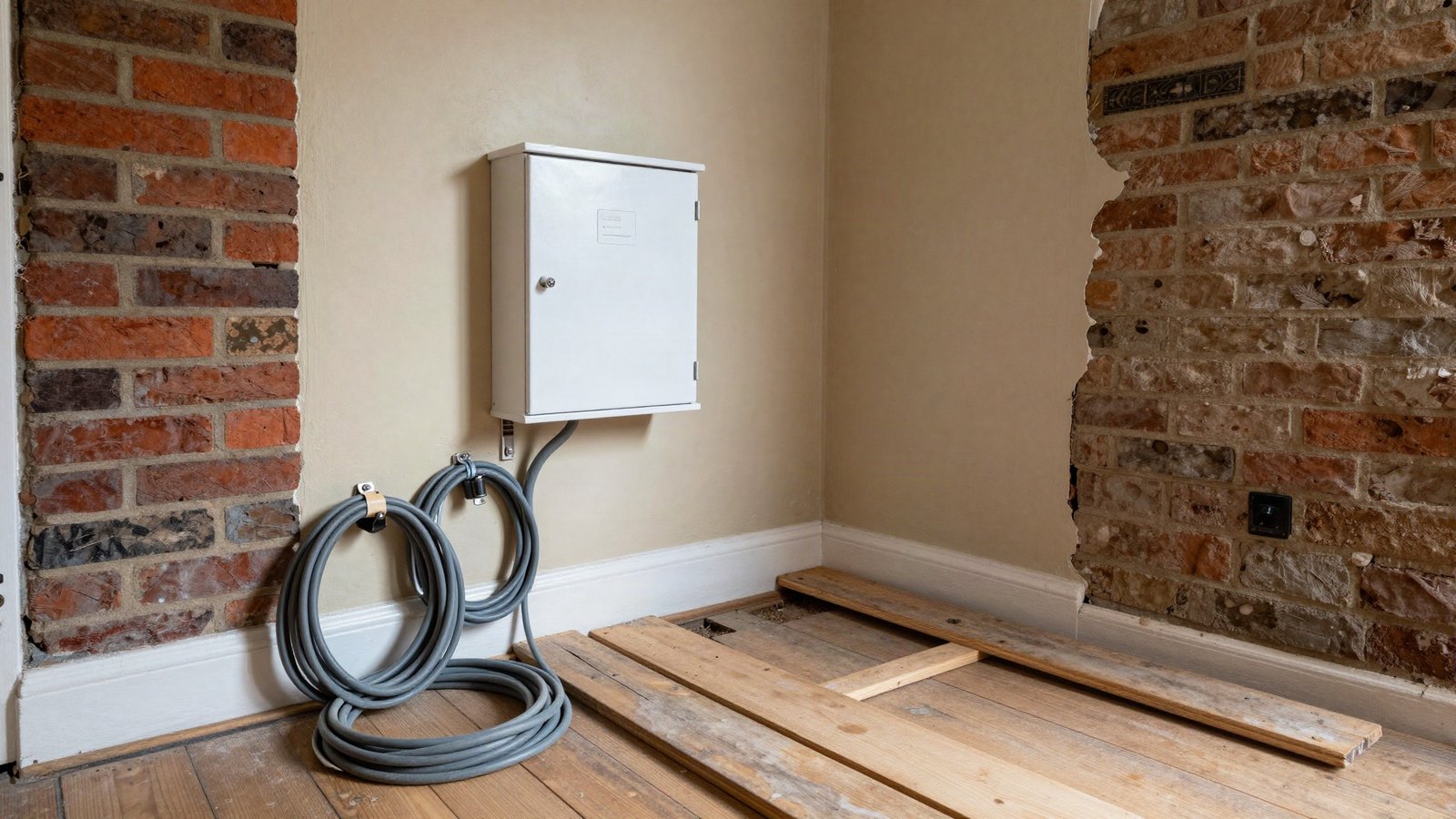
The cable is almost irrelevant to the bill. Twin-and-earth, back boxes and accessories for a whole three-bedroom house come to roughly £900 at trade prices. Everything else is somebody on their knees under a floor, a wall chaser filling a room with brick dust, and a plasterer following behind. That is why two honest electricians can quote the same house £4,000 apart: they are pricing different amounts of destruction.
These figures cover first fix, second fix, a new consumer unit, testing and certification at 2026 rates. Plastering is almost never included, and in a pre-1919 house it is the biggest hidden number in the job.
What a full rewire costs in 2026, by property type
Most UK electricians price by "points": every socket, light, switch and spur counts as one. These assume a post-1930 property with cavity walls, accessible floors and no listed status.
- •One-bed flat, 25–35 points: £2,800–£4,200
- •Two-bed terrace, 40–55 points: £4,200–£6,500
- •Three-bed semi, 55–75 points: £5,500–£8,500
- •Four-bed detached, 75–100 points: £8,000–£13,000
- •Pre-1919 solid-wall terrace or villa: add 25–40% to the figure above
- •Grade II listed or heavily panelled period house: £12,000–£20,000+
Unit costs and the labour-materials split
Ask for a schedule, not a single number. These rates include materials and labour but never plastering. If you only need the board changed, a consumer unit upgrade is a far smaller job.
On a modern house, materials are 25–30% of the total and labour the rest. In a Victorian property that shifts to 15–20%: the cable quantity barely changes while the hours double. Cross-check against electrician's day rates — £280–£420 outside London, £380–£550 inside it, for a two-person team.
- •Per point, supplied and fitted: £90–£130 modern build, £115–£160 solid wall or conduit
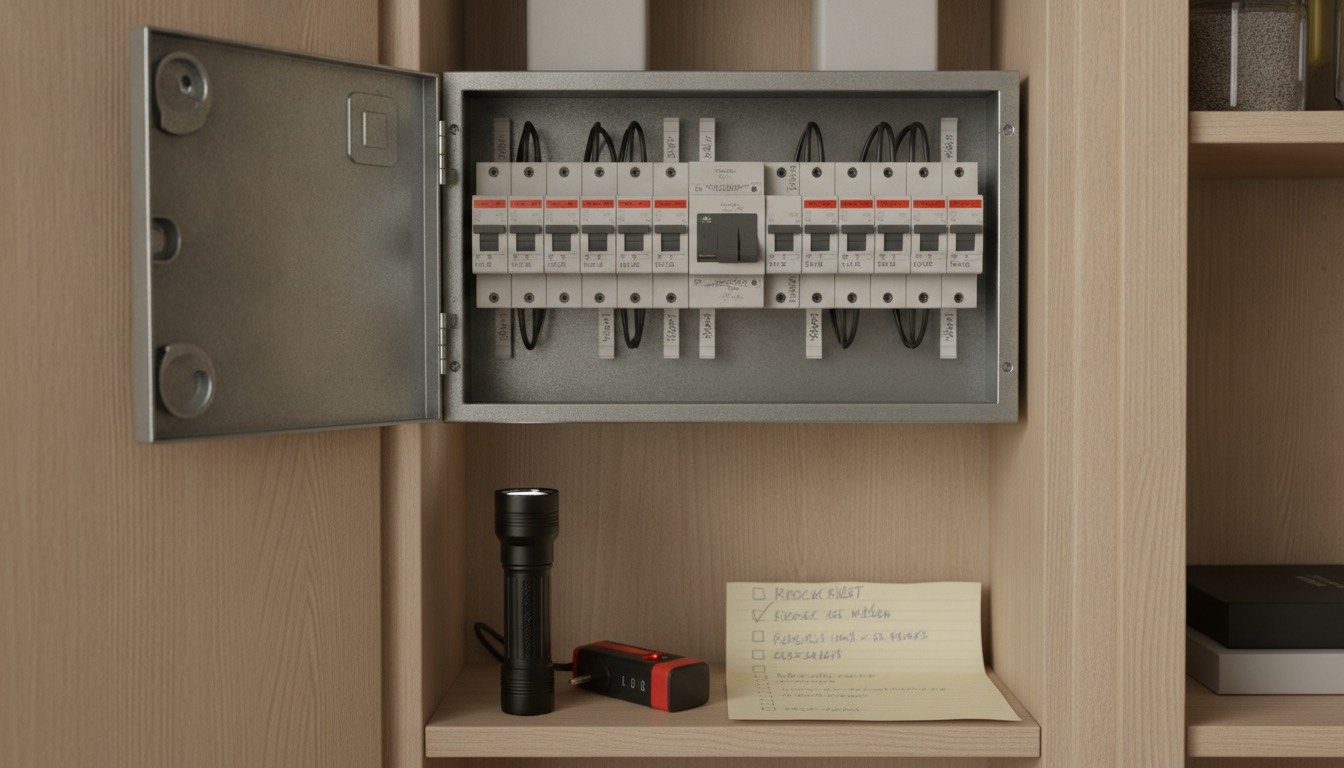
- •18th Edition metal consumer unit, 10–14 way, all-RCBO: £480–£850 fitted
- •Main protective bonding to gas and water in 10mm: £120–£280
- •Earth rod and TT arrangement where there is no supplier earth: £250–£450
- •EICR before or after the work: £150–£300
- •Building control notification if the electrician is not scheme-registered: £250–£450
Why pre-1919 houses cost 25–40% more
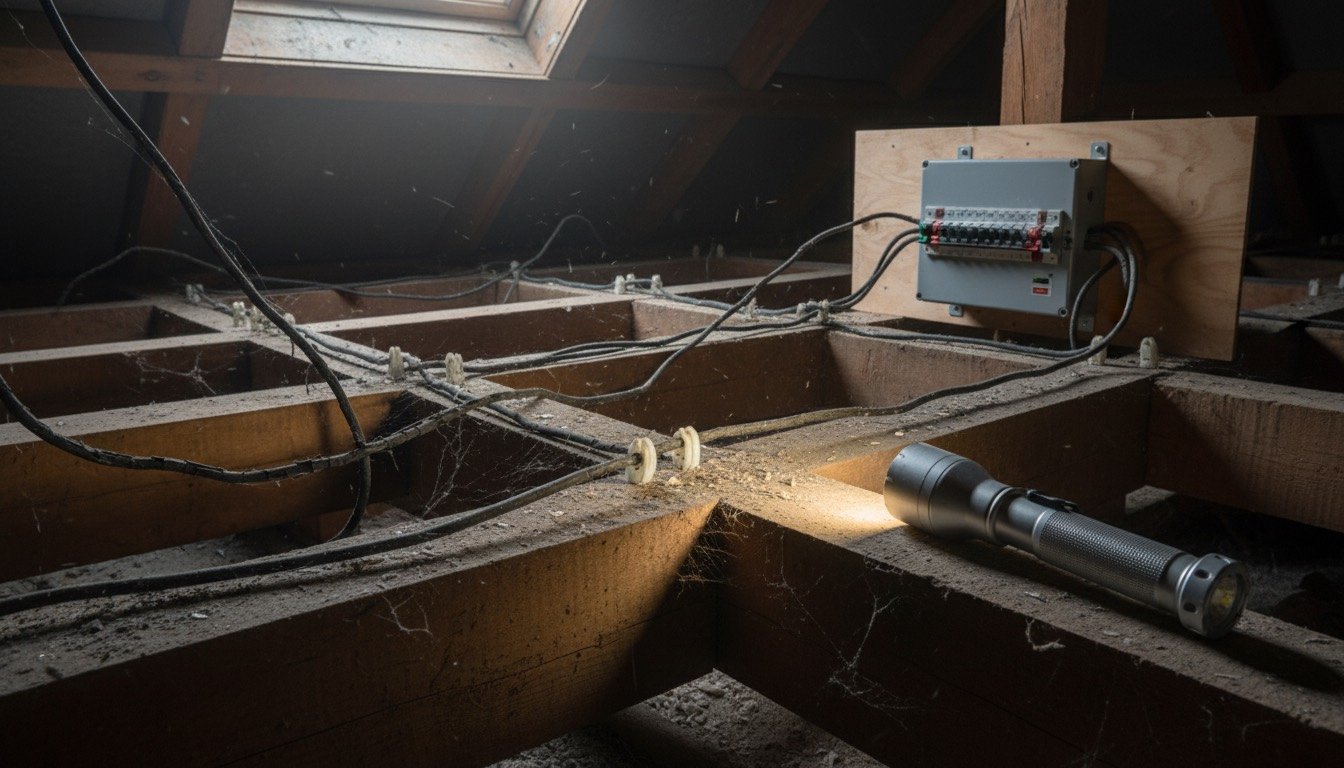
In a 1990s house you drop a cable down a stud void in ninety seconds. A solid nine-inch wall finished in lime plaster has no void at all, so every drop is chased and every chase is a repair. That single difference drives most of the premium — read up on the usual problems in 100-year-old houses before fixing a budget.
Making good is what people forget. Gypsum patched into lime cracks along the chase within a year, so repairs need a lime-compatible mix: dearer, slower, a different trade. Budget £30–£45 per metre of chase, or £1,500–£4,000 across a period house, and see repairing old plaster walls first.
- •Chases must not exceed one sixth of wall thickness horizontally or one third vertically. On a single-skin internal wall there is often nowhere legal to chase at all.
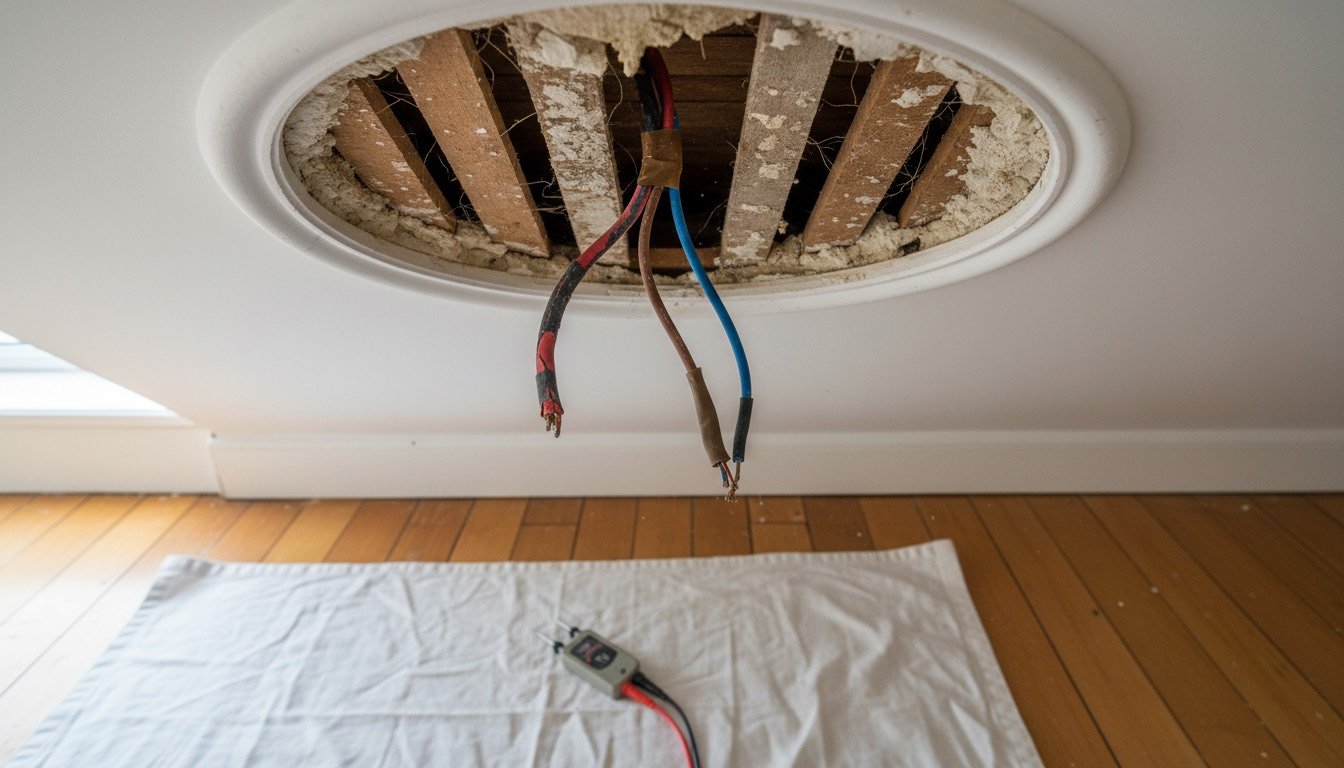
- •Lath and plaster ceilings crack the moment you kneel on the boards above; reboarding and skimming a room runs £45–£70 per m².
- •Victorian cut-nailed boards and later tongue-and-groove both split on lifting, and the voids beneath already carry cast-iron soil pipes and redundant gas runs. Allow 10–20% board replacement at £25–£40 per m².
- •Sash boxes hold counterweights, so no chasing within 150mm of a reveal; cables take the long way round every window.
- •Pre-1970s rubber and VIR insulation crumbles when moved, lighting circuits often have no earth, and old fuse boards sit on asbestos flash pads. None of it can be part-reused.
- •Textured coatings need asbestos sampling at £50–£90 each, and pre-1970s skirtings usually carry lead paint.
What moves the price
Two variables swing the total more than anything on the specification sheet. Living in the house during the work adds 15–25%, because rooms are done one at a time and dust sheets come up and down daily. And VAT: a registered firm adds 20%, a sole trader under the threshold adds nothing, so identical work differs by £1,400 on a £7,000 job. Properties empty two years or more may qualify for the 5% reduced rate.
- •Region: London +25–35%, South East +10–20%, North East, Wales and Northern Ireland −10–15%
- •Specification: all-RCBO boards, surge protection, smart switching and network cabling all add real money
- •Downlights: each is both a point and a hole in a ceiling — twelve in a lath-and-plaster room is a plastering job, not a lighting one
- •Floor coverings: carpet is fine, glued engineered wood is not, and a tiled solid floor over a cable route ends the plan
- •Supply work: a DNO cutout upgrade or meter move is cheap but carries a 6–12 week lead time
Three worked examples
Real quotes, anonymised, from early 2026. The smallest house is not the cheapest.
- •1930s three-bed semi, occupied, West Yorkshire: 62 points at £102 = £6,324; 12-way RCBO board £620; bonding £180; skip £330. Quoted £7,454 inc VAT, plus £1,150 plastering. All-in £8,604 over nine days.
- •Victorian two-bed terrace, empty, Bristol, solid walls: 48 points at £118 = £5,664; board, tails and earth rod £890; relaying 32m² of floorboards £640; one lath ceiling reinstated £480; asbestos sampling £160. Quoted £7,834, plus £1,900 of lime-compatible plastering. All-in £9,734 over fourteen days — more than the larger semi.
- •Grade II listed four-bed, Suffolk: 84 points at £145 = £12,180; two boards £1,450; brass surface conduit £1,900; conservation liaison £600. Total £16,130 over five weeks, with almost no making good because nothing was chased.
How to sanity-check a quote
A quote reading "full rewire, £6,000" is a guess, not a price. An electrician who resents these questions is telling you something useful.
- •Is there a point schedule, room by room, that you can check against your own walk-round?
- •Is making good included, excluded, or subcontracted — and to whom?
- •RCBOs on every circuit, or two shared RCD banks that take half the house out together?
- •Does the price include an Electrical Installation Certificate to BS 7671 and a Building Regulations compliance certificate?
- •Does the scheme registration number check out on the NICEIC, NAPIT, ELECSA or STROMA site, rather than on a van sticker?
- •Divide the labour by the days quoted: £900 a day for two people is padded, £180 means someone will feel it by week two.
Methodology, and where DIY has to stop
These ranges come from UK quotes and invoices collected between October 2025 and March 2026, inclusive of VAT for registered firms and adjusted by the regional multipliers above. Treat anything older than eighteen months as unreliable.
A full rewire in England and Wales is notifiable under Part P: it must be done by a registered competent person who self-certifies it, or notified to building control before you start — see when electrical work is notifiable. Scotland runs through Building Standards; Northern Ireland has its own technical booklets.
There is no DIY route to a compliant rewire that saves real money, and a sale stalls when the solicitor asks for paperwork you do not have. If you are only establishing whether a rewire is needed, start with an inspection and condition check at £150–£300 — plenty of alarming-looking fuse boards need a new consumer unit and two circuits, not eight thousand pounds of work.
Found this useful?
There's plenty more — hundreds of guides and honestly-tested product reviews for every corner of your home.
Browse All Guides