Roofing & Exterior · 6 min read · 14 April 2026
How Much Does It Cost to Renovate an Old House? UK Prices for 2026
Two identical Victorian terraces on the same street can be £30,000 apart on the same brief. Here is what each element really costs in 2026, with three worked budgets.
By the Nims Casa editorial team — written from professional cleaning experience and checked against our editorial standards.
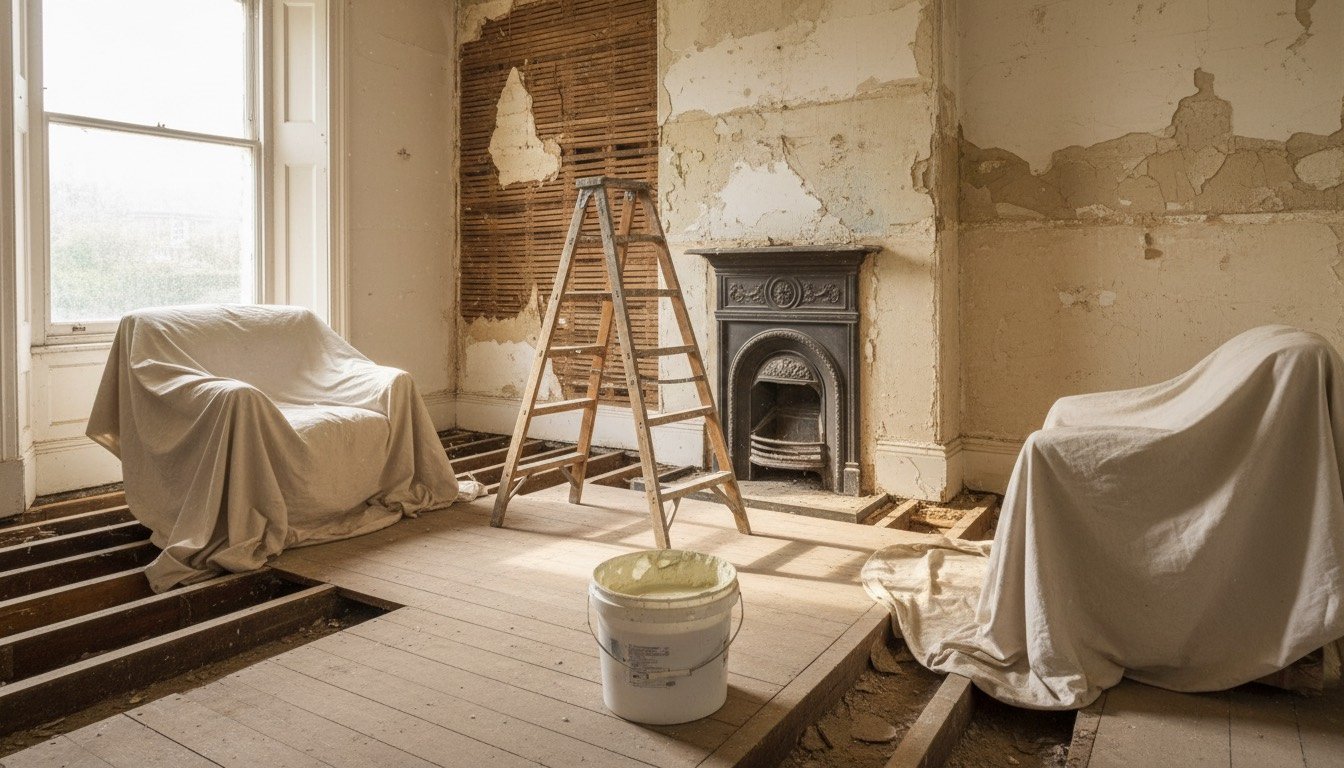
Old houses do not come with a price list. The gap between a £55,000 job and a £95,000 job on the same two-bed terrace is almost never the kitchen. It is whether the roof is sound, whether the walls are dry, and how much cement render a previous owner applied to a building that needed to breathe.
The 2026 range runs from about £400 per m² for a cosmetic refresh to £3,000 per m² for heritage repair on a listed property. Below: where the money goes, three worked budgets, and a reversible version for tenants. At the viewing stage, read the faults in almost every hundred-year-old house first.
Typical UK Price Range in 2026
All-in per m² of gross internal floor area: labour, materials, VAT at 20% and overhead. No extension, no structural alterations.
- •Cosmetic refresh, services untouched: £400 to £750 per m²
- •Medium refurbishment with rewire, new heating, partial replastering and roof repairs: £800 to £1,400 per m²
- •Full renovation back to brick and joists: £1,400 to £2,300 per m²
- •Listed or conservation-grade repair, lime throughout and matched materials: £1,700 to £3,000 per m²
- •London and the South East: add 20 to 40%. The North, Wales and most of Scotland: deduct 5 to 15%
- •In cash: a 68 m² terrace at medium spec is £54,000 to £95,000; a 95 m² semi back to brick is £133,000 to £219,000
Unit Costs: What Each Job Costs on Its Own
Standalone 2026 prices, before main-contractor mark-up. Rewiring varies most, because it turns on floor construction. Lime plaster runs three to four times a gypsum skim and is not optional on a listed building, since lime mortar and cement behave differently on a solid wall — and restoring period windows usually beats replacing them.
- •Full rewire with consumer unit and Part P certificate: £3,000 to £4,500 (two-bed flat), £4,200 to £7,000 (three-bed semi), £7,500 to £12,000 detached
- •New boiler, cylinder and 8 to 10 radiators: £4,800 to £8,500
- •Gypsum skim over sound plaster £20 to £32 per m²; hack off and re-render £35 to £55; three-coat lime on riven lath £70 to £110
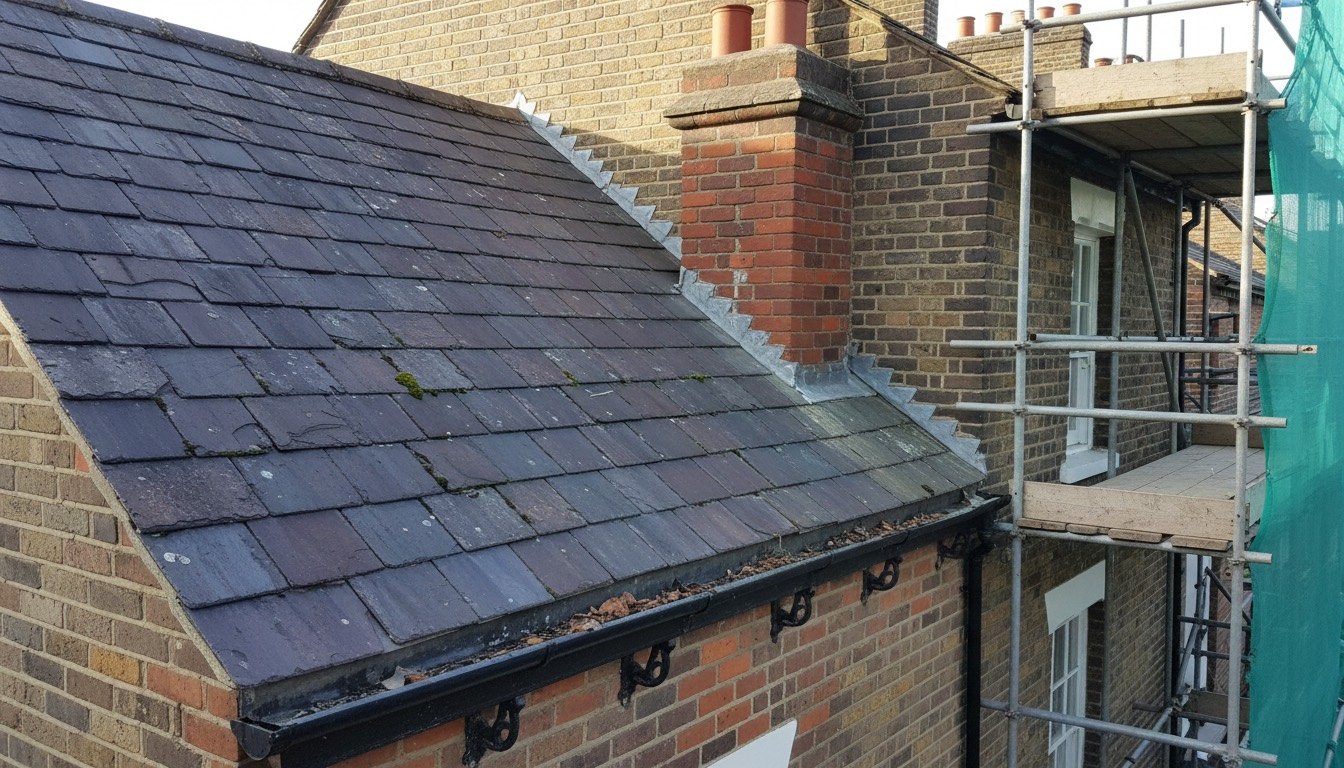
- •Recovering a terrace slate roof on new battens and membrane, most slates reused: £9,000 to £16,000 with scaffolding
- •Lime repointing £50 to £95 per m² of wall face, plus £1,200 to £2,500 scaffolding per elevation
- •Box sash overhaul, new cords and draught seals: £380 to £700 a window. Slim double glazing into existing sashes: £850 to £1,500
- •Damp and timber works £1,800 to £5,000; asbestos survey £250 to £450, licensed removal from £900
- •Mid-range fitted kitchen £8,000 to £16,000; bathroom £5,500 to £11,000; each 8-yard skip £300 to £450
Labour vs Materials, and What Moves the Price
Expect 55 to 65% labour across the project — heavier than a new build, because nothing in an old house is square or repeatable. A rewire is about 75% labour, lime pointing nearer 80% once scaffolding is counted, kitchens and bathrooms invert it at 60 to 70% materials.
- •Listed status or a conservation area: consent adds 8 to 12 weeks, and the officer can specify materials that double an element. Unauthorised work is a criminal offence
- •Access. A mid-terrace with no side return means every slate and skip load goes through the front door — add 10 to 15%
- •Living in it while work happens: add 10 to 20% and several weeks
- •Previous bodges. Cement render on soft brick and a failed injected DPC are the standard £8,000 to £20,000 surprises
- •VAT. A dwelling empty two years or more qualifies for the 5% reduced rate on eligible contractor-supplied work — £10,000 on a £100,000 job
- •Contingency: 15 to 20% on a period property, not the 10% quoted for modern stock
Three Worked Budgets
- •68 m² Victorian mid-terrace, Sheffield, empty, medium spec — rewire £4,600; boiler and 7 radiators £5,400; replastering £6,800; six sashes overhauled £3,200; kitchen £9,500; bathroom £6,800; decoration and floors £5,900; roof repairs £2,200; prelims £3,600. Plus 18% contingency: £56,600, or £832 per m²
- •95 m² 1930s semi, Bristol, empty, full strip-back — prelims £7,800; roof recovered £11,500; rewire £6,200; heating £8,400; replastering £13,500; nine timber casements £14,800; kitchen £14,000; two bathrooms £14,500; flooring, joinery and decoration £19,100. Plus 15% overhead and 15% contingency: £148,400, or £1,562 per m²
- •110 m² Grade II listed stone cottage, Cotswolds, fabric-first — consents and conservation architect £6,500; cement render off, re-rendered in lime £22,000; stone slates relaid on oak lath £38,000; internal lime plaster £19,500; rewire £10,500; boiler and 12 radiators £12,500; limecrete floor £14,000; eleven windows £8,600; kitchen, bathroom and decoration £35,000. Plus 20% contingency: £199,900, or £1,817 per m²
How to Sanity-Check a Quote
The most useful test takes ten seconds: divide the total by internal floor area and compare with the bands above. A builder quoting £620 per m² for a job including a rewire and a new roof has priced getting the work, not doing it. Read every estimate as a specification and compare estimates line by line.
- •Insist on elemental pricing. A period-house quote with fewer than a dozen lines is a guess in a suit
- •Check prelims are in: scaffolding, skips, dust protection and making good after the electrician and plumber. That is 8 to 12% of the cost and the commonest omission
- •Pin down the plaster spec. Replaster throughout means one thing in gypsum and something £14,000 dearer in lime
- •Ask who pays for building control, Part P, Gas Safe and FENSA certificates
- •Two quotes within 5% of each other are usually both honest. One 35% under has a trade missing from it
The Renter-Safe Version
Plenty of people live in the cold end of Britain's period stock without owning it. Everything below is reversible, puts no fixings in a lath wall and comes out at check-out; the lot costs £150 to £600. Get written permission before painting and photograph every wall — adjudicators work from evidence against the fair-wear-and-tear standard. Reversible decor that survives a check-out covers what sticks and what stains.
- •Magnetic acrylic secondary glazing cut to size: £45 to £90 per window, lifts out in seconds
- •Self-adhesive brush strips, silicone door seals and a letterbox brush: £8 to £20 per opening
- •Chimney balloon in an unused open flue: £20 to £30, worth a real 5 to 10% off the heating bill
- •Radiator reflector panels on solid external walls: £15 to £30 a room, held by the existing brackets
- •A 10 to 12 litre plug-in dehumidifier for condensation on single glazing: £160 to £240, at 4 to 9p an hour
- •Report damp and disrepair to the landlord in writing — it is their duty under the Homes (Fitness for Human Habitation) Act 2018
Methodology
Figures come from itemised 2026 UK contractor quotes and published trade day rates, averaged nationally excluding London, with VAT at 20% included unless the reduced rate is noted. The day rates behind them: general builder £220 to £320, electrician £280 to £400, plasterer £180 to £280, heritage lime specialist £280 to £420, plus 25 to 40% inside the M25. Bands are reviewed each spring, and labour is climbing faster than materials in the heritage trades.
Found this useful?
There's plenty more — hundreds of guides and honestly-tested product reviews for every corner of your home.
Browse All Guides