Carpets & Flooring · 6 min read · 7 April 2026
Sanded vs Unsanded Grout: Differences, Pros, Cons and Cost (UK Guide)
UK grout bags rarely say sanded or unsanded. They give you a joint-width range instead, which is why so many bathrooms end up with crumbling joints or scratched tile. Here is how to decide before you buy.
By the Nims Casa editorial team — written from professional cleaning experience and checked against our editorial standards.
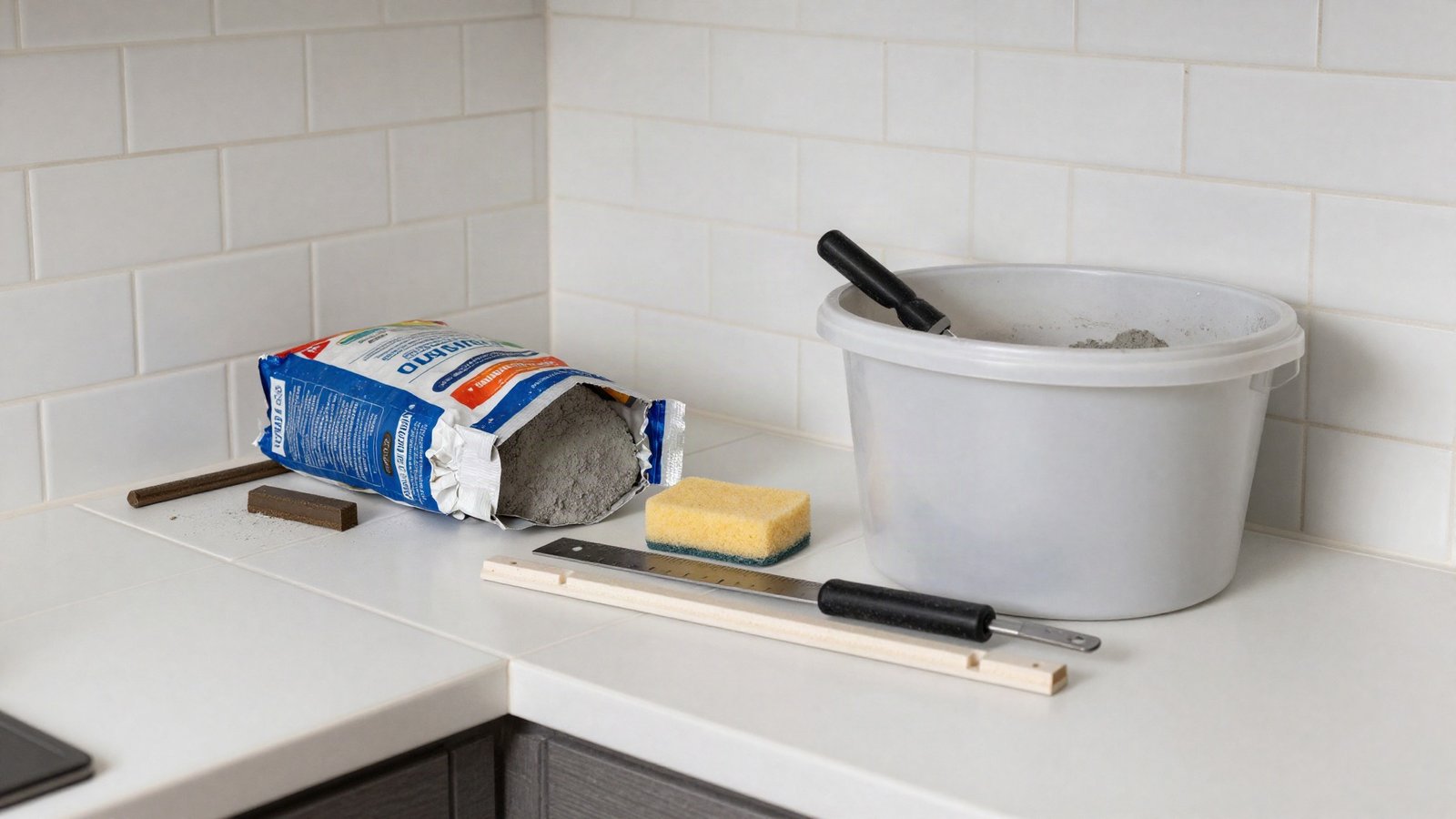
Walk into a UK tile merchant and you will not be handed a bag marked sanded or unsanded. You will be handed one marked "wall and floor, 2-20mm" or "fine joint, 1-6mm". The American labelling never took here, and that gap is why people get it wrong: they buy on colour, then find three weeks later that the joints have shrunk and hairlined, or that sand in the mix has scratched a polished porcelain floor that cost £45 a square metre.
The decision is not taste. It is settled by three things you can measure in a minute: joint width, tile-face hardness, and whether the substrate moves. Get those right and either grout lasts a decade. Get them wrong and you will be regrouting within the year.
First, Work Out Which Problem You Actually Have
Most people arrive at this mid-problem rather than mid-project. Run the diagnostic before comparing products; the first two steps rule out most of the aisle.
- •Measure the joint in three places with a steel rule or a spare spacer, not by eye. Under 3mm is unsanded territory. Over 3mm needs aggregate. At 2-3mm, either works and the tile face decides.
- •Identify the tile face. Polished or honed marble, limestone, glass, mirror, polished porcelain and crackle-glaze all scratch. Standard glazed ceramic, matt porcelain, quarry and slate do not. If you are unsure what you have, our comparison of porcelain and ceramic tile will tell you.
- •Establish where it is. A shower, wet room or bathroom floor wants CG2 WA grout (EN 13888: reduced water absorption, high abrasion resistance). A dry splashback is fine on CG1.
- •Check for movement. Suspended timber floors, plywood overlay, plasterboard walls and anything over underfloor heating need flexible, polymer-modified grout. Rigid grout on a bouncy floor causes most of the failures in why grout cracks.
- •Decide whether this is new work or a repair. Matching existing grout means matching aggregate as well as colour, or the repair reads as a different texture in raking light forever.
Sanded vs Unsanded Grout: Side by Side
Both are cement-based. The difference is graded silica sand: sanded carries aggregate, unsanded relies on cement, fillers and polymers alone. That one ingredient changes everything.
- •Joint width: sanded 3-20mm; unsanded 1-3mm, sometimes rated to 6mm with very fine filler.
- •Shrinkage: sanded barely moves as it cures; unsanded shrinks noticeably and cracks past 3mm.
- •Strength: sanded has far higher compressive strength, which is why it is the floor default.
- •Scratch risk: sanded can abrade polished faces; unsanded is safe on marble, glass and mirror.
- •On walls: unsanded is stickier and stays in a vertical joint; sanded slumps out of narrow ones.
- •Finish: unsanded is smoother and more uniform; sanded is textured and hides daily dirt better.
- •UK price: sanded £8-16 per 5kg, unsanded £10-18 per 5kg, premium polymer-modified (Mapei Ultracolor Plus, BAL Micromax2, Ardex) £18-26 per 5kg.
Performance: Where Each One Actually Fails
Unsanded fails by shrinking. Push it into an 8mm joint and the high cement-to-water ratio pulls the joint inward as it cures, leaving a concave, chalky surface that hairlines within four to eight weeks. Water tracks behind it, and in a shower that is how the black staining starts.
Sanded fails by abrasion and voiding. Under 2mm the aggregate will not pack in, so you get bridging and air pockets that crumble under the first mop. On polished tile the sand acts as a mild abrasive under the float. Grout a spare off-cut, let it cure, then look across the face with a torch held low. Two minutes of testing saves a floor.
In UK bathrooms the third failure mode is neither. Rigid grout over a plywood-overlaid timber floor cracks along the joist lines whatever the aggregate. That is a substrate fault, and no bag on the shelf fixes it.
Installation and Coverage
Sanded is worked at 45 degrees across the joint with a firm rubber float, pressed hard enough to fill the full depth, left 15-25 minutes, then sponged barely damp with constant rinsing. Unsanded is thinner and goes off faster. Sponge it too early or too wet and you pull the polymers out, leaving patchy, pale joints.
Coverage catches people out. A 5kg bag grouts 15-25 square metres of 300x600 wall tile at 2mm joints, but disappears into 4-6 square metres of 25mm mosaic. Buy one batch and mix by weight: an extra splash of water to loosen a stiff mix is the fastest route to a weak joint.
One UK note. Merchants now stock a single "wall and floor" grout rated 1-6mm straddling both categories. Useful at 3mm on a kitchen floor, but no substitute for wide-joint sanded grout on riven slate or reclaimed quarry.
Maintenance and Sealing
Both are porous unless you buy CG2 WA or epoxy. Sanded takes more staining but its texture disguises it; unsanded shows a tea spill instantly. Seal after full cure at 14-21 days, not the 48 hours the tin implies, and reapply every 12-24 months in a family bathroom. Our round-up of grout sealers covers what survives UK hard water.
Routine matters more than the product. Keep acids off cement-based grout, including neat limescale remover, and keep wire brushes off unsanded joints. The method in our guide to cleaning grout without wrecking it suits both and is the difference between a ten-year joint and a five-year one.
Epoxy is the third option worth naming: stain-proof, no sealing, roughly £45-70 per 3kg unit, and unforgiving to apply. On a shower floor it earns its money. On a spare-room splashback it does not.
Ten-Year Cost on a Real UK Bathroom
Take an 8 square metre bathroom: 300x600 wall tile at 2mm and a 600x600 porcelain floor at 3mm. Two 5kg bags of premium polymer-modified grout is about £40. Sealer is £15-25 a bottle and you will use roughly five across ten years. Materials total around £140.
Now price the failure. A tiler charges £180-280 a day outside London, £250-380 inside it, so regrouting a shower enclosure is £150-350 and a full bathroom regrout £350-600. Choosing unsanded for a 6mm floor joint usually buys one of those bills inside two years. Epoxy pushes materials to about £220 but often removes the regrout entirely. If the tiles are coming up too, our tile installation cost guide has the wider picture. Grout is 1-2% of the budget and decides whether you pay the labour twice.
Who Each Suits, and the Verdict
Choose unsanded for joints of 3mm or narrower, for polished stone, glass, mirror or polished porcelain, and on walls where slump is the enemy. Metro splashbacks, marble en-suites and rectified large-format walls at 1.5mm sit here.
Choose sanded for joints over 3mm, for any floor, for riven slate, quarry, reclaimed and handmade tile, and anywhere the joint carries weight. Stronger, cheaper per bag, more forgiving of an uneven tile edge.
There is no better product here, only a correct one, and joint width decides it before anything else. Take the rule of three: under 3mm go unsanded, over 3mm go sanded, at exactly 3mm let the tile face cast the deciding vote. Measure properly first, then work through the rest of the Carpets & Flooring guides before you buy.
Found this useful?
There's plenty more — hundreds of guides and honestly-tested product reviews for every corner of your home.
Browse All Guides