Carpets & Flooring · 6 min read · 10 May 2026
Why Is Grout Cracking? A UK Diagnostic Guide (and What to Do)
Cracked grout is almost never a grout problem. It is a movement problem, a mixing problem or a fixing problem, and the crack pattern tells you which before you buy anything.
By the Nims Casa editorial team — written from professional cleaning experience and checked against our editorial standards.
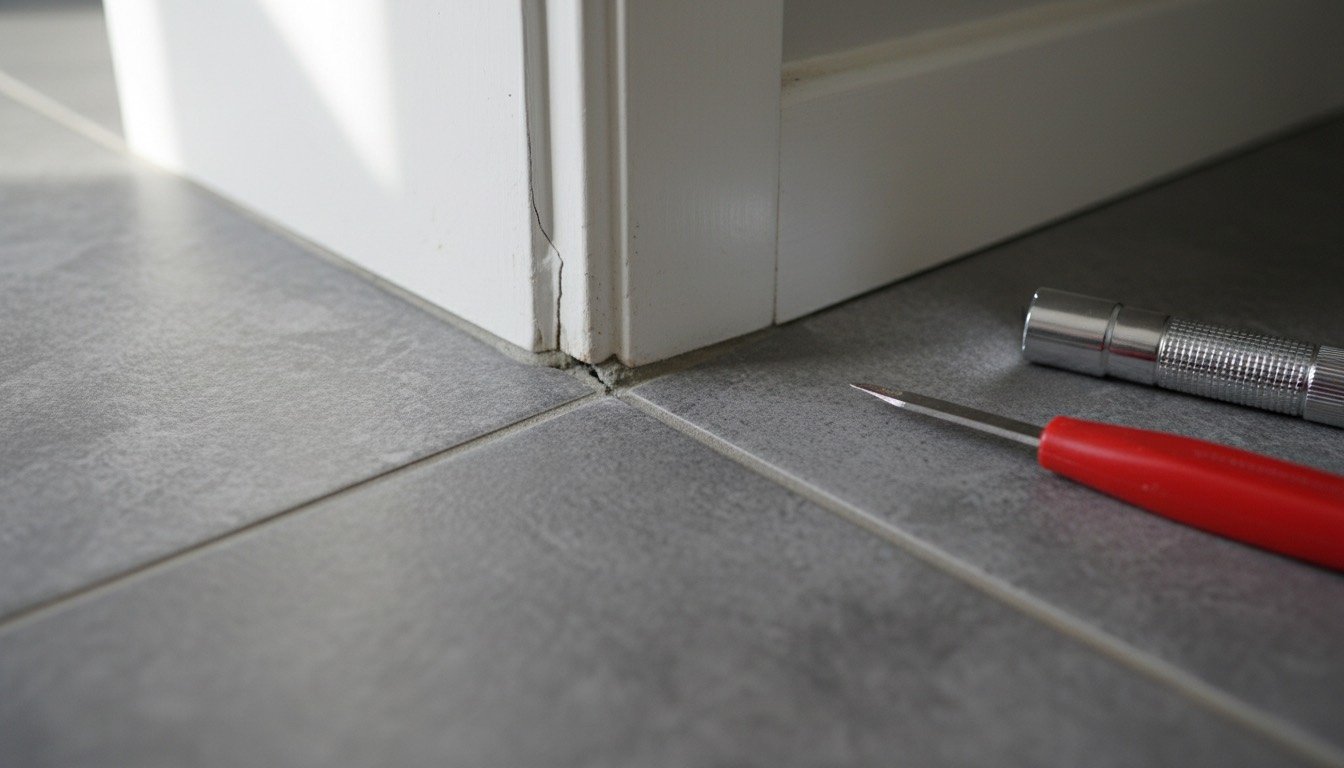
In fifteen years of stripping out failed tiling, we have found grout that failed on its own perhaps twice. Everything else cracked because something underneath moved, because the mix was wrong, or because a joint was grouted when it should have had silicone. Grout is rigid cement with zero tolerance for flex: it does not bend, it splits, and it splits where the stress is.
That is useful, because the crack tells you where to look. Ten minutes with a 20p coin and a torch usually separates a £20 repair from a floor that needs lifting. Diagnose before buying anything — the costliest mistake here is regrouting a moving floor and watching it split again by Christmas.
Start Here: The Ten-Minute Diagnostic Path
Do these in order. By the end you will know whether this is a surface defect, a bonding failure or structural movement.
- •1. Thumbnail test. Press a nail into the grout beside the crack. If it powders, the grout is weak. If it resists and only the crack line is open, something moved it.
- •2. Coin tap. Tap the tiles either side with a 20p. A solid tick means bonded; a drummy note means the adhesive has let go. Mark that area with tape.
- •3. Walk test. Rock your weight on the tile beside the crack. Any give or creak means deflection, not a grout fault. On timber floors, watch the joint under a low torch beam while someone walks it.
- •4. Location. Along a wall, down an internal corner, straight across the floor, or one isolated joint? Straight lines that ignore tile edges are the worrying ones.
- •5. Damp check. Darker grout either side, or black speckling, means moisture behind the tiles — which will wreck any repair over it.
- •6. Heat question. Underfloor heating, a buried pipe run, or strong sun through patio doors? Thermal cycling is the most under-diagnosed cause we see.
Symptom to Cause: Reading the Crack Pattern
Match your findings below. Most jobs land on one line; a few land on two, which means one cause created the conditions for the other.
- •Powdery grout throughout, no movement — over-watered mix, or joints sponged off before they cured.
- •Straight run along a wall or skirting, other joints fine — no perimeter movement joint, so the tiles expanded against a fixed edge and released.
- •Crack down an internal corner or around a bath — grout used where flexible sealant belongs. Guaranteed to recur.
- •Hollow tiles, crack tracing the edge of the hollow patch — debonding from a poor bed or unprimed substrate.
- •One straight line across the floor, often above a joist or board joint — substrate movement or deflection.
- •Fine cracks each winter once the heating comes on — thermal expansion, usually underfloor heating commissioned too fast.
- •Hairline splits in wide joints only — unsanded grout used above 3mm, shrinking back as it cures.
The Causes, Ranked by How Often We Find Them
Roughly half of all cracked grout in UK homes is movement at a junction that should never have been grouted. Standard practice puts flexible sealant at every internal corner and perimeter, because those are where two planes move independently. A bath takes 80 litres plus a person and drops a millimetre, dragging on whatever bridges it — so a crack at the bath edge means replacing the silicone properly.
Second is weak or badly mixed grout. Cement grout needs a specific water ratio and 20 to 30 minutes of slaking; splash extra water in to spread it easily and you have engineered a soft, porous joint. The choice between sanded and unsanded grout matters too — unsanded in a 5mm floor joint shrinks and splits every time.
Third is substrate movement. Suspended timber with 18mm chipboard on 400mm joist centres flexes far more than porcelain tolerates, and needs overboarding in 15mm WBP plywood at 150mm screw centres, or a decoupling mat, before tiling. If the walk test showed give, read the signs of subfloor damage.
Fourth is thermal cycling. Underfloor heating must be commissioned slowly: cure the adhesive seven days, then raise flow temperature about 5°C a day to maximum and back down. Fire it to 45°C in November and the grout gives first.
Fixes, Ordered from Lowest Risk to Highest
Work down only as far as your diagnosis requires; each step is more disruptive than the one above. Decorators' caulk smeared over a cracked joint never belongs on the list: it traps moisture, yellows within months and doubles the eventual repair.
- •Rake and regrout the affected joints (£15-30, 2-3 hours in a small bathroom). Valid only where tiles are solid and nothing moves. Cut back at least 4mm with a grout rake or carbide multi-tool blade, vacuum, then use a flexible polymer-modified grout. Never skim over old grout.
- •Cut out and reseal corners and perimeters (£8-15, 1-2 hours). Strip every trace of old material, wipe with methylated spirit, mask both sides, then run a low-modulus sanitary silicone, tooled in one pass.
- •Lift and replace affected tiles (£30-70 materials, one day). Needed where debonding covers more than two tiles. Our guide to repairing a cracked tile covers lifting one without losing its neighbours.
- •Strip back, stiffen or decouple, retile (£70-140 per m² for a tiler; £35-55 DIY). The only real answer to a flexing floor, and skipping it is why the crack returns.
Costs and Sanity-Checking a Quote
Materials are cheap: a 5kg bag of flexible grout is £18-32, sanitary silicone £7-11 a cartridge, a carbide grout blade £12-25. Regrouting a 6m² bathroom floor is under £50 and a solid day, most of it raking out rather than grouting.
Labour is the variable — £180-260 a day for a tiler across most of England and Wales, £260-350 in London and the South East. A regrout and reseal is typically one day at £200-300; a strip-out, overboard and retile of a 6m² floor is £550-900 including materials. If a simple regrout is quoted over £450, ask what substrate preparation is priced in. And rule out the cheapest outcome first: if the grout is discoloured rather than cracked, cleaning it properly is the whole job.
Where DIY Stops and You Call Someone
Regrouting, resealing and swapping the odd tile are genuine homeowner jobs. Anything structural below the tiles is not, and the failure mode there is expensive.
- •Stop if the floor deflects underfoot, or cracking runs continuously through tiles and grout for over a metre. That is structure, not tiling, and patching hides a diagnosis you need.
- •Stop if the crack is wet, tiles sound hollow across a wide area, or mould returns days after cleaning. Water behind tiles must be traced first.
- •Stop if tiles shift when pressed on a wall above a bath. Falling wall tiles are an injury risk, and that wall likely needs stripping to backer board.
- •Stop if there is underfloor heating and you cannot confirm the pipe layout — a multi-tool over an unmapped element means excavating screed.
- •Get a second opinion if the same joint has cracked twice. That is a missed diagnosis, and our rundown of common tile installation mistakes is where to find it.
Found this useful?
There's plenty more — hundreds of guides and honestly-tested product reviews for every corner of your home.
Browse All Guides