DIY & Maintenance · 6 min read · 19 July 2026
Statement Ceiling Ideas for Real UK Homes and Budgets
The ceiling is the one surface in a British room that almost nobody decorates, which is exactly why treating it well changes a room faster than new furniture does.
By the Nims Casa editorial team — written from professional cleaning experience and checked against our editorial standards.
Walk into most British homes and the ceiling is brilliant white vinyl matt, applied once when the house was last decorated and forgotten since. That is a lot of surface doing nothing. In a 3.6m by 4.2m sitting room that is roughly 15 square metres, more visible area than the largest wall, and the one plane your eye has no furniture to land on.
These are ordered by disruption rather than by how they photograph, and costed at 2026 UK rates. Some are a Saturday and a £40 tin; others need a plasterer and a fortnight of dust. We have flagged what a tenant can do and undo.
Check the Ceiling Before You Commit
Decorative ceilings are unforgiving. Raking light shows every ripple, and a dark colour magnifies defects rather than hiding them.
The big one in UK housing stock is textured Artex. If your ceiling was textured before roughly 2000, assume it may contain chrysotile asbestos until tested, and do not sand, scrape or drill it. Sealing over the top is fine and is what most professionals advise; removal is a licensed job, priced up in our guide to Artex ceiling removal costs.
- •Push gently on bowed areas. Plasterboard that flexes more than a few millimetres, or lath and plaster that sounds hollow, needs fixing first.
- •Brown or yellow rings mean a leak, past or present. Stain-block with a shellac-based primer or they bleed through three coats.
- •Hairline cracks along board joints are normal movement. Use flexible caulk, not rigid powder filler.
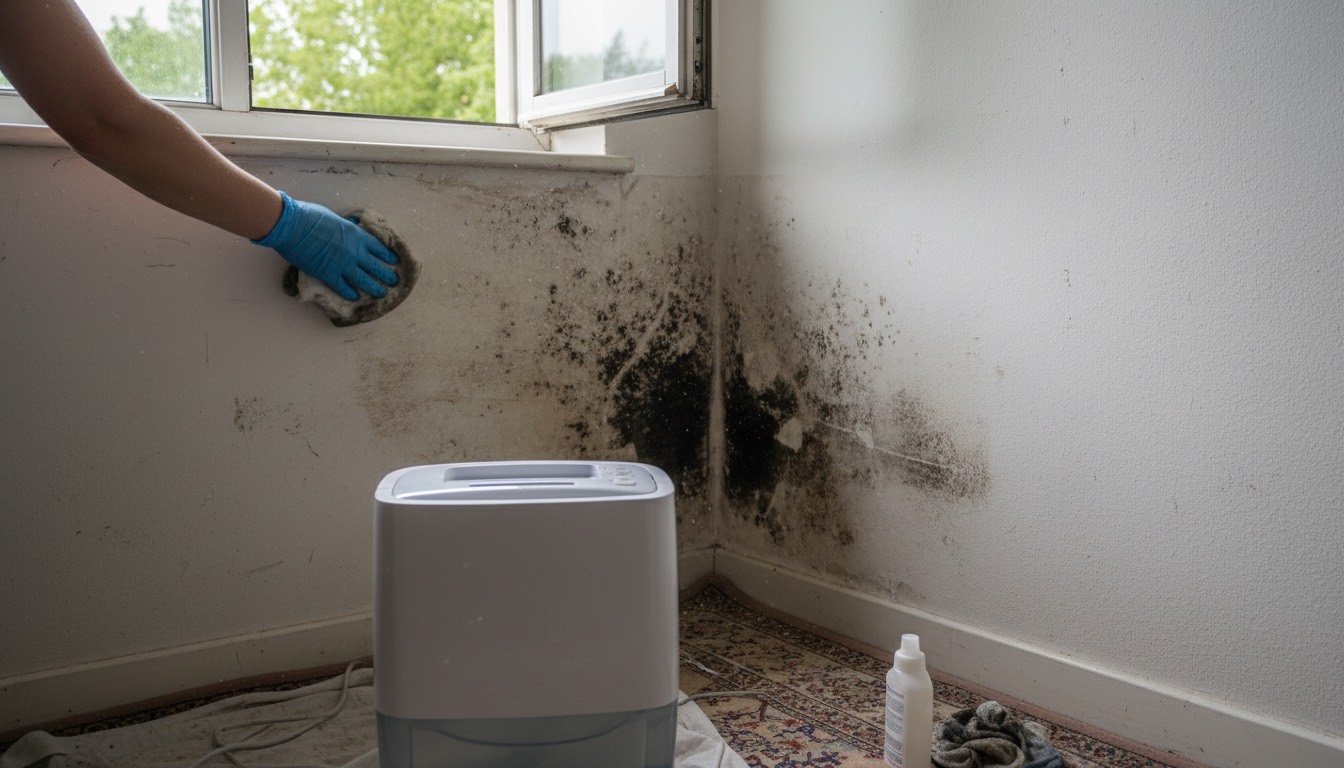
- •Black speckling around the perimeter is condensation mould, not dirt. Fix the ventilation or it returns through any finish.
Eight Ideas That Suit British Rooms
Ignore the American loft ceilings on Pinterest. These work in Victorian terraces, 1930s semis and new-build boxes with 2.4m plasterboard, which is most of the country.
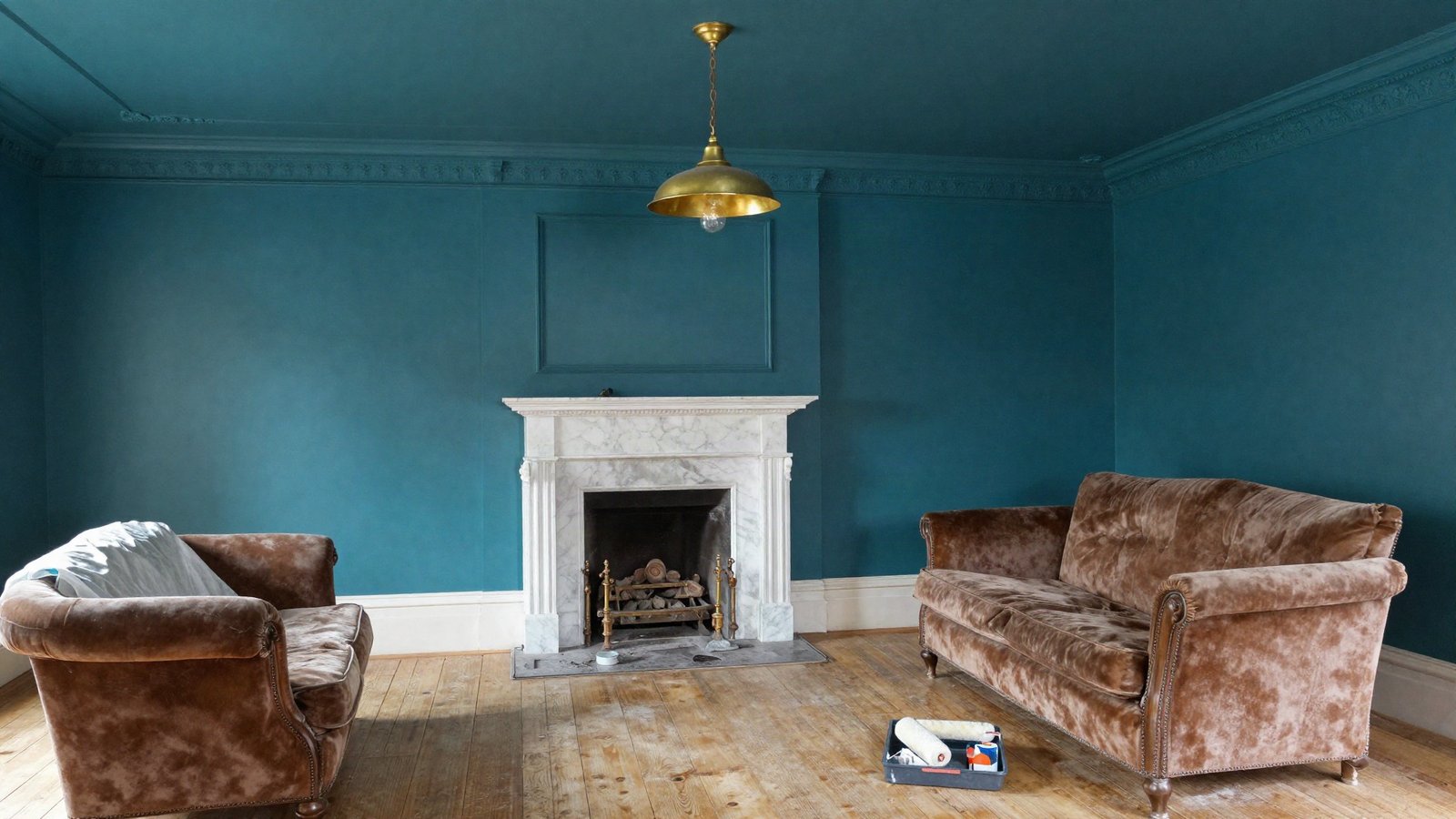
- •Colour-drench it. Take the wall colour over the cornice and across the ceiling, matt above and eggshell on the woodwork. One extra tin, £35-£55 for a good 2.5L. Best in dining rooms, snugs and box bedrooms.
- •Go a half-shade darker than the walls, the safest version. In a north-facing room a soft clay or muted green kills the flat white glare of British daylight.
- •Pick out an existing cornice and ceiling rose in a contrasting tone. About £25 in sample pots and half a day with a 25mm angled brush.
- •Timber battens: 18mm x 44mm PSE softwood at £2.50-£4 per metre, fixed at 100mm centres into the joists and painted out in one colour. A 3m x 3m panel runs £180-£260 in materials.
- •Wallpaper the ceiling. A wide non-repeating pattern or plain grasscloth forgives mild imperfection. Budget £60-£120 a roll, plus a second pair of hands.
- •Add coving. MDF or duropolymer at £6-£12 per 2m length transforms a bare new-build corner. Mitre-saw work, with internal corners cut at 45 degrees.
- •Painted tongue-and-groove, ideal in a bathroom, hallway or under-stairs loo where the area is small and the effect contained. Roughly £22-£35 per square metre.
- •Or change nothing and light it properly. Uplighters under a dark ceiling, or wall washers under a plain one, shift a room as much as paint does.
Budget Tiers: Where the Money Goes
Ceiling work is weighted towards labour and access, not materials. Painting overhead off a platform is roughly twice the effort of the same area of wall, so expect £150-£250 for a decorator to prep and paint one average ceiling.
- •Under £100: a tin of matt, a 9-inch roller with a 1.2m pole, a 25mm cutting-in brush and dust sheets. Enough for a colour-drenched box room.
- •£100-£400: papering a small ceiling, painting a large room in a premium matt, or MDF coving in one room.
- •£400-£1,200: battens or tongue-and-groove across a living room, or a decorator doing three ceilings properly. Labour overtakes materials here.
- •£1,200 and up: replastering before decorating (£450-£900 a room, more in London), fitted plaster mouldings, or recessed lighting added at the same time.
- •Forgotten costs: a platform or hop-up (£40-£90), stain-block primer (£25-£35), and the filling and sanding, which is a third of the total effort.
The Renter-Safe Version
Very little above is off-limits if you rent; you just choose what comes off cleanly and leaves the plaster as you found it. Get written permission for anything involving paint, keep the email, and photograph the ceiling first.
The genuinely reversible options are limited but effective, and they stack well with the wider approach in our rental-friendly decor guide.
- •Paint with permission and offer to reinstate. Most landlords agree if you commit to returning it to white; budget £45 and a day.
- •Use paste-the-wall paper rather than peel-and-stick. It steams off far more cleanly. Test a 30cm patch in a corner first, because it will lift soft or previously distempered plaster.
- •Swap the pendant shade and flex, keeping the originals bagged and labelled. Isolate at the consumer unit, and if fixed wiring is not your thing, pay an electrician for the hour.
- •Add interest without fixings: a large paper lantern, a rattan shade clipped over the existing lampholder, or fabric hung from the picture rail.
- •Avoid anything needing screws or grab adhesive overhead. Battens, coving and boarding all do, and adhesive tears the paper face off plasterboard when removed. That is a deduction, not a repair.
Low Ceilings and the Mistakes That Cost Most
The idea that a white ceiling makes a low room feel taller is only half true. Brilliant white above a coloured wall draws a hard line at 2.4m and tells your eye where the boundary sits. Blurring it, with the same colour running over the cornice, reads as more space, which is why it appears in every serious guide to making a small room look bigger.
The expensive mistakes are predictable. Any sheen above dead matt is the worst, showing every roller lap and skim ripple under a pendant, so check the paint sheen guide first. Then skipping stain block over old water marks, and fixing heavy coving to plasterboard without finding the joists, which ends with it on the sofa.
- •Do not batten a ceiling under 2.3m. You lose 20-45mm and it feels oppressive.
- •Cut in the perimeter before rolling, and roll 1m squares wet edge to wet edge to avoid banding.
- •Two thin coats beat one thick one, with the second run at 90 degrees to the first.
Common Questions
Will a dark ceiling shrink the room? In a well-lit room, no. It stops the ceiling reading as a lid and the corners disappear. In a dim, single-bulb room, yes, so fix the lighting first.
Can I paint over Artex? Yes, with a long-pile roller and a thinned first coat, provided you do not disturb the surface. Never sand it.
How long does it last? Eight to ten years in a living room, three to five in a kitchen or bathroom.
Next step: if the ceiling is sound, follow our method for painting a ceiling, then browse the home decor hub for the wall and lighting decisions around it.
Found this useful?
There's plenty more — hundreds of guides and honestly-tested product reviews for every corner of your home.
Browse All Guides