Heating & Cooling · 6 min read · 1 July 2026
Summer AC Maintenance Checklist for UK Homes (Printable)
Air conditioning in a British house sits idle for forty weeks, then gets asked to hold 21°C through a 32°C night. Here is the fortnightly, seasonal and annual routine that keeps it doing that.
By the Nims Casa editorial team — written from professional cleaning experience and checked against our editorial standards.
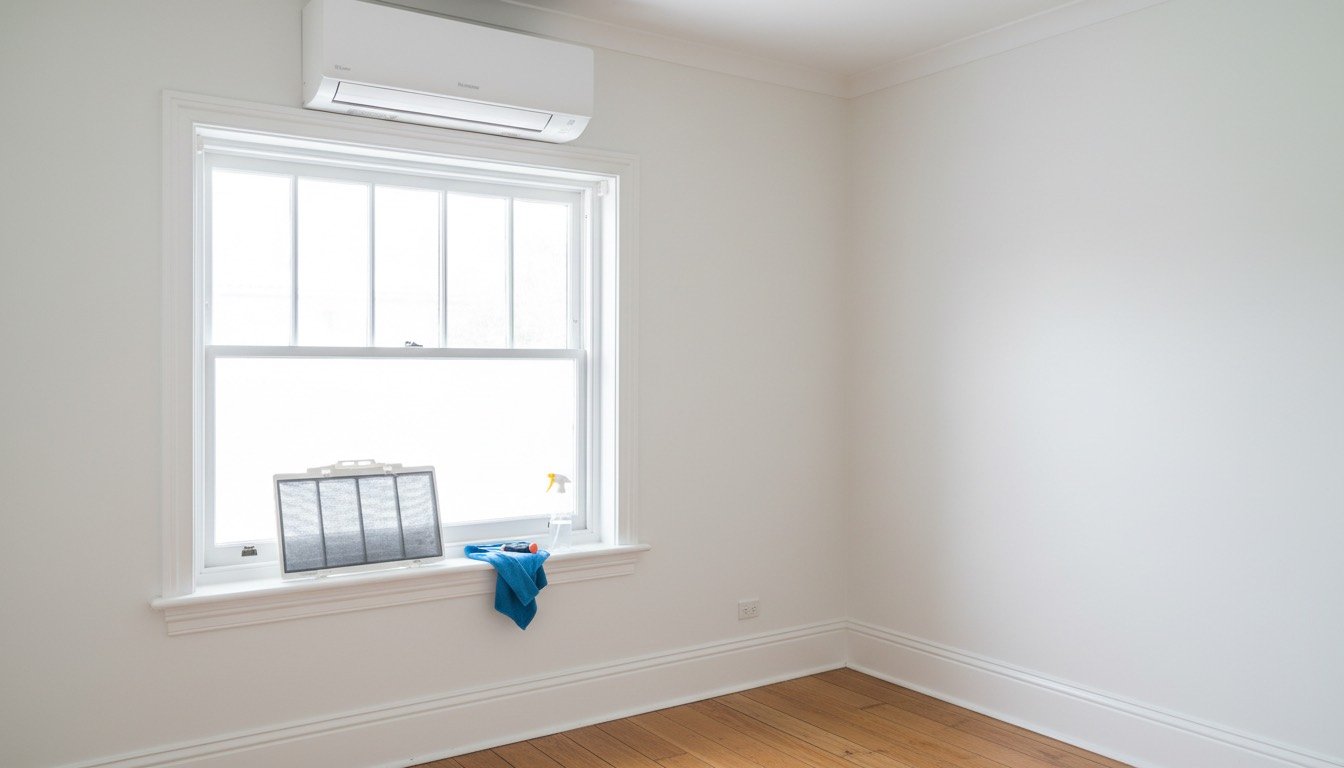
Air conditioning in a British house sits untouched for forty weeks, then gets asked to hold a bedroom at 21°C through a 32°C July night — at which point everyone discovers the filters have not been out since the day it was fitted. A furred filter and a pollen-packed condenser take 15-20% off cooling output and add roughly the same to running costs. The first symptom is rarely weak cooling; it is water running down the wall from a blocked condensate drain.
Here is the schedule we work to on domestic splits and reversible air-to-air heat pumps, with real times and prices — and a hard line through the middle, because some of this work an uncertified person legally cannot touch in the UK.
Where DIY stops: the F-Gas line
Everything on the air side is yours: filters, grilles, fins, drains and the ground around the outdoor unit. Everything on the refrigerant side belongs to an engineer holding F-Gas Category I certification (City & Guilds 2079 or equivalent). Under the Fluorinated Greenhouse Gases Regulations 2015, recovering, charging or venting refrigerant without it is an offence, and that applies to a 2.5 kW bedroom split, not just commercial plant.
The system is sealed and pre-charged, so if yours needs topping up it has a leak, and adding gas without finding it is money burned. Rule out the ordinary causes first: see why an AC unit stops cooling properly — nine times in ten it is airflow, not gas.
- •DIY, no certification needed: filters, the indoor coil face, vanes, the condensate drain, clearing and rinsing the outdoor coil, combing fins, pipe lagging, and a temperature-split test.
- •Engineer only, by law: connecting gauges, adding or recovering refrigerant, brazing, pressure testing, evacuating, or replacing any sealed-system component.
- •Engineer only, in practice: capacitors and contactors, the outdoor electrical box, stripping the indoor unit for a bib wash, hard-wired condensate pumps, and any new circuit — notifiable under Part P in England and Wales, as our list of electrical jobs that should never be DIY sets out.
Every fortnight while it is running (10 minutes, £0)
Daikin, Mitsubishi Electric and Panasonic all specify fortnightly filter cleaning under heavy use — mid-May to mid-September in a UK summer. Skip it and reduced airflow makes the evaporator run colder, which is how a coil ices up on the hottest afternoon of the year.
- •Slide out both mesh filters, vacuum the dusty side, then rinse in lukewarm water — under 40°C — with a drop of washing-up liquid.
- •Dry them flat and in the shade. Never refit a damp filter or use a hairdryer: the mesh warps and stops seating.
- •Wipe the discharge vane and fascia with a damp microfibre. Dust here becomes that sour, gym-bag smell.
- •Check the condensate pipe drips while the unit runs. A dry pipe on a humid day means the drain is blocking.
- •Outside: no clippings in the fins, 30 cm clear behind, 60 cm in front.
The May start-of-season service (90 minutes, about £25)
Do this before the first hot spell, not during it. Isolate first — the rotary isolator beside the outdoor unit, then the fused spur or MCB indoors — and wait five minutes. Aim for late April: UK grass pollen peaks from mid-May to late July.
- •Wash the filters; check frames for splits (10 min, £0).
- •Vacuum the exposed evaporator fins with a soft brush — with the fins, not across them — then apply a no-rinse foaming coil cleaner and let it drain into the tray (25 min, £10-£14).
- •Flush the tray and drain with 200 ml of warm water and a condensate tablet; it should reach the external pipe inside a minute (15 min, £1).
- •Outside, lift the top grille, hand-clear leaves and seed fluff, then rinse the coil with a garden hose from the inside out. Never a pressure washer: it folds fins flat and drives water into the fan motor (20 min, £0).
- •Comb bent fins straight and replace perished pipe lagging with split armaflex — UV kills it in five to seven years (10 min, £8).
- •Restore power, run cooling at 18°C on high fan for 15 minutes, then compare return air at the top grille with supply air at the outlet. Expect an 8-12°C drop; under 6°C points to a fouled coil, failing fan or charge problem, and our full cleaning method covers the fixes (15 min, £12).
Monthly outdoors, and what to do in October
The outdoor unit is where UK-specific damage happens. Mowing is the biggest cause of blocked condensers we see: clippings are fired into the fins and bake on. Within a kilometre of the coast, salt is next, and a monthly fresh-water rinse roughly doubles the life of an uncoated coil.
- •Monthly: sweep clippings clear, rinse coastal coils, check the drain outlet is not silted or webbed over.
- •October: a final clean so the unit overwinters clean, not damp and dirty. Do not shrink-wrap it — a full cover traps moisture against the fins and makes an excellent mouse nest.
- •October to March: if the unit is reversible, run it in heating for 15 minutes once a month. It circulates compressor oil and exercises the reversing valve.
- •October: check the anti-vibration feet, because perished rubber is what starts the neighbour complaints.
The annual professional service and what it should cost
Book a certified engineer once a year, ideally March or April when they are not fielding emergency calls at £180 a visit. A proper service takes 45-60 minutes on a single split and ends with a written report carrying pressures and temperatures, not a sticker. If yours is over twelve years old and losing R410A, weigh the repair against current AC installation costs and the signs a unit is finished: quota phase-down has made that gas expensive.
- •Single split: £90-£150 inc VAT. Each extra head on a multi-split, £45-£70; a three-head system, £180-£260.
- •Deep clean with the indoor unit stripped and bib-washed: £120-£200 per head, every three to five years or whenever there is a persistent smell.
- •Capacitor £90-£150; condensate pump £120-£180 fitted; leak detection, repair and recharge £250-£600.
- •The visit must include refrigerant pressures and superheat, current draw, a capacitor test, coil and drain condition, and a measured temperature split.
The kit list, and what to do first when time is short
Servicing your own system costs under £50, most of it one-off: no-rinse evaporator foam (£10-£14), a fin comb (£8-£12), condensate tablets (£8-£12 for twelve), a soft vacuum brush head, microfibres and a digital probe thermometer (£12-£20). Everything else on cooling, sizing and running costs sits in the Heating & Cooling hub.
- •Priority 1 — filters. Ten minutes, free, and it recovers more cooling than anything else here.
- •Priority 2 — clear and rinse the outdoor coil. Twenty minutes, free, and it stops the compressor tripping on high pressure at 4pm in a heatwave.
- •Priority 3 — flush the condensate drain. Fifteen minutes, £1, and it is the difference between cool air and a damp patch on the plasterboard.
- •For scale: a 3.5 kW split with a SEER around 7 averages about 0.5 kW — 13p an hour at 26p per kWh. A neglected coil adds a fifth to that.
Found this useful?
There's plenty more — hundreds of guides and honestly-tested product reviews for every corner of your home.
Browse All Guides