Heating & Cooling · 6 min read · 15 July 2026
Why Is My AC Not Cooling? The 10-Minute Diagnosis (Old Houses Included)
Nine callouts in ten end the same way: the equipment is fine and the building is beating it. Here is the order an engineer checks things in, and why old British houses change every answer.
By the Nims Casa editorial team — written from professional cleaning experience and checked against our editorial standards.
A blocked filter, a condenser jammed into a lightwell, or a portable venting through a gappy sash account for more lost cooling in British homes than compressor faults ever will. Refrigerant loss is real, but suspect it last: a system that has genuinely lost gas has a leak, so topping it up without finding that leak is money poured away.
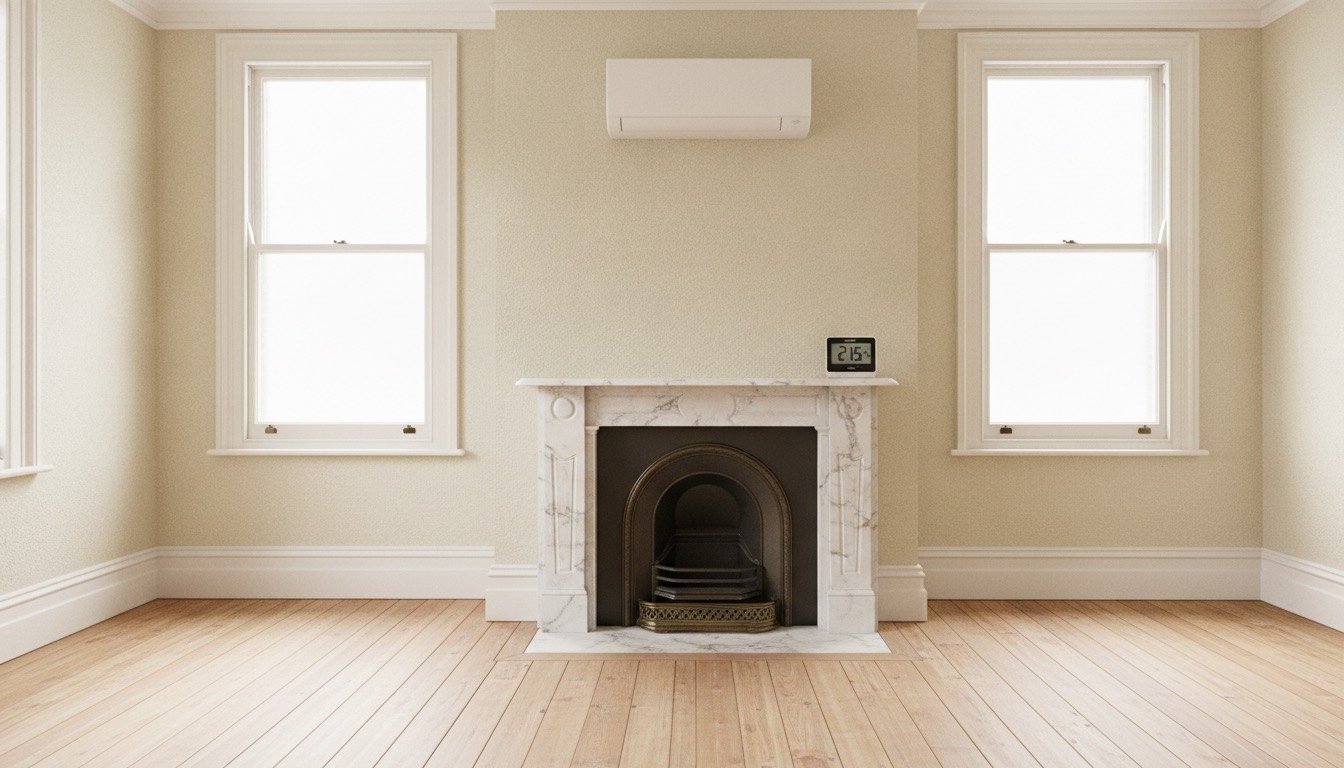
What follows is the order an engineer works in — measure first, free checks next, expensive ones last — plus the case the manual ignores: a 2.5 kW split in a solid-walled Victorian room with 3.2-metre ceilings and lath-and-plaster overhead.
Start with the temperature split
Everything below depends on one number. Run the system in cooling at its lowest setpoint and highest fan for 15 minutes, then hold a probe thermometer in the return air at the intake grille, and again in the air leaving the louvres. The difference is your diagnosis.
- •8-11°C split: the refrigeration circuit is fine. The problem is the room, not the machine.
- •4-7°C: airflow is restricted or the charge is low. Work through the causes below.
- •Under 3°C: the compressor is not running, is short-cycling, or the charge is badly down.
- •Lights on but no air moving: indoor fan motor, run capacitor, or a comms fault between the units.
- •Ice on the coil or pipework: run fan-only for an hour to thaw it. Running it iced wrecks compressors.
- •Then step outside: air off the outdoor unit should be unmistakably hot and moving hard. Weak and lukewarm means the fan or compressor is failing.
Symptom to cause, at a glance
- •Cool air but never reaches setpoint — undersized, or solar and solid-wall heat gain is outrunning it.
- •Fine last summer, weak this year — dirty filters and a furred condenser, in that order.
- •Water down the wall or the ceiling below — blocked condensate drain or a failed pump.
- •Humming outdoor unit, static fan — seized motor or dead capacitor. Kill it at the isolator.
The causes, ranked by how often they turn out to be it
On a British callout list, roughly this order holds — and the first three are free to put right.
- •1. Filthy filters. Two clogged mesh filters cut airflow 30-40%, drop the split to 5°C and ice the coil. In pollen season wash them fortnightly, using the method in our guide to cleaning an air conditioner.
- •2. Restricted or recirculating condenser: fins packed with seed fluff, or a unit boxed into a side return re-breathing its own 45°C exhaust. Expect to lose a fifth of capacity.
- •3. Wrong mode. Dry and fan both feel like weak cooling, as does 24°C in a room gaining heat faster than the unit removes it.
- •4. Undersized equipment — the commonest design error in period homes, and no repair fixes it.
- •5. Blocked condensate drain, which on many units trips a float switch and stops cooling.
- •6. Failed capacitor, fan motor or contactor: a real fault, but cheap at £150-£400 fitted.
- •7. Low charge from a leak, usually at a flare joint — look for oily residue there.
- •8. Compressor failure: rare, and usually the financial end of the line on a domestic split.
Why old British houses defeat air conditioning
A 215mm solid brick wall stores several times the heat of an insulated cavity wall. Over a three-day heatwave that mass charges up, and by 9pm it radiates back at 26-27°C while the unit fights it: day one it holds 22°C, day three it runs flat out at 25°C. The building has become a storage heater — one of the common problems in 100-year-old houses modern kit is never specified for.
- •Sash windows leak continuously at the meeting rail and parting bead. Brush-pile seals cost £60-£120 a window fitted, and the same air leak testing that finds winter draughts finds them in July.
- •Single glazing admits 600-700 W per square metre of unshaded south-facing glass at midday in July — a quarter of a small split's output through one window. External shutters beat internal curtains, which absorb the heat indoors.
- •Ceilings of 2.9-3.4m mean sizing on volume, not floor area: 35-40 W per cubic metre for solid walls and single glazing. A 4m x 5m room at 3.2m is 64 m³, so 2.3 kW minimum — yet 2.0 kW is what usually gets fitted. Check yours against our method for sizing an air conditioner.
- •Lath and plaster will not hold a 9-14 kg indoor unit. Its bracket must land on studs or added noggins; fixings creeping in friable plaster cause the drumming mistaken for a bearing fault.
- •Lightwells and side returns are almost always too tight: allow 300mm behind the outdoor unit and a clear metre in front.
- •Victorian drainage struggles with condensate — 0.5-2 litres an hour in humid weather. Teed into an old hopper head or a shared gully, one blockage sends it into the ceiling below.
- •Pre-1970s wiring meets a portable pulling 1 kW for hours. On rewireable fuses and cloth-covered cable with no RCD that is a real load, and a dedicated supply is squarely electrical work you should never DIY.
Fixes, safest first
Work down the list and stop when the split recovers. Isolate at the fused spur before removing any panel.
- •Thaw any ice on fan-only for 60 minutes. Never chip or heat it.
- •Wash both indoor filters in lukewarm water, dry fully, refit. Ten minutes, free.
- •Brush the outdoor coil in line with the fins and cut planting back a metre. No pressure washer — it folds the fins flat.
- •Flush the condensate line and confirm it discharges to a gully, not a blocked hopper.
- •Check the mode is Cool, the setpoint 5°C below room temperature, and no eco setting is capping the compressor.
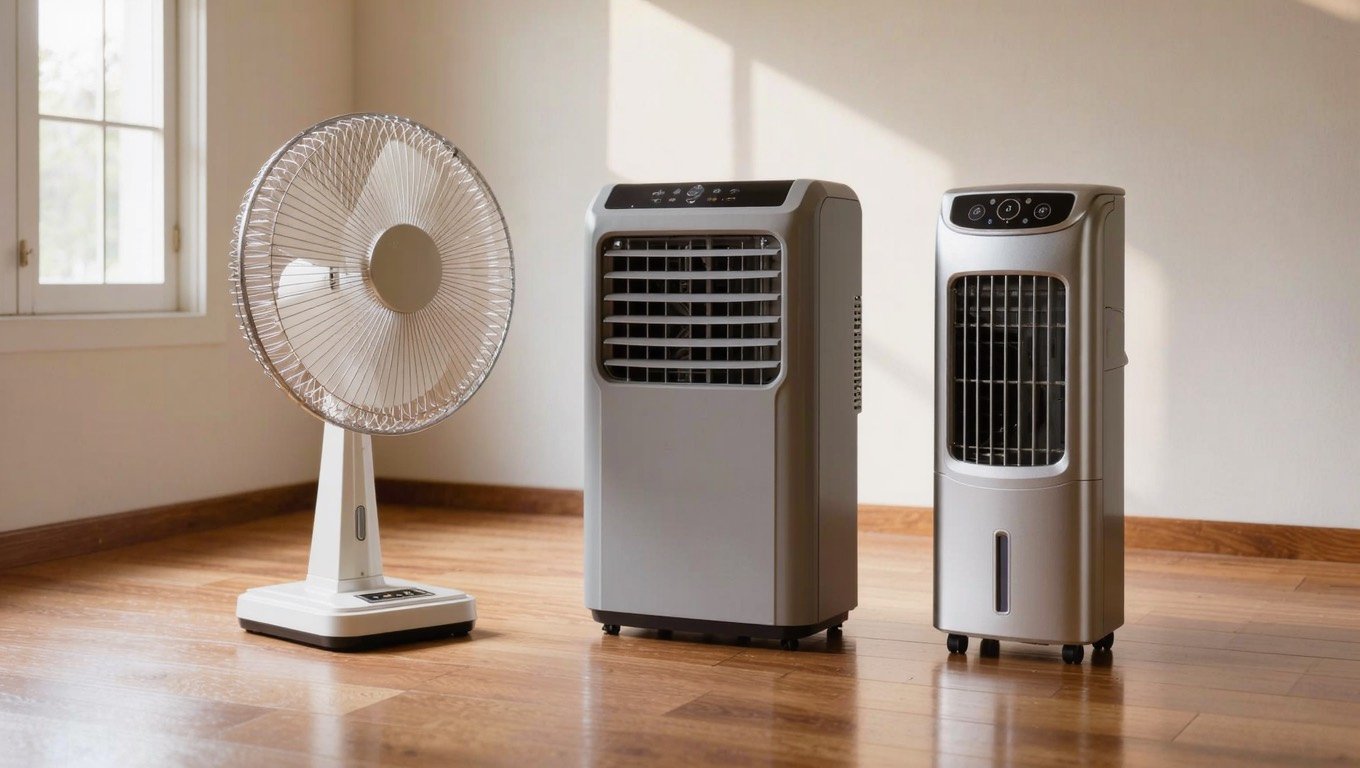
- •Kill the gains: blinds down on the sunny side by 10am, doors shut, and never run a single-hose portable in an open hallway — it drags hot air in as fast as it cools.
- •Reset at the isolator for five minutes to clear a latched code. If it returns, believe it.
Where DIY has to stop
Refrigerant is the hard boundary. Under GB F-gas rules it may only be handled by a certified engineer, and deliberately venting it is an offence — top-up cans sold online are neither lawful nor sensible on a domestic split. Budget £90-£150 for a diagnostic visit, £250-£600 for leak detection and repair, £150-£350 to recharge.
Electrics come second: a dedicated circuit is notifiable work in England and Wales, and with a pre-1970s consumer unit the board usually goes first — price it against typical electrician rates. Planning is third; an outdoor unit on a listed building or in a conservation area needs consent before, not after.
Call someone the same day if
- •It trips the RCD, MCB or fuse more than once, or smells of burning or hot plastic.
- •The coil ices again within a day of a thaw and fresh filters, or oily residue shows at the flare joints — refrigerant leaving with the compressor oil.
- •Water is staining a lath-and-plaster ceiling below the unit. Saturated plaster fails suddenly, and stopping the leak beats rebuilding the ceiling.
Found this useful?
There's plenty more — hundreds of guides and honestly-tested product reviews for every corner of your home.
Browse All Guides