Costs & Hiring · 5 min read · 1 April 2026
Summer Home Maintenance Checklist for UK Homes (With Real Costs)
A British summer gives you roughly twelve usable weekends. Here is what to spend them on, what each job costs in labour and materials, and which trades to book while they are still quiet.
By the Nims Casa editorial team — written from professional cleaning experience and checked against our editorial standards.
A British summer gives you about twelve genuinely usable weekends: dry enough for masonry paint to cure, warm enough for timber to take preservative, quiet enough that a roofer answers the phone. Miss them and the exterior work slides into September, where it either costs more or simply does not happen.
Everything below carries a realistic time and price, because maintenance is a budgeting problem more than a motivation one. On an average three-bed semi, summer costs £250-£450 doing the hands-on jobs yourself and £900-£1,500 if trades do everything, part of the wider annual home maintenance cost most owners underestimate by half.
June: the jobs that need a run of dry days
Exterior coatings need a dry substrate and a clear forecast for 24 to 48 hours afterwards. Outside the south coast, June is the first month you reliably get that. Work top-down so you are not cleaning the same patio twice.
- •Roof check from the ground with binoculars: slipped tiles, lifted ridge mortar, daylight through the loft boards. 30 minutes, free. A drone survey is £120-£250 and worth it above two storeys.
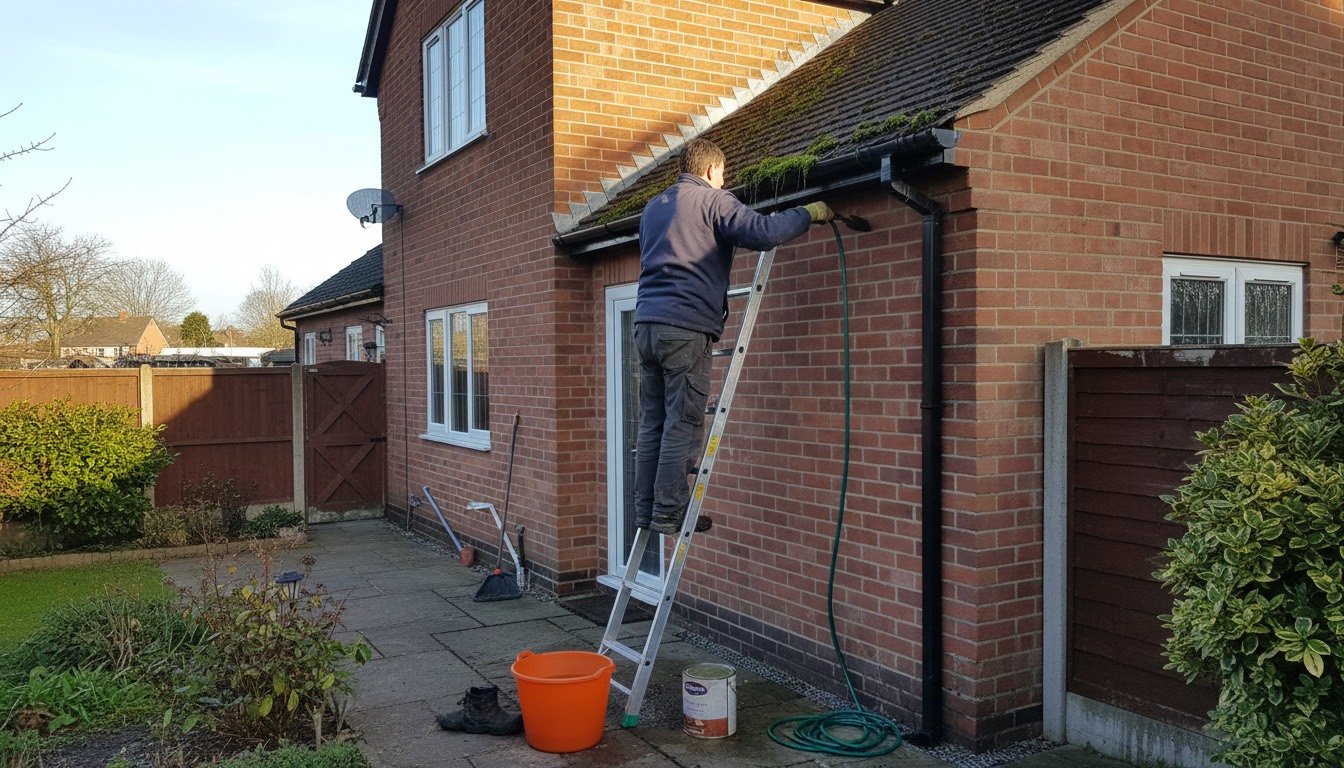
- •Clear gutters, downpipes and the gully. 1-2 hours yourself, or £60-£150 for a pro on a semi (£4-£8 per metre). Our gutter cleaning guide covers doing it without climbing onto the roof.
- •Wash render, fascias and soffits: half a day with sugar soap and a soft brush. Pressure washer hire is £30-£45 a day, or £180-£220 to buy one.
- •Treat fences and sheds: a 5L tin of stain is £20-£25 and covers four to five panels, so £60-£90 in product plus a full day.
- •Repaint exterior woodwork every four to six years, not annually. 10L of exterior paint is £60-£80; a decorator charges £180-£280 a day outside London and £250-£350 inside the M25.
July: water, heat and the garden
July tests the house with heat rather than damp, and it is when hosepipe restrictions land. If your water company declares a Temporary Use Ban, anything needing mains water gets awkward overnight, so front-load the wet jobs.
- •Fit a water butt: £40-£70 for a 100-litre butt, stand and diverter, and it pays for itself in two summers on a metered supply.
- •Clean patios and decking before the algae hardens. Two to four hours yourself; a professional clean is £2.50-£5 per m², so £150-£300 on a 60 m² patio. See how to clean decking for lance settings that will not fur the boards.
- •Run rarely-used taps and showers for two minutes weekly after a holiday. Stagnant warm water in a dead leg is the one real legionella risk in an ordinary house.
- •Check the loft for wasp nests before they reach football size: £45-£90 privately, £60-£120 through most councils.
- •Leave hedges until after mid-August. Nesting birds are protected under the Wildlife and Countryside Act 1981.
August: get ahead of the autumn queue
Boiler engineers, sweeps and roofers price on demand. In August they are quiet; by mid-October they are booked three weeks out and the goodwill has gone. Booking off-season is the biggest single saving in the summer calendar.
- •Boiler service: £80-£150 from a Gas Safe engineer in August against £120-£180 and a wait in October. Check the registration number on the Gas Safe Register first.
- •Chimney sweep for any open fire or wood burner: £60-£100 with the certificate your insurer may ask for.
- •Run the heating for 20 minutes, bleed radiators, confirm pressure sits at 1-1.5 bar cold. Free, and it finds a seized pump now rather than on the first cold night.
- •Top up loft insulation to 270mm while the loft is bearable: £6-£9 per m², or £150-£300 in materials for a semi.
- •Order logs now: seasoned hardwood is £90-£140 per cubic metre in August, £120-£180 by December. Then move on to the autumn checklist.
Monthly repeats and the supplies to have in
Three small jobs repeat through June, July and August. None takes long, and each catches a problem while it is still cheap.
Supplies are short: sugar soap, a stiff yard brush, a tin of fence stain, exterior filler, frame sealant and a decent extending ladder. Around £120-£160, most of it the ladder, which lasts twenty years.
- •Test every smoke and carbon monoxide alarm, first Sunday of the month.
- •Check under sinks and around the boiler for damp patches or green staining on copper pipe.
- •Walk the perimeter after every named storm: dislodged tiles, lifted fence posts, blocked gullies.
What a summer of maintenance actually costs
Materials are the smaller half of nearly every job involving a trade. Exterior decorating runs 20-25% materials to 75-80% labour. Gutter clearing and boiler servicing have no materials at all: you are buying skill and, above single-storey height, the insurance covering ladder work.
That split is why DIY saves hugely on some jobs and nothing on others. Treating a fence yourself saves the whole labour element; replacing a lead flashing saves £40 of material and costs you a roof.
- •Fence and shed treatment: £60-£90 materials, no labour if you do it. A gardener adds £150-£250.
- •Exterior woodwork repaint, three-bed semi: £120-£180 materials, £550-£900 labour over two to three days.
- •Gutter clear or boiler service: no materials, £60-£150 labour.
- •Patio clean, 60 m²: £15-£25 detergent plus £135-£275 labour, or £30-£45 machine hire and a Saturday.
Reading a summer quote: fair, high or suspect
Summer is peak season for doorstep roofing offers, and the script never changes: materials left over from a job round the corner, cash price, today only. Nobody legitimate works that way. Five other tests separate a fair price from a bad one.
- •Check whether the paper says quote or estimate. A quote is a fixed price you can hold them to; an estimate is not.
- •No deposit on jobs under £500. Above that, 20-25% towards materials is normal; 50% up front, or cash-only with no VAT number on a five-figure job, is not.
- •Work at height must show access as a line item. Scaffolding a terraced front elevation is £500-£900 for a fortnight, and a roof quote that omits it will grow later.
- •Suspiciously low is as much a warning as suspiciously high. A roofer 40% under two others has misread the job or plans to find extras once the scaffold is up.
- •Get three prices against one written specification and compare them line by line, as in how to compare contractor estimates.
If you only get one weekend
Prioritise by cost of failure, not visibility. Water getting into the structure is the only summer problem that becomes four figures by Christmas; a scruffy fence never does.
Clear those four and the expensive failures are covered. The rest is comfort and appearance, and it will keep until September, when you can fold it into the month-by-month maintenance calendar.
- •Clear gutters, downpipes and gullies: two hours, free, and it prevents the damp patch that costs £600 to chase.
- •Survey the roof from the ground and fix any slipped tile now, while a roofer will do a half-day call-out for £180-£350.
- •Reseal or repaint bare exterior timber, especially the bottom rail of window frames where rot always starts.
- •Check that ground level sits at least 150mm below the damp-proof course and that no soil, decking or raised bed has bridged it.
Found this useful?
There's plenty more — hundreds of guides and honestly-tested product reviews for every corner of your home.
Browse All Guides