Costs & Hiring · 6 min read · 25 May 2026
Home Maintenance Checklist by Month (UK, Printable) — Older Houses Included
The generic maintenance list was written for a 2005 estate house. Here is a month-by-month UK version with real times and costs — plus the jobs an older, solid-walled home actually needs.
By the Nims Casa editorial team — written from professional cleaning experience and checked against our editorial standards.
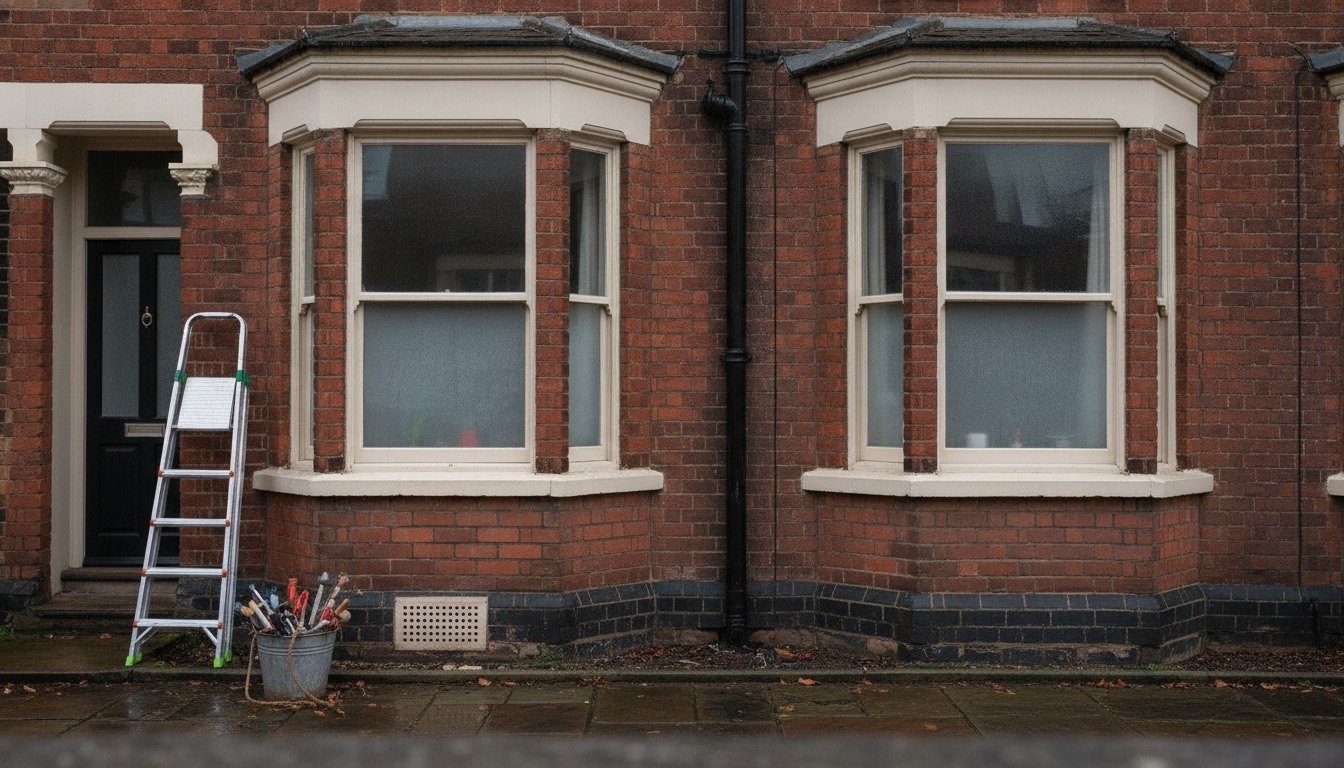
A maintenance calendar only works if it matches the building you own. Service the boiler, clear the gutters, test the alarms — fine for a 2005 estate house with cavity walls and plastic drainage. Put it on an 1890s terrace and it misses the jobs that cost real money: the airbrick buried by a flowerbed, the cast-iron hopper discharging down a solid wall, the sash cord about to part.
Below is a month-by-month schedule with honest times and 2026 UK prices for a three-bed semi or terrace, plus the extra task an older house needs each month. The last section says which four you cannot skip.
How to use this calendar (and what an older house changes)
Pre-1919 housing is not newer housing that has aged. It runs on different physics: solid walls that get wet and dry again, lime that flexes, floors that breathe from underneath. Modern instincts — seal it, paint it with plastic, repoint in cement — do more harm than neglect. Start with the common problems in 100-year-old houses.
- •Solid 9in brick absorbs driving rain and releases it inwards over days. It has to dry, so never seal it with waterproofer or vinyl emulsion.
- •Lime mortar and plaster are deliberately soft. Cement pointing traps moisture behind the brick face and blows it off in frost; NHL 3.5 repointing runs £60–£100 per m².
- •Lath and plaster ceilings fail by nail sickness — the keys snap and the ceiling bulges well before it drops. Tap for hollowness twice a year.
- •Victorian drainage is salt-glazed clay in short sockets, often shared with next door. Root ingress and displaced joints, not fat, cause most blockages.
- •Pre-1970s wiring may be rubber or lead-sheathed with no earth on lighting circuits. An EICR every ten years, five if let, is the proper check.
January to April: wet, cold and on the move
This is when defects announce themselves — damp on the north elevation, drains backing up after storms, heating faults at the worst moment. Keep January and February diagnostic.
- •January — 45 minutes, £0: walk the house during heavy rain with a torch, noting damp patches, overflowing hoppers and water running down brickwork. Older house: clear every airbrick — a blocked subfloor vent rots joist ends within a few winters.
- •February — 1 hour, £0–£20: bleed radiators and check the boiler sits at 1.0–1.5 bar cold; the order is in bleeding radiators and re-pressurising the boiler. Older house: lift a board in the coldest room and look for damp timber or white fungal strands.
- •March — 2 hours, £0–£40: clear gutters, hoppers and downpipes now leaf fall has finished — see gutter cleaning and maintenance. Older house: cast-iron guttering needs repainting inside with bituminous paint every three to five years.
- •April — 2–3 hours, £15–£60: wash down external joinery, check putty lines, prime bare timber before it swells. Older house: linseed oil putty on sash bars, never silicone; overhaul one or two windows a year, not a whole elevation.
May to August: the only reliable window for outside work
British weather gives roughly four months in which masonry, timber and render properly dry. Paint wants surface temperatures above 8–10°C and no rain for six to eight hours; lime wants frost-free nights for weeks after.
- •May — 2 hours, £0: service the mower, check the outside tap, and cut back anything growing against a solid wall. Ivy and stacked bin stores keep brickwork permanently saturated.
- •June — half a day, £30–£120: two coats on windows, doors, fascias and bargeboards. Older house: breathable mineral or linseed paint over lime render, because modern masonry paint traps water and lifts off in sheets.
- •July — 1–2 hours, £0: roof check from the ground with binoculars — slipped slates, cracked mortar verges, daylight through the loft boarding. Older house: a nail-sick slate roof at 100 years fails as scattered slips, not one leak.
- •August — 2 hours, £0–£150: rod and flush the drains before autumn; lift the chamber lid, check the benching, run a hose through. Older house: repeated backing-up on Victorian clay warrants a £120–£250 CCTV survey, not three call-outs.
September to December: getting ahead of the first frost
From late September you are working against the clock. Mortar, paint and excavation get harder every week, and the trades book further out.
- •September — 1–2 hours, £80–£120: book the boiler service now; Gas Safe engineers are three weeks out by mid-November. Older house: sweep every working flue at £60–£90 and cap unused chimneys with a vented cowl, never sealed dead.
- •October — 2–3 hours, £20–£80: brush strips, chimney balloons, letterplate flaps and floorboard filler, as covered in draught-proofing your home. Older house: sashes need brush carriers routed into the beads, £150–£250 per window fitted — foam tape just stops them sliding.
- •November — 1 hour, £10–£40: lag exposed pipework in the loft, garage and outbuildings, and turn the internal stopcock fully off and on so it can't seize; preventing frozen pipes covers the thresholds.
- •December — 30 minutes, £0–£30: test smoke and CO alarms, replace batteries, watch condensation on the coldest windows. Streaming glass and black spotting is a ventilation problem, not a cleaning one.
Time and cost per task
Rough 2026 figures for a three-bed semi — DIY where sensible, trade rates where not. Older properties run 20–40% higher across a year, mostly because more of the work is specialist. For the yearly provision, see our annual home maintenance cost guide.
- •Boiler service, Gas Safe registered: 45–60 minutes, £80–£120. Never a DIY job.
- •Chimney sweep, NACS or HETAS registered: £60–£90 per flue, with a certificate.
- •Drain rodding: 1 hour DIY with a £25 rod set, or £80–£150 for a call-out.
- •EICR on pre-1970s wiring: £150–£300, plus C2 remedials and a follow-up quote.
- •Sash overhaul with draught-proofing: £150–£250 a window, £400–£700 with cords and rot splices.
The supplies that cover most of the year
No workshop required — this kit covers everything above bar the trade-only jobs.
- •A 3m EN 131 double ladder and stand-off — never rest one on cast-iron guttering.
- •Radiator key, filling loop and 10mm spanner, bagged together near the boiler.
- •Ten-piece drain rod set with corkscrew head, plus long gauntlets.
- •Moisture meter, £25–£40, to tell condensation from a real leak.
- •Linseed oil putty, hacking knife and a 50mm cutting-in brush.
- •NHL 3.5 lime, sharp sand and a pointing iron.
Short on time? The priority order
Manage only four things a year? Make them these — each prevents a four- or five-figure failure.
The rest can slip a season. Repointing, decorating and window overhauls are worth doing slowly — one elevation or two windows a year — not all at once because a surveyor forced the issue mid-sale.
- •Clear gutters and hopper heads, twice if you have trees. Water discharging onto a solid wall is the commonest cause of internal damp in older UK homes.
- •Service the boiler and sweep the flues. Carbon monoxide and a Christmas Eve breakdown are the two risks worth paying to remove.
- •Keep airbricks and subfloor vents clear. Blocked ventilation rots joist ends and invites dry rot — a £15,000 problem starting with ten minutes and a trowel.
- •Walk the house in heavy rain with a torch. Fifteen minutes in bad weather finds more than a survey on a dry day.
Found this useful?
There's plenty more — hundreds of guides and honestly-tested product reviews for every corner of your home.
Browse All Guides