DIY & Maintenance · 6 min read · 4 June 2026
What Causes Water Hammer? Banging Pipes Explained (With Real UK Repair Costs)
The bang in the wall when the washing machine stops filling is usually a £15 problem. Occasionally it is a £600 one. Here is how to tell which you have before anyone quotes you.
By the Nims Casa editorial team — written from professional cleaning experience and checked against our editorial standards.
The bang arrives about a quarter of a second after the washing machine stops filling, and it comes from inside the wall rather than from the machine. What you are hearing is a moving column of water hitting a valve that has just slammed shut. In a 15mm copper run that column travels at around 2 metres per second, and stopping it in the 30 milliseconds a solenoid takes to close generates a spike five to ten times your normal mains pressure.
Most of the time this is a £15 fix you can do on a Saturday morning. Occasionally it is a £600 one. The difference is diagnosis, and that gap is where households get overcharged — so alongside the causes, here are real UK parts prices, the labour split, and the point at which a quote should send you for a second opinion.
What water hammer actually is
The proper name is hydraulic shock. Water is effectively incompressible, so when a valve closes faster than the water can slow down, that energy goes into a pressure wave. It races back up the pipe at roughly 1,200 to 1,400 metres per second in copper and bounces until friction kills it. The bang is the pipe jumping against a joist or plasterboard as it passes.
Two noises get called water hammer. A single hard bang on valve closure is true hydraulic shock. A machine-gun rattle while a cistern fills is resonance from a worn float valve diaphragm — a different, far cheaper problem. Housing type matters too: gravity-fed systems with a loft cistern rarely hammer badly, because 3 metres of head is only 0.3 bar. This is overwhelmingly a mains-pressure fault — combi boilers, unvented cylinders, post-2000 installs.
The five causes, in the order we actually find them
Ranked by how often each is the culprit on a real call-out:
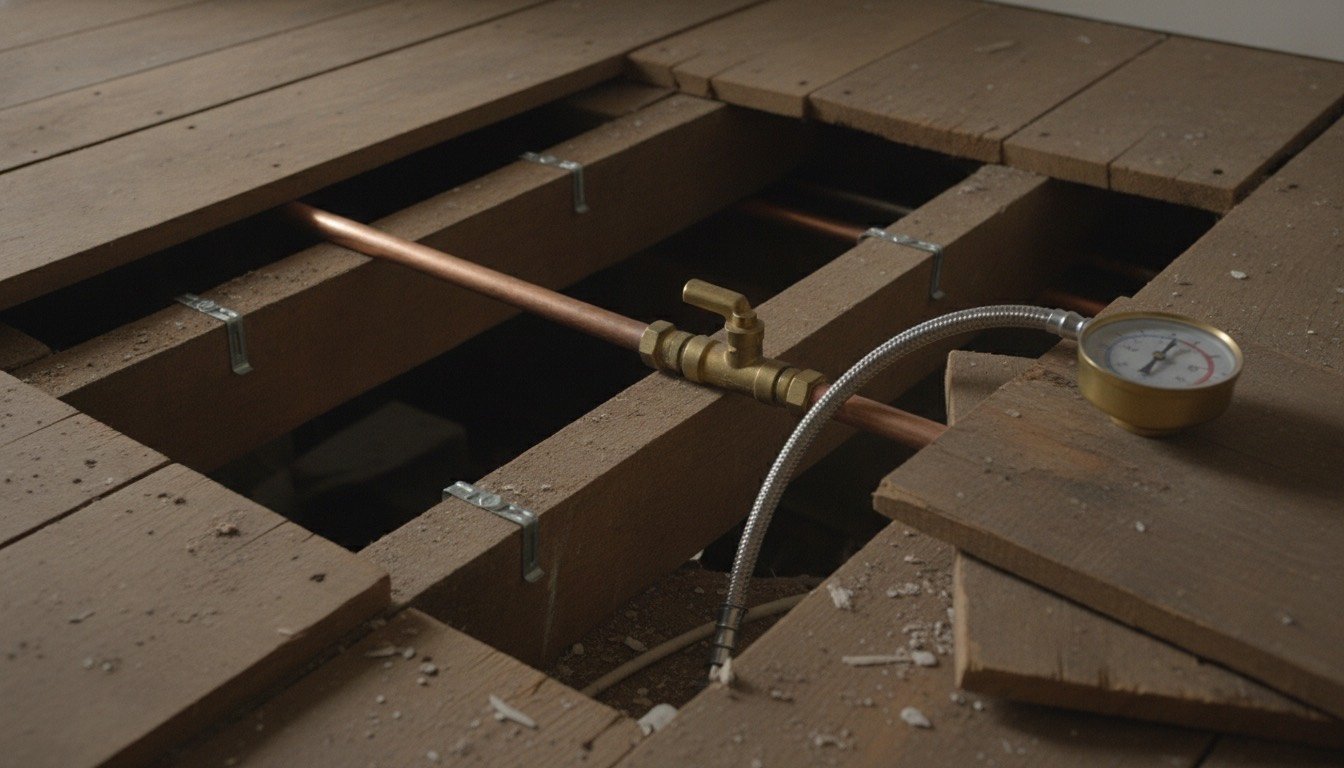
- •Unclipped or badly clipped pipework — roughly half of all cases. The surge is normal; the noise exists only because the pipe can move. Copper 15mm wants a clip every 1.2m horizontally and 1.8m vertically; plastic push-fit needs support every 300mm or so. Loft and under-floor runs are the usual offenders.
- •Fast-closing appliance valves. Washing machine and dishwasher solenoids shut in 20-40 milliseconds, far faster than any tap. If the bang only happens mid-cycle, that is your trigger.
- •Excessive mains pressure. Anything over 5 bar makes every other cause worse. Suppliers must deliver about 7 metres static head (0.7 bar) at the boundary, but urban mains often run 4-6 bar and climb overnight as demand drops.
- •A worn float or fill valve in a WC cistern. This makes the rattle, not the bang. A diaphragm washer costs under £1, a modern fill valve £12-20 — same strip-down as fixing a running toilet.
- •Failed check valves, booster pumps or a combi diverter. Least common, most expensive. A short-cycling shower pump or sticking diverter bangs on hot only, and needs an engineer rather than a clip.
Diagnosing it yourself in twenty minutes
A £12-18 hose-union pressure gauge from a trade merchant is the most useful thing you can buy here. Screw it onto the outside tap and you have a number, which changes every conversation you subsequently have with a plumber.
- •Note exactly what triggers the bang: hot tap, cold tap, washing machine fill or WC refill. Hot-only points at the boiler or cylinder side.
- •Take a pressure reading in the evening and again first thing. Under 3 bar is comfortable, 3-5 bar workable, over 5 bar needs regulating.
- •Close the washing machine and dishwasher isolating valves one at a time and rerun the test. If the noise vanishes, you have found the trigger.
- •Have someone work the offending tap while you rest a hand on pipework in the airing cupboard, under the sink and in the loft. Movement you can feel is a clipping problem.
- •Drain down: close the internal stop tap, open the highest tap then the lowest, let it empty, then close the lowest before the highest. This re-charges dead-leg air pockets — free, 20 minutes, fixes perhaps one case in five.
What the fixes cost in the UK: parts against labour
Independent plumbers charge £45-80 an hour across most of the UK in 2026, and £70-110 in London and the South East. First-hour rates of £60-100 are normal; a day rate sits at £280-450, and out-of-hours work doubles it. What a plumber costs by job has the regional detail; for water hammer, parts are almost always the smaller half of the bill.
- •Extra clips and felt lagging: £4-15 parts, free DIY or one hour (£50-80) if a plumber lifts boards.
- •Mini washing machine shock arrestor, 3/4in BSP between valve and hose: £12-25 parts, 10 minutes to fit yourself. The highest-value fix on this list.
- •Inline 15mm compression arrestor: £20-45 parts, £60-90 labour for 45 minutes and a drain-down.
- •Pressure reducing valve on the incoming main: £45-110 for a branded 15mm or 22mm unit, £120-220 labour depending on how buried the stop tap is. Budget £180-330 all in.
- •Re-clipping a whole floor after a botched install: £400-900, of which £350-800 is labour and floor reinstatement.
DIY or plumber? Where the line honestly sits
Domestic cold water plumbing is not a licensed trade in the UK — there is no Gas Safe equivalent — so fitting clips, arrestors and fill valves yourself is legal, provided the work complies with the Water Supply (Water Fittings) Regulations 1999.
Stop at three things. Unvented cylinder work is notifiable under Building Regulations Part G3 and needs a G3-ticketed installer. Anything inside a combi casing is Gas Safe territory. And if hammering has started a weep at a soldered joint or olive, deal with that first — fixing a leaking pipe joint covers the repair, before you end up reading emergency steps for a burst pipe.
What a reasonable quote looks like, and what should worry you
A sound quote starts with a diagnostic visit: one hour, £60-100, including a mains pressure reading and a look at accessible runs. Whatever is recommended afterwards should reference that figure. If nobody took a reading, nobody diagnosed anything.
Treat as suspect: a repipe proposed before a floorboard has been lifted; a pressure reducing valve quoted above £450 fitted when your pressure is already under 4 bar; and any firm that will not itemise parts against labour. Whole-house repiping is a genuine answer for perished pipework — PEX vs copper pipe is worth reading if you get there — but hammering alone almost never justifies it. If pressure is poor as well as noisy, why your water pressure is low works through the overlap.
Frequently asked questions
Is it dangerous? Not immediately, but it is cumulative. Repeated 10-15 bar spikes work-harden soldered joints, loosen olives and burst washing machine inlet hoses.
Why has it suddenly started? Usually a new appliance with a quicker solenoid, or mains work nearby that raised supply pressure. Take a gauge reading before assuming the pipework changed.
Will lagging fix it? Foam lagging stops a pipe rattling against a joist and is worth doing while boards are up, but it does nothing about the pressure spike itself. At £4 a length, treating the symptom is often good enough.
Found this useful?
There's plenty more — hundreds of guides and honestly-tested product reviews for every corner of your home.
Browse All Guides