Plumbing · 6 min read · 9 June 2026
PEX vs Copper Pipe: Costs, Pros and Cons for UK Homes
Copper or plastic push-fit? The material argument matters far less than the labour bill behind it. Here are the real 2026 UK numbers and where each pipe genuinely lets you down.
By the Nims Casa editorial team — written from professional cleaning experience and checked against our editorial standards.
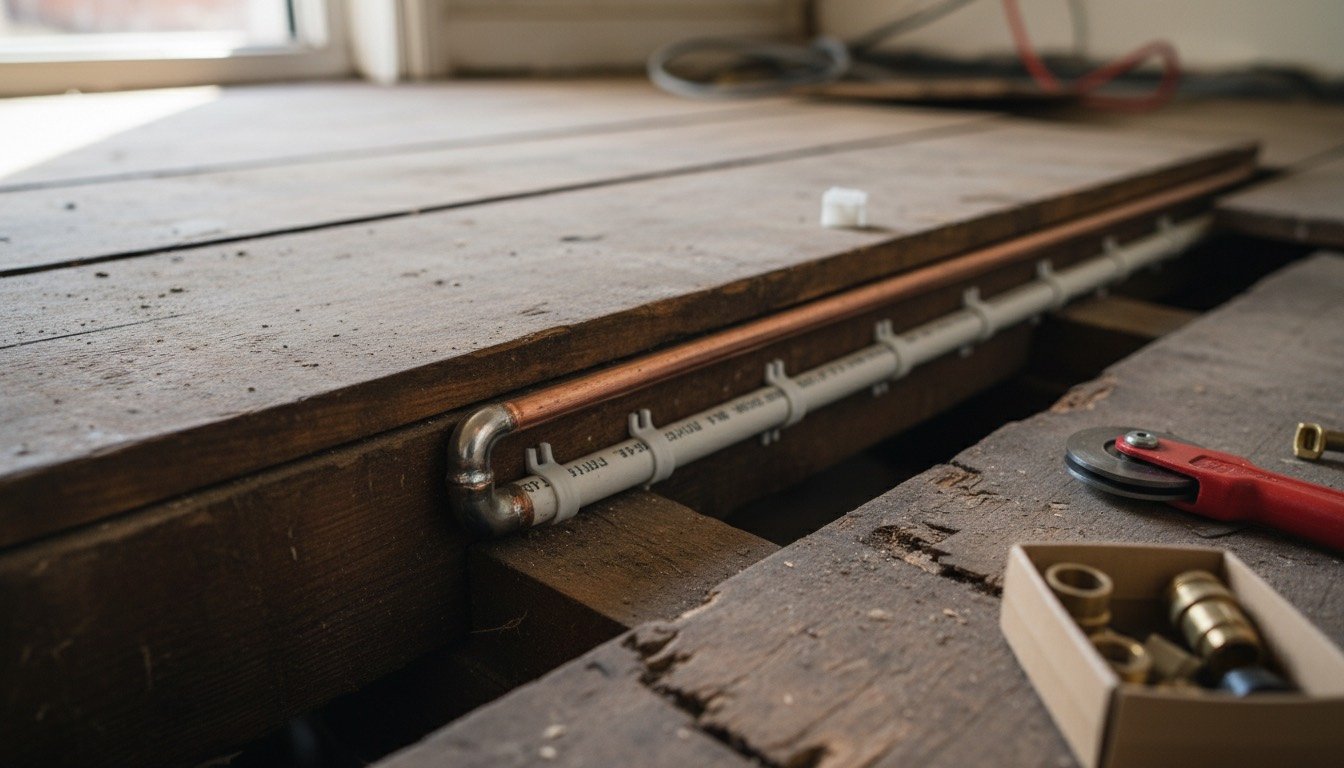
Ask three UK plumbers which pipe to use and you will get three answers, usually shaped by whatever they served their apprenticeship on. The material sold here as Speedfit, Hep2O or PolyPlumb barrier pipe is the cross-linked polyethylene the wider trade calls PEX, and it now goes into most new British housing. Copper tube to BS EN 1057 still dominates renovations, boiler connections and anything on show.
The honest comparison is not about which material is better. It is about where your money goes. On a typical UK repipe, pipe and fittings account for 12 to 20 per cent of the bill and labour swallows the rest, which is why this choice shifts the total far less than most homeowners assume.
Copper vs plastic push-fit: the side-by-side
Figures are retail including VAT, for domestic 15mm sizes.
- •Pipe: copper £4.50 to £6.50 per metre; barrier plastic £1.10 to £1.80 per metre from a 50m coil.
- •Fittings: copper solder-ring elbow 70p to £1.40, compression elbow £2 to £3, push-fit elbow £2.50 to £4.50. Cheaper pipe, dearer fittings.
- •First-fix speed: plastic goes in 30 to 40 per cent faster, and that is where the real saving lives.
- •Internal bore: 15mm copper carries about 13.6mm of water; 15mm plastic about 10mm, narrowed further inside every push-fit fitting.
- •Heat: copper shrugs off 100°C beside a flue; plastic is rated to 95°C peak, 70 to 82°C continuous.
- •Freezing: plastic stretches and often survives; copper splits along the seam and floods the ceiling below.
- •Movement: plastic expands roughly ten times more, so it wants clipping every 300mm horizontally against copper's 1.2m.
- •Weak spots: mice gnaw plastic under floors and in lofts, and UV degrades it, so anything external stays copper.
- •Guarantees: Hep2O 50 years, Speedfit 25; competent copper routinely passes 50 without attention.
Performance: pressure, noise and what you actually notice
The bore difference is the one homeowners feel. Run 12 metres of 15mm plastic with six push-fit elbows to a top-floor shower and you get measurably less flow than the same route in copper. On a combi with modest flow to begin with, that is the difference between a decent shower and a disappointing one. Plastic is rarely the sole culprit, but it is one more restriction on a chain that may include a partly closed stopcock or scaled tails, so rule out the usual causes of low water pressure first.
Plastic wins on noise. It absorbs the shock wave from a fast-closing washing machine valve rather than transmitting it through the joists, so plastic systems rarely suffer the bang that sends people looking up what causes water hammer. Copper is also the one that ticks and creaks as hot water expands it through a tight notch in a joist.
On frost, plastic is more forgiving, but fittings still fail even when the pipe survives, and a plastic run in a cold loft is no substitute for lagging. Either way, preventing a freeze is cheaper than either repair.
What it costs in 2026, and the labour split that matters
Domestic plumbers charge broadly £45 to £85 an hour outside London and £70 to £110 inside it, with day rates of £250 to £400 and £350 to £550. That range, not the pipe, sets your bill — our breakdown of plumber rates by job covers callout minimums and emergency loading.
- •Full repipe, three-bed semi, plastic: £3,000 to £5,500 all-in, 4 to 6 days on site, materials £400 to £700 of that.
- •Same house in copper: £4,500 to £8,000, 6 to 9 days, materials £900 to £1,600.
- •Kitchen or bathroom first-fix only: £550 to £1,200 in plastic, £750 to £1,600 in copper.
- •Press-fit copper, flameless and often demanded by insurers in occupied flats: add £3.50 to £6 per fitting plus £55 to £85 a day tool hire.
- •Making good — floorboards, plaster, redecoration — is usually excluded and runs £600 to £1,500.
The 10-year cost on a real three-bed semi
Take a 1970s semi in the Midlands, ten hot and cold points, both floors accessible from above. Plastic came in at £4,200 and copper at £6,400 — a £2,200 gap, of which only about £800 was materials. Over the following decade the plastic system needed one joint remade after a floorboard nail caught it (£120 callout) and the copper needed one compression joint nipped up (£95). At ten years both are comfortably mid-life, so the £2,200 stays a saving rather than deferred cost.
Water chemistry is what flips that. In a handful of UK supply areas copper suffers pinhole pitting and starts weeping at 15 to 25 years rather than 50. If neighbours have had repeat pinhole leaks, that local history beats any brochure, and it is one of the clearer signs your pipes need replacing rather than patching.
Installation: inserts, clips and the earth bonding trap
Almost every plastic push-fit failure traces back to a missing pipe insert — the 15p sleeve that stops the pipe collapsing under the O-ring. A joint made without one can hold pressure for months before it weeps. Pull a floorboard and look: no inserts means the whole install is suspect. Copper's equivalent tell-tale is a joint soldered with the pipe unclean or unsupported, the usual cause of a leaking pipe joint surfacing weeks after the plumber left.
Two UK rules catch DIYers out. Boiler manufacturers require the first metre of flow and return in copper, and discharge pipework from an unvented cylinder's relief valve must be metal throughout. And because plastic conducts nothing, replacing a copper section can quietly break the earth continuity that metal pipework and a bath relied on. Convert a run near a bathroom and have an electrician confirm main and supplementary bonding still comply with BS 7671. That check costs an hour; getting it wrong is a real shock risk.
How to sanity-check the quote
Ask for labour and materials priced separately. On a plastic three-bed repipe, a materials line under £350 suggests corners cut — no isolating valves, no inserts, coil offcuts joined mid-floor; over £1,000 suggests copper prices on a plastic job. Days on site multiplied by the day rate should land within about 15 per cent of the labour line. A quote 40 per cent below the others is almost always excluding making good, or the plumber intends to notch joists rather than drill them. A good quote also states how long the system is held on test; one hour at 1.5 times working pressure is the domestic standard.
Who each suits, and the verdict
Choose plastic push-fit for whole-house repipes where speed cuts labour, retrofits threaded through existing floors, anywhere a naked flame is unwelcome, and freeze-prone loft runs. Choose copper for boiler and cylinder connections, exposed pipework, external runs, long shower feeds where bore matters, and any property with a rodent history.
For most UK homes the verdict is a hybrid, which is what good plumbers already do: plastic for the concealed distribution, copper for the last metre at every appliance and everywhere it is on show. That buys the labour saving without inheriting plastic's weaknesses. If you are being sold an all-copper repipe, ask what the extra £2,000 buys in your specific house. Sometimes there is a real answer. Often it is habit.
Found this useful?
There's plenty more — hundreds of guides and honestly-tested product reviews for every corner of your home.
Browse All Guides