DIY & Maintenance · 6 min read · 20 July 2026
When to Call a Structural Engineer: UK Fees, Crack Widths and the DIY Limit
A hairline crack over a door and a 12mm stepped crack under a window are different problems, and only one needs a chartered engineer. Here is how to tell before you spend £600 finding out.
By the Nims Casa editorial team — written from professional cleaning experience and checked against our editorial standards.
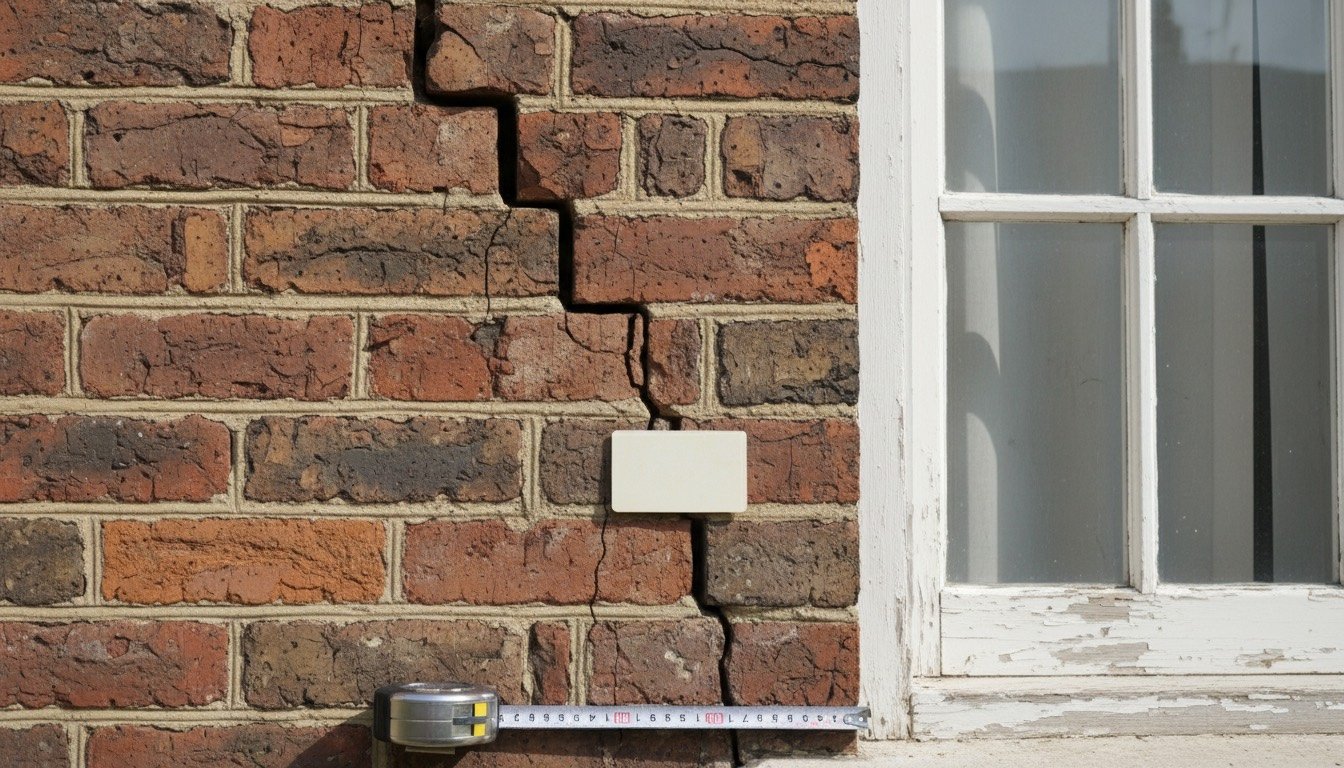
Most homeowners find out which sort of crack they have the expensive way: paying £600 for a report concluding "no action required", or ignoring the serious one through two winters until the door frame goes out of square. Both are avoidable with £50 of kit and some patience.
This is the triage we run before recommending anyone pays for an engineer's visit, and it gets specific about fees. Structural engineering is one of the few trades where you buy nothing but time, judgement and insurance — no materials to hide a margin in, which makes a padded quote easy to spot.
Safety first: the signs that mean stop measuring and get out
Almost all movement in UK housing stock is slow and dull. A few situations are not, and monitoring is the wrong response to every one of them.
- •A crack that widens over hours or days, or you can see daylight through.
- •Doors and windows across a whole elevation jamming in the same week.
- •A floor that has dropped or gone springy after a leak or joist-end rot.
- •Brickwork leaning or bulging when you sight along the wall from the corner.
- •Movement after a vehicle impact, burst water main, fire, or piling next door.
- •A chimney breast removed by a previous owner with nothing supporting the stack in the loft.
Tools, materials and the skill level this needs
In those cases leave the affected rooms, prop nothing yourself, and ring an engineer for emergency attendance: £600–£1,200 for a next-day visit. If collapse looks possible, call your council's out-of-hours building control instead; they hold statutory powers over dangerous structures and attend free.
Otherwise the assessment below is homeowner-level. You are not diagnosing anything, only gathering evidence so an engineer's visit costs one hour instead of three.
- •Crack width gauge card, £4–£8, or a digital vernier caliper at £12–£25
- •Two Avongard-type tell-tale gauges, £10–£14 each, plus two-part epoxy, £6
- •A 1.2m spirit level and a plumb bob or string line
- •Torch, tape measure, phone camera and a notebook for dated readings
What a structural engineer actually costs in the UK
Kit total is £40–£70 and the skill is low. Discipline is the hard part: six months of monthly readings beat any number of photographs shot on one panicked afternoon.
On fees, the labour-to-materials split is simply 100 per cent labour — site time, drawing-office time and professional indemnity cover. Most domestic practices carry £250,000 to £1m of PI insurance, and it sits inside every quote. Rates in 2026 run £75–£130 an hour outside London, £110–£180 inside the M25.
- •Site visit plus short written opinion on cracking: £350–£700 + VAT
- •Full structural report with BRE damage classification: £500–£1,000 + VAT
- •Beam or lintel calculations for removing a load-bearing wall: £350–£750 + VAT
- •Subsidence investigation with trial pits and soil analysis: £1,500–£3,500
- •Party Wall award, per surveyor appointed: £900–£1,600
- •Building control application for a structural alteration: £300–£600
Step by step: the six-week assessment that saves the fee
One caveat first. If it looks like subsidence, do not commission your own investigation. Buildings insurance covers it under almost every UK policy: the insurer appoints and pays for the engineer, and your excess is typically £1,000. Paying £2,500 privately and claiming afterwards rarely gets reimbursed.
- •1. Photograph every crack with a tape or coin in shot, from a spot you can stand in again. Date each image.
- •2. Measure the widest point to the nearest 0.5mm. Under 1mm throughout is BRE damage category 0–1, which is cosmetic.
- •3. Classify the pattern. Stepped cracks in mortar joints, wider at the top, suggest foundation movement. Vertical cracks at an extension junction mean differential movement between old and new. Horizontal cracks every four to six courses point at cavity wall tie failure.
- •4. Check the same spot inside and out. A crack passing right through the wall matters; one confined to the plaster skin rarely does, and most of those are plaster movement needing filler, not an engineer.
- •5. Epoxy tell-tales across the two worst cracks onto sound masonry either side. Record weekly for six weeks, then monthly.
- •6. Rule out the cheap causes meanwhile: blocked gullies, a leaking downpipe soaking the footing, a willow or poplar within 20 metres on clay. Felling the tree is not automatically the answer — removal can trigger heave.
- •7. At six months, movement under 1mm that opens in summer and closes in winter is thermal and moisture movement, not progressive subsidence.
- •8. Movement over 2mm, or any crack passing 5mm, ends the monitoring. Instruct an engineer and hand over the dated records.
Troubleshooting: what the readings are telling you
The pattern matters more than the raw width. These are the readings we see most, and what they mean after a few months of data.
- •Opens in summer, closes in winter, travel under 1mm: clay shrinkage, endemic across London, Essex and the Home Counties. Filler and decorating, not underpinning.
- •Widens steadily in one direction regardless of season: progressive movement. Engineer now.
- •Began within two years of a large tree being felled nearby: possible heave. Engineer now, and lead with the tree.
- •Confined to extension junctions with no other damage: differential settlement of a newer, shallower foundation. Usually a report and a movement joint.
- •Damp, crumbling brickwork alongside cracking: chase the water first, because persistent damp does more visible damage than the movement and the cause is often a £200 gutter repair.
Reading the quote: fair, padded or frankly suspect
A sound quote is a fixed fee, states the site hours included, names the chartered individual attending (MIStructE, CEng MICE, or a RICS chartered building surveyor) and confirms PI cover. Crucially it does not include a remedy: once diagnosis and cure come off the same invoice, the diagnosis is a sales document.
- •Fair: £450 + VAT, one site visit up to two hours, written opinion within 10 working days, £1m PI cover.
- •Suspect: a "free structural survey" from a firm that also sells underpinning, resin injection or damp-proofing.
- •Suspect: any underpinning figure quoted before trial pits are dug. Nobody knows the footing depth or soil until someone digs beside it.
- •Padded: separate charges for travel, photographs and "report production" stacked on top of an hourly rate.
- •Worth paying more for: an engineer who also produces the calculations and handles building control and planning consents if works follow. Splitting that across two firms always costs more.
When to skip the assessment and call straight away
Monitoring is for ambiguous cracking. Some jobs need an engineer from the outset, and no amount of homeowner diligence changes that.
For everything else, most cracking in British houses is cosmetic, seasonal and fixable with flexible filler and a Saturday. Working out which pile you are in costs £50 and six weeks of notes.
- •Before removing any internal load-bearing wall, chimney breast or section of structural masonry. The calculations are a Building Regulations requirement, and unapproved alterations surface at sale.
- •Before a loft conversion, a basement dig, or an extension opening more than about 3m of external wall.
- •When a survey on the house you are buying flags "evidence of structural movement" — a £500 opinion on top of the survey fee is trivial against a £400,000 purchase.
- •When cracking reappears within 12 months of being filled and decorated.
Found this useful?
There's plenty more — hundreds of guides and honestly-tested product reviews for every corner of your home.
Browse All Guides