Heating & Cooling · 6 min read · 14 May 2026
AC Not Cooling but Still Running? Find the Fault Before You Call
A unit that runs but blows warm is a different fault from one that will not start at all. Work the diagnostic path first and you will know whether you face a £0 fix or a £400 one.
By the Nims Casa editorial team — written from professional cleaning experience and checked against our editorial standards.
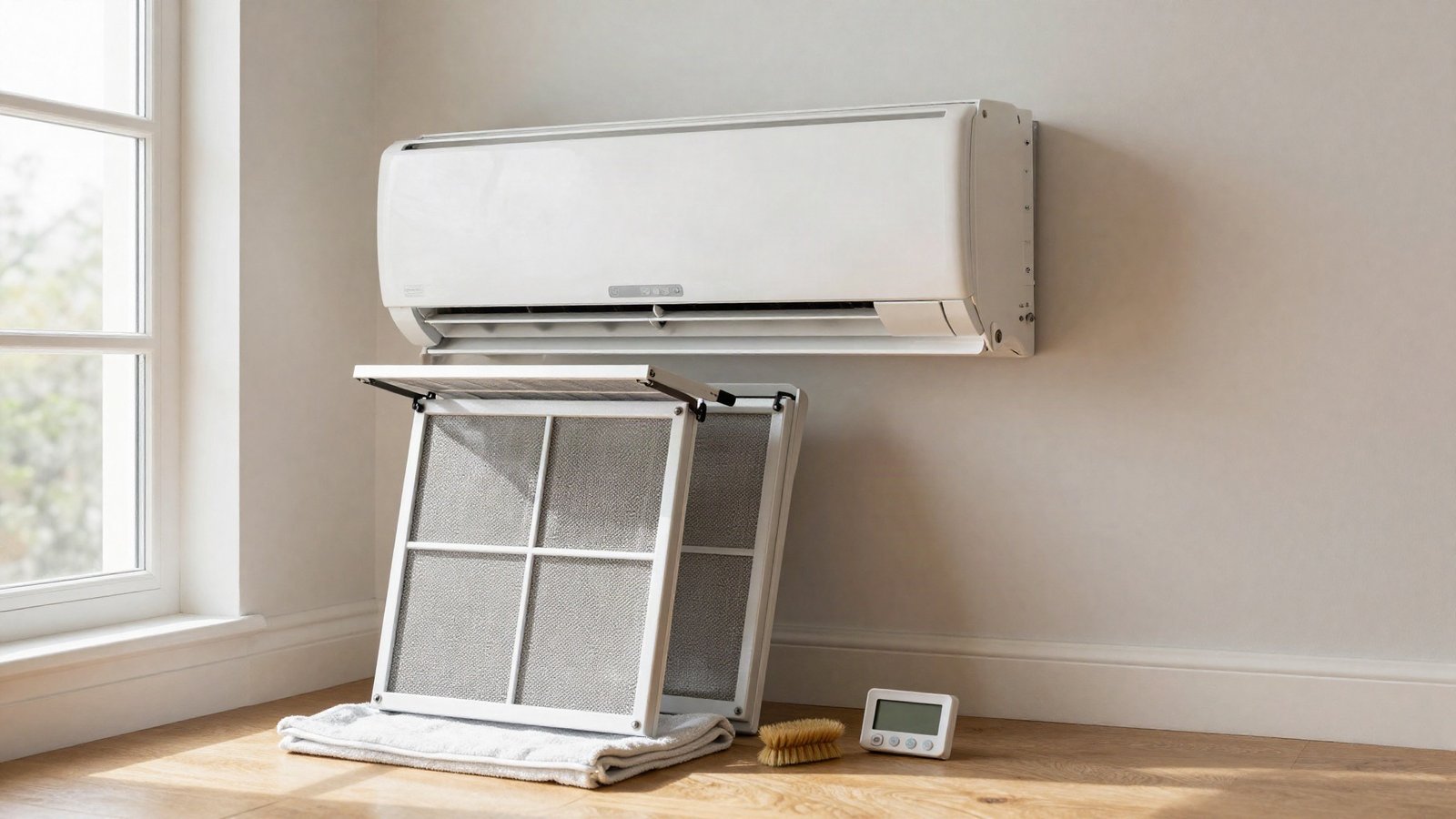
The calls land on the second warm day of the year, when the system has sat untouched since August. The indoor unit hums, air moves out of the louvres, the green light is on — and the room stays at 27°C. That is useful, because a machine that runs but will not cool has a far shorter list of causes than one dead on the wall.
It comes down to six things, and four you can check yourself in twenty minutes with a screwdriver and a kitchen thermometer. The expensive mistake is paying for a regas when you had a blocked filter.
Start Here: The Diagnostic Path
Take these in sequence and stop at the first that gives you an answer. Allow ten minutes of settled running first; an inverter that has just started is nowhere near full output.
- •Is the outdoor unit running? Silence and a still fan means a power or control fault — check the outdoor isolator and its MCB first.
- •Humming outside with a still fan? That normally means a failed run capacitor. Leave the cover on and skip to the costs.
- •Is the remote set to Cool, and the setpoint below room temperature? Snowflake is Cool, fan icon Fan Only, droplet Dry — and Dry mode dehumidifies at very low output. Drop the target to 18°C to test.
- •Measure the split. Thermometer at the indoor return grille, then at the outlet. A healthy system gives an 8–12°C drop; under 5°C means refrigerant or airflow, and that distinction is the whole ballgame.
- •Look for ice on the aluminium coil behind the filters. Frost or a white sheet means stop and read the frozen coil section.
- •Inspect the condenser outside. Wheelie bins, a new fence panel or ivy will strangle it — allow 300mm clear on the intake sides.
Why the Temperature Split Tells You So Much
A split system does not make cold. It moves heat outdoors using refrigerant that boils at low pressure indoors and condenses at high pressure outside. Capacity depends on enough refrigerant and enough air over both coils.
So the return-to-outlet split is the most useful reading you can take. A big split with weak airflow means the air is cold but too little reaches you — filters, fan or dirty indoor coil. A small split with strong airflow means plenty of air with little cooling in it — charge, compressor or fouled outdoor coil. If the split is healthy and the room is still hot, nothing is broken: the unit is undersized or losing to solar gain, which sizing an air conditioner in kW and BTU covers properly.
The Six Faults Behind Almost Every Warm-Air Call
Ordered by how often we find them in UK homes, not by how dramatic they sound.
- •Choked filters — a third of callouts, two minutes of work. In pollen season they load up in three weeks; pet hair halves that. How often to change an air filter sets sensible intervals.
- •A filthy or obstructed outdoor coil. If you cannot see daylight through the fins, head pressure climbs until the unit derates or trips out.
- •Slow refrigerant loss. R32 and R410A systems shed charge through flare joints, usually 3–8 years in. Weak split, ice on the thin copper pipe outside.
- •A failed run capacitor or condenser fan motor — common past eight summers, especially coastal, where salt eats the bearings.
- •A reversing valve stuck in heating on a reversible model — it runs, and quietly warms the room.
- •Nothing wrong with it. South-facing glazing and 31°C outside will beat a 2.5kW unit in a 30m² room.
Frozen Coil: Stop, Thaw, Then Diagnose
Ice on the indoor coil is a symptom, never the fault. Running a frozen system sends liquid refrigerant back to the compressor — the difference between a £200 repair and a new system. Switch to Fan Only, let room air melt it, towel underneath. Light frost clears in 45 minutes; a properly iced coil takes two to three hours. Never chip at it or point a hot air gun at aluminium fins.
Once clear you have a test that separates the two causes. Wash the filters, dry fully, refit, run in Cool at 18°C. If it holds an 8°C split and stays ice-free through a hot afternoon, airflow was the problem. If it re-freezes within four to six hours on clean filters, the charge is low and there is a leak. Clean both coils and the drain tray either way — the air conditioner cleaning guide covers what most people miss.
What the Fixes Cost in the UK
Typical 2026 prices for one wall-mounted split. Labour is £45–£75 an hour outside London, £65–£95 inside the M25, one-hour minimum plus travel.
Two worked examples. A five-year-old 3.5kW unit, weak split, no ice: £85 call-out, nitrogen test finds a weeping flare at the service valve, re-flare and 1.1kg R32 recharge — £310, worth doing. A twelve-year-old unit with a seized compressor: £800 against £1,800 for a replacement running 30–40% cheaper. Replace it.
- •Filter clean or replacement, DIY: £0–£25
- •Diagnostic call-out, often credited against the repair: £60–£110
- •Full service — coil clean, drain flush, pressure check: £90–£160
- •Run capacitor replaced: £90–£170 fitted
- •Outdoor fan motor: £180–£320 fitted
- •Condensate pump replacement: £120–£220
- •Leak detection, repair and R32 recharge: £250–£500
- •Control PCB, indoor or outdoor: £220–£420
- •Compressor replacement: £700–£1,100, rarely economic past eight years
- •New 3.5kW wall split supplied and installed: £1,500–£2,300
What You Can Legally Do, and Where You Must Stop
Stricter here than most online advice assumes. Under the Fluorinated Greenhouse Gases Regulations 2015, handling refrigerant in a sealed system requires F-Gas certification, and venting it is an offence. Marketplace top-up kits are not a legal route for a domestic split, and they mask a leak you pay for again next summer. A new condenser circuit is notifiable under Part P — our electrician cost guide gives realistic rates.
Yours to do: washing filters, rinsing outdoor fins at low pressure, clearing bins and plants from the condenser, flushing a blocked condensate drain, resetting at the isolator. Twice a season prevents most of what we get called out for — the summer AC maintenance checklist is the version we hand clients. The sealed circuit, compressor terminals and capacitors are where DIY ends.
Questions We Get Every Summer
How cold should the air feel? Judge the difference, not the number. Eight to twelve degrees below the incoming air is healthy — on a 30°C day that is about 19°C at the louvres, less impressive than people expect.
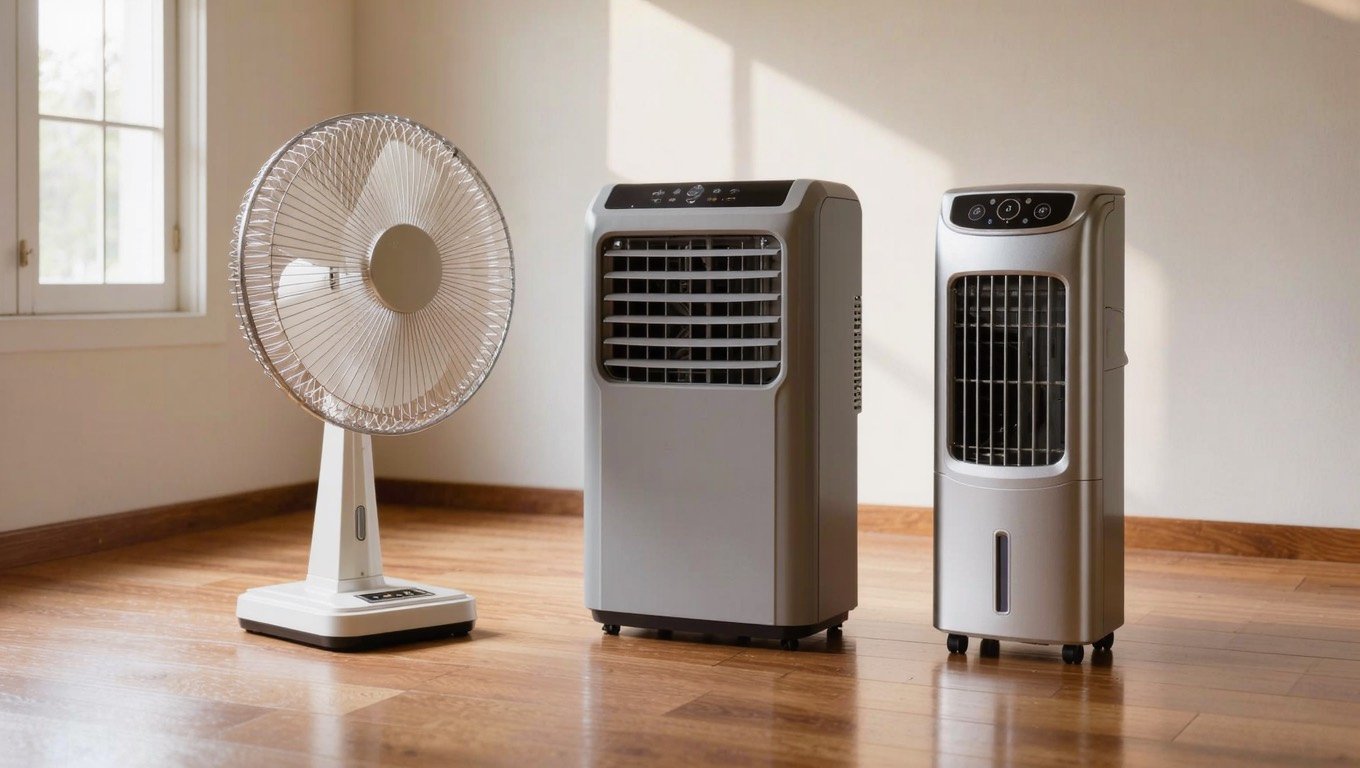
My portable unit is not cooling. Single-hose portables exhaust indoor air outside and pull warm air in through every gap to replace it. Seal the window kit, keep the hose short and straight under 1.5m, and accept it will not match a fixed split.
Does a regas fix it for good? No. These are sealed systems, so low charge means a leak. A reputable engineer pressure-tests and repairs before recharging.
Run it all day in a heatwave? An inverter holding a steady 23–24°C usually costs less than repeatedly hauling a baking room back down. Close the blinds on the sunny side, and see our heating and cooling guides for running costs.
Found this useful?
There's plenty more — hundreds of guides and honestly-tested product reviews for every corner of your home.
Browse All Guides