Plumbing · 6 min read · 17 July 2026
Battery Backup Sump Pump Buying Guide (UK): Sizing, Runtime and Real Costs
The storm that saturates your ground is the same storm that takes the power out. How to size, cost and fit a backup that runs when the mains pump can't.
By the Nims Casa editorial team — written from professional cleaning experience and checked against our editorial standards.
Most sump pumps fail at exactly the moment they matter. The storm that saturates the ground is the same storm that drops the overhead line feeding your street, and a 230V pump with no power is a lump of stainless steel in a hole full of rising water. That single failure mode is the whole argument for backup.
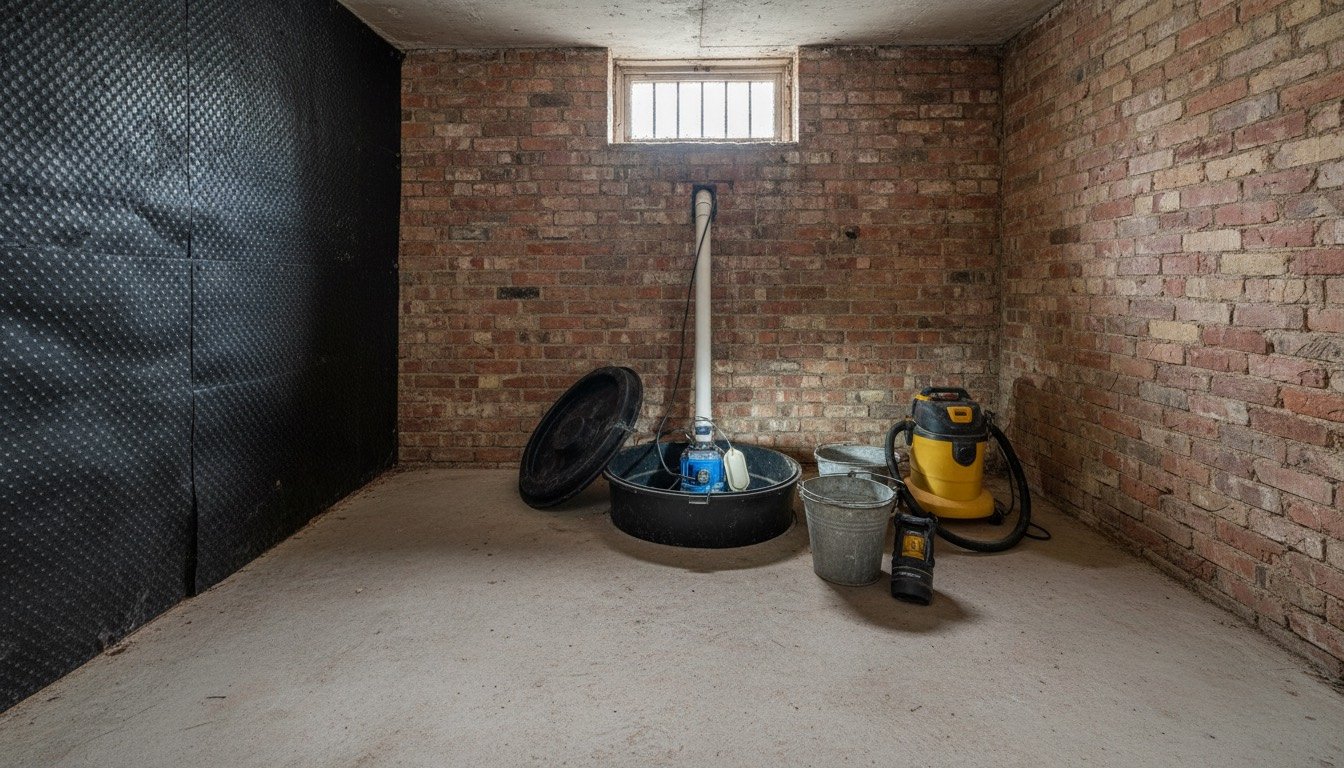
The honest position from servicing these in cellars and lightwell chambers: most homes with a sump need backup power, and plenty do not need a sump at all. Here is how to size one, what it costs installed, and how renters get protection without drilling a hole.
What a battery backup sump pump actually does
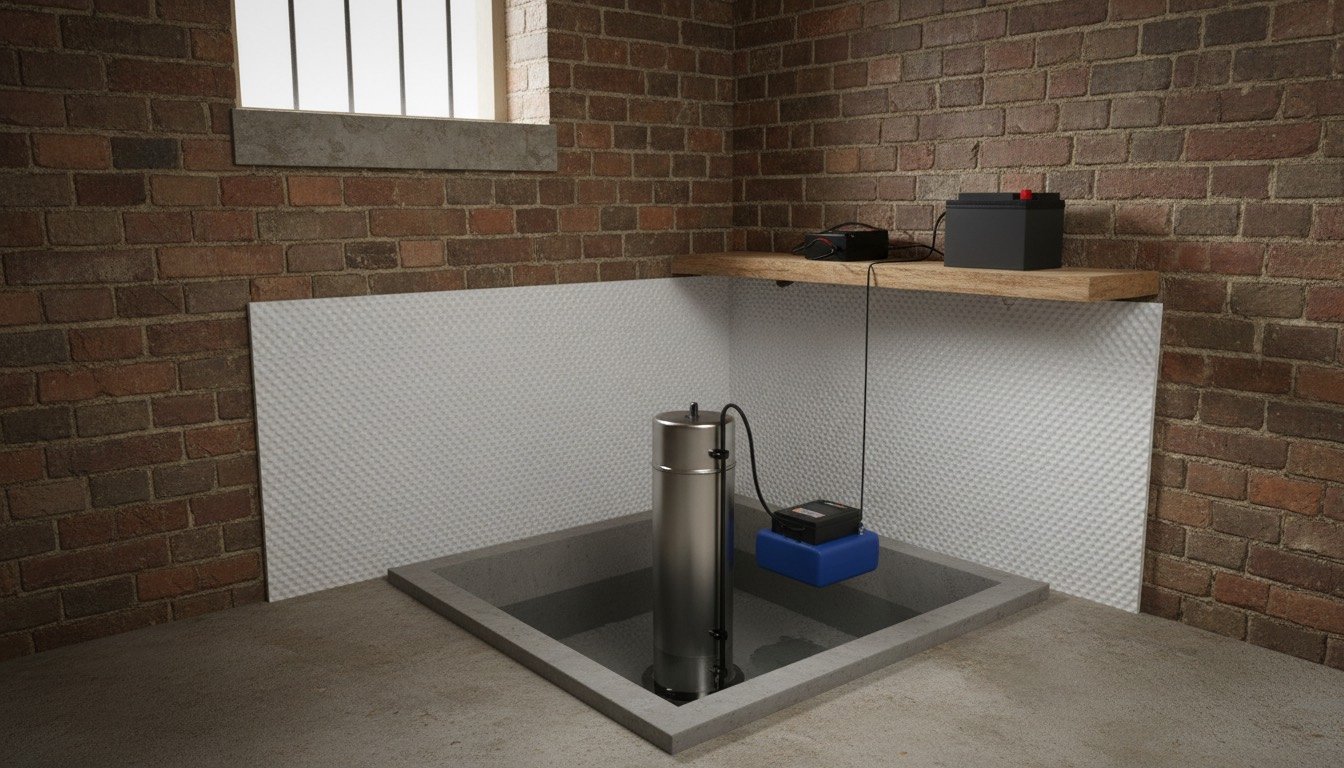
It is a second, independent pump that takes over when the primary stops — power cut, tripped RCD, seized impeller, or a jammed float. Usual UK form: a 12V or 24V DC submersible sitting slightly higher in the same sump, wired to a sealed battery on permanent trickle charge, its own float set 40–80mm above the primary's cut-in.
That offset is the whole design. The backup only starts once water climbs past where it should have stopped, so every activation doubles as a fault alarm. If your main pump already misbehaves, fix that first — see why your sump pump keeps running before spending £900 on a stuck float.
The decision tree
Work down these in order; most people stop at the second or third.
- •Is the space habitable, or holding anything you'd grieve over? BS 8102:2022 expects dual pumping plus backup power for a Type C drained system.
- •Does the sump cycle in a normal wet week? A chamber dry from November to March is a case for leaving alone; one that cycles daily makes backup non-negotiable.
- •How long could you be off supply? Urban, underground: usually under two hours. Rural, overhead-fed: plan for 12–48 hours — Storm Arwen left households off for a week.
- •Groundwater or a burst pipe? Backups handle groundwater; a burst needs a stopcock you can find in the dark.
- •Already have a generator or home battery with changeover? Powering the existing AC pump is cheaper and higher-flow than adding a DC one.
The three types sold here — and one that isn't
- •Dedicated DC backup pump. A 12V or 24V submersible moving 40–70 litres a minute at 2m head, with its own float, charger and controller. £350–£750 before the battery. The default choice.
- •Inverter/UPS backup for the existing AC pump. Keeps the 230V pump alive and its full 100–160 L/min — but only if it handles a start surge three to five times running current. A 400W pump wants 1,500VA.
- •Twin AC pumps on a backed-up supply. Duty/standby controller fed from a generator changeover or home battery. Best performance, highest cost, standard for a finished basement.
- •Water-powered ejector backups. Standard in the US, a dead end here: drawing mains water through a device plumbed near a sump is a Fluid Category 5 backflow risk under the Water Fittings Regulations.
Sizing and runtime: the numbers that decide it
Two figures do all the work. Head is the vertical lift from pump to discharge plus pipe friction — a typical UK cellar is 2.5–3.5m, and a backup sold as 'up to 8m' shifts roughly half its headline flow at 3m. Read the pump curve, not the box.
Duty cycle sets runtime. If the main pump runs 15 seconds every two minutes in heavy rain, that is 12.5% duty, so a 12V backup drawing 10A averages about 1.25A. A 110Ah AGM at 50% depth of discharge gives 55Ah usable — around 40 hours at that duty, or five hours flat out. Double the duty, halve the runtime.
AGM stays the default at £110–£200 for 110Ah; LiFePO4 runs £300–£550 but takes deeper discharge and weighs a third as much. Replace every five years and test quarterly — see testing a sump pump.
What it costs in the UK
Supply-and-fit figures for central and southern England; knock 10–15% off in the north and Scotland, add it back inside the M25.
- •DC backup kit (pump, float, controller, charger): £350–£750
- •110Ah sealed AGM: £110–£200. LiFePO4 equivalent: £300–£550
- •Pure sine wave inverter-charger, 1,500VA: £280–£600
- •Fitting to an existing sump: £250–£450 labour, 2–4 hours on site
- •New RCD-protected circuit, registered electrician: £180–£350
- •Typical all-in retrofit to a working sump: £850–£1,400
- •New twin-pump chamber with backup: £1,900–£3,600
- •Annual service and battery load test: £120–£220
The renter-safe version
Tenants get told there is nothing they can do, which is wrong. What you cannot do is alter the fabric — no drilling for battery shelves, no new sockets, no cutting into the discharge pipe. Everything below is reversible and leaves no trace at check-out.
- •Plug-in pure sine wave UPS, £300–£550. Pump plugs into the UPS, UPS into the existing socket. Never use a cheap modified sine wave office UPS on an induction motor — it cooks the windings.
- •Adhesive Wi-Fi water alarms, £20–£40 each, on the cellar floor and the top step. They peel off cleanly and wake you at 3am, which the pump will not.
- •A standby puddle pump in a box: 230V submersible utility pump (£60–£110) plus 10m of layflat hose.
- •Photograph the sump, socket and any existing tide marks on day one and the day you leave.
- •Report in writing, never by phone. Flood and damp risk sits under the Homes (Fitness for Human Habitation) Act 2018, and the paper trail is what helps later.
DIY versus a specialist
Dropping a DC backup into an existing chamber and tying it into the discharge with its own non-return valve suits a confident DIYer — a morning's work if the sump is accessible. Three parts of it are not. New circuits are notifiable under Part P in England and Wales, so use an electrician registered with NICEIC, NAPIT or ELECSA. Groundwater must not enter a foul sewer without your water company's consent, so discharge to a surface water drain or a soakaway clear of the foundations. And if the cellar is a bedroom or office, BS 8102:2022 applies and you want a PCA-registered waterproofing designer.
For membranes, channels and where the sump sits in the wider design, work through our basement waterproofing guide. If the cellar smells musty rather than floods, the cause is usually ventilation — read why your basement is damp first.
Common questions
Next step, and it costs nothing: tip a bucket into the sump, time the run, then count cycles during the next downpour. That gives you flow rate and duty cycle. To price the whole system, see our sump pump installation cost guide or the plumbing hub.
- •How long will it really run? At 10–15% duty, a 110Ah AGM gives 30–45 hours; under continuous heavy inflow, 4–6 hours. Size for the storm, not the average week.
- •Can I use a car battery? No. Starter batteries fail within months of cyclic use. Fit a sealed leisure/AGM or LiFePO4.
- •Does a backup replace servicing the main pump? No — backups cover failure, not neglect. Clear silt and test both pumps quarterly.
- •Generator instead? Better for multi-day rural outages, but someone must start it. A battery works while you sleep, which is when cellars flood.
Found this useful?
There's plenty more — hundreds of guides and honestly-tested product reviews for every corner of your home.
Browse All Guides