Plumbing · 6 min read · 4 May 2026
How Much Does Sump Pump Installation Cost in the UK? 2026 Price Guide
Quotes for the same-sounding job run from £250 to £4,000, and the spread is genuine. Here is what each version of the work costs in 2026, and exactly where DIY has to stop.
By the Nims Casa editorial team — written from professional cleaning experience and checked against our editorial standards.
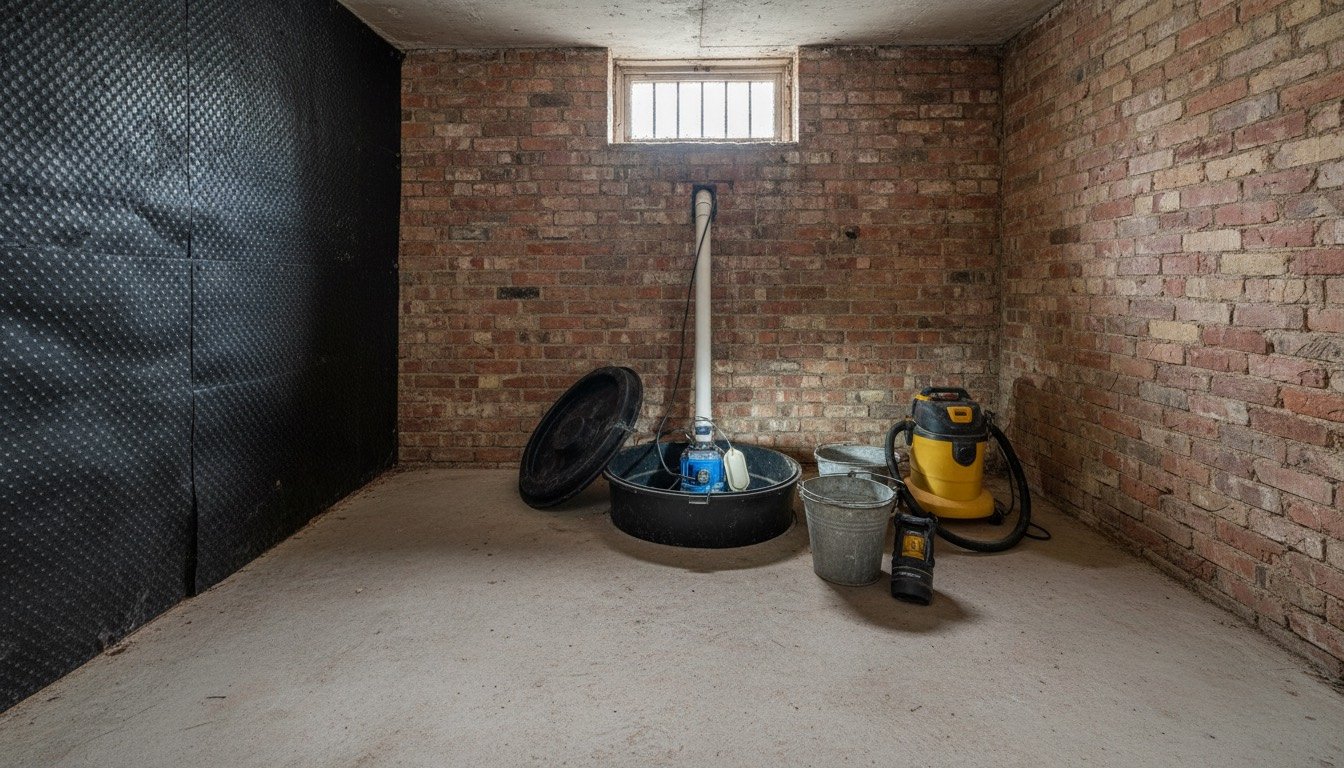
A cellar that has stayed dry for forty years can start taking water the winter after a neighbour block-paves their front garden. That is when people ring round for prices and find quotes for one job landing anywhere between £250 and £4,000.
The spread is genuine. "Sump pump installation" covers everything from dropping a replacement pump into an existing chamber to breaking out a Victorian cellar floor, forming a sump, running a discharge to the surface water drain and having a new circuit certified. Here is what each version costs in 2026, and where the line falls between DIY and professional work.
Typical UK price range in 2026
Most householders pay £450 to £1,800 all in. Below that you are replacing a pump in a chamber someone else built; above it you are buying a drainage system. If yours cycles more than it used to, read why a sump pump keeps running first — plenty get replaced when the fault is a stuck float or a failed non-return valve.
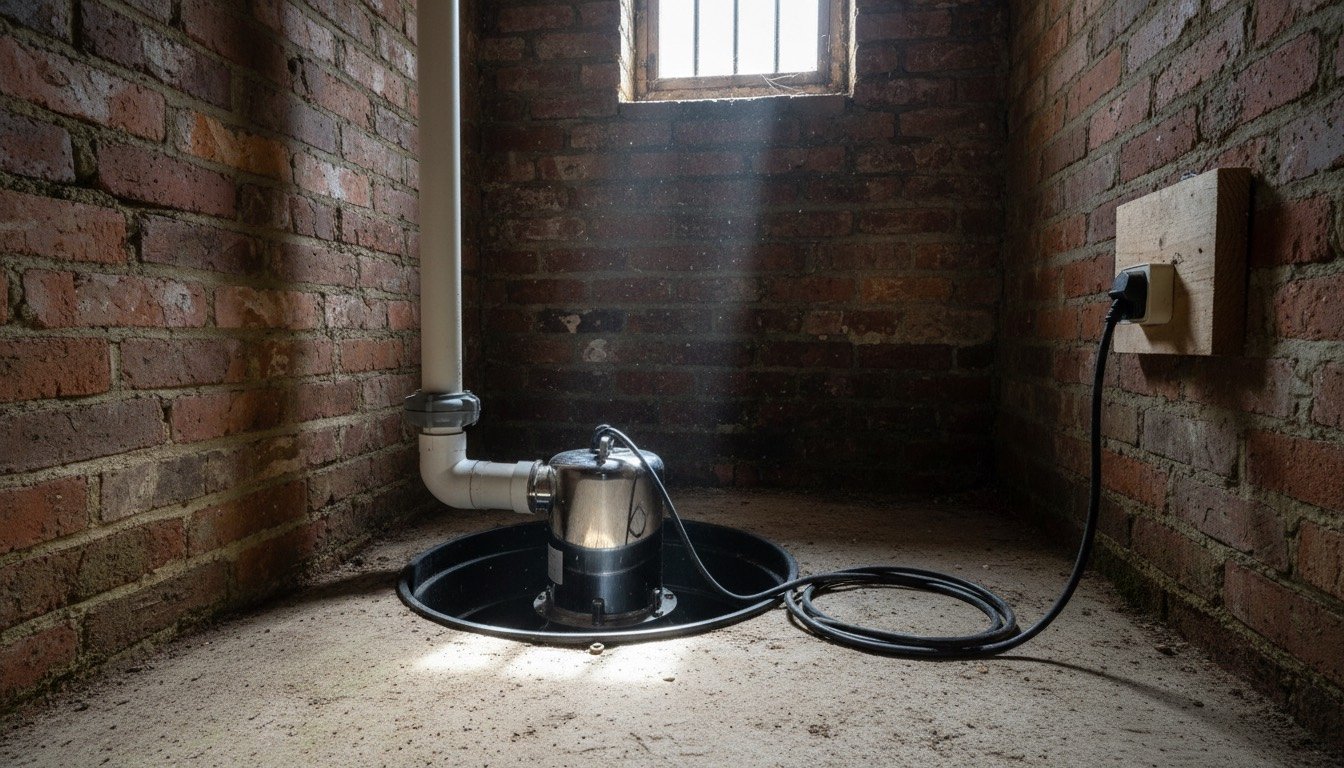
- •Like-for-like pump swap in an existing sump on a plug-in supply: £220–£450 fitted
- •New sump chamber cut into an existing concrete floor, pump and discharge run: £900–£1,800
- •Twin-pump packaged station with control panel and high-water alarm: £1,600–£3,200
- •Battery backup retro-fitted to an existing installation: £450–£900
- •Full Type C cavity drainage system to a cellar, sump and pump included: £5,000–£15,000+
- •Annual service, chamber clean and float test: £90–£180
Unit costs for the parts
Knowing what the parts retail for is the quickest way to spot a padded quote. April 2026 prices with VAT; a contractor on a trade account pays 20–35% less.
- •Shed-grade submersible pump (Screwfix, Toolstation, Wickes): £60–£150
- •Duty-rated cellar pump such as a Grundfos Unilift KP150 or KP250: £250–£450
- •Preformed sump liner with sealed, gas-resistant lid, 400–500mm: £120–£280
- •Non-return valve plus 32–50mm discharge pipework and fittings: £40–£110
- •Battery backup pump, charger and sealed battery: £300–£650
- •High-water alarm £25–£90; GSM telemetry alarm for an empty winter property £150–£300
Labour versus materials
On a straight pump swap the split is roughly 40% parts, 60% labour: 60–90 minutes at £55–£90 an hour across most of the country, £90–£130 inside the M25. Our guide to plumber's rates by job covers how call-out minimums stack on top.
Once concrete is involved the ratio flips. Breaking out a 500mm square of a 150mm slab, digging the pit by hand, bedding the liner level and making good is most of a day for two people — £400–£700 in labour before a fitting is bought. On a full waterproofing scheme materials climb back to about 45%; the basement waterproofing cost breakdown covers that end.
Electrics are priced separately by almost everyone, and that is where two quotes quietly diverge. A fused spur off an existing RCD-protected circuit is £150–£300; a new dedicated circuit, certified and notified, is £250–£450.
What moves the price
- •Discharge route. Three metres to an existing gully is trivial; 12m across a cellar and out through a wall to a soakaway adds £200–£600.
- •Where the water may legally go. A surface water drain or soakaway is straightforward; connecting into a combined or foul sewer needs the water company's written consent and is often refused.
- •Head and flow. A pump lifting 4m delivers far less than the figure on the box, so a deep cellar forces a bigger, dearer pump.
- •Floor construction. A 100mm unreinforced slab is a morning's work; a reinforced raft, flagstones over hardcore or an old bitumen tanking layer is not.
- •Region. London and the South East run 20–30% above the national middle; the North, Wales, Scotland and Northern Ireland sit 10–20% below.
- •Guarantees and backup. A PCA-member install with an insurance-backed guarantee adds £150–£400, and the battery backup sump pump guide explains when the extra £450–£900 earns its keep.
The DIY-or-pro line, stated plainly
Most price guides fudge this. There is real work here for a confident DIYer, and work where doing it yourself voids guarantees, breaches building regulations or risks the structure.
- •DIY is fine: swapping a failed pump like-for-like in an existing sump served by a plug and socket, bailing silt from the chamber, freeing a jammed float switch, fitting a non-return valve or a battery high-water alarm, and running the quarterly check in how to test a sump pump.
- •Professional only: breaking out any cellar or basement floor slab, because of underpinning, buried services and pre-2000 bitumen layers that can contain asbestos.
- •Professional only: any new electrical circuit. In England and Wales that is notifiable under Part P, so it needs a registered electrician who self-certifies, or notification to building control before work starts. Scotland requires a building warrant.
- •Professional only: connecting a discharge into a public sewer, which needs the water company's consent, and anything forming part of a waterproofing design under BS 8102:2022, which a CSSW-qualified surveyor should specify if the guarantee is to hold.
- •Whoever does it: never work in a chamber holding water with the circuit live. Isolate at the consumer unit, and never run a permanent pump from an extension lead through a cellar hatch.
Three worked examples
A 1930s semi in Wakefield, eleven-year-old pump under the utility room, running almost constantly. Grundfos KP250, new non-return valve, chamber cleaned: parts £355, two hours' labour £150. Total £505.
A Victorian terrace cellar in Bristol, no sump, 30mm of standing water each February. A 450mm liner cut into the slab, 50mm discharge 6m to a garden soakaway, plus a dedicated RCBO circuit by an NICEIC electrician. Materials £520, two days' labour £780, electrics £260. Total £1,560.
A south London basement conversion, cavity membrane already in at £11,400. Twin-pump station with battery backup and telemetry alarm: kit £1,850, install £1,100, electrics £340, handover £180. Total £3,470. Pricing this after a flood? Work through the basement flood cleanup checklist first.
How to sanity-check a quote
Ask for it itemised. If a contractor will not name the pump, you cannot compare anything. A usable quote names the pump make, model and output at your actual head height rather than the headline figure; liner size and lid type; the discharge route and consented outfall; whether the electrics are a spur or a new circuit and who certifies them; the backup; and the guarantee.
Get three prices against one written specification rather than three quotes for three different jobs — comparing contractor estimates shows how. When one sits 40% under the rest, it is almost always missing the electrics, the outfall connection or the making good.
Methodology
These figures come from quotes and invoices collected across England, Wales and Scotland between autumn 2025 and spring 2026, cross-checked against merchant list prices in April 2026. They include VAT at 20% where the contractor is VAT-registered; a sole trader below the threshold often comes in 10–15% lower on labour.
Apply a regional multiplier rather than treating these as flat rates: about 1.2–1.3x for London and the South East, 1.0–1.1x for the South West and East, 0.85–1.0x for the Midlands, North, Wales and Scotland, 0.8–0.9x for Northern Ireland. We revise the bands each spring as pump prices track copper and motor costs.
Found this useful?
There's plenty more — hundreds of guides and honestly-tested product reviews for every corner of your home.
Browse All Guides