Plumbing · 6 min read · 17 April 2026
Why Is My Basement Damp? Diagnosing Cellar Damp in UK Homes
A cellar that smells musty in August is not suffering from the same fault as one that puddles two days after heavy rain. Here is how to tell them apart before anyone quotes you for tanking.
By the Nims Casa editorial team — written from professional cleaning experience and checked against our editorial standards.
Damp below ground has at least six distinct causes, and the wrong diagnosis is expensive. We still meet homeowners who paid £2,500 for a chemical damp-proof course injected into a wall sitting a metre below the garden — a treatment that does nothing about water arriving sideways under pressure.
Most UK cellars were never meant to be dry rooms. In a Victorian terrace the cellar was a coal store and cold larder: solid brick laid straight against clay, no membrane, no drainage, airbricks and a coal chute left open. They stayed serviceable because they breathed. Board one out, lay laminate and block the vents, and damp appears within a season.
Three checks to run before you spend a penny
Almost every below-ground damp problem can be narrowed down in a weekend with £20 of kit. UK cellar walls sit at 10–14°C all year, while air at 20°C and 65% relative humidity condenses at roughly 13°C — which is why cellars are wettest in July and August, not January.
- •Polythene patch test: tape a 300mm square of clear polythene to the wall with aluminium tape on all four edges. After four days, beads on the room side mean condensation; damp trapped behind it means moisture coming through the masonry.
- •Hygrometer and timing: a £12 hygrometer left down there for a fortnight tells you more than any moisture meter. Log when the wall darkens — within hours of rain points to rainwater goods, days later points to groundwater.
- •Water meter test: turn every tap and appliance off, note the reading, check again two hours later. Any movement means a supply leak, and a weeping mains pipe under a cellar floor is common.
Symptom to cause: what the wall is telling you
Below-ground damp leaves specific signatures. Read them before you read anyone's quote.
- •Musty smell, black spotting on stored cardboard, streaming cold pipes, worst in summer — condensation, not ingress.
- •White fluffy crystals you can brush off by hand — efflorescence: salts carried out of the brick by evaporating water. It confirms water is moving through the wall, but is harmless.
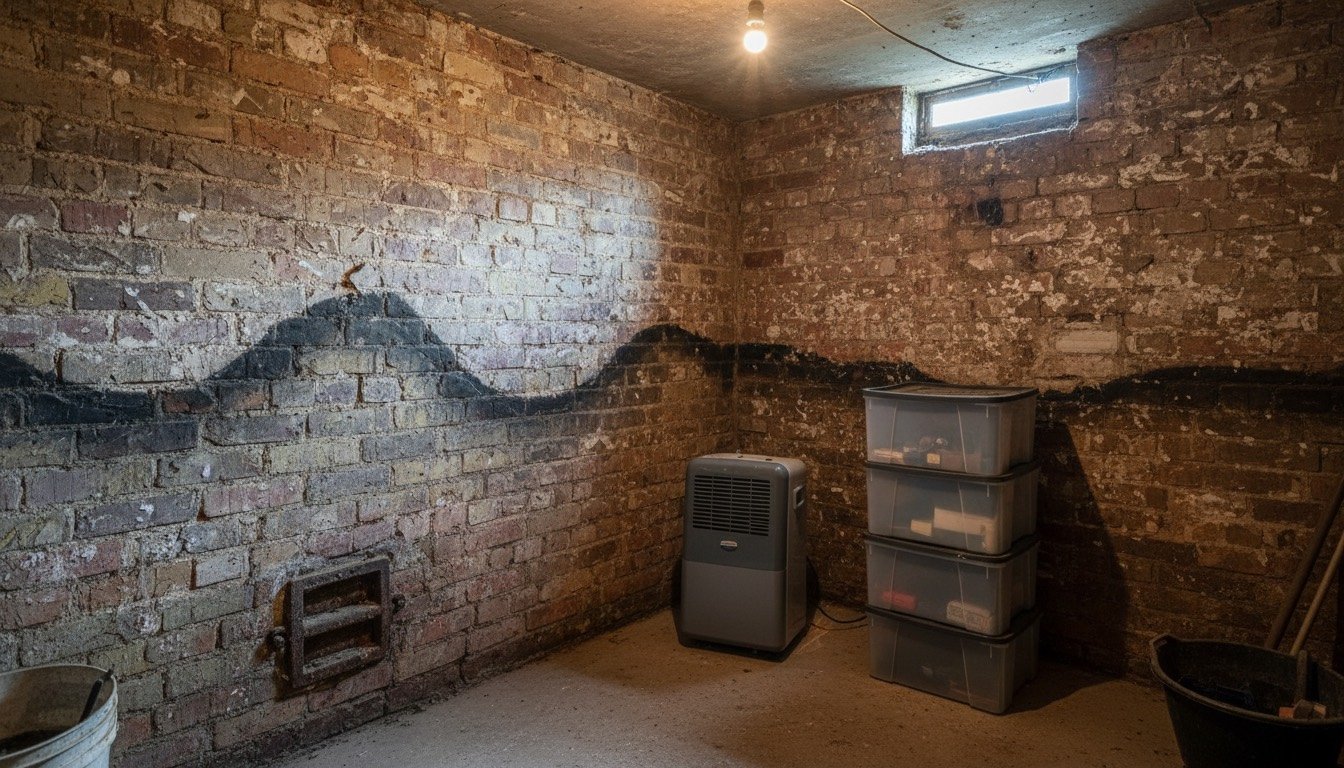
- •A horizontal tide mark stopping between 900mm and 1.2m up, with a fuzzy edge — capillary rise through a wall with no working damp-proof course.
- •Wet patches at a height matching the external ground or patio, worst on the garden-facing wall — lateral penetration under hydrostatic pressure.
- •A wet column running vertically, often near a corner — a cracked downpipe, blocked gully or leaking soil stack, not a cellar problem at all.
- •Water welling up at the wall-to-floor joint — the water table has risen above floor level. No internal coating will hold that back alone.
The likely causes, in the order we actually find them
Condensation and drainage failures account for the clear majority of call-outs, and both are cheap to fix. A cracked downpipe can dump hundreds of litres against one spot of wall in a single storm, the damp showing internally days later and well away from the defect — which is why our gutter maintenance guide is the first thing we point people at.
- •1. Condensation on cold below-ground surfaces — common where a tumble dryer, drying rack or unvented boiler shares the cellar.
- •2. Blocked or broken rainwater goods and gullies saturating the ground outside the wall.
- •3. Raised external ground levels — patios, decking, raised beds — bridging the damp-proof course, which wants to sit 150mm above finished ground.
- •4. Lateral penetration through untanked brickwork, or capillary rise through a floor with no membrane. Normal for a pre-1919 cellar; only a fault once you want the space habitable.
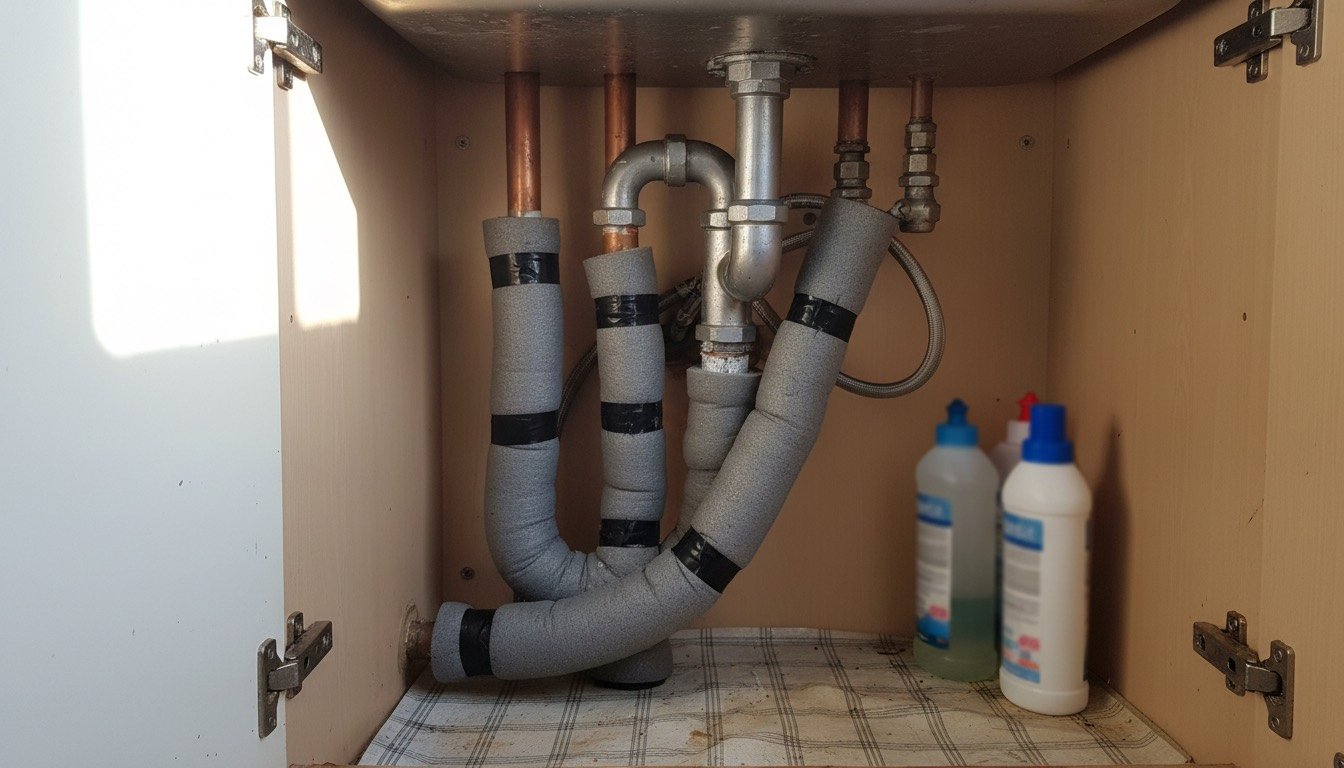
- •5. Plumbing leaks — mains supply, boiler condensate, or a collapsed clay drain under the floor. Our hidden water leak method works well here.
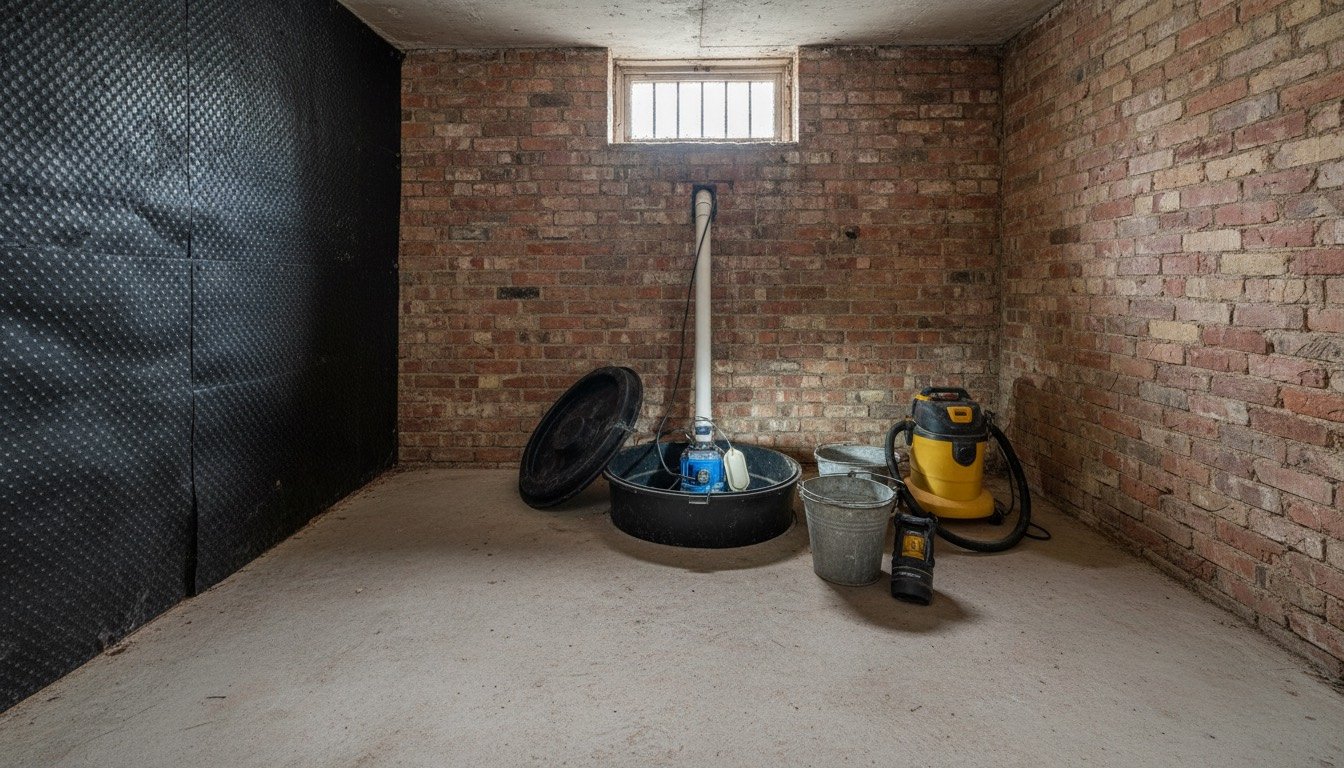
- •6. A failed sump pump or silted perimeter channel in an already-waterproofed cellar. If yours cycles constantly, that is a diagnosis in itself.
Fixes in order of risk and cost
Work upwards and stop as soon as the cellar dries. One warning on dehumidifiers: below about 15°C a compressor unit collapses in performance, which is exactly where an unheated cellar sits. A desiccant model works down to 1°C, draws 300–650W and costs roughly 60p–£1.20 a day.
- •Free to £150: clear gutters, downpipes and gullies; reinstate airbricks; remove cardboard, carpet and soft goods; stop drying washing down there.
- •£150–£400: a desiccant dehumidifier sized to the room, plus a passive vent or low-wattage extractor for real cross-ventilation.
- •£200–£800: dig out raised ground levels, lay a 150mm gravel margin, repoint in lime not cement, and strip any masonry paint or render trapping moisture in.
- •£400–£2,000: reline defective drainage and install a French drain to intercept surface water before it reaches the wall.
- •£70–£120 per m²: Type A cementitious tanking applied internally. Fine on sound walls; it fails where water arrives under real pressure.
- •£150–£300 per m²: Type C cavity drain membrane — 8mm studded HDPE, perimeter channel, sump and twin pumps. It manages water rather than resisting it, as BS 8102:2022 expects of a habitable basement. A terrace cellar lands at £5,000–£12,000.
- •£250–£500: an independent survey from a CSSW-qualified surveyor with no waterproofing contract to sell — read our interior versus exterior comparison first.
Where UK regulation genuinely applies
Most of a damp cellar is unregulated maintenance, but four areas are not. Electrics are where people trip up: in England and Wales, adding a new circuit — which is what a sump pump wants, on its own RCD-protected supply — is notifiable under Part P and must be certified by a registered competent person or signed off by building control.
- •Habitable conversion: a cellar bedroom or office needs building control approval covering Part C (moisture), Part F (ventilation), Part B (fire escape) and Part L. Storage use does not.
- •Planning and party walls: converting an existing cellar is usually permitted development, but lowering the floor, underpinning or forming a lightwell often needs planning permission — and in a terrace triggers a Party Wall etc. Act 1996 award.
- •Landlord duties: damp and mould is a scored HHSRS hazard, and the Homes (Fitness for Human Habitation) Act 2018 makes it actionable by tenants in England. Awaab's Law deadlines bind social landlords and are being extended to private rentals.
- •Radon: cellars concentrate it. In Devon, Cornwall, Derbyshire and other mapped areas, check the UKHSA radon map before sealing the space up. A waterproofing sump can usually double as a radon sump.
Where DIY has to stop
This boundary is not about confidence or tool ownership. Stop if there is standing water near sockets or a consumer unit — isolate at the main switch and do not wade in. Stop if the ingress is foul water rather than groundwater; sewage is a biohazard and a job for your water company and insurer. Stop if walls bow inwards or horizontal cracks open after heavy rain: that is soil pressure, and it needs a structural engineer, not a waterproofer.
On mould, small patches on hard surfaces are reasonable DIY with proper RPE and gloves, but anything beyond a square metre, anything on plasterboard or insulation, or any household including an asthmatic wants professional handling. Identify what you have with our cellar mould guide, then fix the moisture — killing mould without drying the wall buys three months.
Found this useful?
There's plenty more — hundreds of guides and honestly-tested product reviews for every corner of your home.
Browse All Guides