Product Reviews · 6 min read · 10 April 2026
The Best Basement Waterproofing Paint UK (2026): What Actually Holds Back Damp
A tin of waterproofing paint is the cheapest thing you can put on a damp cellar wall, and the most commonly misused. What genuinely works on UK brick, what it costs per square metre, and where the paintbrush stops.
By the Nims Casa editorial team — written from professional cleaning experience and checked against our editorial standards.
Affiliate disclosure: if you buy through links in this article we may earn a small commission at no extra cost to you. Our recommendations come from professional cleaning experience and are never influenced by retailers or brands.
Used in the right situation, a waterproofing coating is a legitimate Type A barrier under BS 8102:2022, the standard covering protection of below-ground structures, and it will keep a dryish Victorian cellar usable as storage or a workshop for a decade. Used in the wrong one it blisters off the brick within a winter and takes the render with it.
Our contributors have brushed these coatings on, and later chipped them off, solid-brick cellars, 1930s semi-basements and post-war concrete under-crofts. Here are the four worth buying this year, and the part most guides skip: the point where a tin stops being the answer.
Our top picks at a glance
Sika SikaTop Seal-107 Two-Part Waterproof Slurry
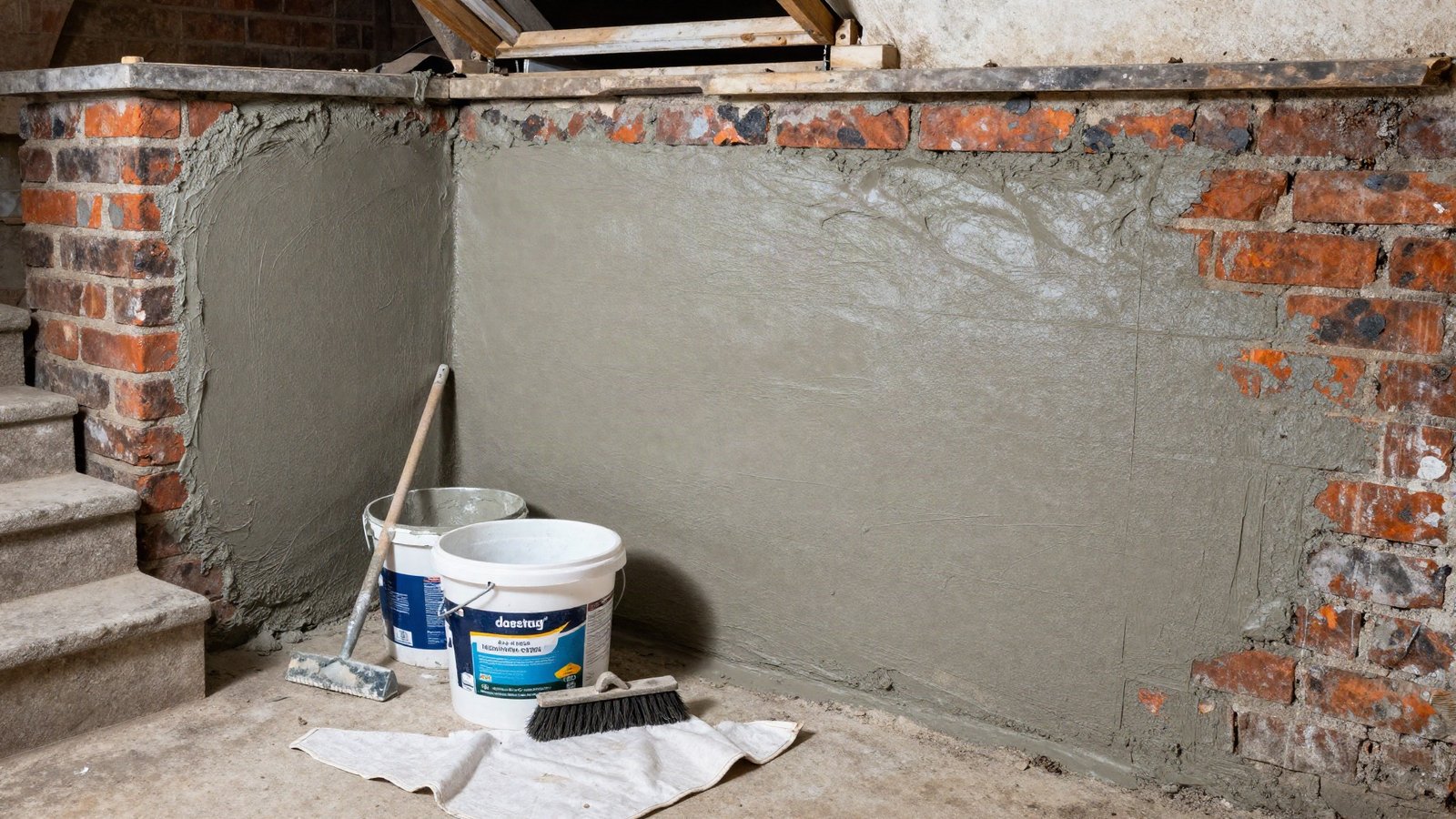
~£55-70A two-part cementitious slurry that is the workhorse of UK internal tanking, stocked by Screwfix, Toolstation and every builders' merchant. Brushed on at 2mm in two coats it gives a genuine barrier on sound brick, block or concrete, with a 20kg kit covering roughly 5-6m².
Pros
- ✓ Widely stocked and consistently priced, so you can top up mid-job
- ✓ Bonds reliably to damp masonry and tolerates high alkalinity
- ✓ Can be rendered or dry-lined over once cured
Cons
- ✗ Rigid, so it will crack over any wall that moves
- ✗ Cannot be left as a finish, so budget for render or boarding on top
Safeguard Drybase Flexible Tanking Slurry
~£70-95A polymer-modified slurry from a specialist UK damp-proofing manufacturer, made to bridge hairline cracking and cope with the patchwork of brick, old render and concrete you find in most Victorian cellars. It stays slightly flexible, which is what saves it on walls that shift a fraction seasonally.
Pros
- ✓ Bridges hairline cracks that split rigid slurries
- ✓ Backed by technical support that actually answers the phone
- ✓ Strong performance against negative pressure for a Type A product
Cons
- ✗ Noticeably more expensive per square metre
- ✗ Less widely stocked, usually a merchant order rather than a shelf pick
Zinsser Watertite Waterproofing Paint
~£65-85A thick solvent-based barrier coat you can leave on show, with genuine mould resistance built in, suited to a mildly damp storage cellar or an integral garage you want tidy rather than converted. Roughly 7m² per coat from a 5L tin, and it looks finished the same day.
Pros
- ✓ No render or dry-lining needed afterwards
- ✓ Strong mould and mildew resistance in cold, still air
- ✓ Brightens a gloomy cellar in two coats
Cons
- ✗ Heavy solvent fumes demand forced ventilation and no naked flames
- ✗ Not a structural waterproofing system and no substitute for one
Ronseal One Coat Damp Seal
~£15-22A water-based stain and salt blocker for isolated patches rather than a tanking product, and honest enough about that if you read the tin properly. Useful for sealing a dried-out stain on a cellar stairwell or an alcove before decorating.
Pros
- ✓ Cheap, low-odour and dry in about two hours
- ✓ Genuinely stops salt and water stains bleeding through emulsion
Cons
- ✗ Covers only around 5m², so it is uneconomic across a whole wall
- ✗ Offers no meaningful resistance to water pressure whatsoever
Who this is for, and who should put the tin down
Waterproofing paints and tanking slurries resist moisture and low water pressure, not hydrostatic pressure, which is what you have once the water table climbs above your floor slab. Most cementitious slurries are rated to around 5m head of positive pressure but only 1-2m of negative pressure, and on an internal cellar wall the negative figure is the one that applies.
If you cannot tell which cellar you own, work through why your basement is damp first: roughly a third of the damp cellars we attend turn out to be condensation, and no coating fixes that.
- •Green light: musty smell, patchy staining, white salting, walls damp to the touch but never running, drying out over summer. A cheap, sensible improvement.
- •Amber: seepage after prolonged rain that clears within a day or two, plus a known external defect such as a split downpipe or blocked gully. Fix that first, then coat.
- •Red light: water running in, standing water, a tide mark that rises after rain, or any plan to make the space habitable. Coatings will not hold this, and they hide it while the wall degrades behind.
How we judged these coatings
We are not a laboratory and will not pretend otherwise. What follows is trade judgement from real applications on UK cellar walls, plus the manufacturers’ technical data sheets, which are free, specific, and where the honest limits are written down.
- •Resistance to negative water pressure in metres head, not the flattering positive figure on the tin.
- •Adhesion to damp, alkaline masonry, since almost no UK cellar wall is dry on the day you coat it.
- •Crack-bridging: rigid slurries split over a moving hairline crack, flexible polymer-modified ones do not.
- •Salt tolerance and vapour behaviour: an impermeable film on solid brick pushes moisture up into the ground-floor skirtings.
The picks, in short
SikaTop Seal-107 is the default for sound brick or blockwork you intend to tank and then render. Safeguard's Drybase Flexible earns its extra £20 on mixed substrates or hairline cracking. Zinsser Watertite suits a mildly damp wall you want looking finished by Sunday. Ronseal's damp seal is a stain block for patches, not a system.
Coverage decides cost, not tin price. A 20kg cementitious kit covers 5-6m² at two 1mm coats, so a 20m² cellar takes three or four kits: £170-£260 in materials plus £30 of brushes and a mixing paddle. Set that against what full basement waterproofing costs and you see why the tin tempts people who should not be reaching for it.
What to look for on the tin
Below-ground coatings come in four families and the packaging blurs them deliberately. Knowing which one you are holding prevents most of the disappointment in this category.
- •Cementitious tanking slurry: two-part powder and polymer, brushed 2mm thick in two coats. The only family we would trust behind a finished wall, though it must be rendered or dry-lined over.
- •Flexible polymer-modified slurry: bridges hairline cracks to about 0.4mm and tolerates minor movement, for 30-50% more.
- •Solvent-based waterproofing paint: a thick barrier you can leave visible. Fine on mildly damp masonry, but heavy fumes and no standing under BS 8102.
- •Water-based damp seal: a stain and salt blocker. Cheap, useful, and routinely mistaken for tanking.
- •Minimum substrate temperature is usually 5°C and rising, and pot life once mixed is 30-45 minutes.
What a competent DIYer can genuinely do
There is real work here for a confident amateur and most of it is preparation. Allow a weekend for a 20m² cellar: a day preparing, a day coating, then 48 hours before anything goes over the top. Cementitious slurries are strongly alkaline and burn skin, so nitrile gloves and goggles are not optional, and keep a fan blowing out of the hatch throughout.
- •Hack off blown or salt-contaminated render back to sound brick and rake perished joints to 15mm before repointing.
- •Dry-brush salts off with a stiff bristle brush rather than washing them in; removing efflorescence explains why water makes it worse.
- •Form a coved mortar fillet at the wall-to-floor junction, the commonest leak point, then brush two coats on at right angles, the second once the first is touch-dry after four to six hours.
- •Fix the external causes: clear gutters and gullies, extend downpipes, lower flower beds above the damp-proof course, keep airbricks open.
- •Handle the leftover humidity with ventilation and a compressor unit sized for cold rooms, as in our basement dehumidifier picks.
Where you stop and call a professional
This boundary is not only about skill: several items below are regulatory, and getting them wrong costs far more than a botched paint job. If you are weighing approaches, interior versus exterior waterproofing explains when the cheap option becomes the expensive one.
- •Converting a cellar to habitable space: a material change of use under Building Regulations, with fire escape, ventilation and Part P electrics in play, and the waterproofing design signed off by a CSSW-qualified surveyor, usually a Property Care Association member.
- •Active ingress or standing water, which needs a Type C cavity drain membrane with a sump and pump, typically £6,000-£15,000 for an average UK cellar. No coating substitutes for it.
- •Any guarantee meant to survive a house sale: insurance-backed guarantees come only from accredited installers, and conveyancers ask for them.
- •Cracks over 3mm, stepped cracking or recent movement. Our check on serious foundation cracks is a starting point, not a substitute for a structural engineer.
- •Pre-2000 cellars with textured coatings, old flue linings or insulating board: nothing gets sanded or broken until it is tested for asbestos.
- •Radon-affected areas such as Cornwall, Devon and parts of Derbyshire and Northamptonshire, where sealing a cellar can raise indoor radon. Test before and after.
- •Anything touching the gas meter, its ventilation or the consumer unit: Gas Safe and a registered electrician respectively, no exceptions.
Mistakes that cost people twice
Nearly every failed cellar coating we are called back to fails for one of these reasons, none of them the brand.
- •Buying a 750ml damp seal for a 20m² wall because the label says damp. It covers about 5m², for patches.
- •Coating over salts. Hygroscopic nitrates and chlorides draw moisture from the air indefinitely and will lift any film within a season.
- •Sealing the inside while ignoring the outside. A split gutter delivers hundreds of litres against a wall in one storm, and no coating wins that argument.
- •Expecting paint to cure condensation. If the wettest patches are the coldest corners and the walls dry out each summer, the answer is heat and ventilation.
Found this useful?
There's plenty more — hundreds of guides and honestly-tested product reviews for every corner of your home.
Browse All Guides