Plumbing · 6 min read · 15 April 2026
Interior vs Exterior Basement Waterproofing: Differences, Pros, Cons and Real UK Costs
Two firms, two quotes, three times the price difference — and each will tell you the other is bodging it. Here is what the inside and outside jobs actually do, and which one an old UK house can take.
By the Nims Casa editorial team — written from professional cleaning experience and checked against our editorial standards.
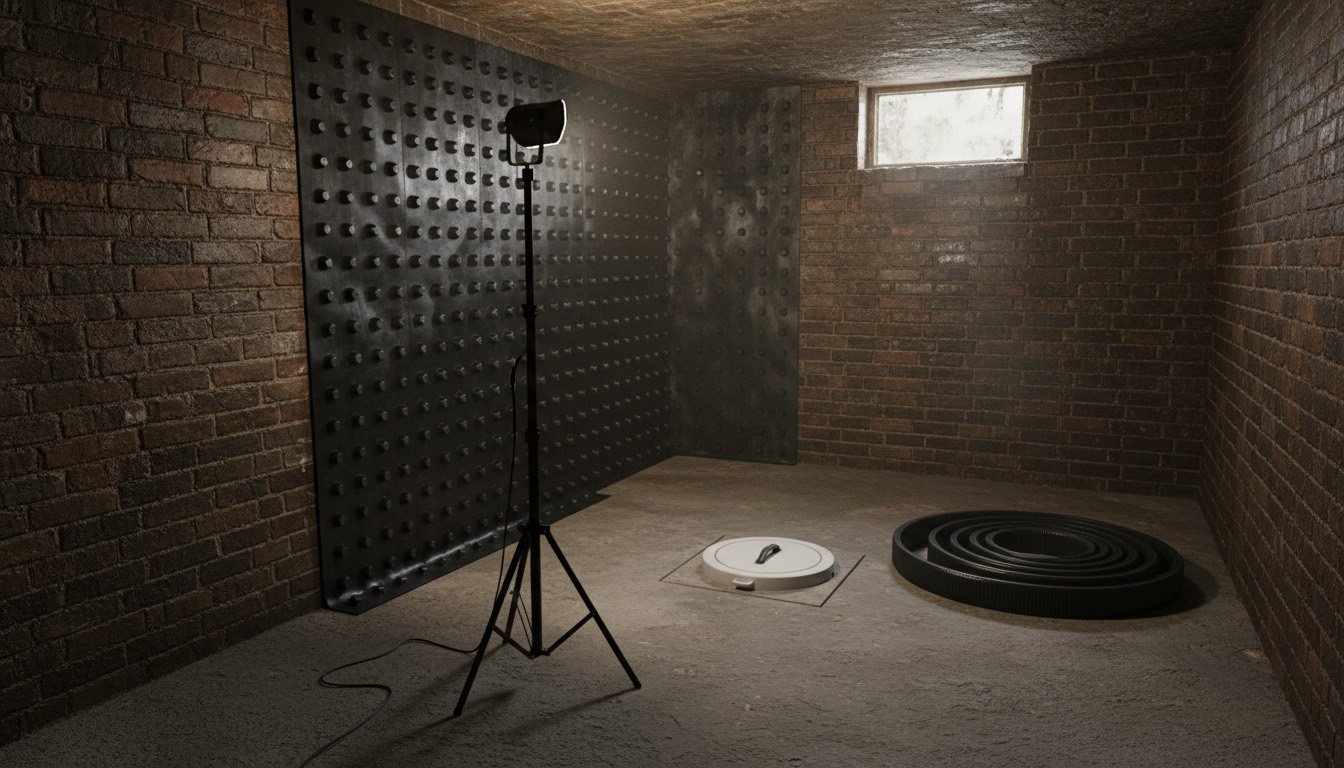
Every wet cellar attracts the same pair of quotes. One firm wants to line the inside with a studded membrane and a pump. The other wants a mini-digger in the front garden and three weeks of spoil in grab lorries. The prices differ by a factor of three, and each salesman implies the other is bodging it.
They are not competing methods. One manages water that has already reached the masonry; the other stops it arriving. Which is right depends on the ground, the access, the neighbours, and whether the wall was ever built to be sealed.
The side-by-side comparison
BS 8102:2022 governs every quote: Type A is a barrier, Type B is waterproof concrete, Type C is drained protection. Interior means Type C or an internal tanking slurry; exterior means a bonded outside membrane plus land drainage.
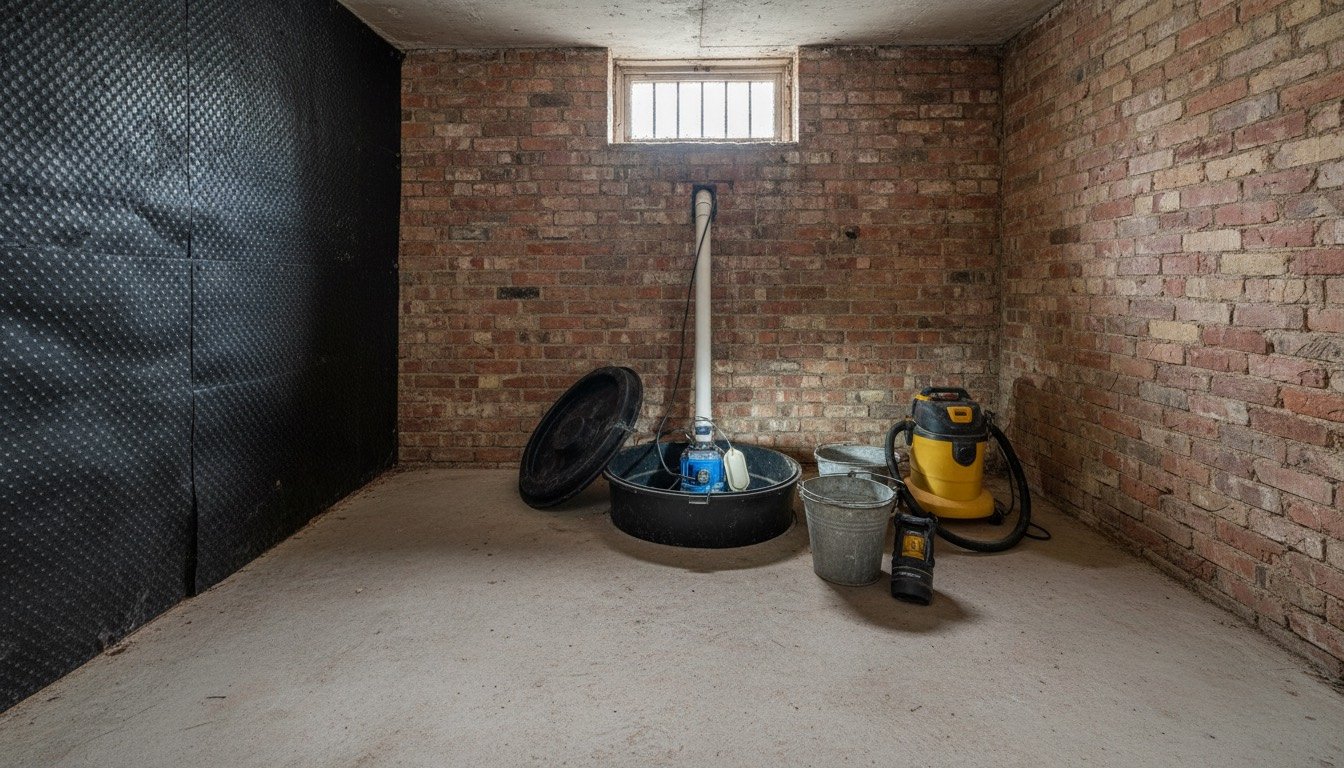
- •Principle — Interior: catches water behind a studded HDPE membrane and pumps it out. Exterior: digs to the footing and bonds a membrane on so water never enters.
- •Cost — Interior: £180–£320 per m2 of treated wall and floor, so £8,000–£16,000 for a typical 22 m2 Victorian cellar. Exterior: £350–£700 per linear metre, so £15,000–£40,000 including shoring and spoil disposal.
- •Disruption — Interior: 5–10 working days, all indoors. Exterior: 3–6 weeks, garden and paths destroyed, trench support needed, weather-dependent.
- •Terraces — Interior: always possible. Exterior: ruled out on the two party walls, so at best you treat front and rear.
- •Failure mode — Interior: pump or power failure floods the floor within hours. Exterior: a torn membrane or silted land drain stays invisible until the wall is wet again.
- •Guarantee — Interior: 10-year insurance-backed cover from PCA member firms, conditional on annual servicing. Exterior: shorter, and usually excludes drainage.
Performance against water, salts and mould
Against genuine hydrostatic pressure — a high water table, or clay saturated for weeks after a wet January — external work is technically superior because the masonry stays dry. White crystalline bloom on brick is efflorescence: soluble salts carried out by evaporating water, and it returns until the wall stops getting wet. Our guide to identifying mould in a basement or cellar separates salt bloom from a fungal problem.
The interior system does not dry the wall; it keeps the room dry, which is what most households were actually buying. Behind the membrane the brick stays as wet as ever: fine for storage, poor for a habitable Grade 3 conversion unless you control humidity too. Confirm you have groundwater at all first, because many "wet cellars" are condensation — why a basement is damp covers that diagnosis.
The old-house problem: solid walls, lime and Victorian drains
A pre-1919 cellar is usually solid brick, one-and-a-half bricks thick, bedded in lime mortar, with no damp-proof membrane and flags laid straight on soil. That wall was built to take water in and evaporate it back out. Seal the internal face with cementitious tanking and the moisture migrates upward instead, reappearing months later as blown lime plaster and rotting skirting 300–600 mm above the cellar ceiling. On a period property specify a breathable build-up — lime render or a vented geocomposite layer — and reinstate in lime, not gypsum.
Victorian drainage changes the maths further: salt-glazed clay pipes with mortar joints and root ingress mean a cracked drain beside the cellar wall defeats any system, so pay for a CCTV survey (£150–£350) before accepting a quote. Pre-1970s wiring — rubber or lead-sheathed circuits with no earth — means a sump pump needs its own RCD-protected circuit, notifiable under Part P: £250–£500, far more if the cellar needs rewiring. Common problems in 100-year-old houses is a useful cross-check.
Installation, access and the legal boundaries
External excavation is where the paperwork lives. Digging within 3 m of a neighbour’s structure and deeper than their foundations triggers the Party Wall etc. Act 1996 — serve notice, and if they dissent expect £900–£2,000 per adjoining owner in surveyors’ fees. Work within 3 m of a public sewer needs a build-over agreement, and in a conservation area a new lightwell needs consent. Interior work carries none of that beyond Building Control sign-off and Part P notification.
Inside, the sequence is short: walls stripped to masonry, membrane mechanically fixed and sealed at laps, a channel chased into the floor perimeter, and a sump chamber (typically 400 mm diameter, 600 mm deep) discharging to a surface water drain, never to foul. The commonest corner cut is a shallow sump that makes the pump cycle every ninety seconds; a sump pump that keeps running is a specification fault.
The 10-year cost, honestly
Worked example one: a 22 m2 mid-terrace cellar used for storage. Internal Type C at £9,500, servicing at £180 a year (nine visits, £1,620), a pump replacement in year eight at £550 and £25 a year in electricity — roughly £11,900 over the decade. External is unavailable on the party walls, so the honest comparison is the front elevation alone at £5,500: a third of the problem fixed, and you still need a pump.
Worked example two: a detached 1930s house with 30 linear metres of accessible wall. External at £520 per metre is £15,600, plus £1,800 for the land drain connection, £900 reinstatement and £600 of gutter maintenance — £18,900. The internal equivalent lands near £12,500 all-in, so external costs about 50% more and buys a dry wall with no dependence on electricity. See what basement waterproofing costs for how firms structure quotes. These are 2026 England and Wales figures; London adds 20–35%.
Maintenance and who each suits
A drained interior system is a machine, and machines need servicing. Annual jetting of the perimeter channel plus a pump test costs £150–£250, and skipping it voids the guarantee. Fit a battery backup or a second pump on a higher float: a storm-time power cut is exactly when you need it.
- •Choose interior if: terrace or semi with no side access, you want the room usable rather than the wall dry, or the budget is under £15,000.
- •Choose exterior if: detached or end-terrace with real access, you are already digging for underpinning, or the brick face is spalling from salt.
- •Choose neither yet if: there has been no CCTV drain survey, gutters are blocked, or readings suggest condensation rather than ingress.
- •Always insist on: a CSSW-qualified surveyor’s report naming the BS 8102 grade and type, a written design rather than a product list, and an insurer-backed guarantee.
The verdict
For most British homes — terraced or semi-detached, no side access, a cellar wanted for storage or utility — interior drained protection is the correct answer, not the compromise. It is cheaper, reversible, inspectable and it works, provided the pump is specified and serviced properly. For a detached period house with spalling brick and habitable ambitions, external work earns its extra 50% because it treats the cause.
The one place the choice is not free is the old solid-walled cellar. Do not let anyone sell you cement tanking on lime-mortared brick; you will trade a wet cellar for a damp ground floor and a plastering bill. If the walls show movement as well as moisture, check whether the crack is serious first.
Found this useful?
There's plenty more — hundreds of guides and honestly-tested product reviews for every corner of your home.
Browse All Guides