Product Reviews · 6 min read · 3 June 2026
The Best Eco Cleaning Products UK (2026): Green That Actually Cleans
Half the green shelf is greenwash; the other half now cleans as well as the chemicals it replaced. Which is which, from people who clean daily.
By the Nims Casa editorial team — written from professional cleaning experience and checked against our editorial standards.
Affiliate disclosure: if you buy through links in this article we may earn a small commission at no extra cost to you. Our recommendations come from professional cleaning experience and are never influenced by retailers or brands.
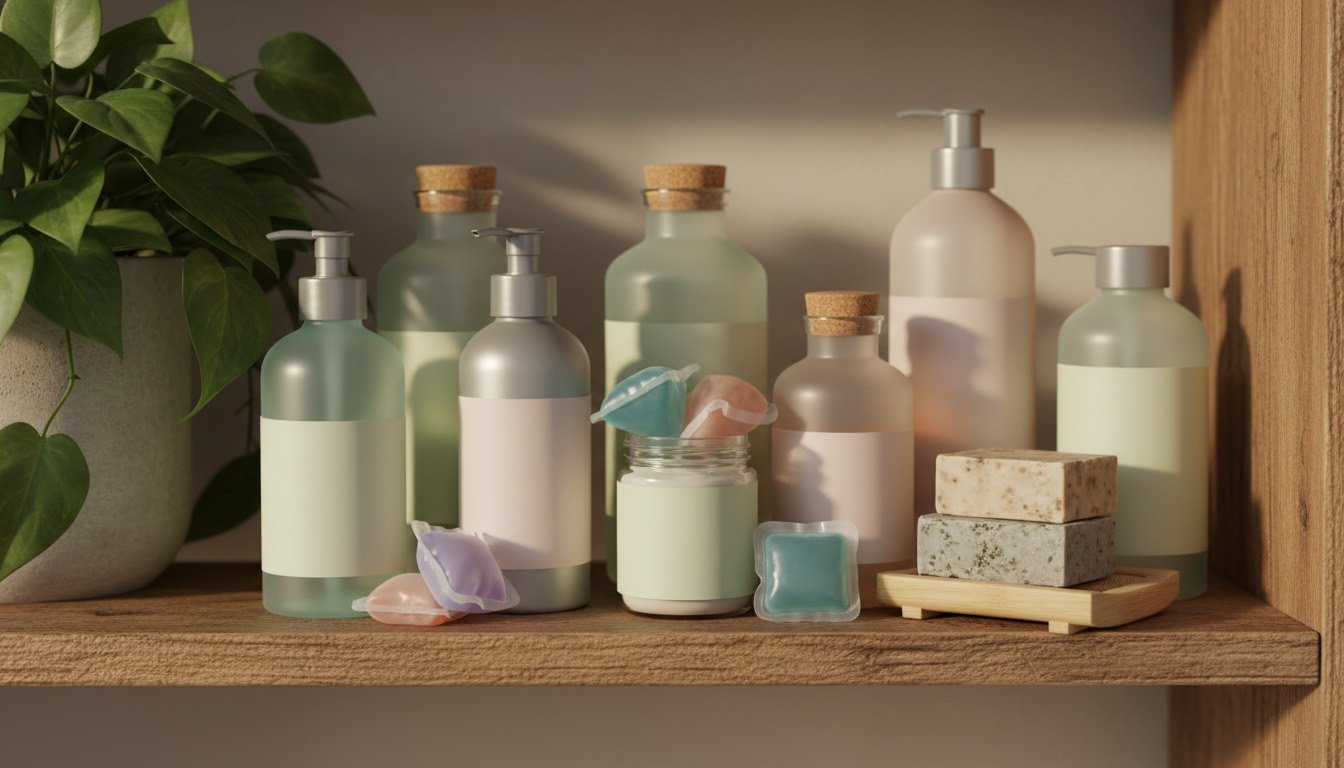
Ask five people whether eco cleaning products actually work and you'll get five different answers, usually shaped by whichever bottle they happened to grab first. That's the problem with the green cleaning shelf: quality varies enormously between brands, and the marketing tells you almost nothing useful. Some well-formulated plant-based cleaners now match conventional bleach-based products on everyday jobs — worktops, glass, floors, general bathroom grime. Others are little more than watered-down soap with a leaf printed on the bottle, moving dirt around rather than lifting it.
We clean occupied homes for a living, so we've used both camps daily rather than for a one-off test. This guide covers how we rated these products, the features worth paying extra for, how to store eco formulas so they perform and last, the buying mistakes that waste money here, and a straight verdict on which pick suits which household.
Our top picks at a glance
Bio-D Home Cleaning Range
~£2–6 per productA UK ethical stalwart: full ingredient transparency, 5-litre refills that slash cost and plastic, and cleaning performance that holds up in daily professional-adjacent use.
Pros
- ✓ Genuine transparency and UK manufacture
- ✓ Bulk refills are cheap per litre
- ✓ Effective everyday range
Cons
- ✗ Utilitarian scents
- ✗ Stockists patchier than supermarket brands
Ocean Saver Refill Drops
~£1 per refillConcentrate pods that turn your old spray bottles into new cleaner — the lowest-friction way to cut cleaning plastic to near zero. Surface and glass drops are the strong performers.
Pros
- ✓ Pennies per bottle
- ✓ Almost zero packaging
- ✓ Uses bottles you already own
Cons
- ✗ Degreaser is the weak spot
- ✗ Dissolving needs warm water and patience
HG Eco Range / Ecover Power line
~£4–7When plant-based needs to punch harder — bathroom scale, oven grease — the eco lines from the heavy-duty brands bridge the gap with better-than-average green chemistry.
Pros
- ✓ Strongest performance on the eco shelf
- ✓ Widely available
- ✓ Clear usage guidance
Cons
- ✗ Not as pure-green as niche brands
- ✗ Pricier per use
How We Tested and Rated These Eco Cleaning Products
Each product went through the jobs a normal week produces: worktops after cooking, sinks and taps, glass and mirrors, hob splashback, and a laundry pre-treat, run alongside a conventional cleaner on an identical surface for comparison.
Scoring weighted four things: performance against that control, cost per use once diluted rather than shelf price, ingredient transparency on the label, and how much single-use plastic the format genuinely avoids rather than simply claims to.
- •Performance: does it lift grease and everyday grime in one pass, or need reapplying?
- •Cost per use: concentrates and refills often look pricier per bottle but work out cheaper per clean.
- •Transparency: a full ingredient listing beats vague terms like 'plant-derived' or 'naturally sourced'.
- •Plastic saved: a refill system only counts if the same bottle survives ten-plus refills, not two.
What to Look For, and What It Should Cost
Not every 'eco' label means the same thing, and price alone won't tell you which bottle is worth buying. A ready-to-use eco spray typically runs £2–£4, a concentrate sachet refilling an existing 500ml–750ml bottle is usually £1–£2, and a 5-litre bulk refill brings the cost down further, often to under 20p a spray.
Certification marks beat adjectives. Look for a full ingredient list rather than 'derived from plants', genuine cruelty-free or vegan logos rather than a company's own wording, and whether any fragrance is naturally derived — this matters for anyone with skin or breathing sensitivities. For how supermarket own-label ranges compare on ingredients and price, our round-up of supermarket cleaning products is a useful cross-check.
- •Concentrate ratio: check how many litres one sachet or pod makes up — that's the real price comparison, not the shelf tag.
- •Trigger quality: a spray head that clogs within a fortnight wastes the formula behind it.
- •Multi-surface claims: a genuine all-purpose formula should work on worktops, glass and tiles without residue — see our all-purpose cleaner tests for how brands compare.
- •Laundry formats: eco pods, liquids and sheets differ on packaging waste and cost per wash — our detergent format comparison covers which suits which household.
- •Packaging: favour widely recyclable HDPE or PET bottles and genuine refill schemes over compostable claims needing industrial composting few households can access.
Storing and Using Eco Formulas So They Actually Last
Plant-based cleaners are more sensitive to storage than synthetic equivalents. Keep concentrates out of direct sunlight and away from radiators — heat breaks down active plant compounds faster than synthetic surfactants, and a bottle left in a warm shed all summer cleans worse than a fresh one.
Dilute to the ratio printed on the label, not by eye. Over-diluting is the biggest reason people decide 'eco doesn't work' — the mix isn't strong enough. Rinse spray triggers with warm water every few weeks, since natural formulas leave more residue and clog nozzles faster than synthetic ones.
- •Check the use-by date — plant-based formulas typically have a shorter shelf life once opened than bleach-based ones.
- •Decant concentrates into clearly labelled reusable bottles rather than leaving unlabelled refill pouches under the sink.
- •In hard-water areas, eco descalers work best used little and often rather than saved for one major limescale attack — our limescale removal guide covers the full method.
Common Mistakes When Buying Eco Cleaning Products
The most expensive mistake is assuming 'eco' automatically means 'weaker' and reaching for a harsher chemical the moment a job resists — often the eco product just needed a longer dwell time, not replacing entirely.
- •Buying the smallest bottle to 'try it out': small bottles usually cost double per use versus a refill pack, so one trial tells you little about running costs.
- •Ignoring dilution instructions, then judging the whole product on one badly mixed spray.
- •Choosing fragrance over function in a household with asthma or eczema — check the allergen list, not just a 'natural fragrance' claim.
- •Assuming every eco product suits every surface: natural acids in some descalers can still etch marble and stone worktops, exactly as conventional acids can.
- •Building a first cleaning kit entirely around eco 'hero' products — a realistic kit still needs a couple of specialist items; our starter cleaning kit for a first flat shows what's worth buying versus skipping.
Reading Past the Greenwash
'Plant-based' is an unregulated phrase any brand can print on a bottle. Full ingredient disclosure is the real signal of an honest company, because there's nothing to hide behind vague marketing language.
- •Refill economics beat recycling theatre: a concentrate sachet topping up your existing bottle avoids more plastic than a new bottle marketed as made from 'ocean plastic'.
- •Fragrance-free or naturally fragranced matters in allergy households — a 'green' label doesn't guarantee an allergen-free perfume.
- •Vinegar-and-bicarbonate-of-soda cleaning suits light jobs but is mythologised beyond its chemistry: mixed together, the two mostly neutralise into salty water, with the fizzing doing more for satisfaction than for grease.
- •'Natural disinfectant' claims need scrutiny — our guide to what Zoflora actually does is a useful comparison point for what genuine disinfection requires.
Frequently Asked Questions
Are eco cleaning products as effective as bleach-based cleaners? On everyday cleaning — worktops, glass, floors, general bathroom grime — yes, well-formulated plant-based cleaners perform comparably. On genuine disinfection, or severe limescale and mould that's had months to establish, conventional chemistry still has the edge; our tested mould removers covers what actually shifts it.
Is it cheaper to use eco cleaning products long-term? Per bottle, eco products are often pricier than budget conventional sprays. Per use, refill and concentrate systems are usually cheaper, because you're paying for active ingredient rather than water and packaging each time.
Can I just make my own eco cleaner from vinegar and washing-up liquid? For light jobs like wiping worktops or descaling a kettle, yes. For grease-heavy jobs or real disinfection, a properly formulated product outperforms DIY mixes, which have no surfactant engineering behind them.
Are eco cleaning products safe around pets and babies? Most plant-based formulas are gentler than bleach-based equivalents, but 'eco' isn't 'harmless' — concentrates should still be stored out of reach and kept off skin and paws until fully dry.
Do refill pods and sachets really cut plastic waste? Yes, provided the original bottle is reused many times. A trigger bottle refilled ten-plus times before recycling cuts plastic use far more than buying a new 'recycled plastic' bottle every month.
Will eco cleaning products damage septic tanks or old plumbing? Generally the opposite — biodegradable formulas are kinder to septic systems and old pipework than bleach-based products, worth knowing on a rural property off mains drainage.
Which Should You Buy?
For one range covering the whole house with full ingredient transparency and refill options that genuinely cut cost per use, Best Overall (UK-made) is the sensible default — it's what we restock most often.
For simply generating less plastic waste without changing brand loyalty, Best Refill System turns any spray bottle you already own into a like-new cleaner for about the price of a coffee. For bathroom scale, oven grease or a job that's genuinely resisted gentler formulas, Best for Tough Jobs (green-ish) is the one to reach for before falling back on something that isn't eco at all.
Found this useful?
There's plenty more — hundreds of guides and honestly-tested product reviews for every corner of your home.
Browse All Guides