Cleaning Guides · 6 min read · 14 August 2026
What Is Zoflora? What It's Actually For, How to Use It — and Pet Safety
Zoflora is Britain's favourite smell-nice disinfectant — but half the popular hacks waste it and one of them can put your cat in the vet's. Here's how the pros actually use it.
By the Nims Casa editorial team — written from professional cleaning experience and checked against our editorial standards.
The small amber bottles command a devoted following in every Tesco, B&M and Home Bargains. Zoflora went from a century-old Yorkshire disinfectant to a social-media phenomenon largely thanks to Mrs Hinch — and somewhere between the shelfies and the 'capful in everything' hacks, what the product actually does got lost.
After years of end-of-tenancy and domestic jobs, here's the straight version: it's a genuinely effective perfumed disinfectant when diluted correctly, a waste of money as an air freshener, and a real hazard to cats when used carelessly.
What Zoflora Actually Is
Zoflora is a concentrated, perfumed disinfectant made by Thornton & Ross in Huddersfield since 1922. It comes in 120ml, 250ml and 500ml bottles across dozens of fragrances — Linen Fresh and Springtime are the perennial sellers — and is always diluted before use.
The active ingredient is benzalkonium chloride, a quaternary ammonium compound ('quat') from the same family used in hospital surface disinfectants. Diluted to label strength it kills 99.9% of bacteria and viruses to tested British and European standards; neat, it's flammable and an irritant. And the point most hacks ignore: it's a hard-surface disinfectant — not a laundry detergent, carpet cleaner or air treatment.
The Dilution Maths (and What It Costs)
The label ratio is 1 part Zoflora to 40 parts water, and getting it right is the difference between disinfecting your kitchen and lightly perfuming it. One capful is roughly 10ml.
- •Trigger spray: 1 capful (about 10ml) topped up to 400ml with cold water — your everyday surface spray.
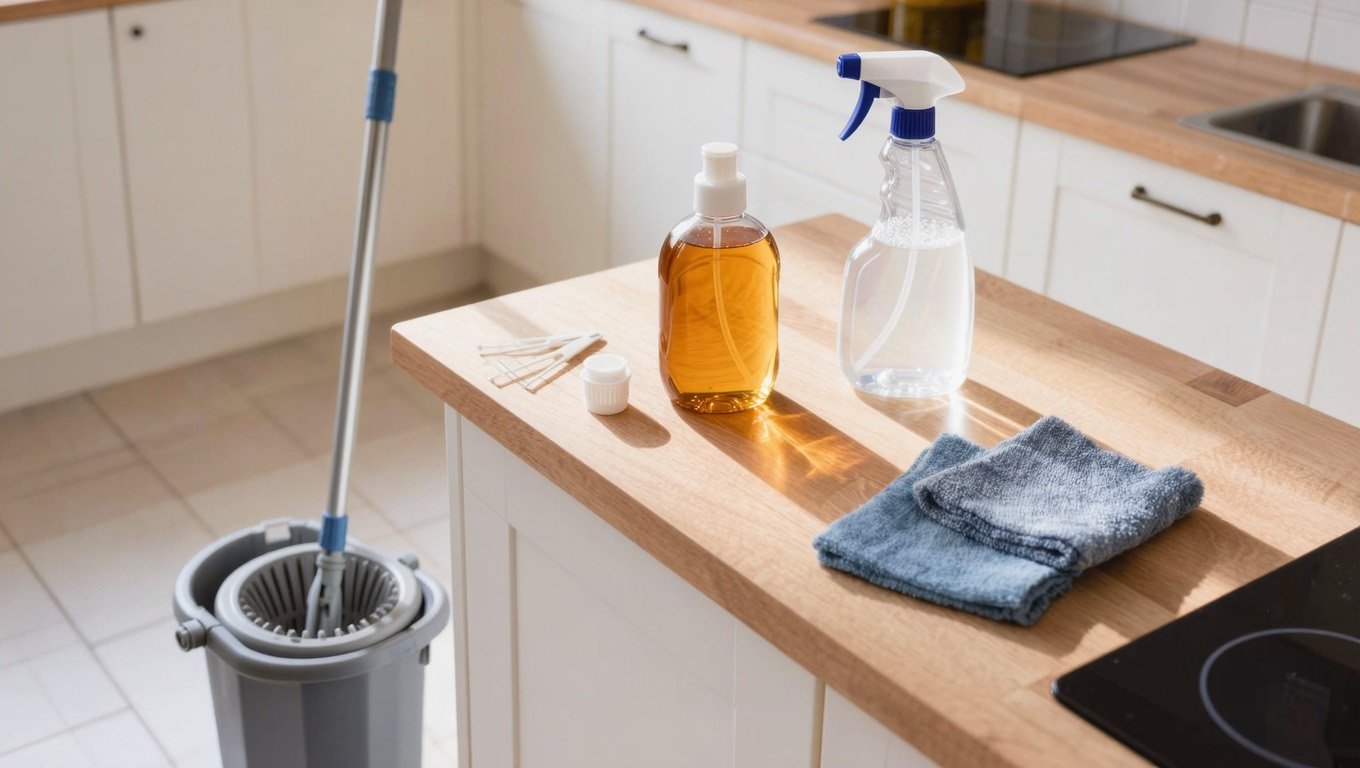
- •Mop bucket: a half-filled 3-litre bucket needs about 75ml (7 capfuls) to hit label strength — one splash is nowhere near disinfecting concentration.
- •Wipe-downs: 1 capful in a 400ml bowl of water, cloth wrung out, surface left visibly wet.
- •Contact time: surfaces must stay wet for about 5 minutes. Spray-and-immediately-buff is fragrance, not hygiene.
- •Shelf life: diluted solution stays effective for about 2 weeks in a labelled spray bottle, then mix fresh.
- •Cost: a £4 bottle of 500ml makes 20 litres of working solution — about 20p per litre, or 8p per spray bottle, far cheaper than ready-mixed antibacterial sprays.
What It Disinfects — and What It Just Perfumes
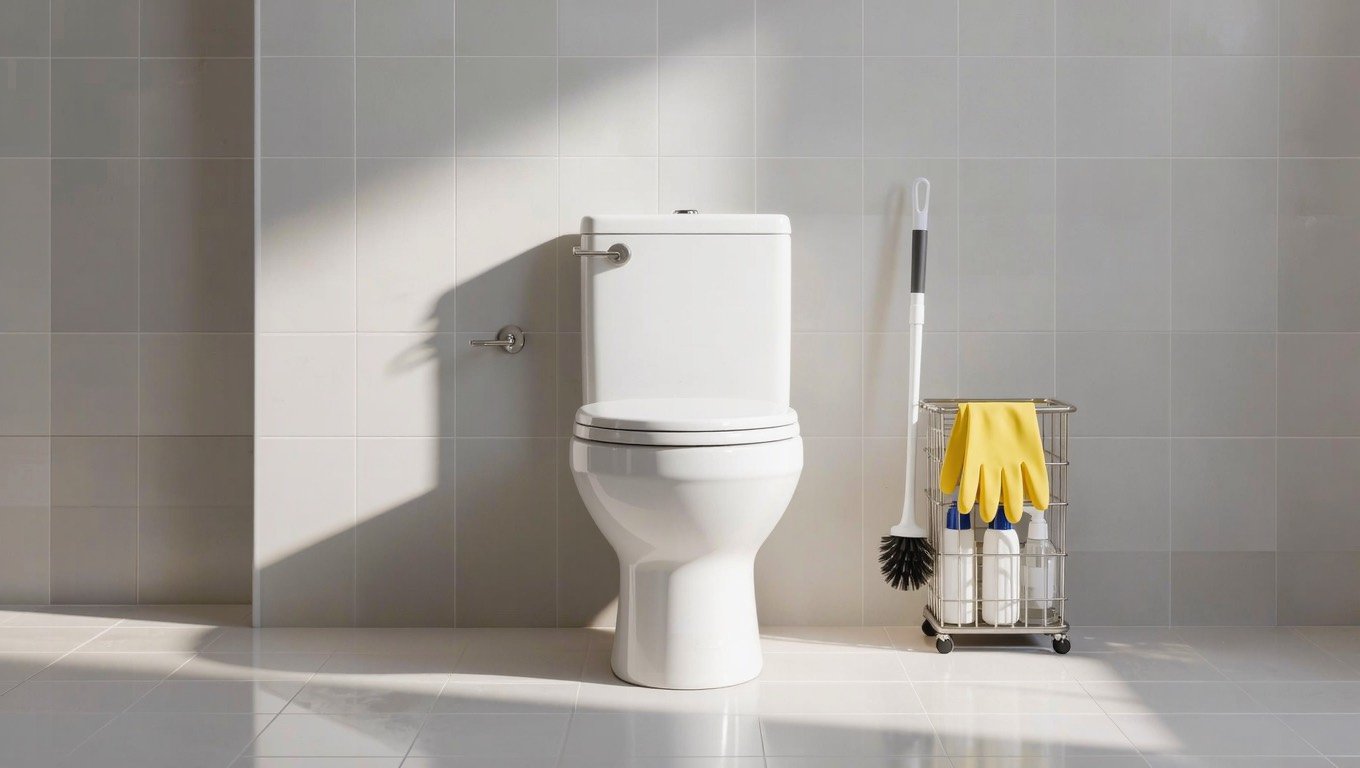
Used at 1:40 with proper contact time, Zoflora earns its keep on the germ hotspots: worktops (rinse food-prep surfaces with clean water afterwards), sink drainers, bin lids and interiors, toilet flushes, light pulls, door handles and hard floors — plus litter tray and pet feeding areas, with the caveats below.
Then there are the rituals that are really just perfume. A capful down the plughole overnight scents the kitchen but does little that hot water and soda crystals wouldn't, and Zoflora on a cloth over a warm radiator is pot-pourri at disinfectant prices. The same honesty applies to white vinegar — covered in our vinegar cleaning guide — which descales and degreases but doesn't disinfect to any tested standard.
One habit deserves a firmer warning: splashing it on carpet to mask pet accidents. The fragrance sits on top while the urine salts stay put, and the smell returns on the first humid day. That's an enzyme-cleaner job — see our guide to removing pet urine smells from carpet.
The Zoflora Laundry Trend: Machine Yes, Clothes No
'Zoflora laundry' is a breakout search this year, so let's be plain: use it on the machine, never in with your clothes. Wiping the detergent drawer, door glass and rubber gasket with diluted Zoflora, then running a hot empty cycle, is a legitimate fix for a musty machine — our washing machine cleaning guide covers the full routine.
Capfuls in the drum with a load in is a different matter. It's formulated for hard surfaces, not fabric: the fragrance oils can spot dark textiles, benzalkonium chloride residue held against skin all day is an irritation risk — especially for babies and eczema sufferers — and at 40°C to 60°C your detergent already does the hygienic work. You're adding risk, not cleanliness.
Is Zoflora Safe for Pets? The Honest Answer
This is the part of the bottle's fame that worries vets. Benzalkonium chloride is toxic to cats, and the exposure route is mundane: a cat walks across a still-wet mopped floor, grooms its paws, and hours later develops drooling, an ulcerated tongue and gums, fever and a refusal to eat. Feline welfare charities see cases every year, and owners rarely connect it to the mopping.
That doesn't make the product unusable in a pet household — it makes the rules non-negotiable.
- •Never use it neat around animals, and never let pets lick, drink from or walk through any solution.
- •Keep pets out of the room until every surface is completely dry — typically 30-60 minutes for a mopped floor.
- •Wash food and water bowls with washing-up liquid and hot water, not disinfectant.
- •Don't use it at all in rooms housing birds, fish or reptiles; birds are acutely sensitive to airborne droplets.
- •Store the bottle shut away — the sweet smell interests dogs, and neat concentrate burns mouths.
- •If your cat drools, paws at its mouth or goes off food after cleaning day, ring the vet and mention the disinfectant.
Surfaces to Avoid — and Mopping It Properly
Zoflora is happy on sealed tile, vinyl, LVT, laminate, ceramics and most plastics. Keep it off bare, waxed or oiled wood, which the alcohol and fragrance oils will dull and mark — real wood floors want a barely-damp mop and a purpose-made cleaner, as our guide to cleaning hardwood floors explains. Spot-test painted surfaces and polished brass or copper somewhere hidden, and keep it off soft furnishings entirely.
For floors, a well-wrung flat mop beats a sopping string mop: you get the wet contact time without puddles seeping into grout lines and board joints — our round-up of the best mops covers which designs wring out properly. In a busy pet household, a steam mop on sealed hard floors sidesteps chemicals altogether; see our best steam mops guide.
When Zoflora Isn't the Answer: DIY vs Professional
A confident DIYer with a £4 bottle covers almost all routine domestic hygiene: touch-point wipe-downs, weekly floors and bathrooms, bins, pet areas, and post-sickness-bug disinfection of handles and flushes. None of that needs a professional.
Draw the line where contamination beats concentration. Sewage backflow, flood water indoors, widespread mould, cleaning up after rodents, or any biohazard calls for professional cleaning with proper protective kit and disposal routes — a perfumed quat spray is not adequate for any of them. And never combine Zoflora with bleach or anything else in the name of extra power: mixing disinfectants is how DIY cleaning ends in A&E.
- •Does it kill viruses? Yes — at 1:40 with 5 minutes of wet contact it's tested against bacteria and enveloped viruses.
- •Can I spray it in the air? No — it's a surface disinfectant, and as a mist it's both unpleasant to breathe and dangerous around birds.
- •How long does diluted solution last? Up to 2 weeks in a sealed, labelled bottle, then mix fresh.
- •Is it food-safe? Fine on food-prep surfaces provided you rinse with clean water before food touches them.
- •Best-value size? The 500ml — per litre of solution it's roughly half the price of the 120ml.
Found this useful?
There's plenty more — hundreds of guides and honestly-tested product reviews for every corner of your home.
Browse All Guides