Cleaning Guides · 6 min read · 14 August 2026
The Best Supermarket Cleaning Products: Which Own-Brands Are Actually Good?
A 65p supermarket bleach and a £1.55 branded one share the same active ingredient. A professional cleaner's guide to where own-brand ranges match the big names — and the two aisles where they still fall short.
By the Nims Casa editorial team — written from professional cleaning experience and checked against our editorial standards.
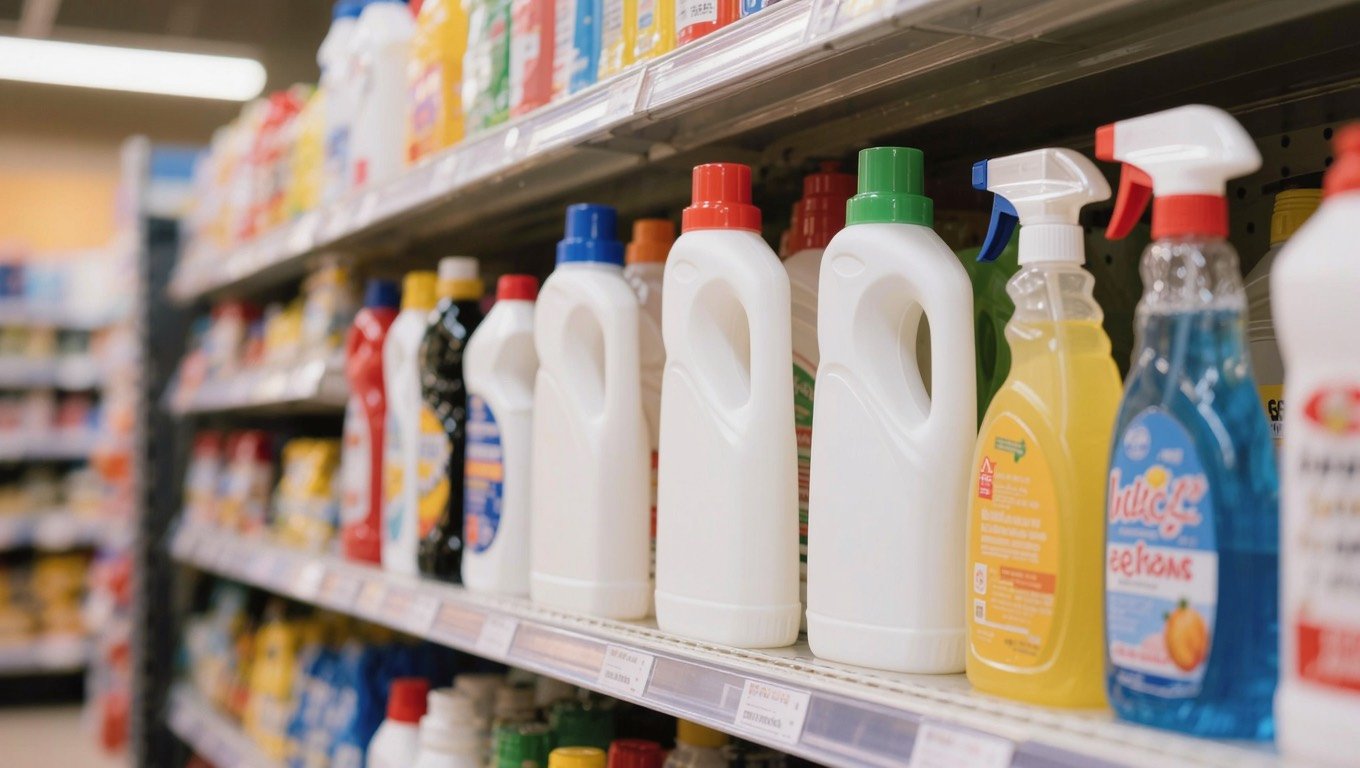
A 65p bottle of supermarket thin bleach and a £1.55 branded one are, chemically, near-identical: sodium hypochlorite at under 5%, a thickener, some fragrance. Yet plenty of households have paid the premium for decades without ever turning either bottle round. With M&S launching a cleaning range of its own, and Aldi's Power Force and Lidl's W5 quietly building loyal followings, the own-brand question deserves a proper answer.
What follows is an ingredient-and-value comparison, not a lab test. Between us we've cleaned professionally with both ends of the shelf for years, and the honest picture is this: own-brand wins some categories outright, ties in most, and genuinely loses in one or two.
Read the Label Before the Price Tag
Every cleaning product sold in the UK sits under the same rules, whether it comes from Aldi or Unilever. CLP regulations govern hazard labelling, and the retained Detergents Regulation forces every manufacturer to declare surfactant content in bands — below 5%, 5–15%, 15–30% — and to publish a full ingredient list online. That banding is the most useful comparison tool you have: a washing-up liquid declaring 15–30% anionic surfactants is meaningfully more concentrated than one declaring 5–15%, whatever the label art suggests.
Two more things to check. Look for BS EN 1276 or EN 14476 on antibacterial products — those are certified kill claims, and plenty of 85p own-brand sprays carry them. Then find the active: thin bleach is sodium hypochlorite, limescale removers are formic, citric or sulphamic acid, antibacterial sprays are usually quaternary ammonium compounds. Same active in the same band means broadly the same job done. The same label-reading works for greener formulations too — our guide to the best eco cleaning products applies exactly this method.
The Ranges, Side by Side
Here is how the main supermarket ranges compare on price, breadth and what you're actually paying for. Prices are typical shelf prices in mid-2026 and move with promotions.
- •M&S Home cleaning range: roughly £2.50–£4.50 per product. Fragrance-led and beautifully packaged — the chemistry inside is standard, so you're paying for perfume and a bottle you'll leave on display.
- •Aldi Power Force: roughly 59p–£1.29. The broadest true-budget range, with strong surfactant bands for the money on sprays, bleach and washing-up liquid.
- •Lidl W5: roughly 65p–£1.50. Near mirror of Power Force, with a W5 Eco line alongside for sensitive households.
- •Tesco own-brand: roughly 70p–£1.50. Widest availability in the UK; the antibacterial spray and thin bleach are dependable staples.
- •Sainsbury's own-brand: roughly 80p–£1.60. Slightly pricier than the discounters for essentially equivalent formulations.
- •Big brands (Domestos, Flash, Dettol, Fairy, Cif): roughly £1.50–£3 for the same product categories — sometimes better chemistry, often just better marketing.
Where Own-Brand Wins Outright
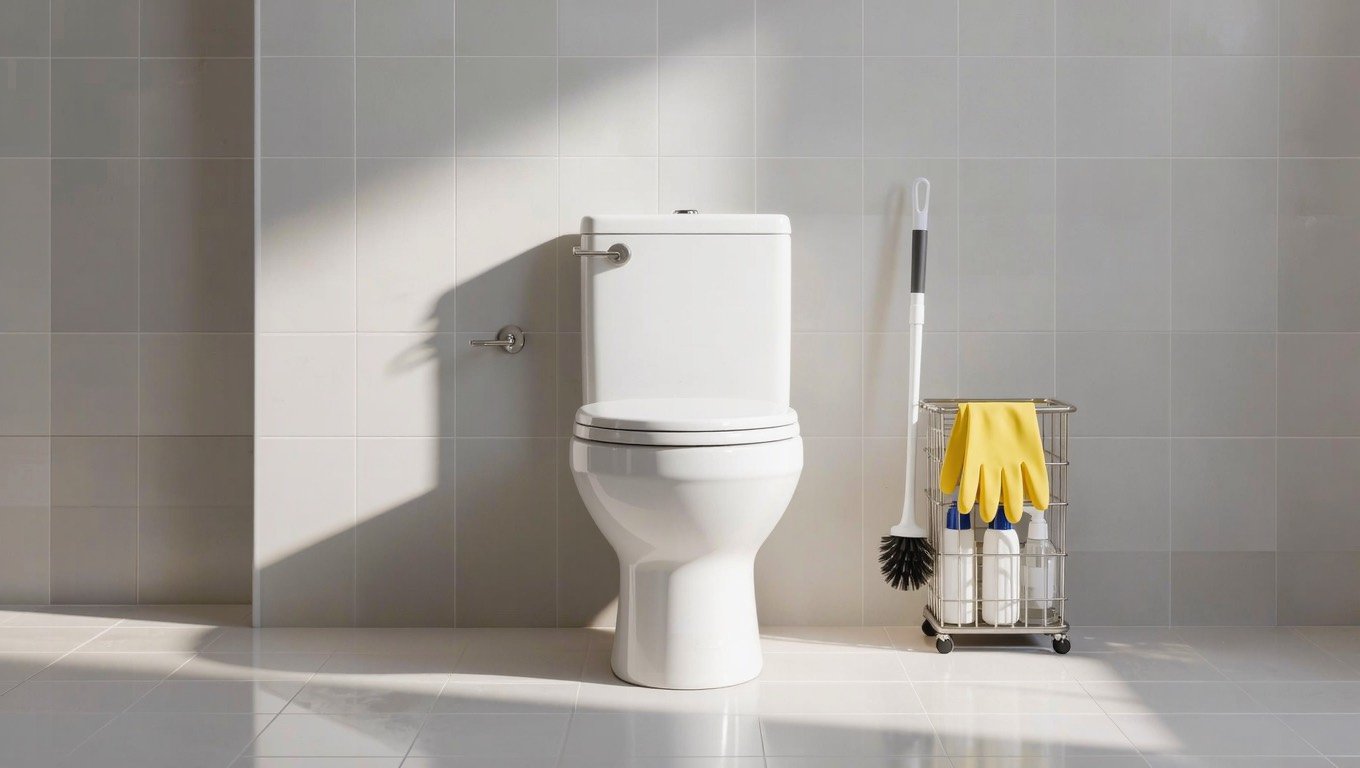
Bleach is the clearest case. Sodium hypochlorite is sodium hypochlorite: a 65p own-brand thin bleach disinfects a toilet pan exactly as a £1.55 branded one does. Thick bleaches vary only in how well they cling, and the discounters' versions cling perfectly well. The same logic applies to white vinegar, soda crystals and citric acid descalers, where you are buying a commodity chemical in a branded coat.
Sprays are nearly as one-sided. Multi-surface and antibacterial sprays from Aldi, Lidl and Tesco routinely carry EN 1276 certification at 85p–£1, against £1.80–£2.50 for the big names. For kitchen worktops, bathroom surfaces and general wipe-downs we've found no practical difference in years of daily professional use. Caustic oven gels are similar across the shelf too — technique matters far more than brand, as our guide to cleaning your oven properly shows. The one caveat in this aisle is mould: for silicone sealant you want a dedicated high-hypochlorite mould spray, own-brand or not — see our walkthrough on getting rid of bathroom mould.
Where the Big Names Still Earn Their Money
Laundry is where own-brand honestly loses. Modern washing happens at 30–40°C, which means enzymes do most of the work, and enzyme packages are expensive to formulate. Premium bio detergents typically list five or more — protease, amylase, lipase, mannanase, cellulase — plus anti-redeposition polymers that keep whites white over repeated washes. Own-brand bio usually carries a shorter package. On lightly soiled loads you won't notice; on collar grime, food stains and greying towels over months, you will. A sensible compromise: own-brand bio powder at around 11p a wash for everyday loads, with a branded stain remover held back for the bad ones. Whatever you use, a monthly hot maintenance cycle — covered in how to clean your washing machine — does more for results than any brand swap.
Dishwasher tablets are the other honest loss, but only in hard-water areas. Branded all-in-ones carry heavier water-softening and polymer loads; in Kent or Hertfordshire water that shows as film and spotting with cheaper tabs unless you keep salt and rinse aid topped up. In soft-water Scotland or Wales, own-brand tabs at 9p each are absolutely fine. If limescale is a constant battle, our dishwashers for hard water guide covers the machine side of the problem. Washing-up liquid sits in between: Fairy's higher surfactant band genuinely lasts longer, which claws back much of its price premium — call it a draw on value, a win on performance.
The Ten-Year Cost of Brand Loyalty
Cleaning products are a repeat purchase, so small gaps compound. For a typical household, here is roughly what the premium adds up to.
- •Thin bleach, one bottle a month: own-brand ~65p vs branded ~£1.55 — about £11 a year saved.
- •Surface sprays, two a month: ~89p vs ~£1.80 — about £22 a year saved.
- •Washing-up liquid, one a month: ~79p vs ~£1.75 — about £11 a year saved, less once concentration is factored in.
- •Laundry, five washes a week: own-brand bio ~11p a wash vs branded pods ~22p — about £28 a year, but this is the category where the premium buys real chemistry.
- •Surface care alone: swapping to own-brand saves a typical household £40–£60 a year — £400–£600 over ten years with no drop in results.
- •Swapping everything including laundry: nearer £850–£900 over ten years, but you trade some stain performance for it.
Who Each Suits — and the Verdict
Own-brand suits almost everyone for the chemistry-driven jobs: bleach, sprays, descalers, washing-up basics. Branded earns its keep in laundry-heavy households — young kids, sports kit, work overalls — and in hard-water postcodes at the dishwasher. The M&S range suits people who want their utility shelf to smell and look lovely and are happy to pay £3 for it; nothing wrong with that, as long as you know it's fragrance you're buying.
Our verdict: buy own-brand wherever the label shows the same active and the same surfactant band — that's most of the trolley — and spend the savings on a proper bio detergent for laundry. And remember that no product choice compensates for poor method: the cleaning mistakes that damage your home cost far more than any brand premium ever will.
Found this useful?
There's plenty more — hundreds of guides and honestly-tested product reviews for every corner of your home.
Browse All Guides