Product Reviews · 6 min read · 7 July 2026
The Best Weatherstripping for Doors in the UK (2026): Draught Seals We Actually Fit, and What They Cost
A 3mm gap round a standard door is roughly a paperback-sized hole left open all winter. Here is what actually seals it, what the materials cost, and what a fitter should reasonably charge on top.
By the Nims Casa editorial team — written from professional cleaning experience and checked against our editorial standards.
Affiliate disclosure: if you buy through links in this article we may earn a small commission at no extra cost to you. Our recommendations come from professional cleaning experience and are never influenced by retailers or brands.
Run your hand round a typical UK front door on a windy February evening and you can feel exactly where the heating is going. A 3mm gap along all four edges of a standard 1981 x 762mm door leaf is roughly 165 square centimetres of open hole, left that way from October to April.
Weatherstripping covers half a dozen products that do quite different jobs, and the wrong one either fails within a season or stops the door latching. Here is what we fit on UK doors, what the materials cost, what a fitter should charge on top, and where a quote stops making sense. Prices are 2026 UK retail including VAT unless stated.
Our top picks at a glance
Diall Self-Adhesive EPDM Rubber Seal (E-Profile)
~£6-10 per 6mThe plain black E-profile from B&Q's own range is the workhorse of UK draught-proofing: EPDM that stays flexible below freezing and shrugs off UV on a south-facing door. One 6m roll does a standard door frame with a little to spare.
Pros
- ✓ Seals 2-3.5mm gaps without stopping the door latching
- ✓ EPDM does not harden or crumble the way cheap PVC foam does
- ✓ Cheap enough to redo every door in the house in one afternoon
Cons
- ✗ Adhesive struggles on chalky old gloss or below 5 degrees
- ✗ No use above about 4mm — step up to P-profile or brush
Stormguard Aluminium & Brush Threshold Draught Excluder
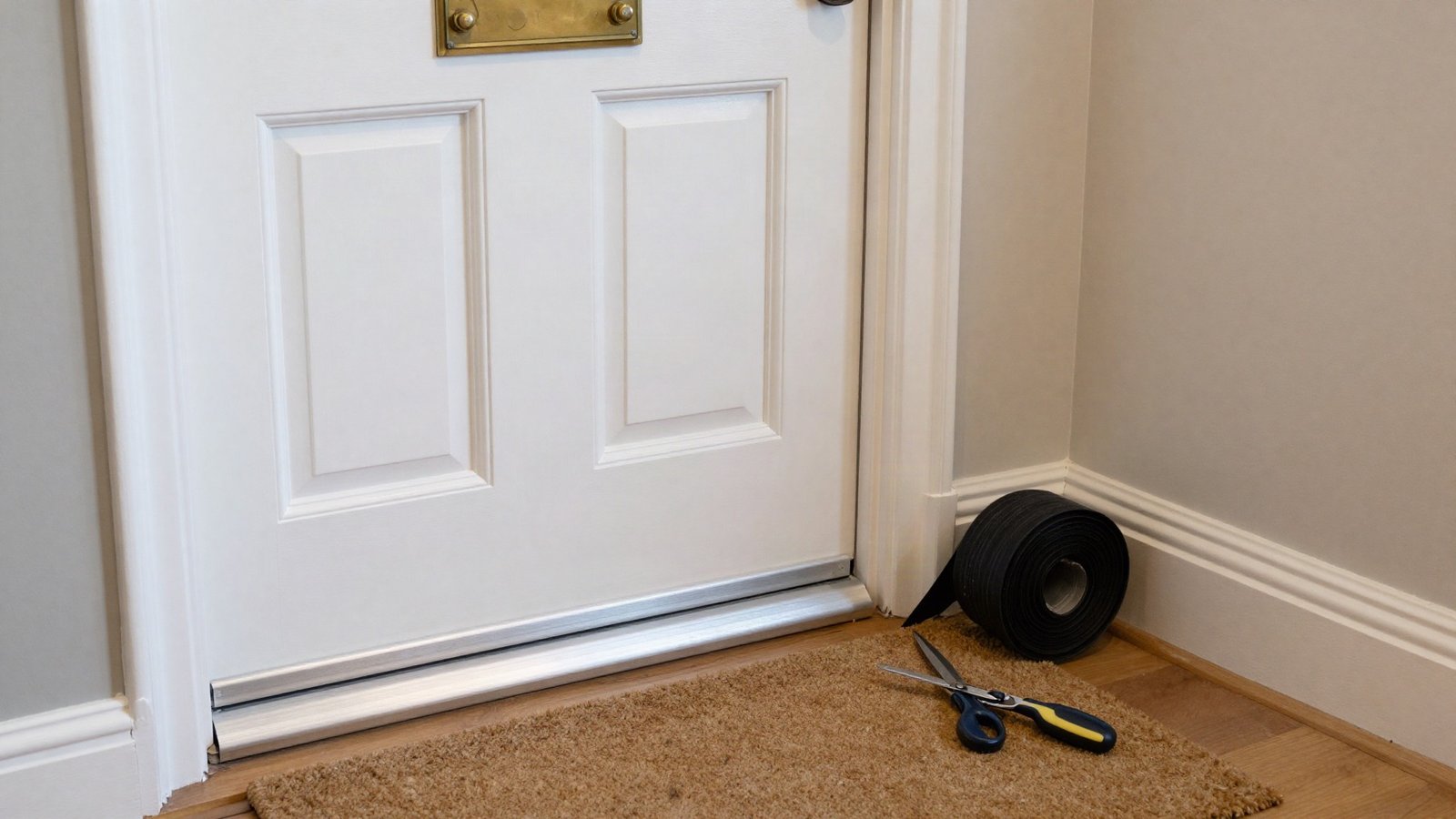
~£20-35A screw-fixed aluminium carrier with a dense nylon brush pile, made in the UK, and the standard fix for the single biggest leak in most houses. It copes with an uneven threshold and rides over a doormat where a rigid seal would jam.
Pros
- ✓ Closes 8-20mm under-door gaps that edge strips cannot reach
- ✓ Screw-fixed, so it survives years of the door being kicked shut
- ✓ Brush pile can be replaced without removing the carrier
Cons
- ✗ Needs a drill, a hacksaw and a spirit level to fit squarely
- ✗ Brush alone will not stop driven rain on an exposed door
Schlegel Q-Lon QL3082 Replacement Door Seal
~£15-30 per door setThe foam-cored polyurethane gasket fitted to most UK composite and uPVC frames at the factory, sold by the metre for replacement. When a five-year-old front door starts whistling, this flattened strip is almost always the culprit rather than the door itself.
Pros
- ✓ Pushes into the existing frame groove — no adhesive, no screws
- ✓ Restores the original factory compression rather than adding bulk
- ✓ Roughly 5m does a single door with offcuts spare
Cons
- ✗ Profile code must be matched; the wrong one will not seat properly
- ✗ Will not rescue a door that has dropped or needs hinge adjustment
Exitex Letterplate Draught Excluder (Brush & Flap)
~£8-15A screw-on internal cover combining a sprung flap with a brush pile, closing the second-largest hole in a typical front door. Ten minutes and a screwdriver, and the hallway stops behaving like a wind tunnel every time the wind swings round.
Pros
- ✓ Kills a draught no edge seal can possibly reach
- ✓ Also cuts road noise and stops the flap rattling in gusts
- ✓ Fits most standard 250 x 75mm letterplate apertures
Cons
- ✗ A stiff brush can catch thick catalogues and soft parcels
- ✗ Budget versions use weak flap springs that sag within a year
Who Actually Needs This
Draught-proofing pays back fastest in older stock: pre-1930s solid-wall terraces, 1950s-70s semis with original timber doors, anything with a suspended floor and a letterplate. The tell is a heating bill that spikes in a windy week rather than a merely cold one — that is air leakage, not missing insulation.
- •Worth doing today: timber external doors, internal doors onto unheated rooms, loft hatches, and any door showing daylight at the edge.
- •Check first: uPVC and composite doors under ten years old, where the factory gasket usually needs replacing rather than supplementing.
- •Not DIY: a rotten or dropped door due for replacement, or a flat entrance fire door, which needs certified intumescent and cold-smoke seals in a routed groove.
- •Never seal: trickle vents, airbricks, extract fans, or ventilation serving an open-flued gas fire or solid-fuel stove.
How We Judge These, and What We Are Not Claiming
This is fitting experience across several hundred UK doors on maintenance rounds and end-of-tenancy work, not a laboratory test. What we have is a long memory for which adhesives let go by March, which brush piles flatten, and which profiles quietly stop a door latching. We buy what we fit and no manufacturer supplies us.
Ventilation outranks every product below. Part F of the Building Regulations exists because modern homes already leak very little, and over-sealing turns a draughty hallway into damp and mould on a bedroom wall. The fitting method itself is in our guide to weatherstripping a door.
- •Gap tolerance: does it seal across the full range the packaging claims, or only at the tight end?
- •Compression set: after a winter of thirty squashes a day, does it still spring back?
- •Adhesion in the real world: aged gloss, 6 degrees, one wipe of meths.
- •Honest cost per door, including the hacksaw blade and the forty minutes.
Matching the Pick to the Gap
Almost every wasted purchase is a measurement failure. Shut the door onto a folded card about 3mm thick and see whether it grips; if it drops out you are above 3mm and E-profile will never seal. Measure at top, middle and lock side — frames rarely move evenly.
- •Under 2mm, a tight door: V-profile polypropylene strip, around £4-7 for 10m.
- •2-3.5mm, by far the commonest case: E-profile EPDM rubber, around £6-10 for 6m.
- •3-5mm, older timber frames: P- or D-profile EPDM, around £7-12 for 6m.
- •5-8mm, sloppy frames: silicone bubble strip or brush pile in a carrier, around £10-18.
- •8-20mm under the door: aluminium-and-brush threshold excluder, around £20-35.
- •Rebated uPVC or composite frame: a replacement push-in gasket, around £15-30 per door.
What It Really Costs: Materials Versus Labour
Materials for one external door come to £25-55 all in: edge strip, threshold excluder, letterplate cover, keyhole escutcheon and a tube of low-modulus frame sealant. Every door in a three-bed semi runs £60-110 in materials and about three unhurried hours.
Pay someone and you are buying time, not expertise. A handyman or maintenance joiner charges £30-45 an hour outside London and £45-65 inside it, or £180-320 a day, and most whole-house jobs are a half-day. Budget £150-320 in labour plus materials at between cost and cost-plus-20-per-cent.
One quirk matters before you compare quotes: draught stripping counts as an energy-saving material for VAT, so professional supply-and-fit is zero-rated in the UK until 31 March 2027, then 5 per cent. Buy the same strip over the counter and you pay 20 per cent, which narrows the DIY saving more than people expect. Our guide to draught-proofing a whole home sets these figures against loft and floor work.
- •DIY, one front door: £25-55 in materials, 45-90 minutes, scissors, screwdriver and a hacksaw.
- •Handyman, every door in the house: £220-430 all in, typically a half-day on site.
- •uPVC or composite gasket replacement: £15-30 DIY, or £70-140 as a door engineer's call-out.
- •Routed compression seals in original timber joinery: £90-180 per door, specialist work only.
Is the Quote Reasonable or Suspect?
This is low-material, low-skill work, which makes it easy to overcharge for and hard to audit afterwards. Judge a quote on its arithmetic, not its confidence.
- •Reasonable: itemised as labour hours plus materials, landing at roughly £35-70 per door fitted, with the seal named.
- •Reasonable: a survey listing specific leaks — the back door, the loft hatch, the skirting junction — not 'draught-proof throughout'.
- •Suspect: a per-metre price above about £15 for stick-on strip, when the material costs under £1.50 a metre.
- •Suspect: more than roughly £500 for a standard three-bed with no planing, new thresholds or joinery repairs involved.
- •Suspect: anyone wanting to seal trickle vents or airbricks, or who cannot say what happens to ventilation.
- •Suspect: a free thermal survey that arrives at a five-figure package, when an independent home energy assessment costs a fraction and sells you nothing.
Common Buying Mistakes
The call-backs are boringly consistent, and almost all of them are decided at the checkout.
- •Buying white PVC foam because it is cheapest. It takes a permanent set in one season and is brittle by the second winter; EPDM costs a pound more and lasts five to ten years.
- •Fitting in the cold. Self-adhesive needs the frame above 5 degrees and clean — wipe with methylated spirit, not white spirit, which leaves a bond-killing film.
- •Ignoring the frame. The joint between frame and masonry is often the larger leak, and a £6 tube of sealant beats another metre of strip.
- •Going one profile too thick. If the door needs a shoulder to close, the latch runs under load and the keep wears oval within a year.
- •Assuming a whistling composite door needs strip at all — usually the gasket has flattened or the hinge compression needs half a turn.
- •Stopping at the door: the loft hatch, letterplate and skirting gap belong in the same evening, and our air-sealing checklist has the full round.
When to Stop and Call Someone
Hand it over when the fix stops being a seal and becomes joinery: a door dropped far enough to catch the frame, a rotten bottom rail, a threshold that needs cutting out, or sash-and-case work where seals belong routed in. If the gap is uneven top to bottom, no strip will sit evenly and the hinges and door fit need sorting first.
Everything else here is a scissors-and-screwdriver evening. If you do only two things, do the bottom of the front door and the letterplate; between them they account for most of what you feel round your ankles.
Found this useful?
There's plenty more — hundreds of guides and honestly-tested product reviews for every corner of your home.
Browse All Guides