Energy & Insulation · 6 min read · 3 July 2026
Home Air Sealing Checklist for UK Houses (Printable)
A 1930s semi leaks roughly twice as much air as Building Regulations now allow in a new build. Here is the job list that closes the gap, with real times, real costs and the point where you stop and phone someone.
By the Nims Casa editorial team — written from professional cleaning experience and checked against our editorial standards.
An average British semi with a suspended timber ground floor tests somewhere around 12 to 18 m³/(h·m²) at 50 Pa on a blower door. Approved Document L caps a new dwelling at 8. That difference is not one dramatic hole — it is forty small ones, and closing most of them costs about £120 of materials and two unhurried weekends.
This list is ordered the way a retrofit crew works a house: fixed leaks first, seasonal checks second. It is also blunt about the boundary. Nine tenths of air sealing is a competent DIYer's job. The remaining tenth touches gas appliances, flues and downlighters, and getting those wrong does not waste money — it puts carbon monoxide in a bedroom.
Before You Seal Anything: The One Rule
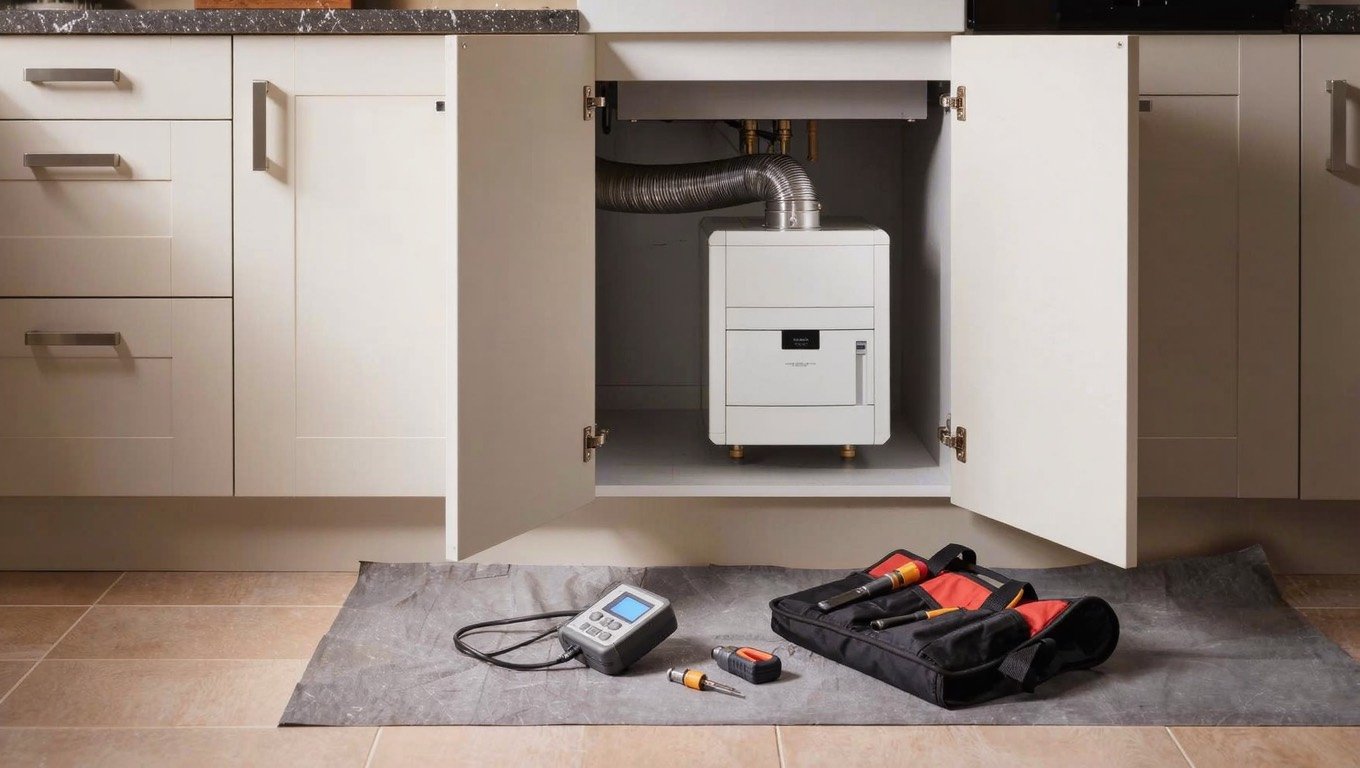
Air sealing removes uncontrolled leakage. It must never remove purpose-provided ventilation. Three things are permanently off limits: wall grilles serving an open-flued gas fire or back boiler, the airbricks feeding a suspended timber floor void, and trickle vents in window frames. Blocking the first is an offence under the Gas Safety (Installation and Use) Regulations 1998 and a genuine killer; blocking the second rots your joists; blocking the third gives you streaming windows by November.
If your house already sits at 65% relative humidity in winter, tightening it without fixing extraction makes things worse fast. Check the signs of poor home ventilation first, and if there is black mould on the reveals, deal with the damp and mould before you seal anything.
Supplies: The £120 Kit
Buy once, in bulk. Running out of caulk halfway round a room is how jobs get abandoned.
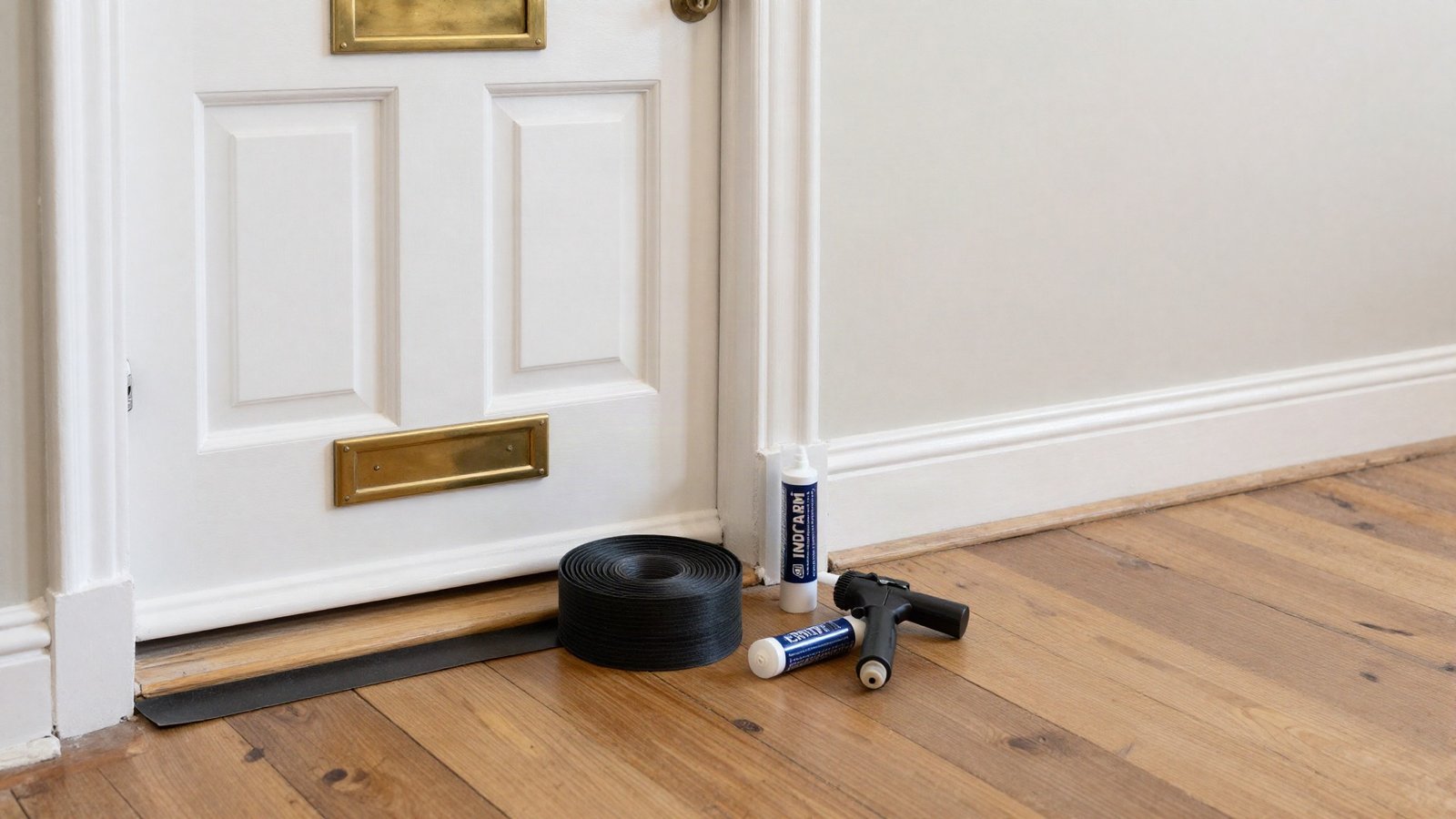
- •EPDM self-adhesive strip, E and P profile, 2 × 10 m — £16. EPDM outlasts foam tape by five years; foam is false economy.
- •Flexible acrylic decorator's caulk, 4 tubes — £14, plus a skeleton gun at £8.
- •Low-modulus neutral-cure silicone, 2 tubes — £12, for anything that moves or gets wet.
- •Brush letterbox plate £9, keyhole escutcheon cover £4.
- •Chimney draught excluder, wool or inflatable — £20 to £28 per unused flue.
- •Loft hatch strip plus a 50 mm PIR offcut for the hatch — £22.
- •B1 fire-rated expanding foam, one can — £11, for gaps over 15 mm only.
- •Compressible V-profile floorboard gap filler — £45 to £70 per room.
One-Off Jobs: Seal Once, Good for 5 to 10 Years
These are the permanent wins. Do the eaves while you are up there insulating the loft, and measure door gaps using the method in our door weatherstripping guide — an oversized strip stops the door latching and gets ripped off by March.
- •Loft hatch — strip the rebate, glue insulation to the back. 30 minutes, £22. Usually the single biggest hole in a 1930s house.
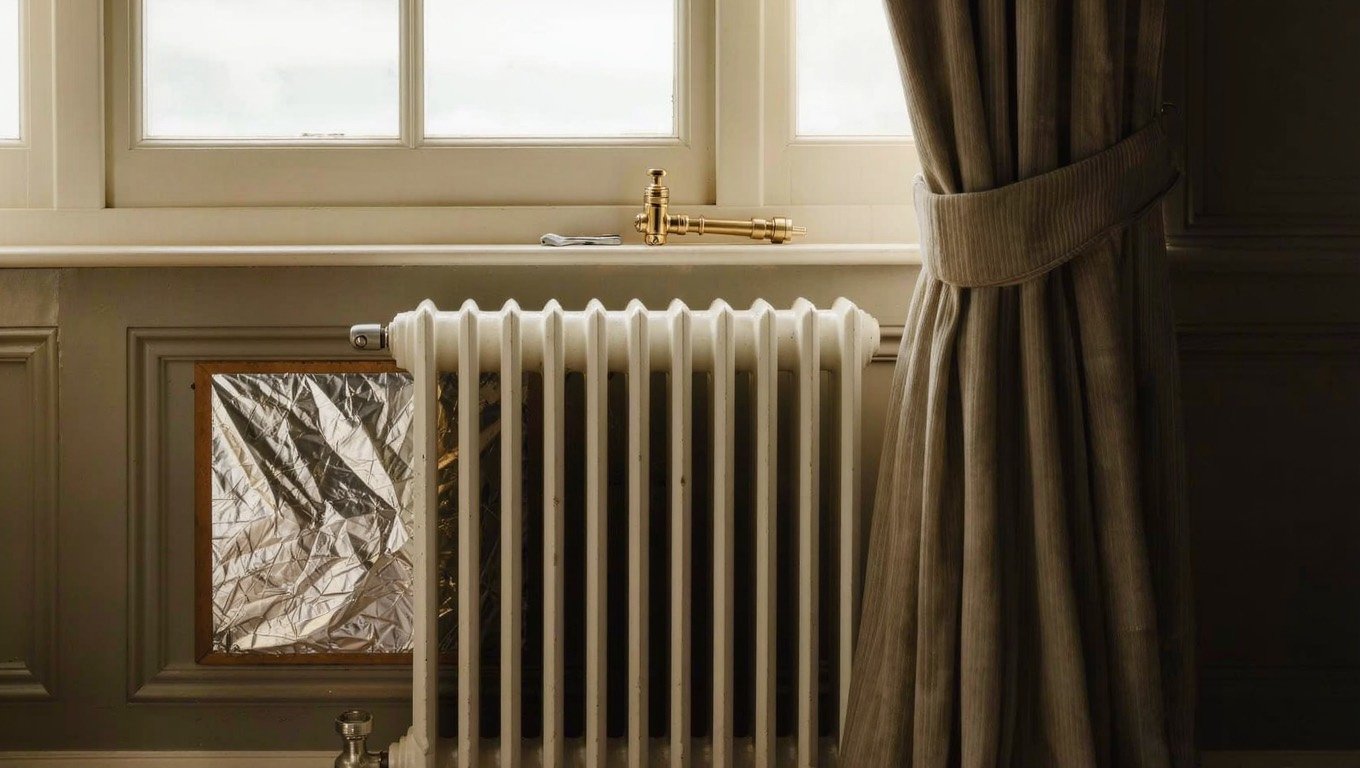
- •Unused chimney — wool excluder above the throat, tag left hanging. 10 minutes, £24. Never on a flue serving a live appliance.
- •Skirting-to-floor gap — a bead of caulk along the run, smoothed with a wet finger. 45 minutes per room, £4.
- •Floorboard gaps — press compressible strip into every joint. 3 to 4 hours per room, £45 to £70. Tedious, but a draughty Victorian lounge stops being draughty.
- •Service penetrations — under the sink, behind the bath, where soil and waste pipes pass through walls and floors. 90 minutes for the house, £12.
- •Front and back doors — perimeter strip plus a brush threshold seal. 40 minutes per door, £18.
- •Letterbox and keyhole — brush plate and escutcheon cover. 15 minutes, £13.
- •Loft eaves and party wall junctions — bag off the cold gaps at the wall plate. 2 hours, £25.
Every Autumn: The September Walk-Round
Ninety minutes, once a year, ideally on the first genuinely windy day in September. Heating off, back door open to exaggerate the draughts, or hold a lit incense stick near suspects and watch the smoke.
- •Re-check every EPDM strip from last year — adhesive fails first at door bottoms and on south-facing frames. 20 minutes, £0 to £8.
- •Test window catches and hinges for closing pressure; a casement that no longer pulls tight leaks more than a perished seal. 20 minutes.
- •Check loft hatch compression — you should feel resistance in the last 10 mm. 5 minutes.
- •Open the under-stairs, meter and airing cupboards, looking for daylight or moving cobwebs. 15 minutes.
- •Refit the chimney excluder if it came out for a summer sweep. 5 minutes.
- •Confirm every trickle vent and extractor still works. 15 minutes — and leave them open.
Every Spring: Open It Back Up
A tight house in July is a hot house, so the spring list is mostly about undoing. Pull temporary excluders off internal doors and check nothing has grown, been dumped or been decked over your airbricks.
- •Clear all airbricks and sub-floor vents — 20 minutes, £0. Blocked airbricks cause costlier damage than draughts ever will.
- •Vacuum extractor grilles and check the flap opens — 15 minutes, £0.
- •Inspect external silicone around frames for splits — 20 minutes, £6.
- •Book a sweep for any live flue — £60 to £90.
The DIY-or-Pro Line: Where You Stop
Everything above is fair game for a competent DIYer with a caulking gun and an afternoon. These are not.
Anything touching a gas appliance, its flue or its ventilation grille is Gas Safe registered work — full stop. That includes sealing round a back boiler, a gas fire builder's opening, or a wall vent you suspect is redundant. Only an engineer can confirm an appliance is room-sealed and the vent genuinely surplus. Downlighters below a cold loft are the second boundary: they leak badly, but the fix is fire-rated hoods or sealed IP-rated fittings, which is notifiable electrical work. Never stuff insulation round a halogen fitting. If you want to know what you have missed rather than guess, a blower door test with thermal imaging runs £150 to £400 — our breakdown of what a home energy audit costs explains which version is worth paying for.
- •Gas fire, back boiler or open-flued appliance ventilation — Gas Safe engineer, £90 to £150 for an assessment.
- •Downlighter sealing and loft cable management — qualified electrician, £180 to £350 for a typical ceiling.
- •Sash window brush-carrier draught proofing (routed, not stick-on) — specialist, £250 to £450 per window, 20-year life.
- •Ladder work above single-storey height, or a loft with no boarded walkway.
- •Spray foam anywhere in a roof space — lenders still refuse properties with it; get advice before, not after.
If You Only Have One Weekend
Prioritise by stack effect, not by how draughty a room feels. Warm air escapes at the top of the house and cold air is pulled in below to replace it, so the loft hatch and ceiling penetrations come first even though nobody stands there feeling cold. Then the ground-floor inlets: skirtings, floorboards, letterbox.
Loft hatch, chimney, letterbox and front door on Saturday morning is about two hours and £70, and the hallway will be noticeably warmer by Sunday. Spend the rest on ground-floor skirtings and service penetrations, and leave floorboards for a separate weekend — done badly it wastes the material. There is more on sequencing and payback in our wider draught-proofing guide.
Found this useful?
There's plenty more — hundreds of guides and honestly-tested product reviews for every corner of your home.
Browse All Guides