Home Decor · 6 min read · 5 May 2026
How to Choose the Perfect Rug for Your Living Room (Size, Material & Placement)
The number one rug mistake in British homes is buying too small. The designer size rules, honest material comparisons, and where the rug should actually sit.
By the Nims Casa editorial team — written from professional cleaning experience and checked against our editorial standards.
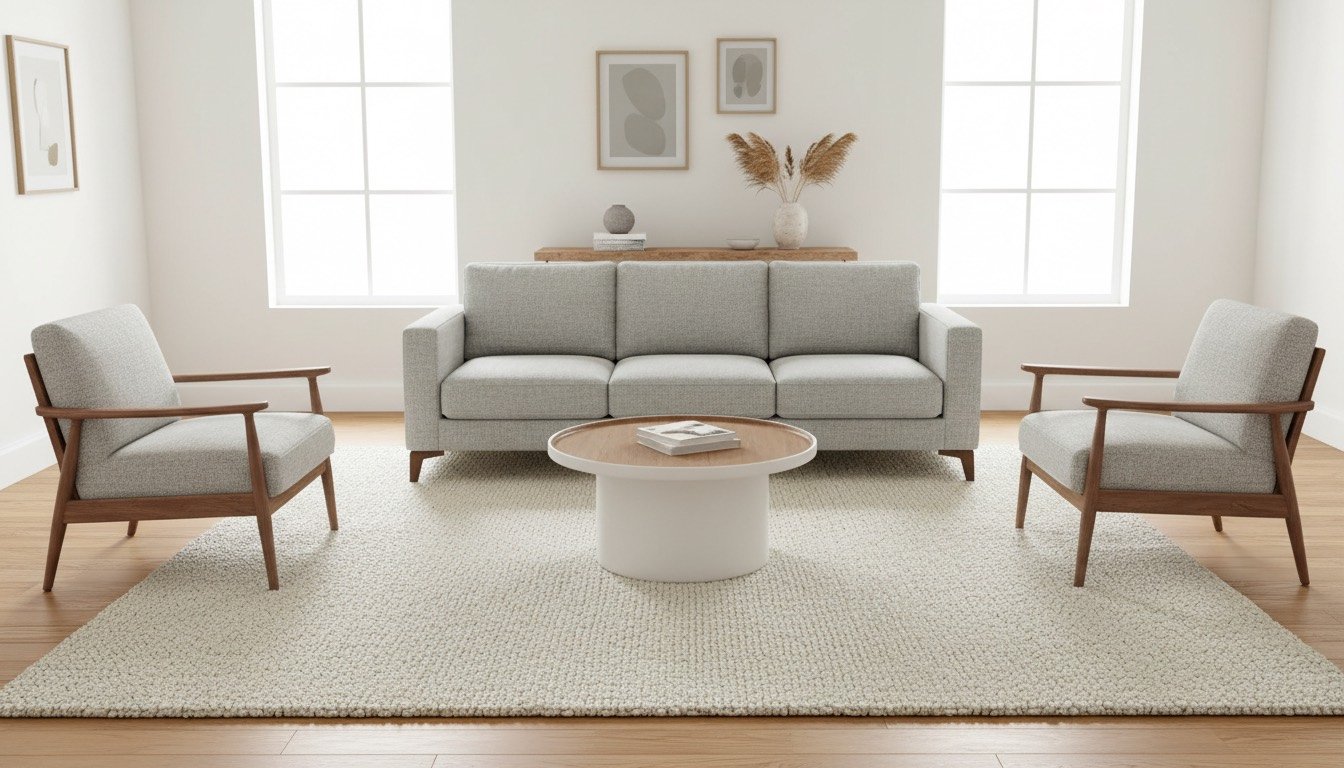
A rug can make or break a living room. Get it right and it visually anchors the sofa, coffee table and armchairs into one composed scheme; get it wrong — usually by buying one a size too small — and the room reads as smaller and strangely unfinished, however good the furniture around it is.
This guide covers what actually matters: the right size for your furniture, what wool, jute, cotton and synthetic fibres cost and how they wear, where the rug should sit, and the habits that stretch its life from five years to twenty.
Budget anywhere from £60 for a synthetic 160×230cm rug to £600 or more for a hand-knotted wool one, and treat it as one of the more consequential purchases in the room — not an afterthought bought once the sofa's already been delivered.
Getting the size right: a step-by-step method
Undersizing is the single most common rug mistake in UK living rooms, and it's almost always caused by measuring the room instead of the furniture. Work through it in this order:
- •Measure your seating zone first — the sofa, any armchairs and the coffee table gap — before you look at rug sizes; the rug should match this cluster, not the room's four walls.
- •Apply the front-legs rule: at minimum, the front legs of every sofa and armchair should rest on the rug; for a properly grounded look, get all four legs on it wherever the room allows.
- •Leave 20–30cm of bare floor between the rug's edge and the walls — a deliberate border, not an odd gap, and the detail that makes a room feel considered.
- •Size up, not down: most UK living rooms need at least 160×230cm; a 200×290cm or 240×330cm rug transforms an average reception room and rarely looks too big in practice.
- •For a dining table sharing the room, add roughly 60cm to each side of the table so chairs stay on the rug even when pulled right out — a six-seat table needs around 200×300cm minimum.
- •Stuck between two sizes? Round up. A generous rug can be tucked under furniture; one that's too small can't be fixed without buying again.
Wool vs synthetic vs jute: the honest material comparison
Fibre choice affects price, feel and durability more than almost any other decision. Here's what each costs and delivers in a real UK household — our wider guide to carpet fibre types covers similar ground for wall-to-wall flooring.
- •Wool (from £180 for 160×230cm, £450+ for premium weaves): the benchmark fibre — naturally stain-resistant, springs back from furniture indents, and can last 20–25 years with proper care. Costs more upfront, but the cost per year of ownership is usually the lowest here.
- •Cotton (from £60): soft and often machine-washable, suiting a rented flat or a child's playroom, but it flattens and thins within a few years under heavy traffic. Best kept to bedrooms or low-use corners.
- •Jute and sisal (from £90): striking, on-trend texture and genuinely hardwearing underfoot — but both mark permanently with liquid spills and feel rough on bare feet, so keep away from the dining zone.
- •Polypropylene and other synthetics (from £70): the practical choice for households with young children or pets — stain-resistant, easy to spot-clean, and premium ranges now convincingly mimic wool's texture.
- •Viscose and 'art silk' (from £120): a beautiful sheen that photographs brilliantly, but it marks permanently with water and even light moisture. Reserve it for low-traffic, adults-only rooms.
Placement: anchoring the rug to your furniture, not the room
Centre the rug on the sofa-and-coffee-table grouping rather than on the room's midpoint — in an L-shaped or awkward room those two points rarely match. This matters even more in a compact room; see our small living room ideas guide for how rug size interacts with the layout, and our guide to arranging furniture in a small living room for the spacing rules that pair with this one.
Always fit a non-slip underlay beneath the rug. It stops the rug creeping, adds cushioning underfoot, and extends its life by absorbing impact. Expect to pay £15–£40 depending on rug size.
Rug care and maintenance: making it last
Vacuum weekly, but switch off the beater bar on wool loop-pile and jute rugs — the rotating brush shreds natural fibres over time rather than lifting dirt out of them. Rotate the rug 180 degrees roughly every six months so traffic and sunlight fade it evenly, instead of leaving one obvious patch.
- •Blot spills immediately rather than rubbing — for the classic red wine mishap, our guide to removing red wine stains applies just as well to rugs as to fitted carpet.
- •Have wool and other natural-fibre rugs professionally cleaned every 12–18 months; our comparison of steam cleaning versus shampooing explains which method suits which fibre.
- •Keep rugs out of prolonged direct sunlight where you can, or fit UV-filtering film to the window — colour fade can't be undone once it's happened.
- •Air natural-fibre rugs outdoors once or twice a year if practical; it releases trapped moisture and helps deter moth larvae, which target wool specifically.
Common rug-buying mistakes to avoid
- •Buying to match the room's dimensions instead of the furniture layout — this is how so many rugs end up a size too small once they're actually laid down.
- •Choosing a busy pattern purely to hide future stains, then finding it fights with an equally busy sofa or curtains. Let one element in the room lead.
- •Skipping the underlay to save £20, then replacing the rug two or three years early once the backing has worn through from constant creeping.
- •Putting jute or sisal under a dining table, where a single spilled glass of wine leaves a mark no cleaning product will fully lift.
- •Ignoring pile height against doors and furniture — a deep-pile wool rug can catch on door bottoms and make dining chairs awkward to push back under the table.
When to call a professional
A regular vacuum handles everyday dirt, but call a professional carpet and rug cleaning service for ground-in stains, soaked-in pet accidents, or any sign of moth damage — DIY attempts often set the mark rather than lift it. Professional cleaning typically costs £40–£90 depending on size and fibre — see our carpet cleaning cost guide for the fuller picture — considerably cheaper than replacing a £400 wool rug outright. For fringed or hand-knotted rugs, confirm the cleaner has handled that weave before booking.
Frequently asked questions
What size rug do I need for a small living room? Resist the urge to go too small — a 160×200cm rug that gets the sofa's front legs on it looks more spacious than a tiny rug floating in open floor, because it reads as one continuous surface rather than a fragment.
Can I put a rug on top of fitted carpet? Yes — it's a common way to zone an open-plan space or freshen a tired carpet. Use a rug-on-carpet grip pad rather than a standard underlay, and expect slightly more movement than on a hard floor.
How do I stop my rug sliding on a hard floor? A rubber, or felt-and-rubber, non-slip underlay cut slightly smaller than the rug is the reliable fix. Double-sided tape works for small rugs but can leave residue on wood or vinyl over time.
Is wool or synthetic better in a home with a dog? Synthetic wins on practicality — it resists stains and cleans up fast — while wool wins on longevity if spills get dealt with promptly. It mostly comes down to how quickly the household reacts to accidents.
How often should a living room rug be replaced? A well-chosen wool rug with proper underlay and rotation can last 15–20 years. A budget synthetic in a high-traffic room is more realistically a 5–8 year purchase.
Should the rug match the sofa or curtains exactly? No — most designers pick one dominant colour from the rug and echo it once elsewhere, such as a cushion, rather than matching everything, which tends to look flat rather than considered.
Found this useful?
There's plenty more — hundreds of guides and honestly-tested product reviews for every corner of your home.
Browse All Guides