Cleaning Guides · 6 min read · 23 May 2026
Steam Cleaning vs Carpet Shampooing: The Real Differences, Costs and Which Wins
One of these methods isn't really steam, and the other isn't really shampoo any more. Here is how they genuinely compare on cleaning power, drying, ten-year cost and risk.
By the Nims Casa editorial team — written from professional cleaning experience and checked against our editorial standards.
Ask three cleaners which method is better and you get three confident, contradictory answers. The honest version is that these two names describe different chemistry, wildly different volumes of water, and different levels of risk to the carpet under your feet — and one of them involves no steam whatsoever.
Here is how they compare in British houses: wool twists over jute backing, cold hallways that take a day to dry in February, hired machines that never extract as well as the box claims — and where the line falls between what you can safely do yourself and what needs someone insured.
What each method actually does
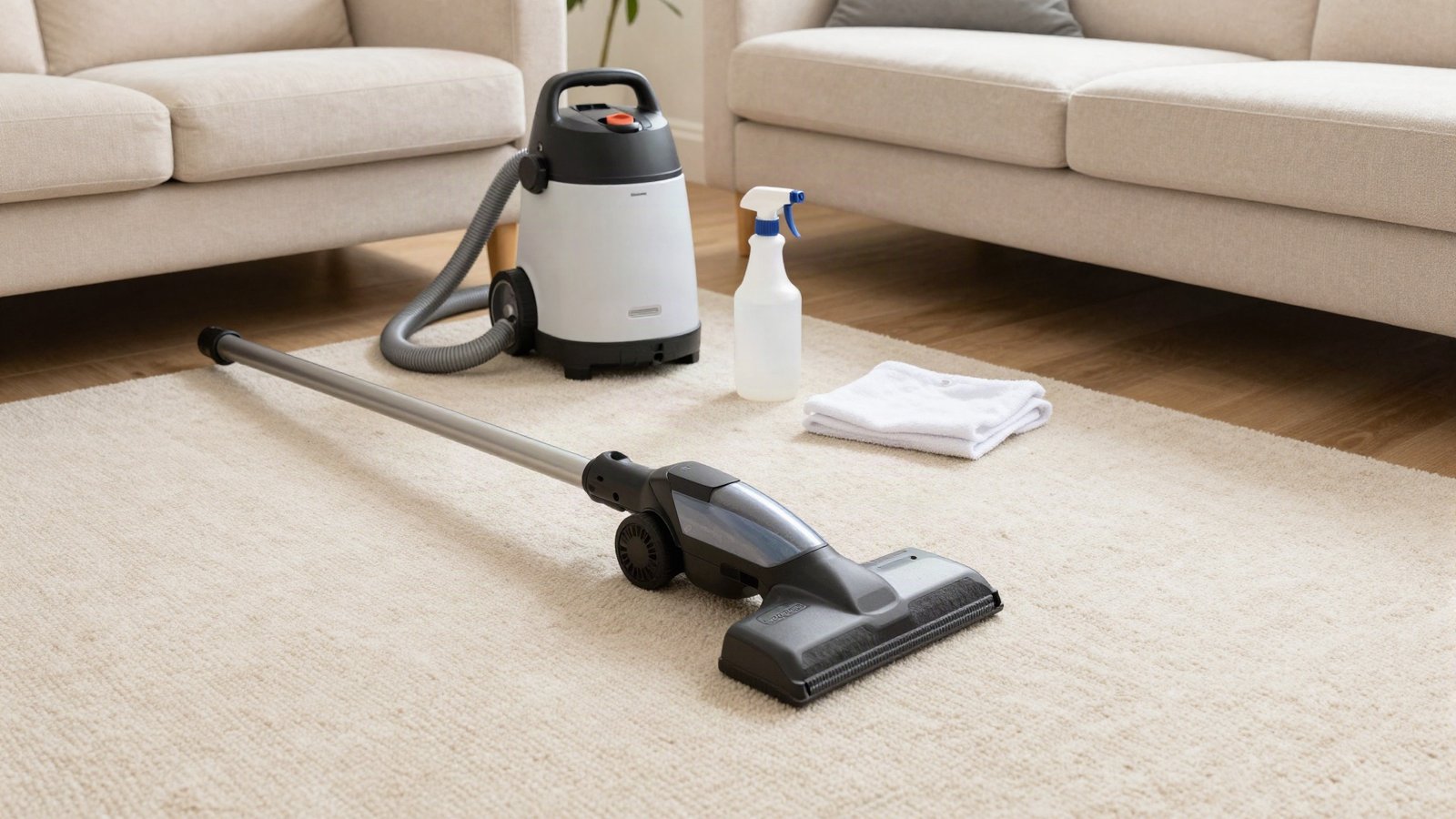
"Steam cleaning" is trade shorthand for hot water extraction. Water at roughly 60-90°C is mixed with detergent, injected into the pile under pressure and vacuumed straight back out with the soil. Real steam never touches the fibre — it would set protein stains solid and cook wool.
"Shampooing" covers three different jobs, and confusing them is why people end up with grey traffic lanes six weeks after paying someone.
- •Hot water extraction (HWE): pre-spray, agitate, rinse, extract. The only method that flushes soil out of the bottom third of the pile, and the wettest by a distance.
- •Traditional rotary shampoo: foaming detergent brushed in, left to dry, vacuumed. Cheap and fast, but sticky residue stays behind and attracts dirt.
- •Encapsulation (modern low-moisture shampoo): a polymer detergent that dries into brittle crystals around each soil particle, hoovered away 30-60 minutes later. What most UK office contracts use.
- •Bonnet pads and dry compound: surface-only, no real downtime, near-pointless in a family lounge.
Side by side: the numbers that matter
The biggest variable is not on that list. It is vacuuming: around 79% of carpet soil is dry particulate, so eight slow passes remove more than either wet method will.
- •Soil at the base of the pile: HWE clearly ahead. Shampooing works the top third and leaves the rest.
- •Water used in a 4m x 4m room: HWE 6-11 litres; encapsulation 0.5-1.5 litres.
- •Drying: professional HWE with air movers, 2-5 hours. A hired machine in an unheated room, 8-24 hours. Encapsulation, 30-90 minutes.
- •Odour and pets: only extraction flushes it out; shampoo masks it until the first humid day.
- •Wool safety: both are safe between pH 5 and 8 — chemistry damages wool, not the machine.
- •UK professional price, three-bed house (lounge, three bedrooms, stairs and landing): HWE £150-220; encapsulation £110-170.
- •DIY availability: extraction machines hire everywhere; encapsulation needs a rotary machine no household owns.
Performance in a real house
On a five-year-old 80/20 wool twist in a hallway, extraction wins outright. Pre-spray with a mildly alkaline conditioner, dwell eight to ten minutes, agitate with a grooming brush, rinse at pH 5-6. Traffic lanes come back three or four shades lighter, and the acidic rinse leaves wool wool-coloured rather than yellowing.
Encapsulation earns its keep on polypropylene and on carpet that cannot be out of action — a home office, a flat being viewed on Monday. It genuinely cleans; it just cannot reach what has settled at the backing. Neither method fixes damage: bleach marks, sun fade, crushed pile and pet urine in the underlay are separate problems, because urine salts wick back up days after any surface clean.
Drying, and the fortnight afterwards
This is where hired machines lose. Their vacuum motors recover perhaps 60-70% of the water they put down, against 90%-plus from a professional unit. Between October and March that leaves carpet damp most of a day, and damp carpet in a cold room means condensation, a wet-dog smell and, past 48 hours, microbial growth in the underlay.
Open windows on both sides of the room and run a fan across the pile rather than at it. Watch for wicking: a stain that vanished can rise again overnight as the backing dries, usually cured by a second light extraction rather than more chemical. And remember that shampoo residue left in the pile behaves like flypaper, so a cheap job can leave carpet dirtier at week six than on day one.
The 10-year cost, honestly
Take a three-bedroom semi with wool twist throughout, cleaned once a year. Realistic 2026 figures:
- •Hire route: about £28 per 24-hour hire plus £15-20 of solution and £5 of pre-spray — roughly £50 a year, £500 over ten years, plus five hours of your Saturday.
- •Buy your own machine: £150-400 up front, £15 a year in solution, replaced around year six. Call it £600-750, with unlimited use for spills.
- •Professional HWE annually: £150-220 a visit — £1,500-2,200 over ten years, done in two to three hours with no lifting.
- •Professional encapsulation annually: £110-170 a visit, £1,100-1,700, house usable by lunchtime.
- •The number nobody quotes: re-carpeting that house in 80/20 wool twist with underlay and fitting is £2,200-3,800. Budget polypropylene, £900-1,600.
Where DIY stops and a professional starts
That last figure is the argument: ten years of professional extraction costs less than one premature re-carpet — the same logic behind the other habits that double carpet life. A competent DIYer can handle the first list; the second needs someone insured and NCCA or WoolSafe accredited.
- •Do yourself: thorough dry vacuuming before anything wet goes down, and blotting fresh spills with a white cloth and a pH-neutral spotter, working inwards.
- •Do yourself: hire an extraction machine for sound polypropylene or nylon carpet under about ten years old, patch-testing on an offcut first.
- •Do yourself: move light furniture out and put foil tabs under whatever stays.
- •Hand over: wool, wool blends, sisal and seagrass, where pH and drying control matter more than machine power.
- •Hand over: any viscose or "art silk" rug — water destroys it, and it needs a specialist rug plant.
- •Hand over: pet urine in the underlay, and carpet over twelve years old on jute backing, which shrinks and browns if over-wetted.
- •Hand over: stairs. A full 13-14kg machine on a UK staircase is a genuine fall risk.
- •Hand over: anything touched by a washing machine overflow, drain backup or flood — that is restoration, not cleaning.
The two things that are genuinely dangerous
Mixing chemistry is the first. Never combine a peroxide spotter with an acidic rust or reducing agent, and never let bleach meet an ammonia-based product — that produces chloramine gas in an enclosed room. Ventilate for solvent spotters and keep them away from a boiler or open flame.
Wetting a floor that is already damp is the second. If you can smell mould or the skirting is discoloured, deal with the damp first rather than adding eleven litres of water. One quieter risk: over-wetting a fitted carpet can shrink it off the gripper rods, and re-stretching costs £70-150 from a fitter.
The verdict for a family home is hot water extraction — the only method that removes soil rather than redistributing it, and the only one that handles odour. Encapsulation wins when downtime matters more than depth. Vacuum weekly, treat spills immediately, and book professional extraction every twelve to eighteen months if you have wool, pets or stairs. Check what your carpet is made of first; the Carpets & Flooring hub covers the rest.
Found this useful?
There's plenty more — hundreds of guides and honestly-tested product reviews for every corner of your home.
Browse All Guides