Electrical · 6 min read · 1 May 2026
Common Home Lighting Mistakes (and What It Costs to Put Each One Right)
Most homes are lit by accident rather than design. Here are the lighting mistakes that matter, ranked by consequence, with the real UK cost of fixing each one.
By the Nims Casa editorial team — written from professional cleaning experience and checked against our editorial standards.
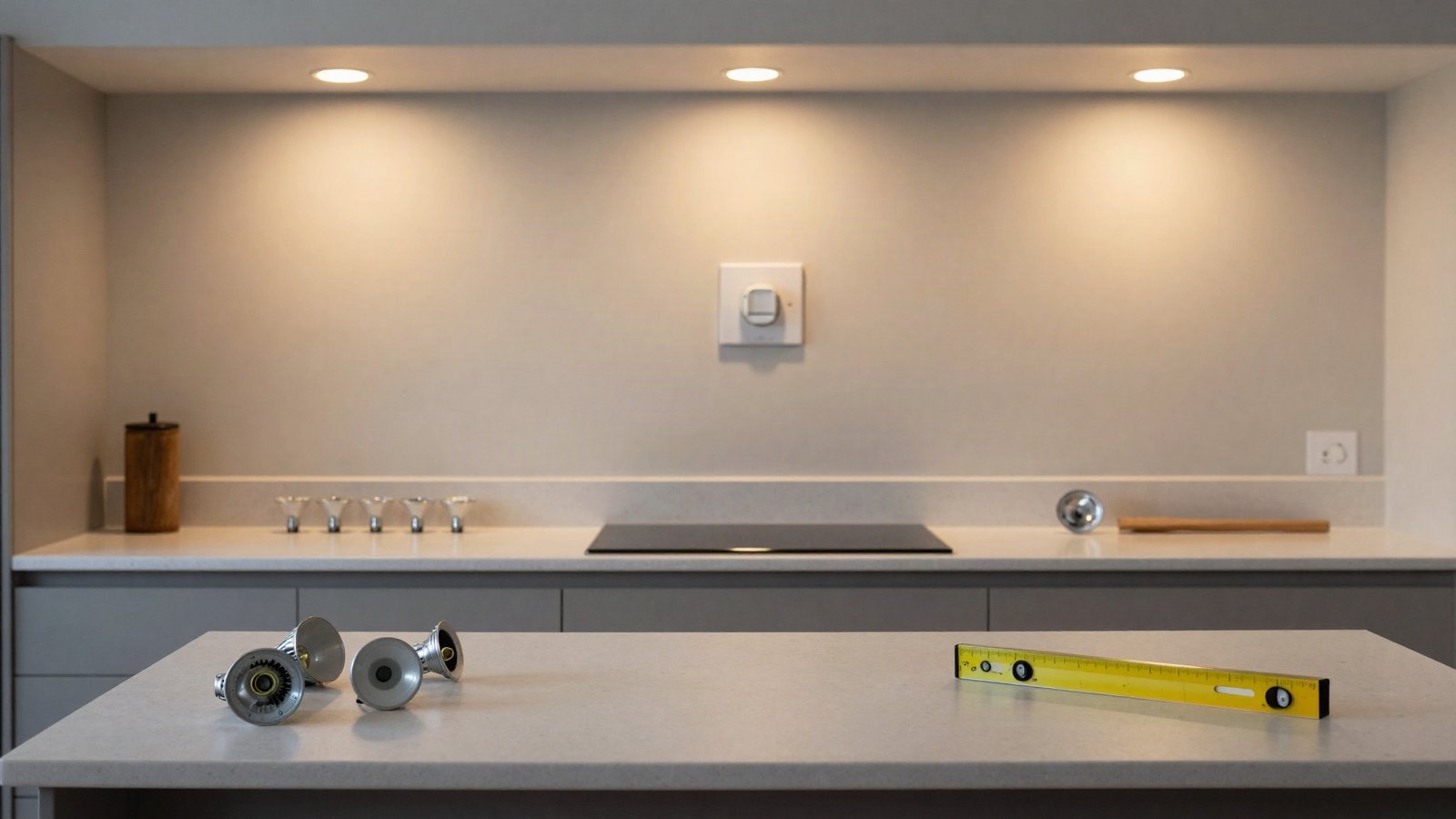
Most homes we work in were lit by accident: one pendant per room, whatever bulb was on offer, and a dimmer that hums like a wasp in a jar. A ceiling drilled for eight downlights in the wrong positions costs more to correct than it did to install, because you now pay for plaster repair too.
This is ranked by consequence, not by how often it appears on social media. Several cost £30 and an evening's irritation. Two start fires. Throughout we have split materials from labour, because the gap between those numbers is where householders get quietly overcharged.
The mistakes, ranked by consequence
Rank them by what happens if you leave them alone and the order looks nothing like the one you get in a showroom.
- •Non-fire-rated downlights punched through a ceiling separating storeys, removing its fire resistance. Correcting it later runs £8-£20 per fitting plus £150-£300 labour.
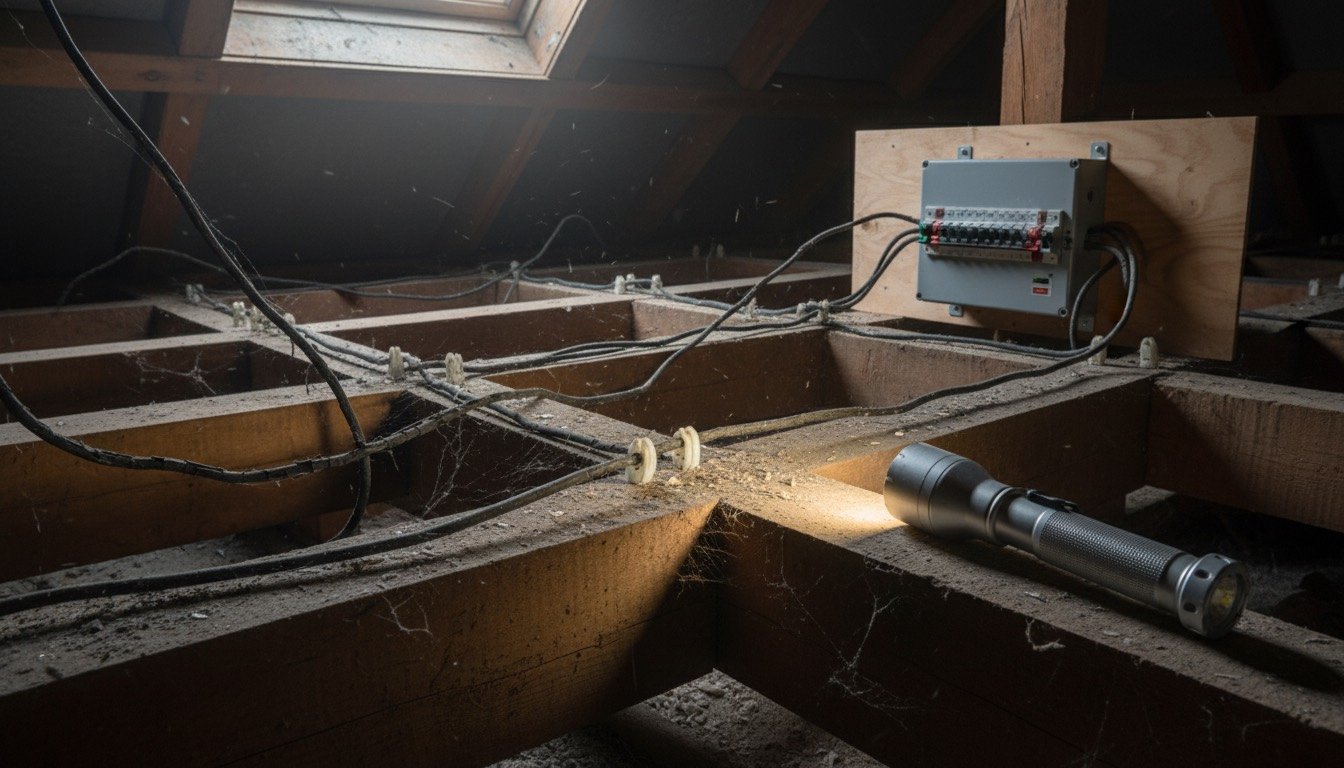
- •Loft insulation laid straight over downlights with no fire hoods — a real overheating risk. Hoods are £6-£10 each; six take an hour.
- •DIY alterations in a bathroom: notifiable in England and Wales, and the wrong IP rating over a bath is a shock risk, not a cosmetic one.
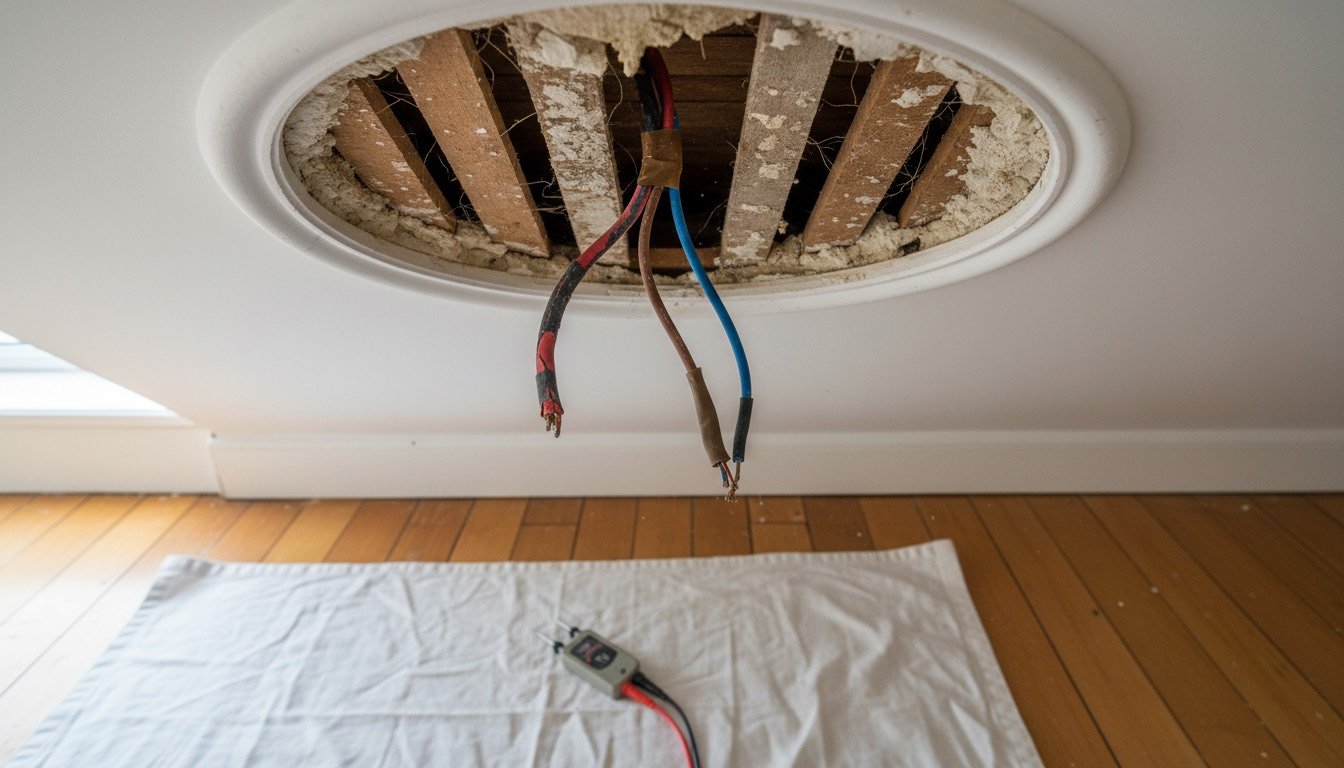
- •Assuming the switch being off means the ceiling rose is dead. On UK loop-in wiring the rose holds a permanent live either way.
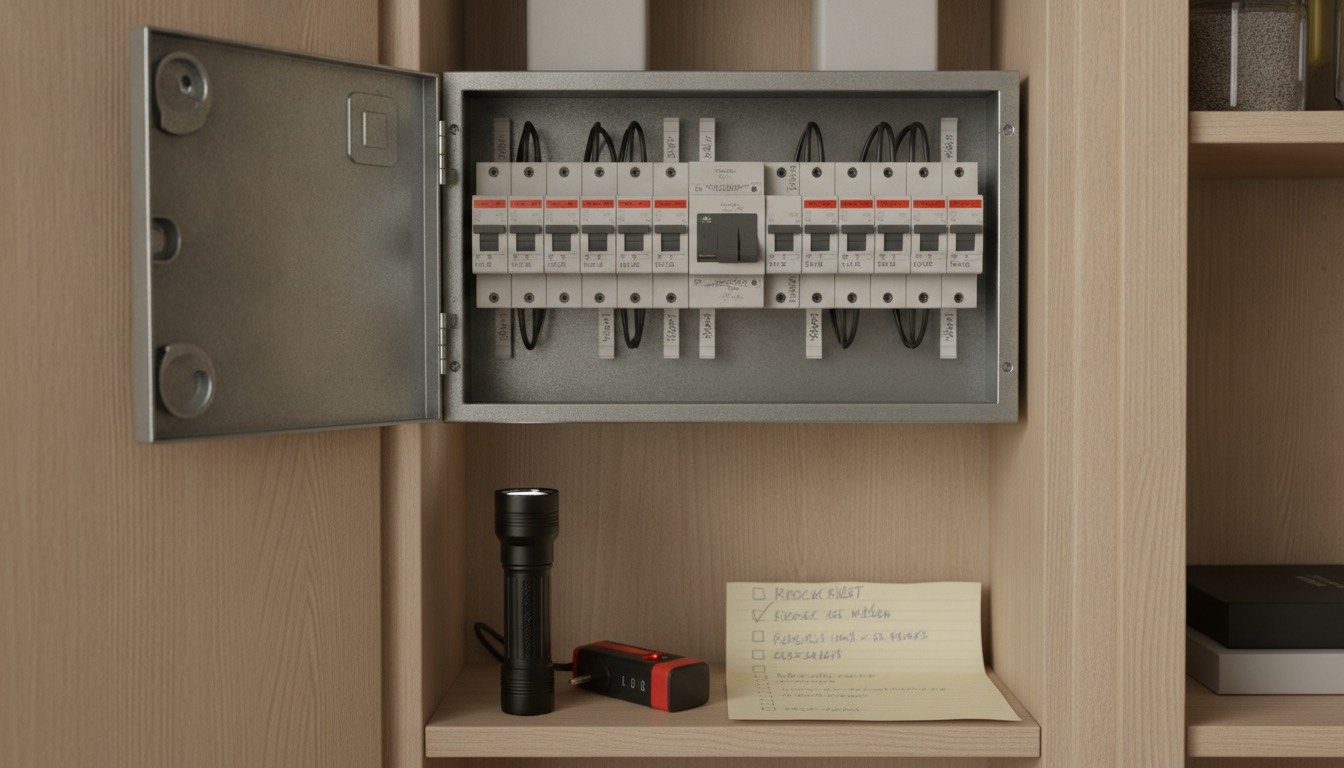
- •Twenty LED drivers on one 6A type-B MCB: inrush current trips the breaker at switch-on. The fix is a circuit split or a type-C device — electrician-only work.
- •A cheap leading-edge dimmer driving LEDs: flicker, buzz, lamps failing within months, and a dimmer running hot. £15-£35 to replace with trailing-edge.
- •Sealed integrated LED fittings you cannot relamp — when the diode array fails at year five, the whole fitting goes in the bin.
The three that are genuinely dangerous
Fire rating comes first. Any ceiling separating storeys, or a house from an integral garage, is a fire barrier, and cutting 70mm holes for standard downlights removes that protection. Fire-rated fittings restore it: Collingwood, JCC and Aurora make 30/60/90-minute IP65 units at £10-£22 each, and the £3 alternative saves nothing real.
Second, bathrooms. A room containing a bath or shower is a special location under BS 7671 with zoned lighting: Zone 1, over the bath or inside the shower, needs IP44 minimum and usually SELV at 12V. An ordinary pendant above a bath is a defect an inspector will fail.
Third, proving dead. Isolate at the consumer unit, lock off or remove the fuse, and test with a voltage indicator you have proved on a known live source first. This is the territory covered by electrical repairs you should never DIY — the danger is not the wiring, it is the confident assumption.
Why sensible people still get this wrong
Almost none of it is carelessness. UK loop-in wiring is counter-intuitive: the permanently live conductors sit in the ceiling rose, so the cable feeding your switch is not the one carrying constant power. Anyone learning from an American video gets it backwards, and pre-2004 red/black colours do not map onto brown/blue.
Bulb packaging is the other culprit. It still shouts watt equivalence, so people swap a 60W incandescent for an 800-lumen LED and stop thinking there — though the gap between 2700K and 4000K changes how a room feels far more than wattage ever did, as our comparison of daylight versus soft white bulbs explains.
The cheap fixes worth doing this week
Plenty of this needs no electrician — lamp-and-plate changes that fix most complaints about a room feeling gloomy or clinical.
- •Match colour temperature by room: 2700K in living rooms and bedrooms, 3000K in kitchens and bathrooms, 4000K in a garage or utility. Mixing temperatures within one room is the most visible error.
- •Buy CRI 90+ (Ra90) lamps anywhere you prepare food or judge colour. Expect £4-£7 per GU10 rather than £2 — a fair premium.
- •Aim for 1,500-2,500 lumens in a 4m x 4m living room across three or four sources, not one bright pendant.
- •Use a trailing-edge dimmer rated for LED, check its minimum load (many need 10W connected) and buy lamps marked dimmable. Flicker after dimming nearly always traces to this pairing — see why LED lights flicker.
- •Reposition rather than add: downlights 600-750mm forward of wall units light the worktop, while a grid down the ceiling centre lights the back of your head.
What lighting work actually costs in the UK
Registered electricians charge roughly £45-£70 an hour outside London and £70-£95 inside the M25, with day rates of £280-£450 and £400-£600 respectively, plus a minimum charge of £60-£120 covering the first hour. Those match our guide to what an electrician costs, and they matter because on nearly every lighting job labour is 60-75% of the bill. Three worked examples, materials and labour separated:
- •Swap a pendant for a new ceiling fitting, like-for-like: fitting £25-£120, labour £60-£100 for a 30-45 minute visit. If you are competent this is legitimately DIY — see how to replace a light fitting.
- •Six fire-rated IP65 downlights into an existing plasterboard kitchen ceiling with loft access: materials £90-£160 (fittings, lamps, hoods, cable), labour £250-£400. No loft access and it becomes £400-£700 plus making good; our recessed lighting cost guide breaks this down per fitting.
- •A new lighting circuit from the consumer unit to a loft conversion: materials £60-£120, labour £300-£600, plus certification and Building Regulations notification.
Reading a quote: fair, generous or suspect
A fair quote itemises fittings by manufacturer and model, states fire and IP ratings, names the certificate you get and gives a day count. A generous one is that same job at the top of the labour band — defensible in London or for awkward access. A suspect one has tells.
- •An all-in price under about £45 per downlight installed: that cannot cover a fire-rated fitting, a hood and certified labour.
- •No scheme registration offered. Ask for the NICEIC, NAPIT or STROMA number and check it on the Electrical Competent Person Register.
- •No Minor Electrical Installation Works Certificate for alterations, or EIC for a new circuit. Uncertified work did not happen, as far as your insurer is concerned.
- •Cash-only terms, or anything over 25% up front on a one-day job.
- •Silence on who makes good the plaster. That gap is worth £150-£400.
Where DIY has to stop
In England and Wales, Part P makes three things notifiable: installing a new circuit, replacing a consumer unit, and any alteration to a circuit in a special location such as a bathroom. Everything else — swapping a fitting, changing a dimmer, replacing a switch on an existing circuit — is non-notifiable but must still comply with BS 7671. Scotland uses a building warrant instead and Northern Ireland differs again, so check locally.
A scheme-registered electrician self-certifies and the compliance certificate arrives within about 30 days. Going through building control after the fact costs £200-£400 and involves an inspection you may fail. The certificate is cheap as part of the job and expensive as an afterthought. If work touches the consumer unit or a bathroom, or you have a circuit tripping repeatedly, scorch marks or a hot-plastic smell, stop and call someone registered the same day.
Found this useful?
There's plenty more — hundreds of guides and honestly-tested product reviews for every corner of your home.
Browse All Guides