Electrical · 6 min read · 24 May 2026
How Much Does Recessed Lighting Cost in the UK? 2026 Downlight Prices
Six downlights in a kitchen can cost £320 or £1,100, and the difference is almost never the fittings. Here is what each part actually costs in 2026, and how to spot a padded quote.
By the Nims Casa editorial team — written from professional cleaning experience and checked against our editorial standards.
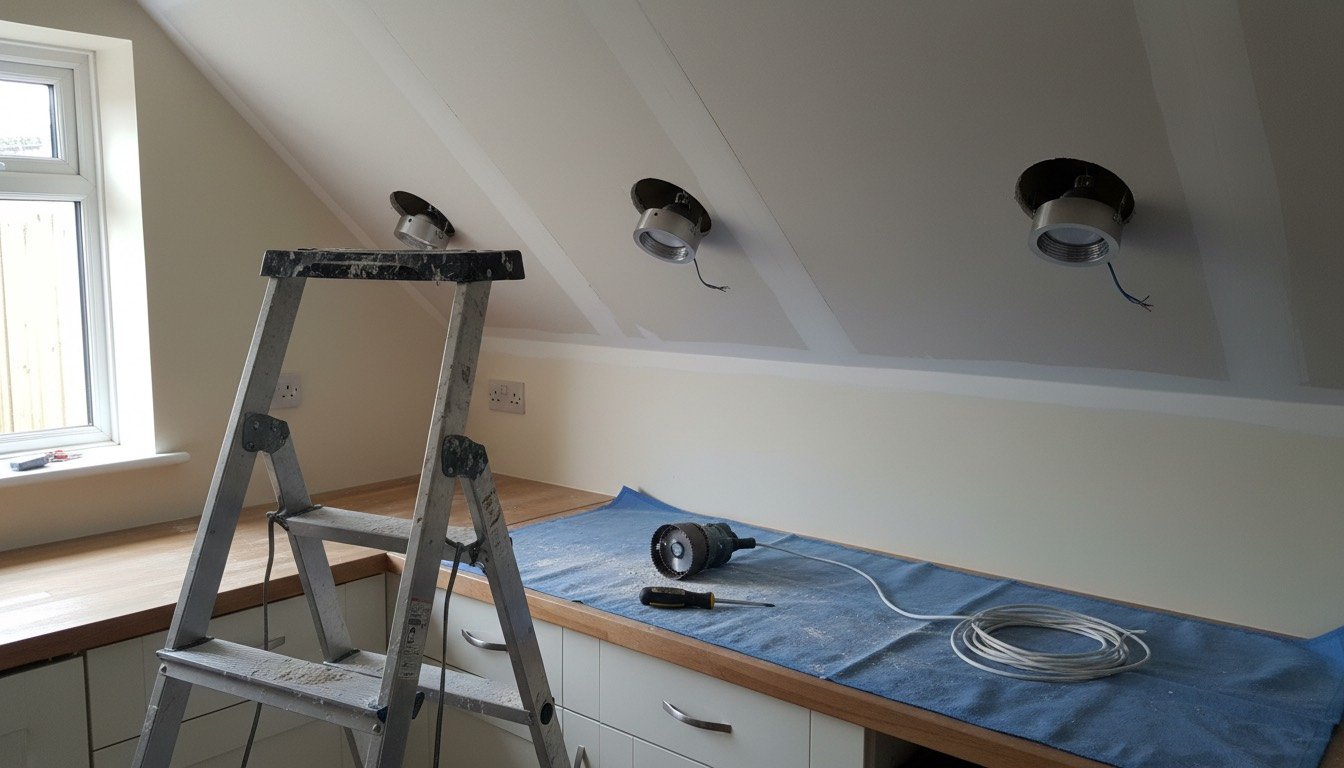
The fittings are the cheap bit. A decent fire-rated LED downlight is under £20, which is why a £900 quote for a kitchen feels like a stitch-up until you see what the electrician is actually being paid for: cutting blind through a ceiling, running cable in a void nobody can see into, and putting their name on a certificate.
The honest headline: installed cost per downlight in the UK sits between £45 and £120, and what decides it is the ceiling, not the light. Below is the breakdown, three real jobs costed line by line, and what a tenant can do instead without touching the ceiling.
The Typical UK Price Range in 2026
For a straightforward retrofit — plasterboard ceiling, existing lighting circuit, accessible void above — expect £45 to £75 per downlight all-in. Add a new circuit, lath and plaster, or an awkward first-floor void and you are into £90 to £140 per light.
Geography moves this more than most trades. Treat the Midlands, Yorkshire and the South West as baseline: add 25 to 40 per cent inside the M25, 10 to 15 per cent across the wider South East, and knock 10 to 15 per cent off in the North East, Wales and Northern Ireland. Scotland tracks baseline. The gaps are almost entirely labour, which is why they mirror general electrician rates.
- •Small room, 4 lights, existing circuit: £220–£340
- •Kitchen, 6 lights, existing circuit, dimmer added: £320–£520
- •Open-plan living/dining, 10 lights on a new circuit: £1,100–£1,700
- •Bathroom, 4 × IP65 fittings, existing circuit: £240–£420
- •Whole house (4 bed, roughly 30 fittings): £1,900–£3,800
Unit Costs, Line by Line
2026 UK retail prices. Trade customers pay 20 to 35 per cent less on fittings, and a good electrician passes some of that on — ask.
- •Fire-rated integrated LED downlight, dimmable, IP65, switchable colour temperature: £11–£24 each
- •Budget fire-rated fitting (fixed output, no CCT switch): £5–£9 each
- •Fire-rated GU10 housing plus LED lamp: £7–£13 plus £3–£6
- •Trailing-edge LED dimmer plate (leading-edge dimmers flicker on LEDs): £18–£45
- •Loft caps/hoods, if fittings are not insulation-coverable: £4–£8 each
- •Maintenance-free junction box: £5–£9; blanking plate for the old ceiling rose: £6–£14
- •Asbestos sample test on a textured ceiling: £30–£60 per sample
- •Minor Electrical Installation Works Certificate: £0–£70 (often included)
Labour vs Materials: Where the Money Goes
On a typical retrofit the split is roughly 70 per cent labour, 30 per cent materials. Electricians charge £45 to £75 an hour outside London and £70 to £110 inside it, with day rates of £280 to £400, or £400 to £550 in the capital. Most will not travel for less than a half-day minimum of £150 to £250, which is why four lights rarely costs two-thirds of what six costs.
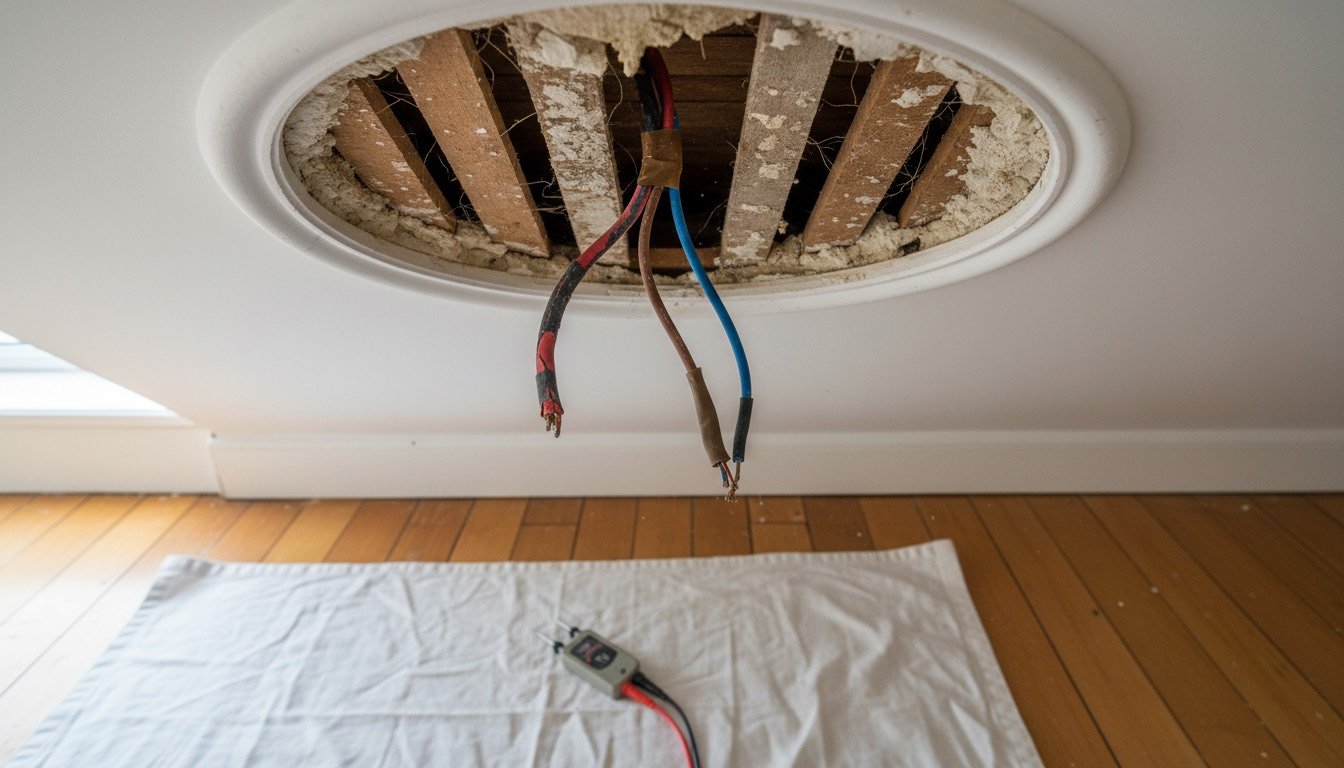
Time per fitting is the number that decides your bill. With a loft above and boards up, a competent sparky does 20 to 35 minutes per light. Working blind from below through a 68mm hole on a ground-floor ceiling with a bedroom above — fishing cable past joists and, in older houses, past pipework nobody documented — that stretches to 45 to 70 minutes. Same fitting, double the labour.
What Moves the Price
Six things account for nearly all the variance between quotes on the same room.
- •Ceiling construction. Plasterboard cuts cleanly. Lath and plaster shatters and adds £150–£400 in making good plus a repaint.
- •Textured coatings. Artex applied before 2000 may contain asbestos. Nobody drills it until it is tested — a hard stop, not a caution.
- •New circuit or not. Spurring off an existing lighting circuit is cheap. A new circuit from the consumer unit adds £250–£450 and is notifiable under Part P; check when electrical work must be notified before agreeing a scope.
- •Bathroom zones. Shower and bath zones need IP65 minimum, adding £3–£8 per fitting. In Wales that work is still notifiable; in England it generally is not.
- •Loft insulation above. Fittings must be rated for insulation contact, or need hoods — do not just pull the loft insulation back.
- •Access. Ceilings over 2.7m, stairwells and vaulted rooms need towers: add half a day.
Three Jobs, Fully Costed
Kitchen, 1950s semi in Leeds. Plasterboard, loft above, one pendant replaced with six fire-rated dimmable downlights and a trailing-edge dimmer. Materials £102, labour half-day £230, certificate included. Total £332.
Open-plan living/dining, 1930s London terrace. Lath and plaster, bedroom above, ten downlights on a new circuit. Materials £190, circuit £340, labour 1.5 days at London rate £720, making good £220. Total £1,470, plus £294 VAT if the firm is registered — the line most people forget.
Family bathroom, Bristol. Four IP65 fire-rated fittings replacing a ceiling rose, existing circuit. Materials £74, labour £185. Total £259. Get the colour temperature right — 4000K reads clinical in a small UK bathroom; 3000K is nearly always better.
The Renter-Safe Version
Cutting 68mm holes in a landlord's ceiling is not reversible, and no deposit scheme will side with you on it. But what people actually want from downlights is even, glare-free light rather than the holes — and that is achievable for £80 to £200 with nothing left behind.
Ask in writing before anything fixed. Some landlords fund materials if you cover labour on a long tenancy — but get it on email, and never swap a switch plate yourself. Fitting a smart dimmer is fixed electrical work, needs consent, and belongs to the landlord the moment it is screwed to the wall.
- •Smart bulbs in the existing fittings, £8–£20 each, run from a magnetic remote. Bag the original bulbs and refit them on move-out.
- •Plug-in LED strip in an aluminium channel above wall units, fixed with removable adhesive strips rather than the strip's own tape, which lifts paint.
- •Battery puck lights under shelves and inside cupboards, £15–£30 for six.
- •A floor uplighter aimed at the ceiling, £30–£60: the cheapest way to fake the ambient wash downlights give.
- •Swap the pendant shade for a wide diffusing one, £20–£45. Keep the original in the cupboard.
- •Plan it as layered lighting — two well-placed plug-in sources usually beat six holes in a ceiling.
Sanity-Checking a Quote
Divide the total by the number of lights. On plasterboard with an existing circuit, anything above £80 per light needs explaining — usually access, making good, or a circuit you did not know was being added. Insist the quote names the fitting by brand and model with its IP and fire rating; 'LED downlights supplied' is not a specification, and it lets a £6 fitting be billed at £22.
Check the firm is on a competent person scheme (NICEIC, NAPIT, ELECSA or STROMA), that a Minor Works or Installation Certificate is included, that VAT is stated either way, and that the quote says who is making good and repainting. That last line is missing from half the quotes we see, and it is a £200 surprise.
Methodology: materials priced May 2026 at Screwfix, Toolstation and CEF; labour from 40-plus quotes and invoices supplied by homeowners and electricians across nine UK regions, median rates, excluding emergency call-out. Revised annually. Fitting prices have been flat for two years; labour is up around 5 per cent year on year.
Found this useful?
There's plenty more — hundreds of guides and honestly-tested product reviews for every corner of your home.
Browse All Guides